
Wholesale Blank Baseball Caps: Your Ultimate Guide
You probably landed here with a logo file in one folder, a rough hat idea in your head, and a deadline that feels a little too close. Maybe you need staff hats for a new shop, team caps for the season, merch for an event, or a first test run for your brand. The hard part is not finding hats. The hard part is choosing the right blank, the right decoration method, and the right order size without wasting money on caps that looked better on a screen than they do in a box.
That is exactly where wholesale blank baseball caps make sense. They give you a consistent base, better unit economics than buying one-off retail hats, and a cleaner path to repeat orders once you nail your design.
It is also a bigger category than many first-time buyers realize. The global baseball cap market reached USD 22.72 billion in 2025 and is projected to reach USD 36.45 billion by 2032 at a 7% CAGR according to Research and Markets. That matters because it tells you this is not a niche purchase. Businesses, teams, and brands buy caps every day, and there is a mature supply chain behind them.
A good cap order is not about picking a random style from a catalog and hoping your logo works. It is a workflow. You choose the blank based on fit and decoration. You match the material to the use case. You review a proof carefully. You check the finished order before handing it out or listing it for sale. If you want a broader overview of the buying side, this wholesale blank hats buying guide is a useful companion.
Your Guide to Sourcing Custom Caps
The first decision is not color. It is purpose.
A coffee shop usually needs a cap that looks relaxed, fits a wide range of staff, and handles frequent wear. A baseball team usually needs cleaner structure and stronger color retention. A merch brand may want a specific silhouette because the shape of the crown matters as much as the logo.
Start with the job the cap needs to do
If you skip this step, you end up shopping backwards. That is how buyers pick a hat because the stock photo looks good, then discover the front seam cuts through the logo or the fit feels wrong for the audience.
Ask these questions first:
- Who will wear it: Staff, players, customers, donors, or resale buyers all expect something different.
- How will it be used: Daily uniform wear calls for durability. Event giveaways need broad fit appeal. Retail merch needs shelf appeal.
- What decoration do you want: Embroidery, patches, and printing each favor different cap constructions.
- Do you need to reorder later: If yes, pick a style with stable availability and standard colors.
Why blanks are the practical choice
Blank caps give you consistency. If you buy mixed retail hats or random closeouts, the crown height changes, the panels behave differently under embroidery, and your finished result looks uneven.
With wholesale blank baseball caps, you can standardize:
- Fit across staff or team members
- Color from one order to the next
- Decoration placement
- Reorder process when you need a restock
Tip: Treat your first order like a production test, not just a purchase. The winning cap is the one people wear again after the event or shift ends.
A lot of first-time buyers assume custom caps are complicated because suppliers make the process sound technical. It is technical on the back end, but your role is simpler. You need to choose the right blank and approve the right proof. Everything else gets easier once you understand the basic anatomy of the cap.
Deconstructing the Perfect Baseball Cap
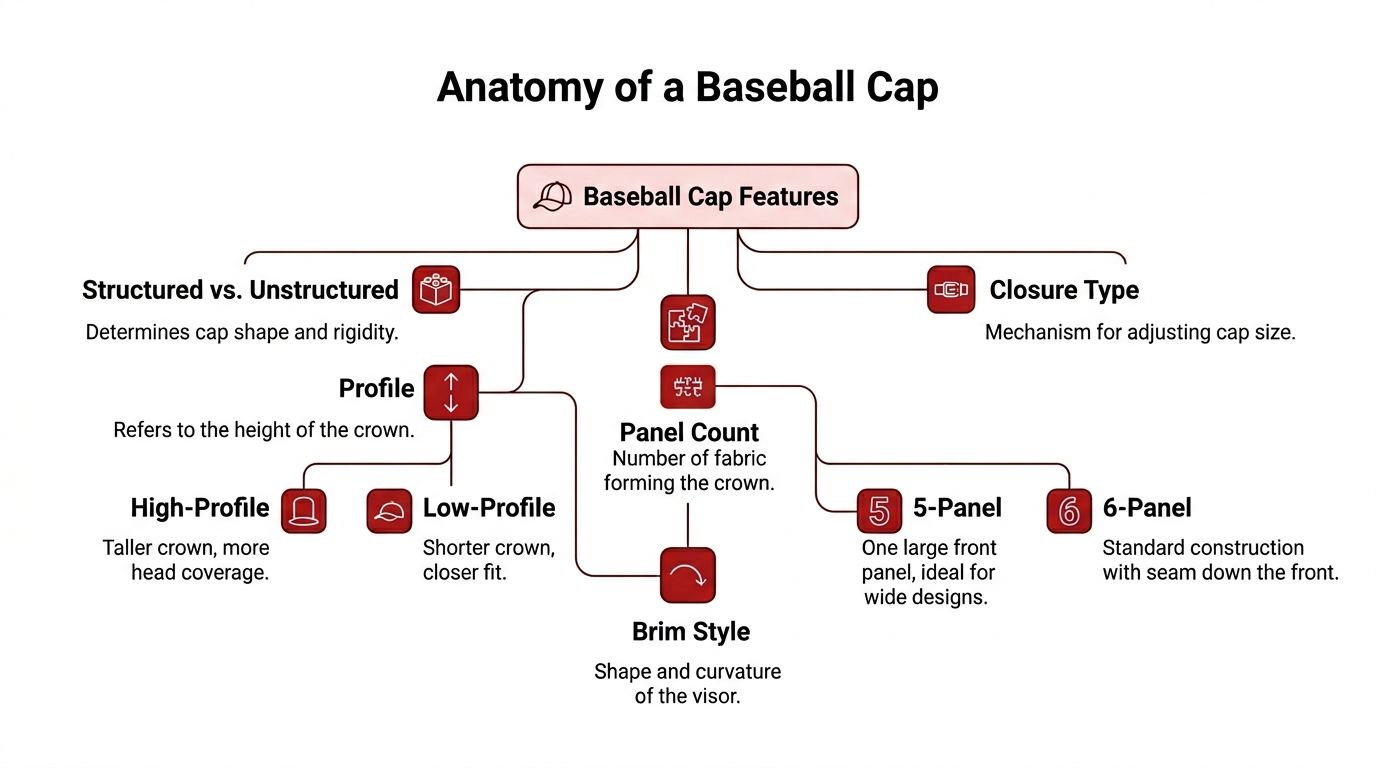
Cap terminology throws people off because the words sound minor, but they change the final result in a big way. Structured, unstructured, low-profile, high-profile, 5-panel, 6-panel. Those are not catalog filler words. They tell you how the hat will fit, how your logo will look, and whether the cap feels like team gear, workwear, or casual merch.
Structure changes the personality of the hat
A structured cap has reinforcement in the front panels. It holds its shape on the shelf and on the head. This is usually the safer choice for bold embroidered logos, team marks, and business branding that needs a crisp front view.
An unstructured cap has a softer front. It collapses more naturally and feels broken-in faster. This is the classic dad hat lane. It works well for smaller logos, simple wordmarks, and brands aiming for a relaxed look.
Here is the simple rule I give new buyers. If you want the hat to look sharp before anyone even puts it on, start with structured. If you want it to feel easy and casual, start with unstructured.
Profile changes how high the crown sits
Profile refers to crown height.
- Low-profile caps sit closer to the head.
- Mid-profile caps land in the middle and fit a lot of buyers well.
- High-profile caps have a taller front and more visual presence.
Profile matters because a logo that looks great on a taller crown can feel cramped on a low-profile cap. It also affects who likes the fit. Some people love the clean front face of a higher crown. Others think it looks too tall and prefer the easier shape of a low-profile hat.
Panel count matters more than most buyers expect
The front of the cap is your canvas. Seams can help or hurt depending on the design.
5-panel caps usually give you one larger uninterrupted front area. 5-panel caps offer a seamless front, ideal for screen printing and large patches, while 6-panel structured caps provide superior shape integrity for embroidery, holding their form 98% better than unstructured caps under a logo according to CapBargain.
That one fact saves buyers from a lot of bad choices.
If your design is wide, printed, or patch-based, 5-panel often makes life easier. If your design is embroidered and you want a classic baseball cap shape, 6-panel structured is usually the dependable choice.
Brim and closure finish the fit
Do not treat the brim and back closure as afterthoughts.
A curved visor reads classic and ready-to-wear. A flatter visor feels more fashion-forward and can suit certain streetwear or team looks. Closures also affect how the cap feels in hand. Snapbacks read sporty. Buckles feel cleaner and more casual. Hook-and-loop is practical but usually less premium in appearance.
Quick Guide to Common Baseball Cap Styles
| Style Name | Profile | Structure | Panels | Best For |
|---|---|---|---|---|
| Dad Hat | Low | Unstructured | 6 | Casual brands, coffee shops, lifestyle merch |
| Pro Style Cap | Mid to High | Structured | 6 | Teams, uniforms, bold embroidery |
| 5-Panel Camper Style | Mid | Usually unstructured or lightly structured | 5 | Patches, prints, trend-driven brands |
| Trucker Cap | Mid | Often structured front with mesh back | 5 or 6 | Outdoor events, breathable merch, casual retail |
| Snapback Team Cap | High | Structured | 6 | Streetwear, team branding, large front logos |
Key takeaway: Buyers often focus on color first. Experienced decorators focus on front panel shape first, because that decides whether the design looks clean or compromised.
Choosing Your Canvas Materials and Brands
Material is where comfort, durability, and decoration all meet. Two hats can look almost identical online and behave very differently once you embroider them, wash them, or hand them to a customer.
Washed cotton, acrylic, and performance fabrics
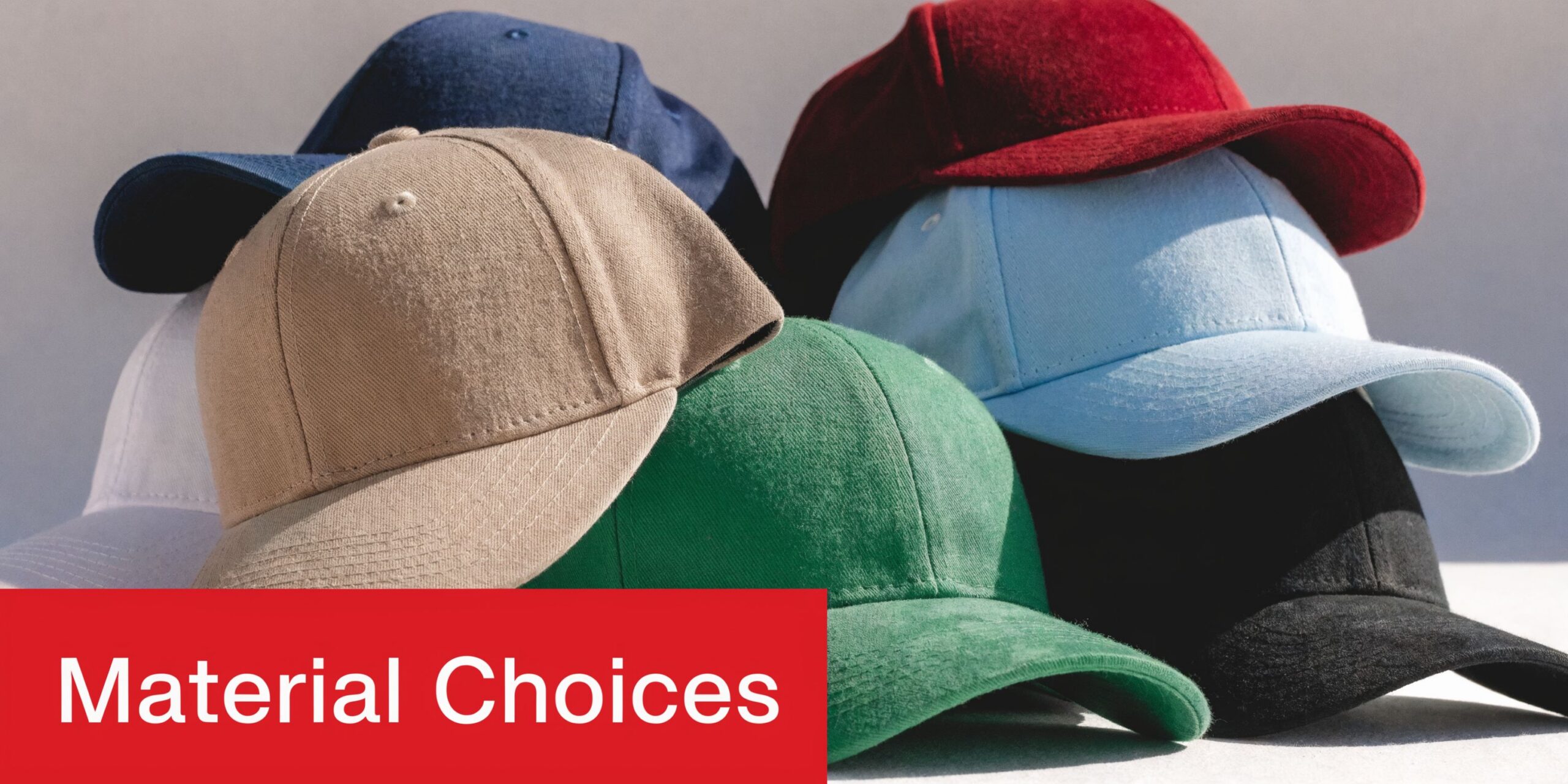
If you want a softer feel and a more relaxed finish, washed cotton is usually the first place to look. 100% washed cotton reduces shrinkage by up to 50% compared to unwashed cotton, which helps preserve size consistency in bulk orders, according to KBETHOS.
That is one reason washed cotton dad hats stay popular. They feel more natural out of the box, and they are forgiving for everyday branded wear.
Acrylic goes in a different direction. It is useful when you need better shape retention and color durability over repeated washing. Team hats, school gear, and promotional orders often benefit from that because the cap needs to keep looking consistent after regular use.
Performance fabrics sit in their own category. These are the hats I point buyers toward when they care about sweat, sun, and outdoor wear more than vintage feel. Polyester blends and similar technical fabrics tend to make sense for training groups, golf events, outdoor staff, and active brands.
The trade-offs that matter
Buyers usually compare caps by price first. Decorators compare them by how they perform under stitches.
Here is the practical version:
- Washed cotton: Softer hand feel, relaxed appearance, easier everyday wear.
- Acrylic: Better for holding shape and keeping bright team colors looking sharp.
- Performance fabrics: Better for heat, moisture, and active use.
- Mesh-backed truckers: Better airflow, but a more casual look that does not suit every logo or workplace.
What does not work well is trying to force one material into every job. A soft dad hat can look wrong for a competitive team. A rigid structured acrylic cap can feel too formal for a laid-back cafe brand.
Brand matters because consistency matters
When buyers ask whether brand really matters, my answer is yes, mostly because repeatability matters. Once you find a cap shape your audience likes, you want a style that stays available and decorates predictably.
Different buyers gravitate to different brands for good reason:
- Richardson is a familiar choice when buyers want trucker styles with a retail-ready feel.
- YP Classics and Flexfit fit projects that need stretch-fit comfort or classic structured shapes.
- New Era appeals to buyers chasing an on-field, sport-forward look.
- Valucap and similar value-focused lines make sense when budget and volume matter more than name recognition.
If you are deciding between soft and crisp crown shapes, this overview of structured vs unstructured hats helps narrow the choice quickly.
Match the material to the buyer, not just the logo
A lot of first orders go wrong because the owner chooses the hat they personally like, instead of the hat their audience will wear.
Use this simple matching guide:
| Need | Better Material Direction | Why |
|---|---|---|
| Staff uniform for everyday wear | Washed cotton or cotton twill | Comfortable, approachable, easy to wear |
| Team cap for repeated use | Acrylic or structured blends | Holds shape and color better |
| Outdoor event or active use | Performance fabric | Better comfort in heat and motion |
| Lifestyle merch drop | Washed cotton or trend-focused blends | More casual, more wearable off the clock |
Bringing Your Vision to Life with Decoration
A blank cap is only half the product. The decoration method decides whether the final piece looks polished, cheap, sporty, subtle, or retail-ready.
Embroidery is the default for a reason
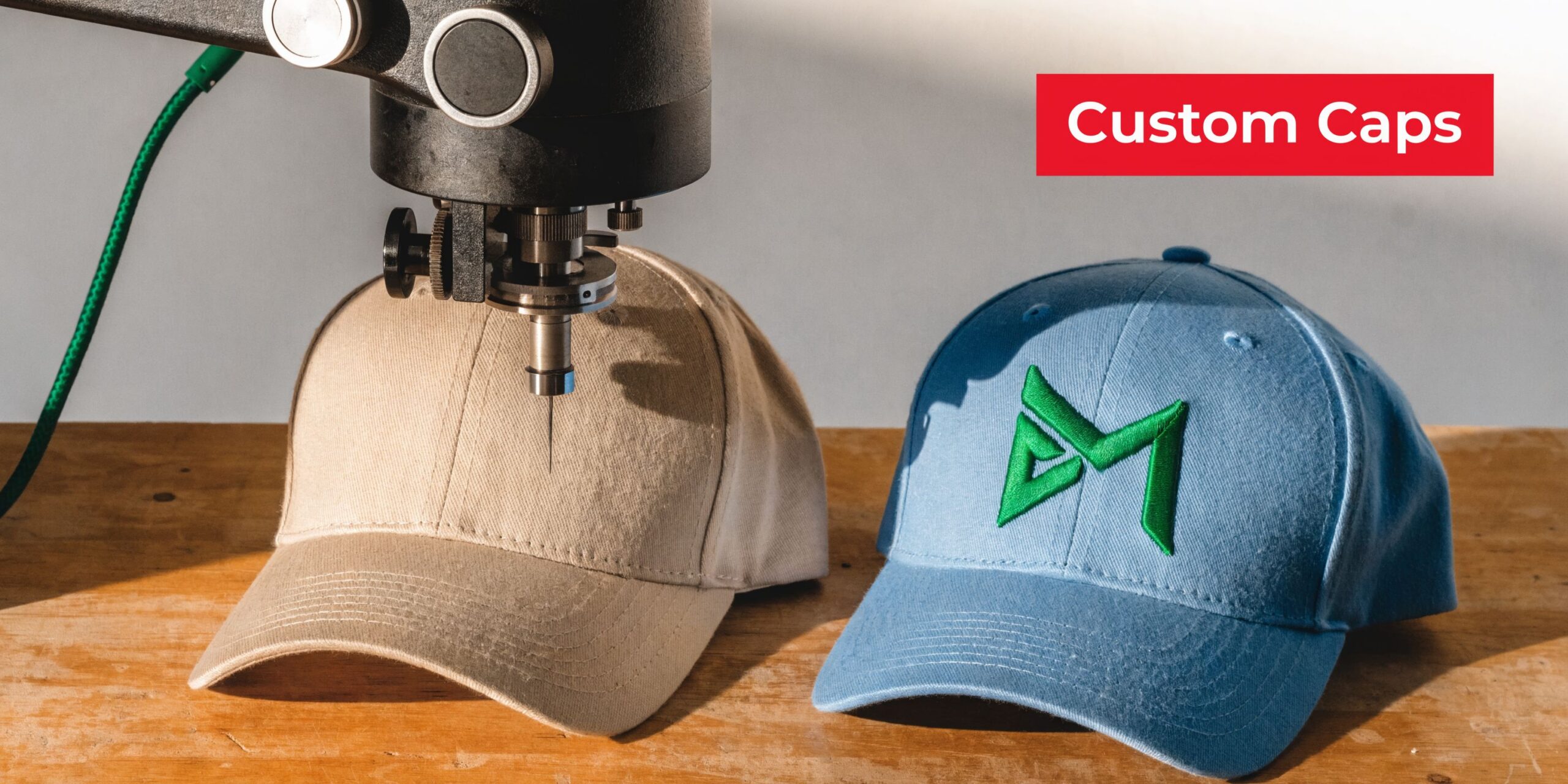
For most businesses, teams, and merch projects, embroidery is the safe starting point. It gives the logo texture, depth, and a finished look that feels more permanent than a print.
Flat embroidery works best when the logo has clean shapes and not too much tiny detail. Text-based logos, badges, initials, and bold icons usually translate well.
3D puff embroidery raises part of the design off the cap. It works best on thicker, simpler elements. Think block letters, bold outlines, and logos with space to breathe. It does not work well for fine detail or tiny script.
Patches solve detail problems
Some logos look great in Illustrator and terrible when reduced for direct embroidery. Thin lines, tiny type, and layered details can turn muddy fast.
That is where patches help. You build the patch first, then apply it to the cap. Depending on the look you want, that patch can feel rugged, vintage, clean, or more premium.
Patches are often a smart move when:
- The logo has small text
- The artwork has more detail than direct embroidery can comfortably hold
- You want a different texture from the base fabric
- You want to use the same patch across multiple hat styles
Screen printing has a place
Screen printing is not the first thing people think of for caps, but it can work very well on the right blank. Foam-front truckers and some smooth-front 5-panel styles take print nicely. If the design is bold and graphic, print can be a clean answer.
If your logo is part of a larger brand rollout, it helps to review broader small business branding tips so the cap design matches your storefront, packaging, and web presence.
Tip: If your logo has tiny text under the main mark, consider dropping that line for the hat version. Caps need edited artwork, not just resized artwork.
The file matters as much as the method
A good-looking logo still needs to be prepared for stitch. That process is called digitizing. The machine does not read your logo like a person does. It follows stitch paths, densities, directions, and compensation settings.
If you have never dealt with that before, this guide on how to digitize a logo for embroidery explains what makes a file embroidery-ready.
The best decoration choice is usually the one that protects the logo, not the one that forces the logo into a method it was never meant for.
The Ultimate Ordering Workflow From A to Z
Most first-time buyers think the ordering process starts when they ask for a quote. It starts earlier, when they decide what kind of result they need.

Step one is choosing the blank and quantity
Start with one style, not five. Mixed styles sound fun, but they complicate approvals, decoration placement, and reorder planning.
Pick:
- The cap model
- The cap color
- The quantity
- The logo location
If this is your first run, a smaller order is usually smarter than overcommitting. It lets you test wearability and audience response before you scale.
Some shops, including Dirt Cheap Headwear, offer low-minimum custom runs starting at six pieces per logo, which is useful for test orders, staff kits, and pilot merch drops.
Step two is submitting artwork
Send the cleanest file you have. Vector art is ideal when available, but many shops can also evaluate high-quality raster files.
What slows an order down is not the art itself. It is vague instructions.
Say exactly what you want:
- Front logo only, or front plus side/back
- Approximate logo size preference
- Thread color direction
- Whether you want flat embroidery, 3D puff, patch, or print
- Deadline, if one exists
Step three is proof approval
This is the point where buyers either save themselves a headache or create one.
A digital proof gives you a chance to catch:
- Incorrect logo version
- Wrong thread color
- Placement that looks too high or too low
- Sizing that feels off for the cap style
- Missing details in simplified artwork
Do not approve a proof in a rush. Zoom in. Compare it to your brand files. Ask to adjust if anything feels off. Small corrections are easy now and expensive later.
Key takeaway: The proof is not a formality. It is your production checkpoint.
Step four is understanding the real cost
A blank cap price is not the full project price. Many new buyers often get tripped up here.
The practical budget usually includes:
- Blank caps
- Decoration cost
- Setup or digitizing, if applicable
- Shipping
- In some sourcing models, duties and landed costs
That matters even more if you are comparing domestic stock against import-heavy options. As BlankCaps notes, many sellers advertise caps under $4, but buyers often do not get a clear breakdown of full landed cost, decoration, or sourcing-related expenses. The same source also notes that 'custom headwear' searches grew 31% year over year, which tells you more buyers are entering the category and trying to understand profitability.
If you plan to resell caps online, workflow tools matter too. Stores managing account-based pricing, tiered discounts, or B2B customer groups may want to review these best Shopify wholesale apps before setting up their catalog.
Step five is production and delivery
Once the proof is approved, production starts. At that point, changing the artwork or cap style can delay the order.
When the caps arrive, do not just admire the top one in the box and call it done. Open the shipment fully and inspect it. That part protects your event, your team rollout, or your product launch.
A simple ordering checklist
| Stage | What to confirm |
|---|---|
| Before quote | Cap style, audience, logo method, rough quantity |
| At quote | What is included, what is separate, whether setup applies |
| At proof | Placement, colors, logo version, scale |
| At production | Approved design only, no last-minute changes unless confirmed |
| At delivery | Count, finish quality, consistency, packaging condition |
The cleanest orders come from buyers who make fewer assumptions. If something matters to you, put it in writing before production begins.
Performing Your Own Quality Check
A lot of buyers treat delivery day like the finish line. It is not. It is the inspection point.
That matters because North America accounts for over 32% of global headwear demand, and this is a mature market with high buyer expectations, according to Fortune Business Insights. If the hats represent your business, team, or store, they need to look intentional.
What to inspect first
Start by pulling samples from different parts of the box, not just the top layer.
Check the basics:
- Logo placement: Does it match the approved proof?
- Thread or patch appearance: Are the colors visually correct?
- Cap consistency: Do the crowns, brims, and closures look uniform?
- Quantity: Did the full order arrive?
- Visible defects: Look for loose threads, crooked decoration, crushed fronts, or dirty marks
Look closely at the embroidery
Embroidery quality tells you a lot in a few seconds. Tight stitching usually looks clean and stable. Bad stitching often shows itself right away.
Watch for:
- Gaps where fill should be solid
- Jagged edges on shapes that should be smooth
- Backing showing where it should not
- Loose thread tails
- Distortion around the logo area
A hat can be technically decorated and still not be sellable. If the front panel puckers or the logo pulls the crown out of shape, the buyer sees that immediately.
Fit and finish matter too
First-time buyers often inspect only the logo. The cap itself deserves the same attention.
Check the feel of the closure. Open and close a few. Make sure the sweatband looks clean. Set a few hats side by side and compare brim curve and crown shape. If you are fulfilling for a team or staff group, consistency matters more than any single cap.
Tip: Keep one approved hat as your control sample for future reorders. It becomes the physical reference for shape, logo size, and thread appearance.
Why this step protects your brand
If you hand out hats with obvious defects, people do not blame the supplier. They blame your brand. The cap becomes a public piece of marketing the minute someone puts it on.
A quick inspection takes a little time and prevents bigger problems later:
- Staff wearing gear that looks off-brand
- Teams receiving inconsistent caps
- Customers returning resale merchandise
- Event giveaways that feel lower quality than intended
The buyers who do this well usually become much better at reordering. They know what good looks like, and they ask sharper questions on the next run.
Frequently Asked Questions for First-Time Buyers
How many caps should I order for a first run
Start with a quantity you can use or sell comfortably if the design performs only moderately well. For a staff order, count current team members and add a few extras. For resale, test one strong design before expanding into multiple styles.
What cap style is safest if I am not sure
A mid-profile structured 6-panel cap is usually the safest all-around starting point for embroidery. If your audience leans more casual, an unstructured dad hat is often easier to wear day to day.
Is embroidery always the best option
No. It is the default option for many projects, but not always the best one. Patches work better for some detailed logos, and printed fronts can make more sense on certain 5-panel or foam styles.
Can I use the same logo file from my website
Sometimes, but not always. Website logos often need cleanup, simplification, or digitizing adjustments before they work on a cap. Fine lines and tiny type are the usual trouble spots.
Should I pick the cheapest blank to save money
Only if the project is disposable. If people will wear the cap repeatedly, the blank matters. A better-fitting cap with cleaner decoration usually does more for your brand than shaving a little off the base cost.
What causes first orders to go wrong most often
Usually one of these:
- The cap shape did not match the intended audience
- The logo was too detailed for the decoration method
- The buyer approved the proof too quickly
- The total cost was underestimated because only the blank price was considered
Is it smart to mix colors in one order
It can be, but keep the logo treatment consistent. One cap style in a few colorways is easier to manage than multiple styles with multiple decorations on a first run.
What should I keep on file for reorders
Save the approved proof, cap style name, color name, closure type, logo size, decoration method, and a photo of the finished hat. Better yet, keep a physical sample.
If you want a straightforward place to buy wholesale blank baseball caps or turn them into finished custom hats, Dirt Cheap Headwear offers blank styles from major brands plus in-house decoration for small runs and larger bulk orders. It is a practical option when you want to test a design, restock a team program, or get help matching the right cap to the right logo.
Pingback: Flat Bill Hats Custom: A Complete 2026 Guide | Dirt Cheap Headwear
Pingback: Custom Baseball Hats for Teams: A Coach's Guide | Dirt Cheap Headwear
Pingback: Design Your Own Baseball Caps: A Pro's Guide | Dirt Cheap Headwear
Pingback: Find Your Ideal Water Resistant Cap for 2026 | Dirt Cheap Headwear
Pingback: Suede Baseball Cap The Ultimate Buyer's & B2B Guide (2026) | Dirt Cheap Headwear
Pingback: The Organic Cotton Hat Guide for Your Brand | Dirt Cheap Headwear
Pingback: How to Sew a Baseball Cap: Step-by-Step Guide | Dirt Cheap Headwear