
The registration tent is full, the sun is climbing, and your event staff are already fanning themselves with clipboards. Their shirts identify the team, but their solid caps trap heat around the crown. A hat with mesh looks like the obvious fix, yet choosing the right one involves more than picking a ventilated back and adding a logo.
For most buyers, hat with mesh means a trucker-style cap with a solid front and an open mesh rear. That construction can offer airflow, an adjustable fit, and a large branding area in one familiar shape. It also raises practical questions: Does more ventilation mean less sun coverage? Will a five-panel or six-panel crown display your artwork better? Should you use embroidery, a patch, or printing? And does recycled mesh support a sustainability message without creating a misleading claim?
This guide walks through those decisions in plain language. You'll learn how mesh construction works, how panel shape changes the fit and decoration area, where different materials make sense, and what to check before placing a bulk order. If you're comparing styles, this overview of what a trucker hat is provides useful background on the broader silhouette.

A mesh cap can help your crew stay more comfortable during outdoor work, while the solid front keeps a team name, sponsor mark, or event logo visible. By the end, you should be able to choose based on the job the hat needs to perform, not only on whether the style looks fashionable.
Understanding the Core Concept Behind Mesh Backed Hats
A classic mesh-backed trucker cap combines three parts that solve different problems. The foam front panel creates a smooth, structured surface for a logo. The plastic mesh rear allows air to move around the head. The snap closure lets one cap accommodate a broad range of wearers.
The design emerged in the United States during the 1960s and 1970s as a low-cost promotional giveaway from feed, farming supply, and trucking-related companies to farmers, truck drivers, and rural workers, as documented in the history of the trucker hat. Its original appeal was practical rather than luxurious. Companies could place a recognizable logo on the front, workers could adjust the cap, and the breathable back suited long days in warm conditions.
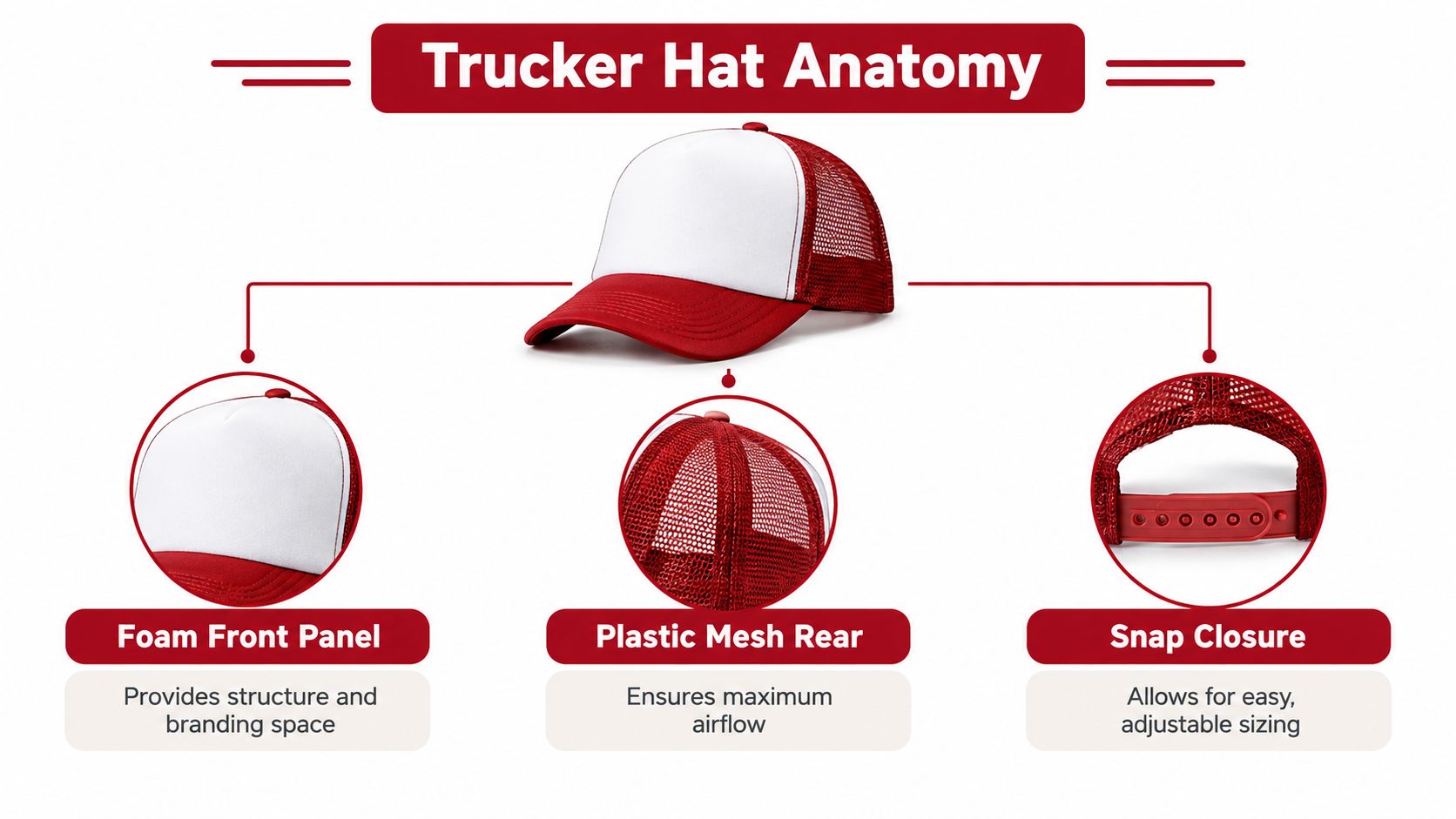
Think of the crown as a billboard with windows
The front is the billboard. It gives decorators a stable, opaque field for a wordmark, emblem, patch, or bold graphic. The rear is the windows. It doesn't carry the main visual message as easily, but it lets heat escape instead of surrounding the wearer with a fully closed crown.
That split explains why the style works so well for promotional headwear. A business can use the front to communicate its identity while the wearer gets a cap that feels less stuffy than a fully solid design. The adjustable closure also reduces the risk of ordering a narrow size range for a mixed group.
The construction became associated with working-class and rural identity before moving into mainstream fashion. Its transition from utility item to pop-culture accessory accelerated in the early 2000s, when celebrity adoption made the shape widely visible, as described in this account of the trucker hat's fashion shift.
Why the silhouette still works for organizations
The same features that made the cap inexpensive and practical also suit modern custom orders:
- The front panel is prominent: Large logos remain easy to see from the front.
- The back adjusts quickly: A snap closure helps different people share the same general style.
- The mesh supports warm-weather use: Airflow is valuable for outdoor teams, crews, and event staff.
- The shape carries heritage: A familiar profile can make a new brand feel more approachable.
A mesh-backed cap isn't automatically the right choice for every use. It's a strong starting point when you need visible front branding, casual styling, and ventilation in one product.
Practical rule: Choose the front for your message and the mesh for the wearer's environment. If either side fails, the order may look good but perform poorly.
How Mesh Materials and Ventilation Actually Work
Mesh isn't one universal material. The feel, stretch, appearance, and sustainability story can change depending on the fiber and construction. For a buyer, the important question isn't “Which mesh is best?” It's “Which mesh matches the way people will wear the hat?”
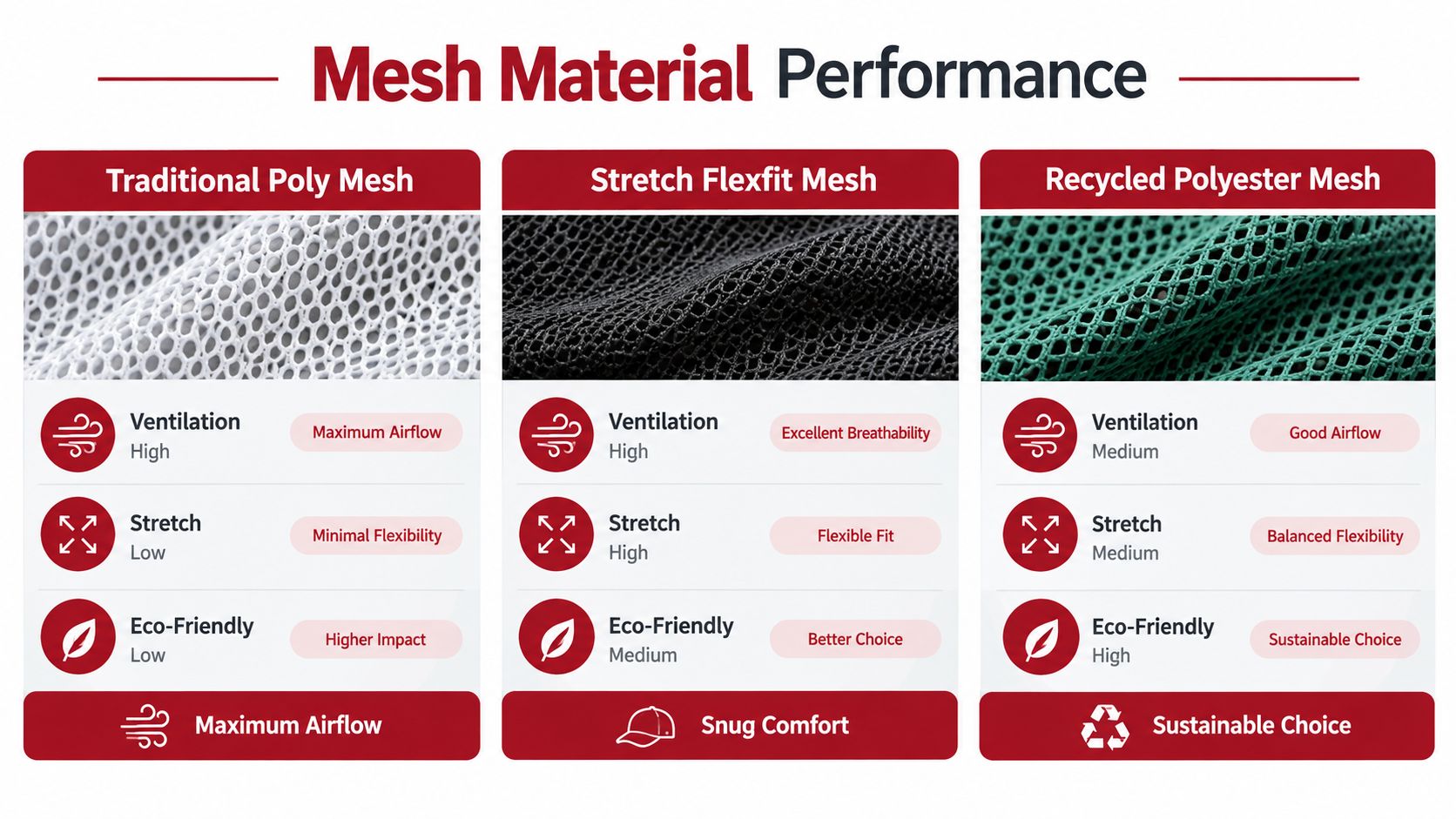
Traditional trucker caps commonly use plastic polyester-style mesh at the rear. This option holds a familiar shape, provides strong airflow, and works well for standard snapback programs. Stretch mesh, including products marketed as Flexfit Mesh, adds give to the crown and is positioned around ventilation and comfort, while newer recycled polyester options appeal to brands that want to discuss material sourcing.
Airflow depends on placement
Open crown zones support convective air exchange. As the wearer moves or encounters wind, warm air near the head can leave through the ventilated material while surrounding air replaces it. Rear and upper panels are especially useful because they're close to areas where heat and sweat accumulate, as explained in this technical overview of ventilated mesh hat construction.
That doesn't mean a cap with more holes is always more comfortable. A highly open crown can reduce opaque coverage, allowing more light through. A solid front and mesh rear often provide a useful middle ground for outdoor promotions, sports, and active work.
Match the material to the buying priority
Traditional poly mesh suits buyers who want the recognizable trucker appearance and dependable ventilation without emphasizing stretch. It's a straightforward choice for event merchandise, crew caps, and promotional programs.
Stretch mesh makes more sense when the wearer values a closer, more forgiving feel. It can reduce the rigid sensation associated with some snapback styles, though the fit still depends on the crown shape and closure.
Recycled polyester mesh supports a sustainability conversation, but buyers should verify exactly what the supplier can substantiate. One recent industry source says recycled polyester mesh panels can be made from post-consumer bottles, typically six to eight bottles per cap, according to its discussion of recycled mesh hats. Use that claim only when the specific product and supplier documentation support it.
Buying insight: Ventilation, stretch, and recycled content are separate benefits. Don't assume one material delivers all three equally.
Fit and Panels That Change Comfort and Look
Two caps can both be called trucker hats and still feel completely different. Crown height, panel count, front structure, brim shape, and closure all affect how the cap sits and how much room your artwork gets.
A six-panel cap usually divides the crown into more sections, creating a familiar baseball-cap shape. A five-panel crown often presents a cleaner uninterrupted front area, which can suit modern graphics and flatter decoration. Neither option is automatically more comfortable. The right choice depends on head shape, desired profile, and the visual language of the brand.
Structure controls the silhouette
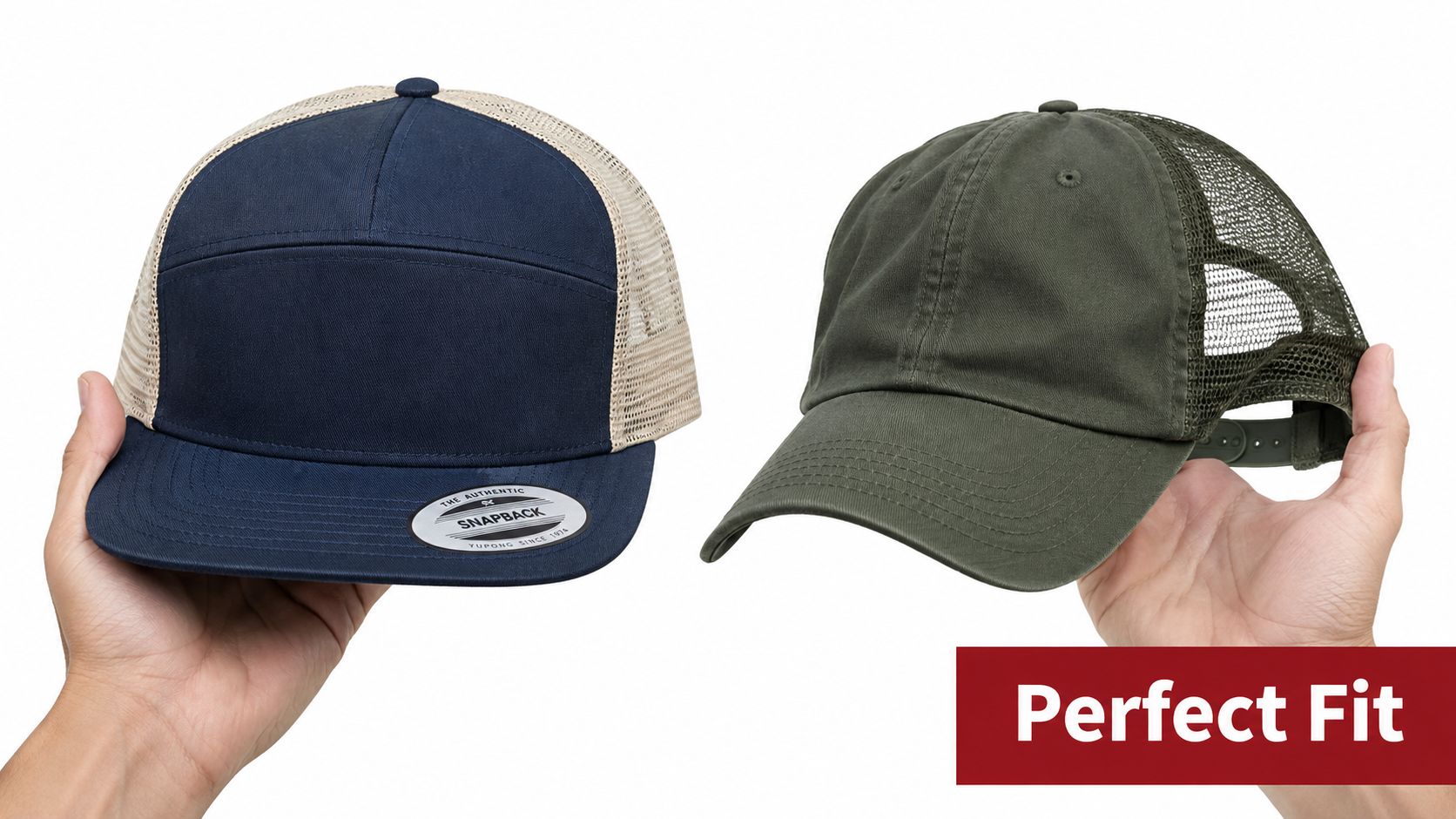
A structured front uses foam or reinforcement to hold a taller, more defined shape. It gives a logo a firm surface and creates the classic high-profile trucker appearance. An unstructured front collapses more naturally and tends to feel softer, making it a better fit for relaxed, low-profile styling.
A tall foam-front cap can suit a construction crew, outdoor brand, or sponsor program that wants a bold logo to stand out. A lower-profile mesh dad-style cap may appeal to lifestyle customers who prefer a less pronounced crown and a curved brim.
The closure changes the experience, too. A snapback offers quick adjustment and a familiar visual detail. Stretch mesh can provide a snugger feel, while an adjustable strap or buckle creates a different look and fit range.
Compare the profile before you approve the logo
Use the artwork and audience together:
- Large, simple logo: A structured front gives the mark a strong display area.
- Fine, understated branding: A lower-profile shape can feel less promotional.
- Mixed group of wearers: Adjustable closures simplify distribution.
- Active movement: A secure fit matters more than a dramatic crown.
- Fashion-led merchandise: Panel layout and brim shape may matter as much as airflow.
The embroidery area isn't identical on every five-panel or six-panel cap. Seams, front-panel height, and reinforcement can limit how large or tall a design should be, so request a decoration proof on the actual blank style rather than approving artwork in isolation.
For a visual comparison of cap profiles and construction, the following video offers another way to examine how shape affects the finished look.
A good fit decision starts with the wearer, then considers the logo. If your audience rejects the crown shape, perfect decoration won't rescue the order.
Decoration Pros and Cons for Embroidery Patches and Printing
The solid front panel is the main reason mesh hats remain so useful for custom branding. Embroidery needs a stable base, and foam or reinforced fabric gives stitches something consistent to hold. The mesh rear serves a different job, so direct decoration there requires more caution.
Standard embroidery works well for bold lettering and uncomplicated logos. Three-dimensional puff embroidery can add height to a simple mark, but it needs enough space and clean shapes to remain readable. Dense or highly detailed artwork may look crowded on a small front panel, especially when seams or curvature interrupt the design.
Patches offer another route. A woven or embroidered patch can carry intricate artwork on its own backing, then attach to the solid front. This can preserve detail more effectively than forcing every small element into direct stitching. Printing can work for certain smooth front panels, though the final result depends on the panel material, surface finish, and the decoration process.
For a broader look at how printing and embroidery options differ, compare the intended finish with the cap's actual construction before selecting a method.
A practical decoration matrix
| Decoration Method | Best Placement on Mesh Hat | Look and Durability | When to Choose It |
|---|---|---|---|
| Direct embroidery | Solid foam or reinforced front | Textured, traditional, and durable when matched to suitable artwork | Choose it for bold logos, names, and simple brand marks |
| Three-dimensional puff | Solid front with open lettering or shapes | Raised and attention-grabbing, but less suited to tiny details | Use it when the design needs dimension and reads clearly at a distance |
| Embroidered patch | Solid front panel | Detailed, tactile, and easy to treat as a separate badge | Select it for intricate artwork, badge-style branding, or multiple color areas |
| Printed decoration | Smooth, stable front surface | Flat and graphic, with a clean visual result | Consider it for artwork that depends on color blocks or fine visual elements |
| Direct decoration on mesh | Only when the supplier confirms suitability | Airy surface can distort, snag, or reduce clarity | Use sparingly and only after testing the exact mesh construction |
Artwork preparation prevents expensive surprises
Send vector artwork whenever possible, identify the thread or print colors, and explain which details are essential. A tiny slogan may need to become larger text, fewer colors, or a simplified shape once it moves onto a curved cap.
Ask for a proof that shows the logo at its intended size and position. Check the relationship between the artwork and the seams, brim, and front-panel edge. For bulk orders, approve the proof before production and confirm whether the supplied cap is structured, unstructured, five-panel, or six-panel.
Decoration rule: The most detailed logo isn't always the most effective logo. On a mesh hat, contrast, scale, and placement usually matter more than adding every brand element.
Sourcing and Customizing Mesh Hats for Bulk Orders
Bulk buying starts with the blank cap, not the decoration method. A Richardson trucker, a YP Classics or Flexfit style, and a lower-cost promotional cap can all provide mesh ventilation, but they may differ in crown profile, material feel, color availability, and stock reliability.
Begin by writing the use case in one sentence. “Outdoor registration staff need a breathable cap with a large front logo” points toward a structured mesh-backed style. “Lifestyle merchandise should feel relaxed and understated” may point toward a lower-profile mesh dad cap. That sentence keeps the purchase focused when a catalog offers too many similar options.
A sourcing sequence that reduces rework
- Choose the blank by audience: Review crown height, brim shape, panel count, closure, and mesh feel before thinking about decoration.
- Confirm available colors: A cap shown online may not be available in the color your team needs, so verify inventory before finalizing the artwork.
- Prepare production-ready files: Supply clean artwork and identify which parts must remain readable at the finished size.
- Request a proof: Check placement, scale, thread or print colors, and the relationship between the design and the front seams.
- Set the delivery plan: Coordinate proof approval, production, and shipping with the event or launch date.
- Order a sample when the fit matters: A physical sample can reveal crown height, brim curve, and mesh stiffness that a product page can't fully communicate.
For small organizations or resellers, low minimums can make testing a new logo or colorway less risky. Dirt Cheap Headwear states that its custom embroidery programs can begin at six pieces per logo, with options including 3D puff and fine-detail stitching, as described in the publisher information provided for this article.
What to ask before placing the order
Use a short checklist during the quote or support conversation:
- Stock status: Is the selected style and color available now?
- Blank identity: What brand and model will be decorated?
- Decoration limits: Is the design suitable for the front panel and chosen method?
- Proof timing: When will you receive the approval image?
- Production timing: How long does decoration take after approval?
- Shipping scope: Where will the order ship, and what delivery window applies?
- Reorder consistency: Can the supplier notify you when stock changes?
You can also browse Wispra apparel sourcing listings when comparing sourcing resources and supplier options. For a focused product category, review mesh trucker hats and compare the cap structure before selecting your decoration.
The cheapest blank isn't always the cheapest project if it creates sizing complaints, decoration problems, or a last-minute replacement order. A reliable process protects the schedule as much as it protects the budget.
Final Takeaways for Choosing Your Next Hat With Mesh
A hat with mesh makes sense when airflow, adjustable fit, and front-panel branding all matter. It's especially practical for outdoor event crews, sports groups, warm-climate promotions, and casual merchandise that needs a recognizable silhouette.
Start with the conditions. Rear or upper mesh can help warm air escape during movement, but open construction also means less opaque coverage than a fully solid crown. Breathability isn't the same as complete sun protection. Medical evidence summarized in the sun-protection discussion for mesh hats shows that hat performance varies by style and environment, and even strong hat designs don't provide total facial protection. If people will work for long periods in direct sun, pair the cap with sunscreen, consider additional neck coverage, and evaluate whether a wider-brim style offers a better fit for the job.
Then choose the crown around the brand:
- Need a bold logo: Select a structured front with enough uninterrupted space.
- Need a relaxed fashion profile: Look at lower-profile or unstructured construction.
- Need flexible group sizing: Consider an adjustable closure or stretch mesh.
- Need fine artwork: Test a patch or simplify the embroidery before production.
- Need a sustainability message: Confirm recycled content for the exact model and keep the claim specific.
- Need maximum cooling: Prioritize ventilated crown zones, while accepting the coverage trade-off.
The strongest buying decision connects material, fit, decoration, and use case. Don't choose mesh only because it's familiar, and don't choose a solid cap only because it offers more coverage. Select the construction that lets the wearer stay comfortable while the brand remains clear.
Dirt Cheap Headwear offers blank mesh-backed caps, custom embroidery, patches, printing, and an easy custom order process for teams, businesses, events, and resellers. Visit Dirt Cheap Headwear to compare styles, prepare your logo, and request a custom order that matches your fit, airflow, and decoration needs.