
Mesh Trucker Hat Guide for Bulk Buyers and Brand Builders
You've got a logo, a deadline, and a budget that won't survive a bad hat choice. The cap needs to fit a mixed group, look credible in photos, stay comfortable outdoors, and arrive ready for an event or launch. That's why the mesh trucker hat remains a practical starting point for small businesses, teams, creators, and promotional buyers.
It offers a useful combination of adjustable fit, breathable construction, broad front-panel decoration space, and accessible wholesale pricing. The right version can work for a landscaping crew, a brewery merch drop, a trade-show giveaway, or a lifestyle collection. The wrong version can expose a logo seam, snag easily, feel flimsy, or look too seasonal for your brand.
Why the Mesh Trucker Hat Keeps Winning Over Brands
A small business owner ordering their first hats usually wants several things at once. The hats should fit different wearers, carry a recognizable logo, avoid unnecessary production cost, and feel comfortable enough that recipients will wear them. Mesh trucker hats solve those requirements with a simple structure that has proved unusually adaptable.
The style began in the United States during the 1960s and 1970s as a low-cost promotional giveaway from feed stores, farming-supply companies, and trucking-related businesses, according to the history of the trucker hat. People also called them “gimme caps” and “feed caps.” Their foam fronts supported basic branding, while mesh backs helped reduce heat buildup for drivers and rural workers.
That origin matters to bulk buyers because the design was shaped by distribution needs, not runway styling. The cap was inexpensive to produce, adjustable, and easy for a company to hand out at scale. The same characteristics still make it a dependable promotional product today.
Why the format works for wholesale
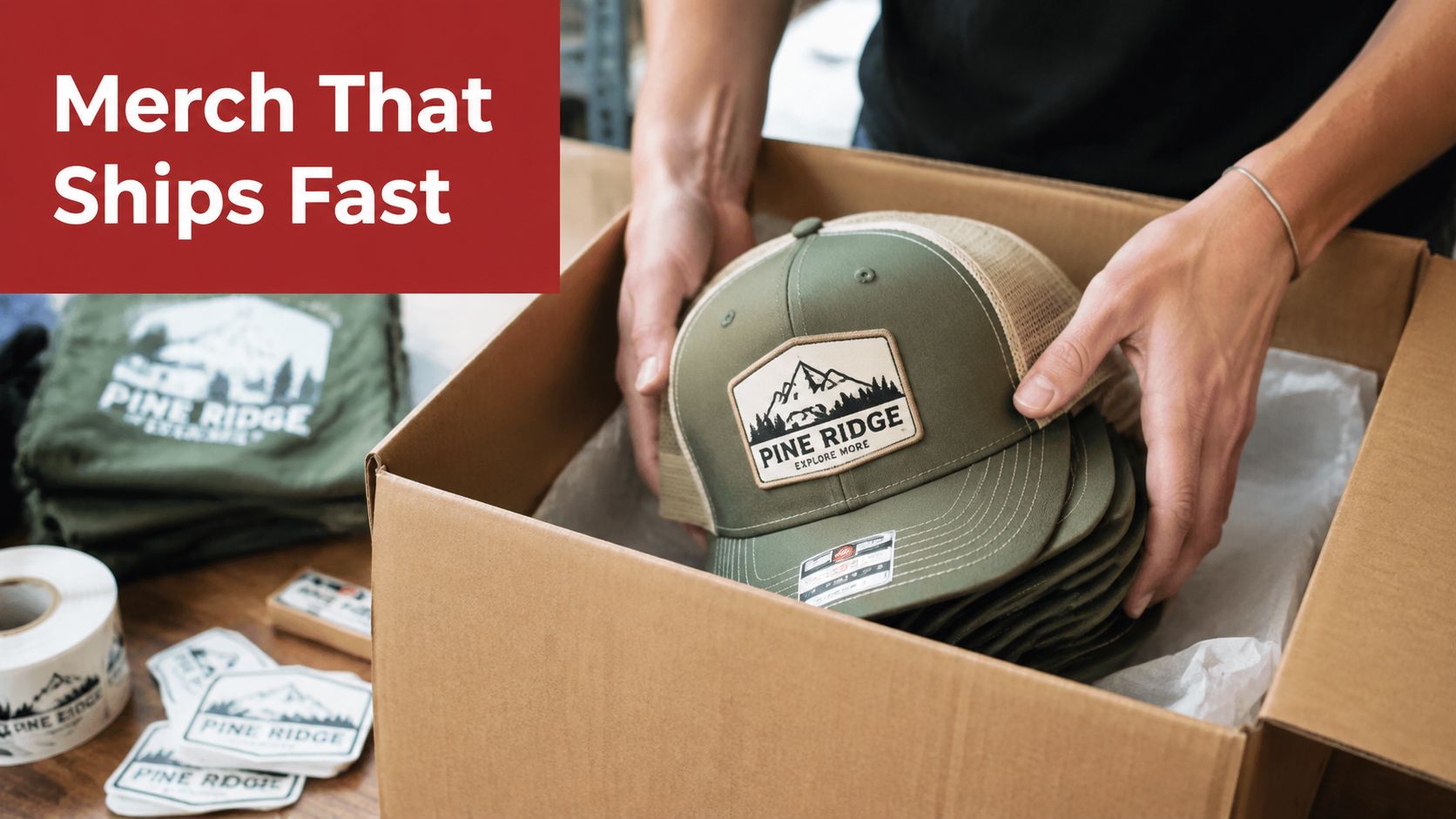
The mesh-back, foam-front design costs less to produce than many traditional baseball caps, while an adjustable closure accommodates a broad range of wearers. That combination made trucker hats especially useful for agriculture, trucking, and beverage promotions, and their revival in the 2000s moved them into global fashion, as described by FreightWaves' trucker hat history.
The front panel gives your mark a clear visual home. A bold wordmark, simple emblem, or patch can read well from a distance. You'll also get a recognizable silhouette that carries a casual, outdoors-oriented message without requiring a complicated design.
My recommendation is straightforward. Choose a mesh trucker hat first when your program needs broad fit flexibility, visible branding, ventilation, and sensible unit economics. Consider another cap only when your brand specifically needs a softer, more refined, more athletic, or more fashion-forward shape.
How a Mesh Trucker Hat Is Actually Built
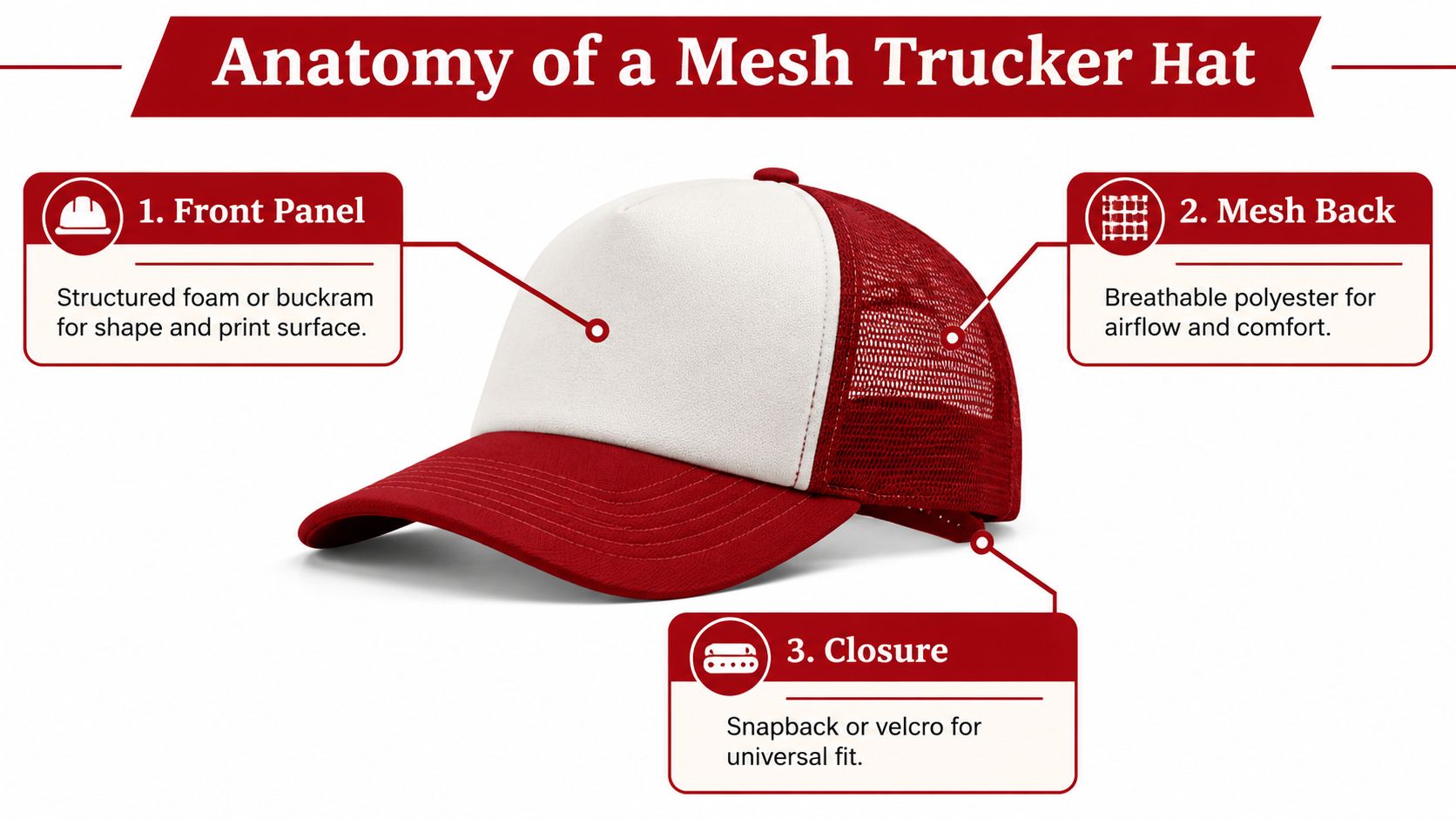
A mesh trucker hat is a hybrid cap. The front does one job, the back does another, and the closure handles fit. Understanding those zones will help you read wholesale specifications without choosing based only on color and price.
The front panel is usually structured with foam, cotton, polyester, or a blended material. It gives the crown its shape and creates a stable surface for embroidery, patches, or other decoration. The rear panels are commonly made from 100% polyester mesh, which creates open space for air exchange around the crown. This construction is described in mesh trucker hat product specifications.
Think of the cap like a ventilated helmet. The solid front protects the visual identity and holds the form, while the open back releases heat instead of trapping it around the head.
Read the specification sheet by zones
Front panel: Foam creates a smooth, branded appearance and works well for simple graphics. Cotton or polyester blends can provide a more textile-like surface and may suit embroidery or patches better.
Mesh back: Open-weave polyester supports ventilation. Ask whether the supplier describes the mesh as fine, coarse, performance-oriented, or standard. Those terms affect comfort, structure, and durability.
Panel count: A 5-panel cap often gives the front a broad uninterrupted area. A 6-panel cap may include a center seam, so a logo that crosses the middle can require repositioning or artwork adjustment.
Profile and bill: A higher crown creates a stronger traditional trucker shape. A lower profile looks more casual and less imposing. A curved bill supports a classic workwear appearance, while a flat bill pushes the design toward streetwear.
Closure: Snapback and hook-and-loop closures provide adjustability. Don't treat “one size fits most” as a substitute for checking the actual closure and crown dimensions. Fit still affects whether a customer keeps wearing the cap.
Before placing a large order, ask for the exact front-panel material, panel count, profile, bill shape, mesh composition, and closure type. A structured trucker hat option can help if your logo needs a firm, consistent decoration surface.
The construction becomes easier to evaluate once you see it in motion. This short video gives buyers another visual reference for the cap's shape and components.
Mesh Density and Weight Trade-Offs Buyers Should Know
Mesh density changes the wearing experience. It also changes how much protection and structure the cap provides, so you shouldn't choose a mesh trucker hat solely because the listing calls it breathable.
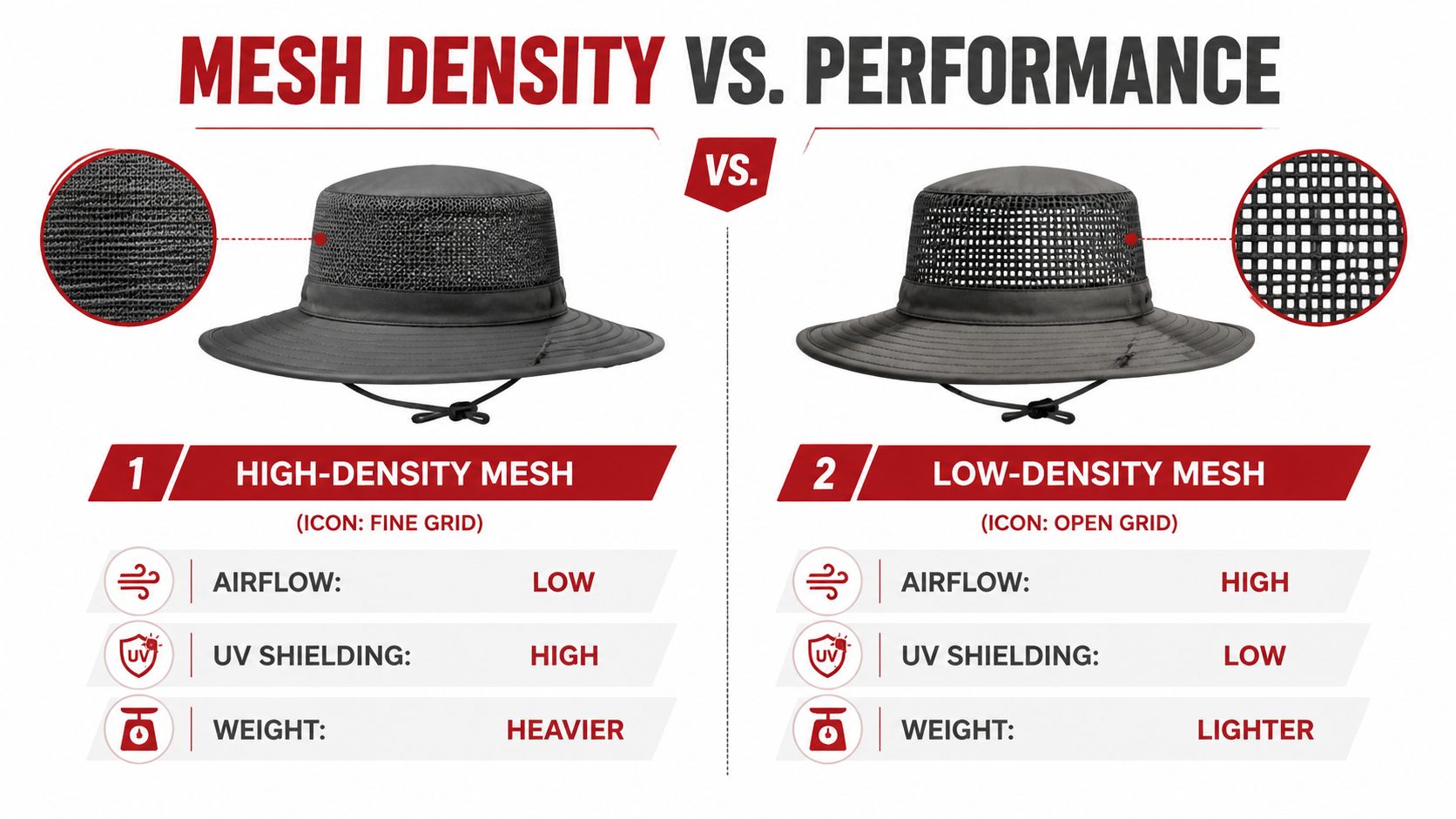
More open mesh improves airflow, especially in warm or humid conditions. The trade-off is greater exposure to abrasion, sunlight, and snagging. Coarse mesh may feel cooler, but it can look less refined and may not hold up as well in rough work environments.
Finer mesh gives the rear of the cap a denser appearance. It can provide better structure, stronger resistance to snags, and more visual coverage, but airflow drops slightly compared with an aggressively open weave. Industry guidance on trucker hats also describes typical retail specifications as lightweight, roughly 85–105 g, which supports packability and reduces freight burden in bulk programs.
Match the mesh to the job
For outdoor crews, prioritize airflow, but don't ignore abrasion. A very open mesh may be comfortable for a festival volunteer, yet less suitable for landscaping, construction, or warehouse work where the hat may brush against equipment.
For event giveaways, lightweight construction usually makes sense. The caps are easier to pack, distribute, and carry, and the ventilation suits crowded venues or outdoor queues. A finer mesh may be preferable when the hat needs to look more retail-ready in product photography.
For a merch drop, choose by perceived value rather than cooling alone. Denser mesh, a cleaner front panel, a stronger closure, and a well-shaped bill can make a basic cap feel more intentional. Buyers should compare the hand feel, crown shape, and decoration surface before committing to a color assortment.
Practical rule: Choose the most open mesh your use case can tolerate, not the most open mesh available.
Weight also affects logistics. Lightweight caps can reduce the burden of packing and freight, but an ultra-light structure may feel less substantial to a retail customer. Request a physical sample when the order will represent your brand. A photograph won't reveal whether the mesh feels durable, whether the crown collapses, or whether the closure holds securely.
Mesh Trucker Hats Versus Other Popular Cap Styles
A mesh trucker hat isn't automatically the right cap for every brand. Compare it against the job your headwear must perform, including decoration, fit, visual tone, and expected wear.
A dad hat usually gives a softer, more understated appearance. It can suit a boutique, café, or lifestyle brand that wants a relaxed look without the taller structured crown. A performance cap makes more sense for athletic programs where stretch, sweat management, packability, or technical fabric matters more than a large decorative front.
A standard snapback can offer a similarly adjustable fit and strong branding area, but its solid back sacrifices the ventilation that defines a trucker cap. A mesh trucker hat is usually the better value for promotional distribution, while another style may communicate a more polished or technical identity.
| Feature | Mesh Trucker Hat | Dad Hat | Snapback | Performance Cap |
|---|---|---|---|---|
| Cost position | Often cost-conscious because of its efficient mesh and foam construction | Varies, with softer washed fabrics sometimes adding cost | Broad range, often accessible | Can carry a higher price because of technical fabrics |
| Decoration area | Strong front-panel space, especially on structured versions | Smaller or softer decoration surface | Strong front-panel space | Usually suited to simpler, lighter decoration |
| Fit flexibility | Adjustable closure supports broad wearability | Adjustable, but softer crown changes the fit feel | Adjustable snapback | May use stretch or technical closures |
| Ventilation | Main strength, thanks to mesh rear panels | Limited by the solid fabric construction | Depends on whether the back is solid or mesh | Typically designed for active comfort |
| Brand impression | Outdoor, casual, promotional, nostalgic | Relaxed, refined, lifestyle-oriented | Youthful, streetwear, or athletic | Technical, active, performance-led |
| Best use | Events, work crews, outdoor brands, broad promotions | Boutique merchandise and understated branding | Fashion drops and bold graphics | Sports, fitness, and active teams |
For a broader selection, compare the available mesh caps before narrowing your order. Look at profile, bill, panel construction, and decoration compatibility, not only the mesh color.
The cheapest cap is expensive if your audience doesn't wear it.
Decoration should drive the decision. Structured trucker fronts generally provide more dependable support for embroidery and patches. Dad hats can look excellent with a small embroidered mark, but they're less suitable for a large, highly structured graphic. Performance caps often need decoration methods that respect lightweight or stretchy materials.
Your marketing plan matters too. If you're building a cohesive campaign around events, product photography, and social content, a guide to boutique social strategy can help connect the hat's visual identity to the rest of your promotion. Don't select the cap in isolation from how you'll sell or distribute it.
Year-Round Use Cases Beyond Summer Promotions
Mesh trucker hats peak in late spring and summer, but treating them as summer-only inventory is a mistake. Trend coverage identifies a secondary January spike and continued interest into fall, according to trend data on mesh caps. That pattern points to a use-case question, not a simple seasonal answer.
A trade show held indoors may be warm, crowded, and heavily lit, making ventilation useful regardless of the outdoor temperature. A restaurant, brewery, auto shop, or outdoor retailer can also keep the style in its assortment throughout the year because customers buy the identity attached to the cap, not just its cooling properties.
Build seasonal relevance through styling
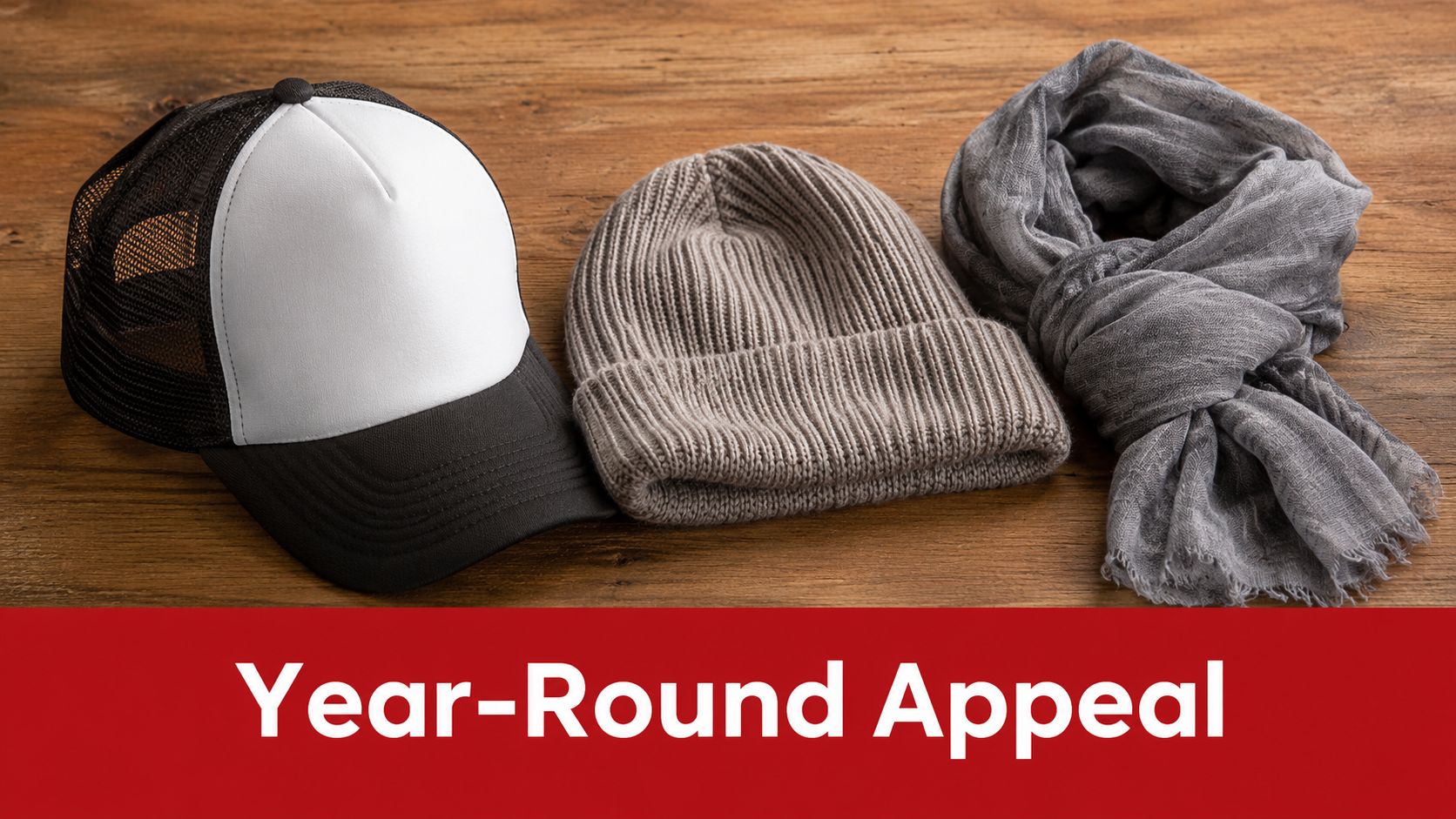
In cooler months, wearers can pair a mesh trucker hat with a jacket, flannel, scarf, or knit layer. The cap doesn't need to provide warmth if it supplies the visual finish for an outfit. That makes it particularly useful for heritage brands, outdoor businesses, and nostalgia-led merchandise.
Decoration can also shift the season:
- Spring and summer: Use bright color blocking, lightweight fronts, and simple embroidered marks for events and outdoor teams.
- Fall: Choose earth tones, rope details, leather-look patches, or heritage graphics that support a workwear story.
- Winter: Use darker palettes, premium-feeling fronts, and designs that pair with jackets and cold-weather accessories.
- January launches: Position the cap as part of a fresh collection, fitness reset, travel line, or new-year brand drop rather than a hot-weather product.
Inventory planning should follow your audience's behavior. An agricultural supplier may need year-round staff headwear. A festival organizer may order seasonally. A clothing brand may use the same silhouette across multiple drops, changing the front decoration and palette rather than abandoning the category after summer.
My advice is to keep the core shape consistent when you reorder. Change decoration, color, or material cues to create seasonal variation, but avoid introducing an entirely different cap unless your customers have a clear reason to switch.
Ordering Custom Mesh Trucker Hats in Bulk
Custom ordering gets easier when you separate the process into three decisions: the blank, the decoration method, and the approval workflow. Most costly mistakes happen when buyers choose a cap before checking whether the logo suits its front panel.
Start with the artwork. A clean vector file, such as an AI, EPS, or editable PDF, gives the decorator a better basis for digitizing embroidery or preparing a patch. Raster artwork can work for printing, but low-resolution files often create avoidable delays during proofing.
Select the decoration method
Flat embroidery is the default for strong, uncomplicated marks. It works best when lettering is legible, shapes aren't excessively fine, and the design stays within the stable front-panel area.
3D puff embroidery adds raised texture and suits bold initials, athletic marks, and simple typography. It needs enough open space and a structured front, so don't use it for tiny details or intricate linework.
Patches are the safer choice for complex artwork, multiple colors, or a retail look that benefits from a defined border. Embroidered, woven, leather-style, and PVC patches each create a different visual message and durability profile.
Printing can reproduce full-color artwork and photographic detail more effectively than thread. Confirm that the front material accepts the selected print process, especially when the cap uses foam.
The minimum order can start at six pieces per logo through Dirt Cheap Headwear's custom program, as stated in the publisher information. That makes a small test run practical before you commit to a larger assortment.
Approve before production
Request a digital proof showing placement, dimensions, thread or patch colors, and the relationship between the logo and any center seam. If the design crosses a 6-panel seam, move it, simplify it, or choose a 5-panel front instead.
For a deeper purchasing checklist, review this guidance on buying bulk blank trucker hats that stitch well. It's especially useful when you're comparing in-house embroidery with a separate decorator.
A physical sample is worth requesting when color matching, puff height, patch texture, or logo scale matters. Keep the approved proof with your reorder records, and note the exact blank style, color, decoration method, thread colors, and placement. That documentation prevents a successful first run from turning into an inconsistent reorder.
Premium Features and Market Trends to Watch
Premium mesh trucker hats are becoming more than basic foam fronts with open backs. Trend summaries point to demand for premium materials, rope details, performance features, and sustainable fabrics, while a market outlook projects growth from USD 1.34 billion in 2026 to USD 2.18 billion by 2034 for mesh-back trucker hats. Treat that figure as a projection, and review the mesh-back trucker hat market outlook before using it in a business forecast.
The important question isn't whether a feature sounds premium. Ask what it changes for the wearer, the decorator, and the person paying for the finished cap.
Features that can justify more
A better front fabric can improve hand feel, shape retention, and retail presentation. A stronger closure can make the cap feel more dependable during repeated wear. Performance mesh may improve comfort for active users, but confirm whether the front still provides enough support for your intended decoration.
Sustainable fabric claims require documentation. Ask about certifications, recycled content, and supply-chain records rather than accepting a vague “eco” label. A certified option may strengthen your product story, but it can also affect color availability, minimums, and price.
Rope trim and premium patches often function as style cues. They can make a basic silhouette feel more like a finished retail product, but they won't automatically improve ventilation, fit, or durability. Pay for them when they support your brand position, not because they appear in trend photos.
A practical premium-order checklist
- Material: Verify what changed from the standard cap, including the front fabric and mesh composition.
- Decoration: Confirm that the premium surface supports your chosen embroidery, patch, or print method.
- Fit: Test the crown depth, bill shape, and closure with real wearers.
- Durability: Inspect seams, mesh tension, sweatband construction, and closure strength.
- Documentation: Request evidence for sustainability or certification claims.
- Merchandising: Decide whether the upgrade supports a higher retail price or adds visual detail.
For staff uniforms and broad promotions, standard construction may be the sensible choice. For a clothing label, collaboration, or limited merch release, premium materials and carefully selected decoration can make the cap feel deliberate rather than generic.
Dirt Cheap Headwear supplies blank and decorated trucker hats, including mesh-backed options, with in-house embroidery, custom patches, printing, low minimums, and wholesale ordering support. Visit Dirt Cheap Headwear to compare styles, prepare a bulk order, and request decoration that matches your logo and use case.