
Printing and Embroidery for Hats: A 2026 Comparison
You've got the logo. You've picked the hat. Maybe it's a Richardson trucker for your crew, a dad hat for brand merch, or a stack of team caps that need to look clean by next week. Then a key question arises. Should this be printed or embroidered?
That choice changes how the hat looks, how long the decoration lasts, how small your text can be, and how much trouble the front seam is going to cause. On shirts, the answer can be simple. On hats, it usually isn't. Headwear has shape, structure, buckram, curved panels, crown height, and seams sitting exactly where people want to place a logo.
Printing and embroidery both go back centuries. Printing reaches at least to woodblock printing in China by the 7th century, and Gutenberg's press changed mass communication in the 1450s. Embroidery also has a long history as a skilled textile craft, with documented examples from the 1400s in the Victoria and Albert Museum's collection of needlework samplers, as noted in this history of embroidery and samplers. That history still shows up in modern custom hats. Printing is the graphic-first option. Embroidery is the texture-first option.
If you're still deciding what the hat should look like before you pick the decoration method, this roundup of cap design ideas is useful because it helps you think through placement, style, and what works on headwear. Once the concept is clearer, you can design your own baseball caps with fewer surprises.
Your Custom Hat Idea Starts Here
A lot of customers start in the same place. They have a blank cap in one hand and a logo file on their phone. They know the hat matters because people will wear it, but they don't know whether the artwork should be stitched, pressed, or printed another way.
That hesitation makes sense. A logo that looks sharp on a website header can fall apart on the front of a low-profile cap. Tiny text gets crowded. Thin outlines disappear. A wide badge design can run into the center seam and suddenly look crooked even when the file itself is fine.
Here's the simple version:
| Decoration method | Best use on hats | What it does well | Where it struggles |
|---|---|---|---|
| Embroidery | Logos, emblems, team marks, front and side placements | Texture, durability, premium feel | Tiny text, gradients, photo-like detail |
| Screen printing | Larger runs, bold graphics, flatter applications | Strong color, efficient volume production | Setup burden on short runs, tricky on structured fronts |
| Heat transfer | Small runs, simple graphics, names, numbers | Flexible ordering, useful for quick projects | Can be limited by seams, curves, and placement area |
| Digital heat transfer | Full-color logos, more detailed art on lower quantities | Better for complex color and graphic detail | Still affected by hat shape and surface irregularities |
The mistake is thinking this is only a production decision. It's really a design and use-case decision. If the hat needs to feel polished and hold up through regular wear, embroidery usually enters the conversation fast. If the design depends on color transitions, soft edges, or artwork that behaves more like a print than a badge, printing methods make more sense.
Clients typically aren't looking for a lengthy theory lesson. They need a clean answer for their hat, their logo, their quantity, and their budget. That's where the trade-offs start to matter.
The Enduring Appeal of Embroidery
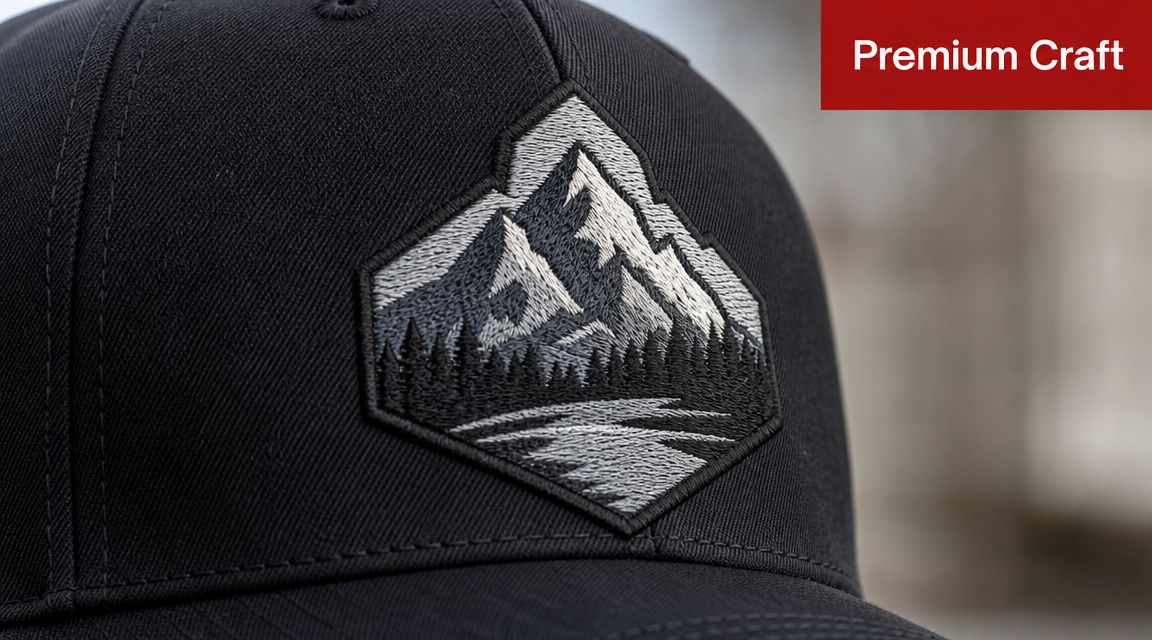
Embroidery remains the default choice for a lot of hat projects because it fits what headwear does well. Hats already have structure and shape. Stitching works with that physical presence instead of fighting it. A stitched logo sits on the cap like part of the product, not just something added to the surface.
For logo-heavy items like hats and uniforms, embroidery is favored when durability and perceived quality matter most. The thread is mechanically anchored into the fabric, which gives it strong resistance to wear and repeated washing, and it works especially well on thicker goods like hats, polos, jackets, and workwear, according to this comparison of screen printing vs. embroidery for apparel decoration.
What digitizing actually means
Customers hear “digitizing” and sometimes think it means converting a PNG into some magic embroidery file with one click. That's not how it works. Digitizing is the process of turning artwork into a stitch map. It tells the machine what stitch type to use, where the stitches run, what order they sew in, and how the design should behave on fabric.
That matters on hats more than people realize. A flat chest logo and a front-of-cap logo don't always digitize the same way, even if the artwork is identical. The hat's structure changes how the stitches pull and how the design reads from a distance.
If you want the deeper process spelled out before submitting art, this guide on how to digitize a logo for embroidery helps set expectations.
Practical rule: If your logo is simple, bold, and built around clean shapes, embroidery usually makes it look more established.
Why embroidery feels premium on hats
The premium look isn't marketing fluff. It comes from physical depth. You can feel embroidery with your hand. Light catches thread differently than ink. On a structured trucker or snapback, that raised texture gives even a straightforward one-color logo more presence.
That's why embroidery is such a strong fit for:
- Company uniforms: It gives polos and hats a consistent, professional identity.
- Team headwear: Mascots, initials, and athletic marks usually read well in thread.
- Brand merch: Small front logos and side hits often look stronger stitched than printed.
- Workwear: Repeated use is less of a problem when the design is anchored into the material.
A lot of people who like craft-based design also respond to stitched decoration for that reason. If you want a consumer-facing example of why stitched visuals have staying power, this piece on discover stamped kit appeal shows how tactile, thread-based design keeps drawing people in across very different products.
Where embroidery stops working
Embroidery has limits, and ignoring them is how you end up with bad proofs.
It isn't the right choice for:
- Photographic artwork
- Soft gradients
- Ultra-small copy
- Very thin lines that need crisp separation
- Large front designs that cover too much of the hat
As designs get larger or more intricate, stitch count, digitizing complexity, and machine time all climb. That's why embroidery is usually the efficient choice for small-to-medium logo placements, not full-panel graphics.
A quick look at the process helps:
If the logo's job is to look durable, polished, and wearable for a long time, embroidery is hard to beat on hats. If the artwork needs more image detail than thread can reproduce, don't force it.
Exploring Printing Methods for Headwear
Printing on hats is not one thing. Customers often say “print” as if every printed hat uses the same process. In practice, the method matters because hats aren't flat tees. The front panel may be structured, the crown may be curved, and the available decoration zone may be smaller than the art file suggests.
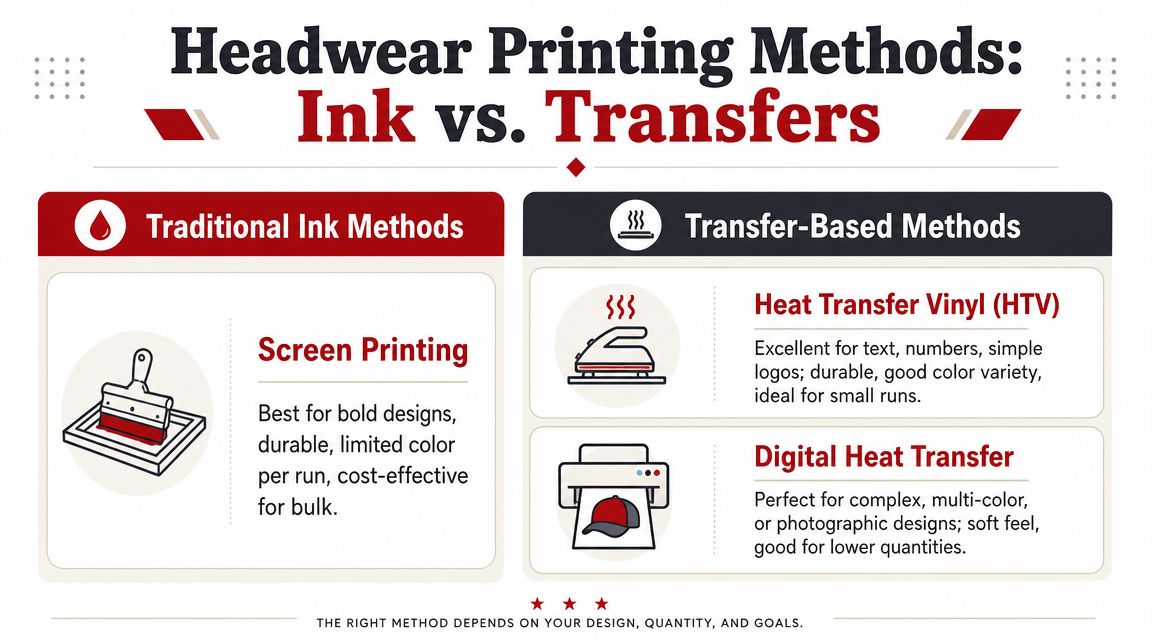
Screen printing on hats
Screen printing is still the benchmark for large production runs because the unit economics improve with volume and the method delivers strong color opacity on fabric. Industry guidance repeatedly describes it as the more cost-effective choice for bulk orders, especially when artwork uses large solids or bold spot colors, in this overview of t-shirt print vs. embroidery.
That said, hats change the conversation. Traditional screen printing is easier when the application area is relatively cooperative. Think flatter surfaces, smoother placements, or patch-based workflows. A heavily structured cap front with a pronounced seam is a different animal.
Where screen printing fits on headwear
- Bold logos: Clean spot-color art reproduces well.
- Larger quantity orders: Setup makes more sense when spread across more pieces.
- Patch applications: Printing onto a patch can sometimes solve surface issues.
- Promotional projects: If the goal is visibility over texture, this route can work well.
Heat transfer and digital transfer options
For smaller hat orders, transfer-based methods are often more realistic than traditional screen printing. They reduce setup hassle and make it easier to handle design changes, names, event-specific graphics, or shorter-run projects.
Heat transfer vinyl works well for simple jobs. Names, numbers, block text, and straightforward marks are common examples. Digital heat transfers open the door to more color and more complex graphics, especially when the art wouldn't translate cleanly into thread.
Printed headwear works best when the design respects the hat's surface instead of pretending it's a flat poster.
That's the key. A transfer can look sharp on the right panel and disappointing on the wrong one. Material matters too. A foam trucker front behaves differently than brushed cotton twill. A slick performance cap can behave differently than washed chino.
Why some print methods show up less on hats
Some customers ask about direct-to-garment because they've seen it used on shirts. It's far less common on structured hats because the machine and the product aren't naturally compatible in the same way. Hat decoration usually leans toward methods that can handle contour, limited space, and more controlled placement.
If you want a broader overview of processes used across custom apparel, this page on screen printing methods gives useful context. But for hats specifically, the practical shortlist tends to be screen printing where the setup makes sense, HTV for simpler short-run work, and digital transfers for more graphic-heavy small orders.
Choosing the right print route
Use this quick filter:
| Printing method | Best hat use | Design sweet spot | Main caution |
|---|---|---|---|
| Screen printing | Bigger runs | Bold shapes and strong color blocks | Setup can be inefficient for small orders |
| HTV | Small orders | Text, numbers, simple logos | Less forgiving near seams and heavy curves |
| Digital heat transfer | Lower quantities with color complexity | Multi-color art and graphic logos | Surface shape still affects final look |
Printing gives you options embroidery can't. Just don't assume that because a graphic looks great on a screen, it will behave on a curved cap front without adjustment.
The Headwear Challenge Curvature and Seams
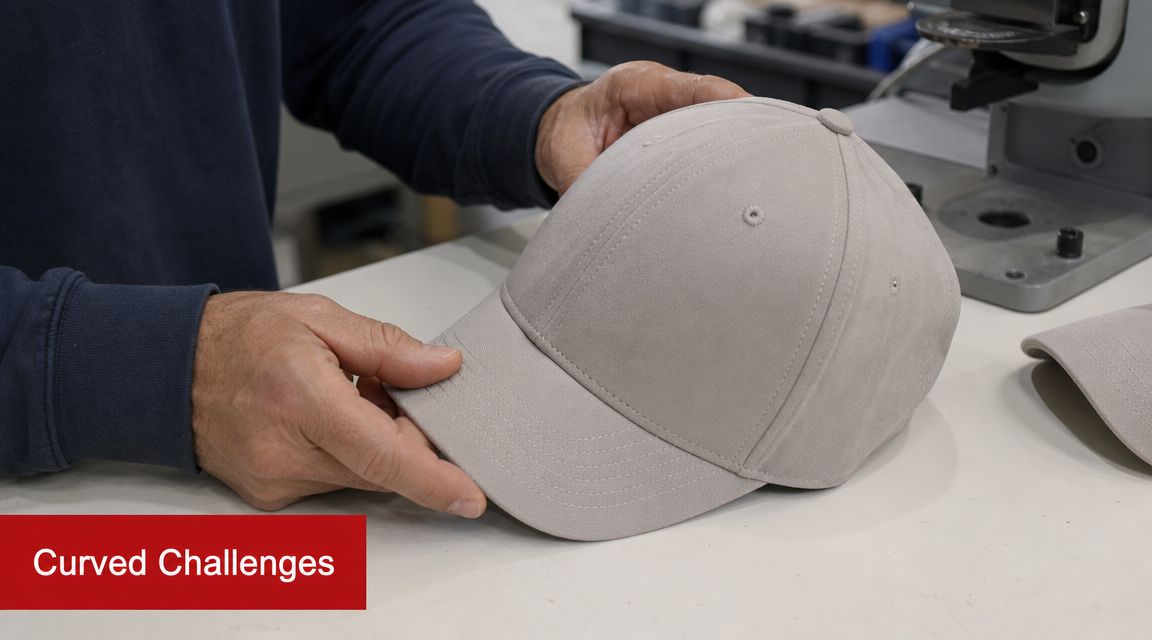
The biggest mistake in printing and embroidery for hats is treating a cap like a flat canvas. It isn't. The front panel curves. The crown changes the viewing angle. The center seam can run right through the strongest part of the design.
That physical shape changes what the customer sees. Independent embroidery guidance notes that viewing angle and curvature can materially change how embroidery appears, which is a big deal on hats where low-profile crowns, curved fronts, and seams can hurt legibility for small text and thin lines, as discussed in this article about embroidery and angle of viewing.
What goes wrong on curved hats
A logo can be technically centered and still look off. That happens when the hat's shape bends the eye line.
Common failure points include:
- Thin horizontal text: It may look stretched or slightly uneven across a curved panel.
- Tiny subtext under a main logo: It often loses readability first.
- Artwork crossing the center seam: Stitches can split visually, and prints can struggle to sit cleanly over the ridge.
- Wide badge designs: The edges may wrap away from the viewer, making the center feel crowded and the sides harder to read.
What usually works better
Simple designs win on hats because the product itself adds complexity.
Use these habits before you submit art:
- Shorten the message: A compact logo generally reads better than a long slogan on the front.
- Thicken fine elements: Hairline strokes rarely improve once applied to a curved surface.
- Respect seam placement: If the main visual feature lands right on the seam, expect compromises.
- Match the decoration to the panel: A soft unstructured dad hat and a high-crown snapback don't present the art the same way.
Small details fail on hats faster than they fail on shirts.
One useful adjustment is changing placement instead of forcing the front. A side logo, rear hit, patch, or simplified front mark can save a design that would otherwise fight the hat.
The decision buyers should make first
Don't ask, “Which looks cooler, printing or embroidery?” Ask, “What will stay readable on this specific hat shape?” That's the question that prevents proof revisions and rework.
If your design depends on tiny typography, layered outlines, or edge-to-edge width, the problem usually isn't the decorator. It's the geometry.
Comparing Costs Minimums and Turnaround Times
Cost questions usually sound simple, but hat decoration pricing comes from different moving parts depending on the method. A customer wants to know the final price. The shop has to look at setup, art prep, run size, placement, and production time.
For small runs, this choice is increasingly about workflow and waste, not just looks. Industry discussion around embroidery quality and production points to setup, digitizing, and machine tuning as central factors, while small orders in the 6 to 50 hats range often come down to whether lower minimums and faster turnaround matter more than unit decoration cost, as discussed in this industry webinar on embroidery quality and production workflow.
Decoration method cost at a glance
| Method | Best For (Qty) | Setup Cost | Per-Piece Cost | Detail Level |
|---|---|---|---|---|
| Embroidery | Small to medium orders | Usually includes digitizing or stitch setup | Often steadier on logo placements | Good for simple to moderately detailed logos |
| Screen printing | Larger runs | Higher setup because screens must be prepared | Usually improves as quantity grows | Strong for bold graphic detail |
| Heat transfer | Short runs and quick-change orders | Lower setup | Often higher per piece than bulk screen printing | Good for simple to complex, depending on transfer type |
| Digital heat transfer | Smaller quantities with full color | Lower setup than screen printing | Can stay practical on short runs | Best of the print methods for complex color on small runs |
What drives embroidery pricing
Embroidery usually has a one-time art preparation step. That's the digitizing discussed earlier. After that, cost often rises with complexity because more stitches and more machine time mean more labor on the production side.
For hats, that can be a good trade if:
- The logo is reused on reorders
- The design stays compact
- The buyer wants a premium finish
- The order isn't large enough for screen setup to make more sense
Reorders often favor methods that don't force you to rebuild the job from scratch every time.
What drives printing pricing
Printing tends to split into two cost behaviors. Screen printing has more setup burden up front, but rewards volume. Transfer-based methods usually have lower barriers for smaller jobs, especially when artwork changes often or the order is time-sensitive.
That's why the “cheapest” method depends on the order:
- A small startup launch may prefer lower setup and faster movement.
- A team reordering the same logo may like embroidery's consistency.
- A big promo order may justify screen setup if the art and quantity support it.
Dirt Cheap Headwear offers in-house embroidery with low minimums starting at six pieces per logo, which fits the kind of small business, team, and test-run orders that often don't line up well with bulk-first decoration models.
Turnaround reality
Fast turnaround doesn't come from the decoration method alone. It comes from clean art, available stock, realistic placement, and a design that suits the hat. The smoothest jobs are usually the ones where the artwork already matches the process.
If the logo needs major cleanup, tiny text has to be rebuilt, or the placement fights the cap structure, production slows down no matter which method you choose.
Making the Right Choice for Your Project
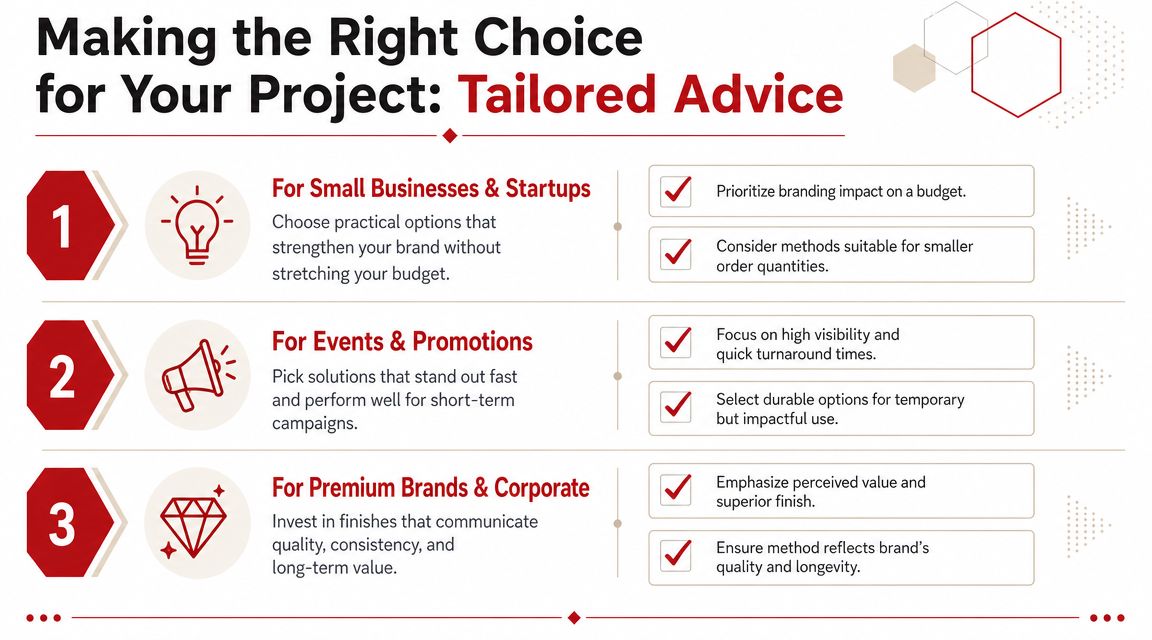
The right answer depends less on theory and more on what the hat has to do. Different buyers care about different outcomes. A brewery merch drop, a landscaping crew uniform, and a one-weekend event order should not all be decorated the same way.
For small businesses and startups
If you're ordering a modest batch and want the hats to help your brand look established, embroidery is usually the first choice. It gives a compact front logo more authority, and it tends to suit the kind of marks startups use on headwear.
A strong backup option is digital transfer if your logo depends on multiple colors or finer graphic detail that thread can't handle.
Best fit:
- Branded staff hats
- Founder merch
- Test runs for retail
- Company logo caps with simple art
For sports teams and leagues
Teams usually need hats that hold up, travel well, and still look good after repeated wear. That makes embroidery a natural fit for mascots, initials, league names, and side hits.
If you need player-specific variation, event wording, or short-run add-ons, transfer-based methods can help with flexibility.
Use embroidery when:
- The logo is bold
- The front panel is structured
- The design needs that classic athletic look
For bulk brand orders
Large quantity projects can shift the math. If the design is graphic-heavy, built around bold spot colors, and better suited to ink than thread, screen printing becomes worth considering. This is especially true when the artwork is more visual than emblematic.
Still, don't assume bulk means print by default. A simple logo on a large cap run can still make sense in embroidery if the brand wants a stitched finish and the design stays within embroidery-friendly limits.
Bulk volume changes pricing logic. It doesn't change what your artwork can physically do on a hat.
For one-time events and promotions
Event hats are often deadline-driven. If the artwork is simple and the quantity is small to medium, transfers can be practical because they reduce setup friction. If the event wants a more durable keepsake feel, embroidery may be the better call.
Think about what happens after the event:
- If the hat is basically a giveaway, graphic visibility may matter most.
- If the hat is merch people might keep wearing, texture and finish matter more.
A quick decision guide
| Your situation | Primary choice | Secondary choice | Why |
|---|---|---|---|
| Small business merch | Embroidery | Digital transfer | Strong branding, compact logos, better perceived quality |
| Sports team hats | Embroidery | Heat transfer | Durable and classic, with flexibility for custom add-ons |
| Big promo order | Screen printing | Embroidery | Volume-friendly if the art is graphic and bold |
| Event or short-run launch | Heat transfer or digital transfer | Embroidery | Easier for smaller quantities and quicker changes |
A lot of bad hat orders happen because buyers pick the method they like in theory, not the method that suits the logo, the cap, and the order size. The good decision is the one that makes the final hat look intentional.
How to Prepare Your Artwork for Perfect Hats
Good production starts with good files. Most order delays come from artwork problems long before the machine gets involved. If the logo is clean and the design matches the hat, everything moves faster.
For embroidery files
Embroidery likes clarity.
Send artwork that has:
- Clean shapes: Strong edges digitize better than fuzzy screenshots.
- Readable text: If the text is tiny on your screen, it's probably too small for a cap front.
- Flat color areas: Gradients and soft shading usually need to be simplified.
- Vector art when possible: AI, EPS, or PDF files make rebuilding and cleanup easier.
For printed hat graphics
Printing gives you more flexibility with color and detail, but the file still needs to be usable.
Make sure you provide:
- High-resolution artwork: Low-quality images create jagged edges and muddy results.
- Transparent background if needed: This matters for logos that aren't rectangular.
- Clear sizing intent: A graphic designed for a shirt front may need to be reworked for a hat.
- Placement awareness: Keep important details away from spots likely to hit seams or hard curves.
Two habits that save time
First, send the original logo file, not a cropped social media screenshot. Second, tell the decorator what hat style you're ordering. A design that behaves on a foam trucker may need adjustment on an unstructured dad hat.
If you're unsure, simplify first. Hats reward bold, readable art more than complicated art.
If you're ready to turn a logo into wearable headwear, Dirt Cheap Headwear offers blank hats and custom decoration options for small runs, team orders, and larger programs. The easiest way to avoid surprises is to start with the hat style, the quantity, and the artwork together, then choose the decoration method that fits the project.
Pingback: Structured vs Unstructured Hat Meaning | Dirt Cheap Headwear
Pingback: Top Sites Like Redbubble for Artists & Entrepreneurs
Pingback: Perforated Performance Hats Wholesale Buying Guide | Dirt Cheap Headwear