
Hat Fabric Material Guide for Wholesale Buyers
You've spent weeks choosing a logo, approving colors, and settling on a six-panel silhouette. Then the samples arrive. The crown feels flimsy, the embroidery puckers, and the fabric changes slightly between the first order and the reorder. The design wasn't the problem. The hat fabric material was.
Wholesale buyers often compare shape, color, and unit price first. That's backwards. Fabric controls how the hat feels in real weather, whether decoration looks clean, and whether your supplier can reproduce the same product when you need more inventory. This guide gives you a practical way to match material to hat style, climate, decoration method, and bulk sourcing needs.
Why Hat Fabric Material Matters More Than Style Alone
A stylish dad hat can still fail as a wholesale product if the cotton collapses, the crown loses shape, or the surface cannot hold the logo cleanly. A structured snapback may look premium in a catalog yet feel hot and rigid outdoors. The silhouette attracts attention. Hat Fabric Material determines comfort, decoration quality, and whether customers wear the product repeatedly.
Set the material against the selling environment before approving the style. An indoor promotional cap has different requirements from a performance hat for runners or tournament staff. Humid markets call for airflow and quicker moisture release. Cooler markets may reward greater weight, warmth, and shape retention. Cotton canvas suits a casual bucket hat or workwear-inspired cap, while lightweight nylon or polyester fits products that need quick drying and some weather resistance.
Practical rule: Choose the fabric before you finalize the decoration method. Material affects nearly every production decision that follows.
Fabric choice also controls branding results. Dense cotton twill gives embroidery a stable foundation, making it a reliable option for dad hats and other low-profile caps. Lightweight synthetics can show fine detail, but stretch, slick finishes, or loose construction may require different backing and machine settings. Knitted acrylic beanies need separate handling because the surface moves and stitches can distort the knit.
For small businesses, the cheapest blank is rarely the lowest-cost option. Failed decoration, customer complaints, and replacement orders can erase the initial saving. Shrinkage, color variation, or shape loss also makes the same logo look inconsistent across batches.
Reorder reliability deserves the same attention as the first sample. Ask the supplier to identify the fiber blend, fabric weight, construction, and finish. “Performance fabric” is not a usable specification. It might describe a breathable sports cap, a slick promotional hat, or a lightweight material that cannot support the planned decoration. Request a fabric swatch and written specifications before placing a bulk order, then compare the approved sample with the production lot.
Use four questions to screen every hat fabric material:
- How will it wear? Check heat, sweat, rain, washing, and daily handling.
- How will it decorate? Match weave and stability to embroidery, print, transfer, or patches.
- How will it fit the style? A soft dad hat requires a different hand and structure from a rigid snapback, trucker, or beanie.
- Can you reorder it? Confirm specifications, color consistency, and continuing availability before committing.
The right material connects comfort, decoration performance, and dependable replenishment. Approve the style only after those three requirements work together.
Breaking Down the Major Hat Fabric Types
A 100% cotton dad hat and a polyester performance cap may share the same logo, but they will not handle sweat, weather, or decoration the same way. For wholesale buying, compare hat fabric material by fiber, weave, weight, finish, and crown construction. Cotton twill, polyester, nylon, wool, acrylic, and blended fabrics each solve a different sourcing problem.
Global fiber production reached 124 million tonnes in 2023, up from 116 million tonnes in 2022. Polyester represented 57% of total fiber production, while cotton declined from 25.1 million tonnes to 24.4 million tonnes, according to Textile Exchange's Materials Market Report. That supply mix helps explain why polyester headwear is widely available, while cotton remains a major choice for comfort-led products.
Cotton
Cotton is the safest starting point for casual headwear. Brushed cotton has a soft, broken-in hand that suits unstructured dad hats and lifestyle caps. Cotton twill provides more body and a cleaner embroidery surface. Cotton canvas is denser and tougher, making it a good fit for workwear-inspired caps and bucket hats.
Moisture is cotton's main weakness. Cotton is hydrophilic and can absorb about 25 times its weight in water. Cotton-heavy hats generally remain wet longer than synthetic alternatives, as explained in this B2B moisture-wicking fabric guide. Choose it for relaxed daily wear, not for products aimed at high-sweat activity or humid outdoor use.
Cotton twill around 260 to 300 gsm gives structured caps enough stability and supports embroidery well. Cotton canvas around 300 to 400 gsm creates a denser, more rugged build, based on the specifications summarized by A Custom Hat. For a broader explanation of how weave influences hand-feel and airflow, see percale cotton sheet benefits. Percale itself is not a typical cap fabric, but the construction comparison is useful.
Polyester
Polyester is the practical choice for performance headwear. It is hydrophobic, with moisture regain of about 0.4%, so it moves sweat along the fiber surface instead of absorbing it. Polyester fabrics are reported to dry in roughly 2 to 3 hours, compared with cotton's 6 to 8 or more hours, according to the moisture-management comparison in the B2B moisture-wicking fabric guide.
Polyester caps commonly fall around 150 to 220 gsm, making them lighter and faster to dry than heavier cotton constructions, according to A Custom Hat's material guide. They work well for performance caps, outdoor promotions, five-panels, and lightweight trucker bodies. Still, “performance polyester” is too vague for a purchase order. Ask for the actual weight, stretch, finish, mesh construction, and decoration test results.
Use this performance hat fabric guide for bulk buyers to compare polyester, nylon, spandex, and mesh options before approving a bulk specification. For small brands, the useful question is not whether polyester sounds technical. It is whether the chosen construction feels right, holds color, dries quickly, and supports the planned logo.
Nylon
Nylon is lighter and more weather-oriented than most cotton options. Nylon around 100 to 200 gsm is described as lightweight, water-resistant, and quick drying, which suits outdoor and sports hats, according to A Custom Hat's fabric breakdown. Ripstop nylon adds a technical appearance and works well for packable caps, travel headwear, and outdoor programs.
Its drawbacks affect both customer perception and decoration. Nylon can feel slick, and certain finishes make printing or adhesive application less predictable. It also looks less traditional than cotton, so it can clash with heritage branding or premium casual collections. Test the exact finish with the intended decoration instead of approving a nylon blank from touch alone.
Wool and acrylic
Wool supplies warmth, body, and a premium hand-feel for cold-weather hats. Merino is softer against the skin, while traditional wool felt offers structure for formal or fashion-led headwear. Use wool for winter beanies and seasonal collections. It is a poor choice for hot, sweaty applications because it retains warmth and dries slowly.
Acrylic is the budget-friendly beanie staple. It is easy to source, color-consistent, and less expensive than wool. Lower-quality acrylic can pill, feel less breathable, and retain heat. Wool usually delivers a richer hand-feel and better temperature balance. Acrylic delivers repeatable pricing, simpler care, and dependable availability for cost-sensitive programs.
Blends and recycled fibers
Poly-cotton blends balance softness and performance. They are often a strong middle choice for promotional caps because they feel more natural than pure polyester while drying faster than cotton-heavy constructions. Tri-blends can create a softer, fashion-oriented surface, but the added fiber content makes specifications and reorder control more important.
Recycled polyester, often called rPET, can support a sustainability position without giving up synthetic performance. Require documentation of composition, then check quality, color consistency, and decoration reliability. Recycled content is a specification to verify, not proof that the finished hat performs well.
| Fabric Type | Typical GSM Range | Moisture Behavior | Best Hat Styles | Embroidery Compatibility | Bulk Price Tier |
|---|---|---|---|---|---|
| Brushed cotton | Varies by construction | Soft, absorbs moisture | Dad hats, lifestyle caps | Good on stable panels | Low to mid |
| Cotton twill | 260 to 300 gsm | Absorbs and dries slowly | Structured caps, dad hats | Very good | Mid |
| Cotton canvas | 300 to 400 gsm | Absorbs, heavier when wet | Workwear caps, bucket hats | Very good, supports dense stitching | Mid to premium |
| Polyester | 150 to 220 gsm | Low absorption, dries quickly | Performance caps, five-panels | Good with proper backing | Low to mid |
| Nylon | 100 to 200 gsm | Quick drying, water resistant | Outdoor caps, sports hats | Moderate, test slick finishes | Mid |
| Wool | Varies by knit or felt | Warm, slower to dry | Beanies, winter hats | Good on stable constructions | Mid to premium |
| Acrylic | Varies by knit | Low absorbency, can retain heat | Beanies | Requires knit-specific backing | Low |
| Poly-cotton blend | Varies by blend | Balanced behavior | Trucker caps, promo hats | Good when panel is stable | Low to mid |
Use these tiers as buying guidance, not fixed prices. Suppliers price hats by construction, brand, finish, order volume, and decoration requirements as well as fiber content. Approve the fabric only after the sample matches the intended style, climate, logo method, and reorder plan.
Matching Fabrics to Hat Styles and Use Cases
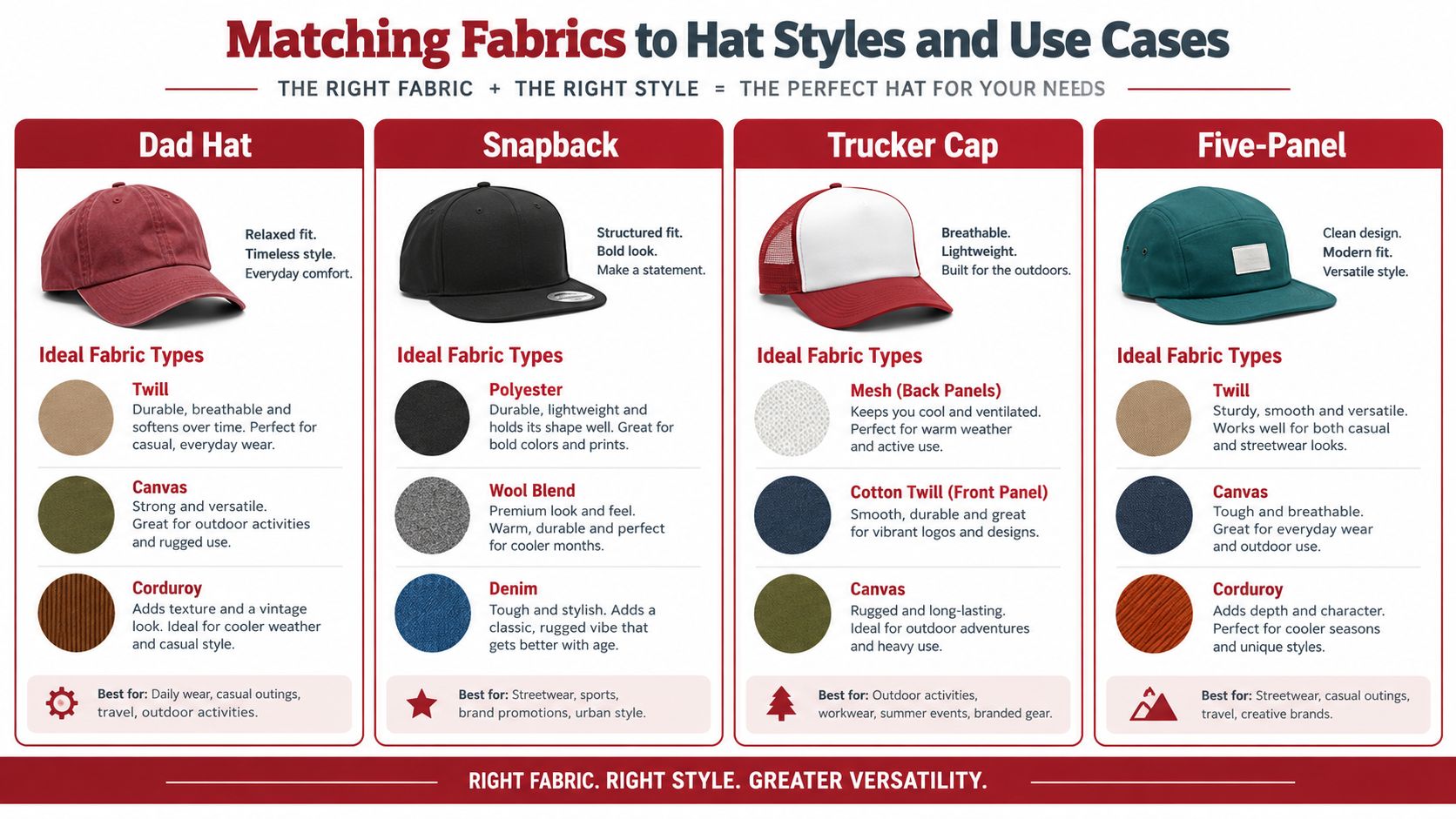
A fabric that works beautifully on a dad hat can fail on a snapback or beanie. Match the material to the crown structure, the climate, and the way customers will use the product.
Dad hats
Choose brushed cotton or medium-weight cotton twill for an unstructured dad hat. The fabric should drape without becoming limp, and the front panel needs enough stability for a small or medium embroidered logo. Cotton gives the style its relaxed, broken-in character.
For humid climates or active customers, choose a lightweight polyester or poly-cotton version instead. You'll lose some of the traditional softness, but the cap will feel less saturated after sweat and recover faster between wears.
Snapbacks
Structured snapbacks need a fabric with enough body to support the crown. Cotton twill, canvas, polyester, or a poly-wool blend are the strongest choices. Cotton twill gives a traditional streetwear feel. Polyester delivers lighter performance and more consistent color. Poly-wool blends can create a richer seasonal appearance.
Avoid selecting a very soft, loosely woven fabric because it feels premium in a hand sample. A snapback needs the front panel to hold its shape after decoration and regular handling.
Trucker caps
Trucker caps are a construction decision as much as a fabric decision. The front panel can use cotton, polyester, or a blend, while the back depends on mesh quality. Polyester mesh is the most practical general choice because it balances airflow, durability, and color availability. Nylon mesh can create a lighter, more technical product, but you should test whether it sags or feels too slick.
For hot, humid markets, use a breathable mesh with a stable front panel. For casual promotions, cotton-front polyester-mesh construction gives you a familiar look without making the entire cap heavy.
Five-panels, bucket hats, and beanies
Five-panels benefit from lightweight polyester or nylon when the product targets travel, outdoor events, or active use. These fabrics support a clean, technical appearance and keep the crown from feeling bulky. Cotton canvas works better for a heavier streetwear or workwear interpretation.
Bucket hats can use cotton twill, canvas, denim, polyester, or nylon. Pick cotton for casual softness and canvas for a more rugged profile. Pick nylon or polyester when packability, quick drying, and outdoor use matter more.
Beanies require a knit decision. Acrylic is economical and easy to reorder, while wool or wool blends offer a warmer, more premium hand-feel. For cold-weather branding, decide whether the logo belongs on a folded cuff, a woven label, or a patch. The decoration location often matters as much as the yarn.
| Use Case | Recommended Material | Why It Works | Avoid |
|---|---|---|---|
| Casual dad hat | Brushed cotton or cotton twill | Soft drape and stable embroidery base | Very thin fabric under dense logos |
| Structured streetwear snapback | Cotton twill, canvas, polyester, or poly-wool | Supports crown shape and branding | Limp fabric with weak front-panel support |
| Humid outdoor promotion | Polyester or poly-cotton with mesh | Releases moisture and improves airflow | Heavy cotton across the entire cap |
| Technical five-panel | Lightweight polyester or nylon | Light, quick drying, packable | Heavy canvas unless a rugged look is intentional |
| Workwear bucket hat | Cotton canvas | Dense, durable, structured | Very light fabric that loses shape |
| Winter beanie | Wool, wool blend, or quality acrylic | Warmth and seasonal comfort | Poor-quality knit that pills quickly |
The best choice depends on the customer, not the trend. A corporate giveaway may need low-maintenance polyester and dependable reorder availability. A premium streetwear drop may justify heavier cotton, canvas, or a textured blend because the hand-feel is part of the product identity.
How Fabric Choice Affects Embroidery and Decoration
Decoration succeeds when the fabric gives the machine or adhesive a stable surface. Weave density, fabric mass, stretch, and fiber content all affect the final result. A beautiful digitized logo can still pucker if the front panel moves under the needle.
Cotton twill is usually the easiest starting point for embroidery. Its stable woven surface supports clean stitch definition, especially when the logo uses lettering or compact shapes. Cotton canvas offers even more support, but its density can make needle penetration and thread coverage feel heavier. Lightweight polyester can also produce crisp detail, yet the supplier should confirm that the panel doesn't stretch excessively or contain a slick finish.
Match the decoration to the construction
Embroidery works best on stable woven panels and structured crowns. Use a suitable backing to control movement, and test the actual blank rather than relying on a fabric swatch. Curved panels magnify small problems, so a logo that looks fine on a flat sample can pucker on a finished cap.
Screen printing and heat transfers need their own testing. Moisture-wicking treatments, water resistance, and smooth synthetic finishes can affect ink adhesion or transfer bonding. Patches may solve some of those problems, but the patch itself still needs a reliable attachment method and enough panel support.
Acrylic beanies are different again. The knit structure stretches, so standard woven-hat embroidery settings may distort the cuff. A specialized backing, lower stitch density, or a sewn label may produce a cleaner result than forcing a dense logo directly into the knit.
Decoration rule: Approve a decorated sample, not just an undecorated blank. The finished logo is the product your customer will judge.
Decoration compatibility matrix
| Fabric Type | Embroidery | Screen Print | Heat Transfer | Common Issues |
|---|---|---|---|---|
| Brushed cotton | Good for relaxed logos | Good on smooth panels | Generally suitable | Puckering, shrinkage, uneven nap |
| Cotton twill | Excellent on stable panels | Good | Good | Density can require careful backing |
| Cotton canvas | Excellent for bold logos | Good | Good | Heavy needle penetration, bulky feel |
| Polyester | Good with proper stabilization | Test finish first | Usually suitable with testing | Shine, stretch, thread tension |
| Nylon | Moderate, sample first | Finish may resist ink | Adhesive compatibility varies | Slick surface, heat sensitivity |
| Wool | Good on stable felt or woven areas | Limited by texture | Test carefully | Texture can soften detail |
| Acrylic knit | Possible with knit-specific setup | Usually limited | Better on labels or patches | Stretch, distortion, pilling |
For a deeper style-specific reference, compare these best hats for embroidery logos before you commit to a blank.
Don't choose a fabric solely because it accepts one decoration method. Choose the material that gives you repeatable results at your expected production volume. If the decoration shop needs extra finishing, specialty backing, or repeated testing, include those costs in the product decision.
Sustainability Claims in Hat Fabrics and What They Really Mean
A wholesale buyer should treat “eco-friendly” as a starting label, not a product specification. The term may refer to the fiber, dyeing, packaging, or supplier positioning. Ask what changed, which claims are certified, and whether the finished hat still performs in its intended climate and decoration process.

Organic cotton is a specification, not a complete environmental answer
Organic cotton can strengthen a product story when the supplier documents the fiber and finishing process. It does not identify how the fabric was dyed, transported, or constructed, and it does not guarantee low shrinkage, colorfastness, or clean performance under dense embroidery.
Request certification and fiber-composition records, then test the finished hat. A certified fiber paired with unstable construction can still produce a poor wholesale item. For a natural-fiber product line, this guide to an organic cotton hat helps frame the decision around material details rather than a broad eco-label.
Recycled polyester has real trade-offs
Recycled polyester, including rPET, reduces reliance on virgin polyester feedstock while retaining the quick-drying behavior useful in performance caps and truckers. Trade coverage, including this hat-trends overview, highlights growing interest in rPET, recycled wool, hemp blends, mushroom leather, algae-derived fabrics, and plant-based PU leather.
Do not assume a recycled blank is automatically the better product. Check hand-feel, color consistency, wash performance, supply continuity, and embroidery results. Recycled polyester can suit moisture-prone climates, but inconsistent batches create visible differences across a reorder. A sustainability message will not correct a mismatched brand line.
Hemp, bamboo, and leather alternatives need scrutiny
Hemp offers a distinctive texture and a clear natural-fiber story, making it suitable for relaxed dad hats when the hand-feel is controlled. It can feel coarse without careful blending or finishing. Bamboo also requires precise wording because many bamboo textiles are regenerated rayon rather than mechanically processed bamboo fiber.
Mushroom leather, algae-derived materials, and plant-based PU are better evaluated as trims, patches, or fashion details than assumed suitable for an entire hat. Test durability, moisture exposure, edge stability, and attachment before approving them for bulk production.
Use sustainability language only when you can explain the material and support the claim with documentation. Customers may like the story, but they will judge comfort, appearance, and wear first.
Sourcing Strategy and Fabric Consistency for Bulk Orders
A fabric decision becomes a sourcing decision as soon as you sell the same hat more than once. Your customers expect the reorder to match the original in color, weight, fit, and decoration response. That requires documented specifications, not a product name alone.

Lock the specification before negotiating price
Write down the details that define your product:
- Fiber composition: Record the exact blend rather than “cotton-rich” or “performance fabric.”
- Fabric weight: Keep the target GSM and acceptable tolerance in your purchase documentation.
- Construction: Note twill, canvas, mesh, knit, ripstop, brushed finish, or other relevant details.
- Color standard: Approve a physical swatch and keep a reference sample.
- Decoration response: Save an approved embroidered or printed sample, not only a blank.
Different dye lots can shift the appearance of a brand color. Fabric weight can also vary between manufacturers, changing the way the hat fits and how the front panel behaves under stitching.
Use a controlled approval process
Request swatches before placing a bulk order. Then approve a pre-production sample using the actual logo, thread, patch, transfer, or ink system. If the supplier changes mills, finishes, or construction, require a new approval rather than assuming the replacement is equivalent.
For growing programs, keep a small reference kit with the approved blank, decorated sample, fabric composition, color standard, and packaging requirements. That gives your team something concrete to compare when a reorder arrives.
Stockouts also deserve a contingency plan. If your main polyester cap disappears, don't substitute a different blank just because the silhouette looks similar. Identify a backup with comparable fabric weight, panel construction, color availability, and decoration behavior. Otherwise, your “same style” reorder may feel like a different product.
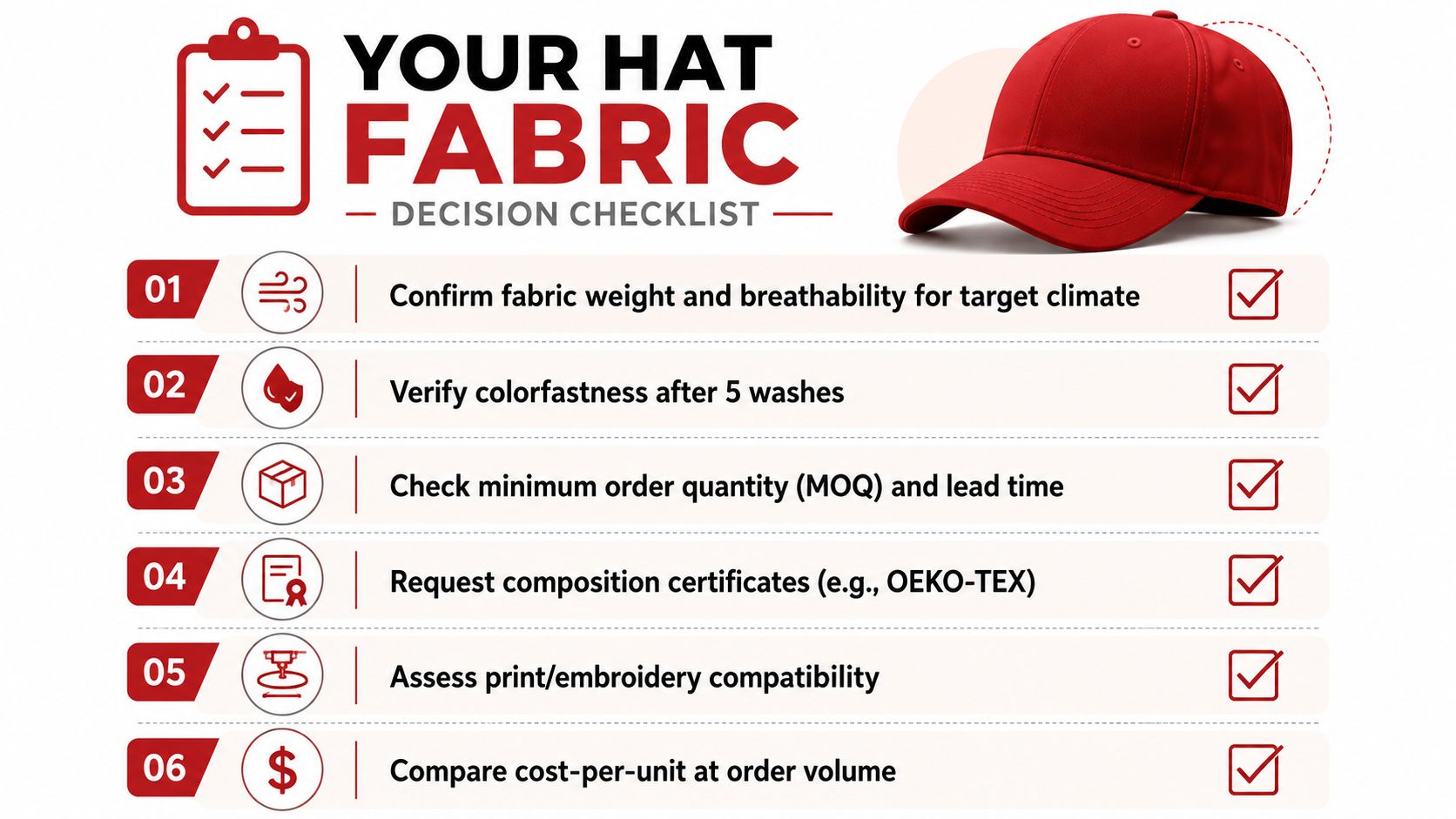
Your Hat Fabric Decision Checklist
Run these questions before approving a bulk order:
- Does the fabric match the climate? Confirm breathability, warmth, moisture behavior, and weather exposure.
- Is the weight right for the style? Check whether the GSM supports the intended crown, brim, and hand-feel.
- Has the decorated sample passed inspection? Test the actual embroidery, print, transfer, or patch on the finished blank.
- Are the specifications documented? Record composition, construction, color, weight, and finish.
- Can the supplier reproduce it? Ask about dye-lot control, reorder availability, and replacement options.
- Is the sustainability claim verifiable? Request composition records and relevant certifications instead of relying on “eco” language.
Red flags include vague fiber labels, changing GSM descriptions, missing shrinkage or colorfastness information, and samples that don't match the written specification. Resolve those issues before signing the purchase order.
Dirt Cheap Headwear supplies blank hats and decorated headwear across styles including dad hats, snapbacks, trucker caps, beanies, visors, and bucket hats, with in-house embroidery and low minimums starting at six pieces per logo. Visit Dirt Cheap Headwear to compare fabric options, request custom decoration, and source a test run before committing to a larger wholesale order.
Pingback: Wool Knit Beanies: A Practical Buyer's Guide | Dirt Cheap Headwear
Pingback: Embroidery Stitch Types Explained for Perfect Hat Logos | Dirt Cheap Headwear