
Wool Knit Beanies: A Practical Buyer’s Guide
Most advice on wool knit beanies starts with the wrong question. People ask whether wool is itchy, when the true question is whether the knit, the blend, and the finish match how the beanie will be worn, washed, and decorated.
That matters because wool has been doing this job for a long time. Knitted wool caps date back to the 15th century, with the earliest type tied to Monmouth, Wales, and surviving examples made from coarse 2-ply wool; by the 18th century, wool knit caps were common headgear for people working outdoors and in cold regions across North America, Europe, and Asia (Knit cap history). The material itself also behaves differently from the old scratchy sweaters people remember. Wool's crimp traps air, which raises thermal resistance, and review literature typically places wool's thermal conductivity around 0.038 to 0.045 W/m·K; one material analysis notes that a 200 g/m² wool fabric can provide thermal resistance of roughly 0.15 m²·K/W (wool thermal behavior review).
What decides satisfaction is more practical. A beanie can feel soft, hold shape, resist odor, and still fail because the knit is too loose for embroidery, or because the blend pills faster than the buyer expects. A wool beanie can also be a headache if the care label and use case don't match, especially for people who toss hats in gym bags or wear them every day.
So the smart move is to judge the fiber content, knit density, fit behavior, and decoration surface before you judge the word “wool.” That's what separates a hat that gets worn from one that sits in a drawer.
Why Wool Knit Beanies Deserve a Second Look
A commuter tugging on a scratchy cap before a cold walk knows the issue isn't the word “wool.” It's whether the beanie feels good after an hour, keeps its shape, and still looks clean after repeated wear. Modern knit beanies get there by pairing finer fibers with tighter stitch structures, so the surface feels smoother and the hat behaves better on head.
Wool earns its place because it does more than hold warmth. It manages moisture well, resists odor, and keeps performing when the weather shifts during the day, which is why people reach for it for commuting, outdoor work, and travel as much as for winter style.
The trade-offs matter too. Wool can pill where it rubs, it dries more slowly than many synthetics, and it usually costs more than a basic acrylic cap. Those aren't reasons to avoid it, they are the details that tell you what to check before you buy. Frequent wear calls for a better blend. Embroidery calls for the right knit gauge. Easy care depends on whether the hat matches the routine of the person wearing it.
Practical rule: judge the blend, density, and finish together, because that combination affects comfort more than the word “wool” ever will.
A product page should tell you more than “wool” and “one size.” The useful details are the fiber type, the knit structure, and whether the beanie is cuffed, slouchy, or more structured. Those choices change fit behavior and how the hat holds decoration.
For a broader breakdown of hat materials, this hat fabric material guide helps place wool next to cotton, acrylic, and blends. If you're planning a coordinated merch run, the way a decorative piece like Custom Sticker Shop decal options sits on different hat styles is a useful reminder that decoration quality starts with surface choice.
In short, wool knit beanies are easy to live with when the build matches the job.
Wool Fiber Types and Common Blends
Merino, lambswool, Shetland, acrylic, the label alone will not tell you how a beanie feels after a month of wear. Fiber finish matters more than the tag word. A well-spun lambswool blend usually feels better and holds up longer than a poorly made merino cap.
The four names buyers see most often
Merino is the softest of the common wool options. It feels closer to a fine base layer than a rugged sweater, so it suits people with sensitive skin and anyone who wears a beanie for long stretches. Lambswool sits in the middle. It has more body and a little more texture than merino, which makes it a practical everyday choice.
Shetland has a more traditional, visibly woolly character. It looks rustic, handles hard use well, and brings enough texture for heritage branding or outdoor uniforms. Acrylic is the budget synthetic. It can feel smooth and consistent, and it is easy to wash, but it does not deliver the same natural temperature behavior as wool. That is why it shows up often in simple promo beanies.
Blends handle a lot of real buying decisions. A 70/30 wool-acrylic mix usually tries to keep some of wool's warmth and hand feel while improving price and wash tolerance. A 50/50 blend pushes further toward easier care and more consistent shape, though it gives up some of wool's natural character. Some beanies also add nylon for stretch and recovery, which helps the hat bounce back after repeated wear.
Practical rule: if the beanie will touch skin all day, start with merino or a softer blend. If it is for workwear, team gear, or a more rugged look, lambswool or Shetland-style knits usually make more sense.
Common Wool Fibers and Blends in Knit Beanies
| Fiber or Blend | Hand Feel | Warmth | Typical Use |
|---|---|---|---|
| Merino | Soft, smooth, close to skin-friendly | Strong for its weight | Sensitive skin, premium retail, everyday wear |
| Lambswool | Moderately soft, lightly fuzzy | Reliable midweight warmth | Casual wear, general outdoor use |
| Shetland | Rustic, textured, visibly woolly | Solid in traditional heavy knits | Heritage looks, workwear, classic branding |
| Acrylic | Smooth, consistent, budget-friendly | Depends on knit, not fiber feel | Promo gear, simple uniforms, easy care |
| 70/30 wool-acrylic | Balanced softness and structure | Good compromise | Retail basics, branded gifts, mixed use |
| 50/50 wool-acrylic | Easier care, lower cost | Adequate for moderate cold | High-volume programs, team orders |
For a broader breakdown of hat materials, this hat fabric material guide helps place wool next to cotton, acrylic, and blends.
If you are planning a branded run, the knit surface matters for decoration too. A rustic wool cap fits a heritage identity, while a smoother knit works better with clean logo work and polished apparel systems. The same logic applies to how a decorative piece like Custom Sticker Shop decal options sits on different hat styles. Surface choice comes first, then the decoration follows.
Knit Gauge, Yarn Weight, and What Makes Them Warm
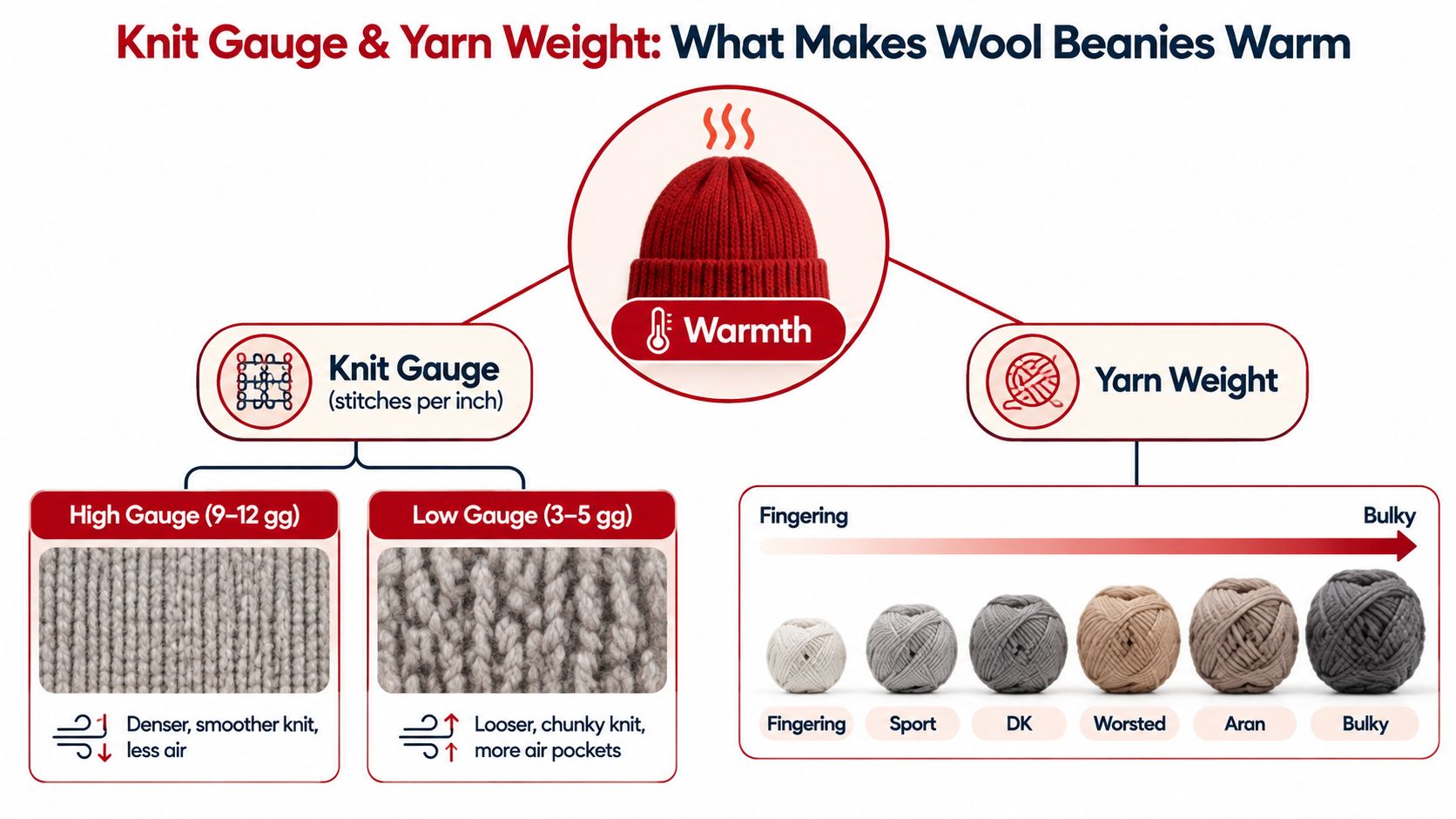
Warmth doesn't come from thickness alone. It comes from how much still air the fabric traps, and that depends on both the yarn and the stitch structure. Wool helps because its crimp creates loft and tiny trapped-air pockets, and that air is doing a lot of the insulating work, not just the fiber mass itself (wool thermal behavior review).
Gauge is about stitch density, not just visual style
Knit gauge means stitches per inch. A high-gauge knit, often around 9 to 12 gg, is dense and smooth. A low-gauge knit, often around 3 to 5 gg, is chunkier, more open, and usually has a heavier hand. The beanie's warmth changes because the stitch map changes how much air gets held in place.
Yarn weight matters too. Fine merino yarns can be knit tightly into sleek, dress-weight beanies. Thicker wool-acrylic yarns can be knit into bulkier winter caps that feel more casual and more substantial. The same fiber can behave differently depending on the twist, the tension, and how tightly the loops are packed.
If you want a simple buyer's rule, use climate and layering as the guide. Choose a denser knit when the beanie needs to sit under a hood, helmet, or jacket collar. Choose a looser knit when the beanie is meant to stand alone in deep winter and you want a softer, more relaxed look.
Dense doesn't always mean warmer in every setting, but it usually means more controlled warmth and a cleaner outer surface.
The practical difference shows up fast when you compare product photos. Tight-knit merino looks smoother and usually takes on a more refined shape. Chunky wool blends read more casual and often feel more substantial in the hand, but they can leave less room for precise logo work. That's why knit gauge matters twice, once for warmth and once for decoration.
Cuff vs Slouch Styles and How They Fit
A wool beanie can fit well and still feel wrong for the job. The shape decides whether it sits close and practical, or drapes with a looser, more casual line. That choice also changes how much room you have for embroidery, how much ear coverage you get, and how likely the hat is to stay in place through a full day.
The main shapes buyers actually choose
Cuffed fisherman beanies sit shallow and usually use a folded cuff around 1 to 2 inches deep. The front panel stays flat enough for a small logo, but the crown coverage is lighter. That makes them a good fit for a compact, modern look or a promotional cap that should not overwhelm the face.
Classic cuff beanies use a deeper fold, often around 3 inches, and that extra fold gives more ear coverage and more warmth. The cuff also creates a visible band that takes embroidery cleanly when the knit is tight enough. For workwear, school gear, or colder markets, this shape usually gives the most dependable result.
Slouch beanies trade structure for drape. The crown is longer, the tension is looser, and the hat hangs with a relaxed back section that reads more casual than utilitarian. The trade-off is straightforward, there is less usable space for embroidery, and the fabric often traps less still air than a tighter cuffed cap.
Pom beanies add a faux-fur or yarn pom to the same base shape. The pom changes the look, not the fit behavior. If the base cap is too shallow or too loose, the pom does nothing to correct that.
Beanie Styles Compared
| Style | Typical Cuff Depth | Warmth | Embroidery Surface | Best Use |
|---|---|---|---|---|
| Cuffed fisherman | 1 to 2 inches | Moderate | Small, flat front panel | Light branding, shallow fit |
| Classic cuff | Around 3 inches | Strong | Good cuff band for logos | Outdoor work, everyday wear |
| Slouch | Variable, longer crown | Moderate | Limited, curved surface | Lifestyle, streetwear |
| Pom | Depends on base style | Depends on base style | Same as base style | Resort gear, teams, gift sets |
Fit starts with head shape and use case. Taller heads often need more crown room. Buyers who want a secure, practical cap usually do better with a classic cuff. People who want a softer, fashion-forward profile usually pick slouch styles, even though the embroidery area shrinks.
For decorated programs, that is the decision that matters. A logo that looks crisp on a cuffed wool cap can disappear on a loose slouch knit. The style should support the message, not work against it.
Care, Odor, and Real-World Durability
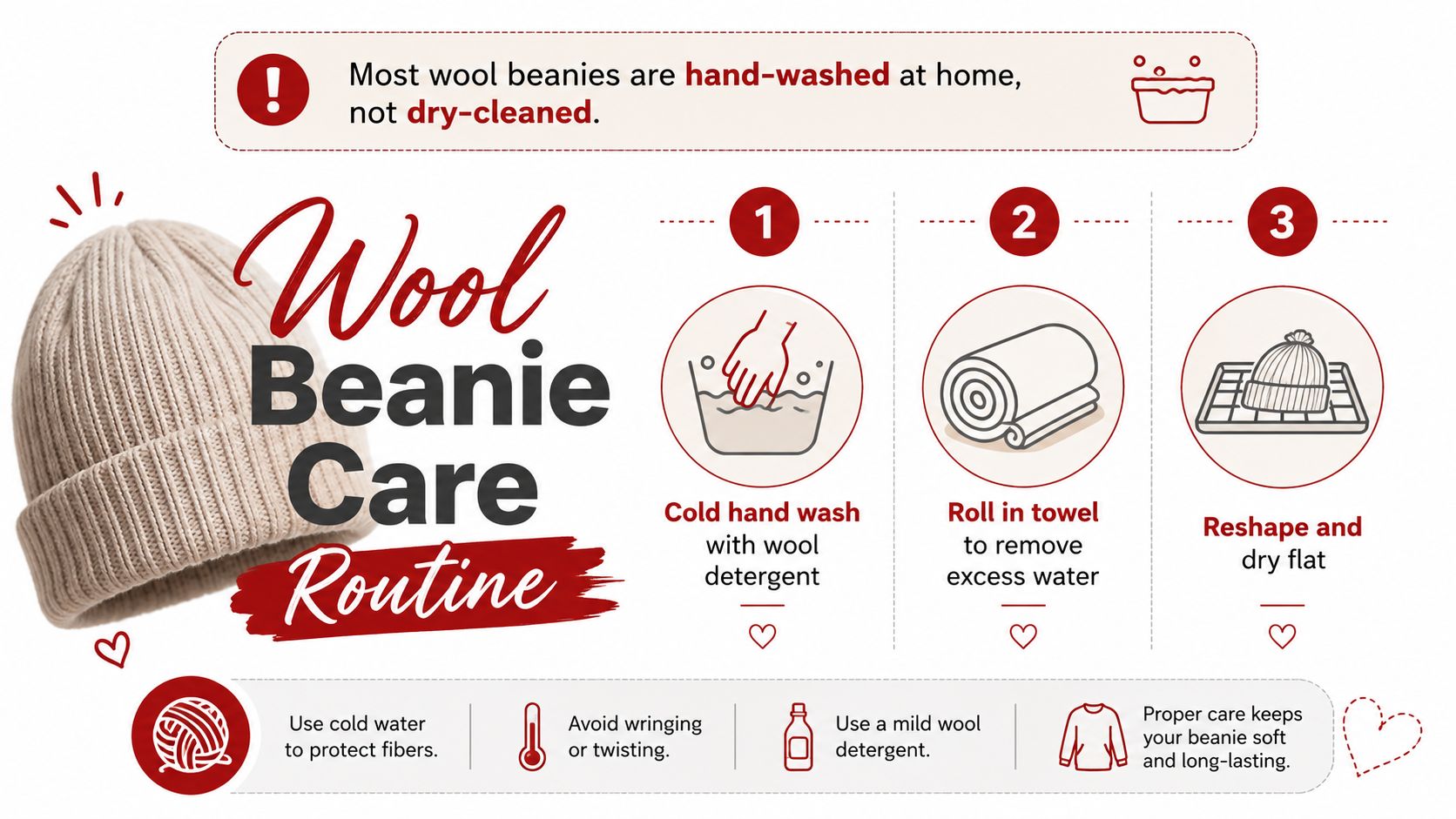
Wool beanies usually stay in a home care routine, and that works well if you treat them as knitted garments, not outerwear with hard laundering. Cold hand washing with a wool detergent, then pressing out water in a towel and drying flat on a mesh rack, protects shape far better than heat or heavy agitation.
Wool also earns its place by resisting odor better than many synthetic knits. A hat that smells tired after one wear in acrylic can often be aired overnight and worn again, which means fewer wash cycles and less stress on the fabric. That matters for travel, daily commuting, and anyone rotating the same beanie all winter.
Machine washing is a limited option. Use it only when the care label allows it, on a delicate cycle inside a mesh bag, and expect the result to be safest with acrylic-heavy blends that tolerate more movement. Pure wool and loose wool blends do better with hand washing.
Pilling shows up where the hat rubs most, often at the crown or inside a bag. A cashmere comb or fabric shaver used gently every few weeks helps keep the surface clean. Shrinkage is the bigger risk, because one hot wash can make the hat smaller fast. If the beanie will see rough travel, leave a little room in the fit.
Care rule that saves the most hats: cold wash, no softener, reshape while damp, dry flat.
For a more detailed product-care checklist, this hat cleaning tips guide covers practical cleaning habits for decorated headwear and works well for wool pieces that need shape protection.
Wool is often lower-maintenance than buyers expect because it does not need washing as often, but it asks for more care on wash day. Acrylic is easier to toss in a machine, yet it can look worn sooner if the knit pills or loses shape.
Sustainability and Sourcing Considerations
Wool has a real sustainability case, but it is not a free pass. It is renewable and biodegradable, yet the footprint still depends on how the sheep are raised and how the yarn is processed. Conventional wool can bring heavier land and water demands, and sheep farming also adds methane into the picture. Buyers should treat “natural fiber” as the starting point, not the finish line.
Recycled wool deserves attention because it reuses existing fiber and can cut water and energy use compared with virgin production. The trade-off is fiber length. Recycled yarns are often shorter, which can reduce pill resistance and make the surface age faster. That works for some seasonal merch programs, but it is a different choice from a retail beanie expected to stay clean-looking for a long time.
Certifications help separate sourcing from marketing. The Responsible Wool Standard audits animal welfare and land management, while GOTS is the stronger end-to-end certification to look for when the finished beanie needs coverage from dyes through trims. If a seller cannot explain the sourcing chain, the label alone does not tell you much.
Acrylic blends complicate the picture. They can lower cost and improve wash durability, but they also add microplastic shedding. For buyers balancing performance and impact, a 70/30 wool-acrylic blend often lands in a more practical middle ground than a heavier synthetic mix. You keep some natural fiber value without going fully into plastic.
Responsible sourcing is not about choosing the most “natural” tag. It is about matching the fiber, the mill, and the finish to the life of the hat.
For founders comparing vendors and material stories, this sourcing products guide for founders is a useful lens for tracing how a hat moves from raw material to finished merch. That matters because wool sourcing is only as credible as the chain behind it.
How Wool Knit Beanies Perform With Embroidery
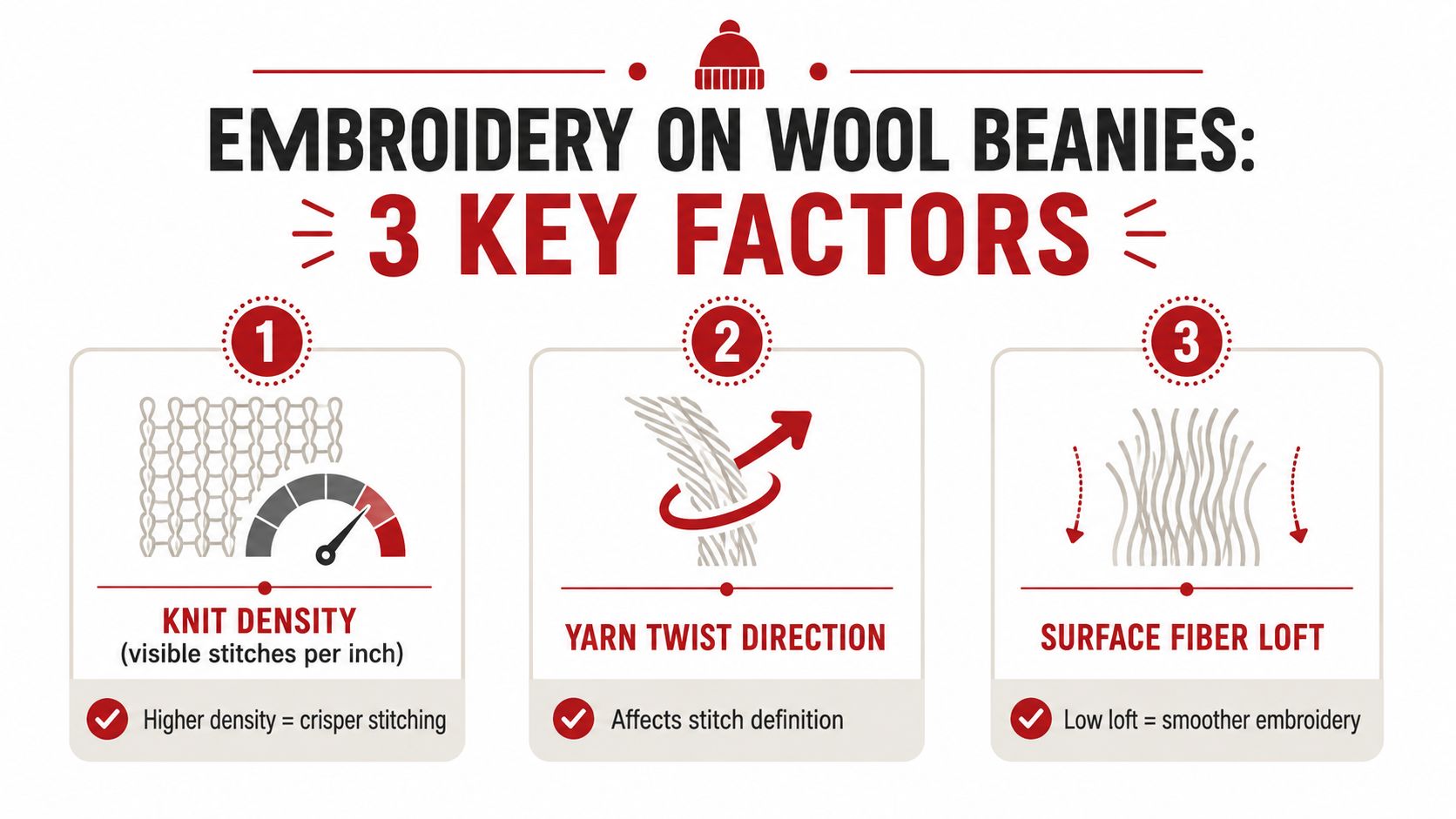
Embroidery is where a lot of wool beanies either become a smart branded piece or a failed sample. The outcome depends on three things that decorators care about, knit density, yarn twist direction, and surface fiber loft. If those three line up, small logos can look crisp. If they don't, even a good design can sink into the fabric.
What the knit does to the stitch
Dense, smoother knits hold satin stitches and small text better because the surface doesn't flex as much under thread tension. Loose, hairy, or slouchy knits swallow detail, so tiny lettering often needs simplification or a different decoration method such as raised appliqué or a patch. Wool's loft can add dimension, but it also softens edges, which is great for texture and bad for ultra-fine detail.
Acrylic behaves a little differently. It can run faster in production because it's more uniform, but it also pills around stitches if the knit quality is weak. That means the fabric can make a clean first impression and then age unevenly around the embroidery zone.
What to ask before you approve a run
- Request a digitizing sample on the exact blank. A mockup on paper won't tell you how the knit moves under thread.
- Keep lettering simple under 8 mm. Small text on wool needs discipline, not decorative extras.
- Ask for a stitch-density cap of about 2,000 to 4,000 stitches for tiny marks. That keeps the logo from overwhelming the surface.
- Specify ballpoint or stretch needles. They're less likely to snag and fight the knit.
- Confirm the backing choice. Wool has memory, and heavy stitch counts can distort it if the backing is wrong.
Good embroidery starts with the blank, not the logo file.
Chunky Shetland-style knits usually need the simplest artwork. Mid-gauge merino blends take cleaner logos and finer detail. Fine-gauge lambswool can work well for polished decoration, as long as the design doesn't chase micro text or dense shading.
If you're ordering decorated blanks, a vendor such as Dirt Cheap Headwear can handle beanies with embroidery and patch options, which makes the blank choice and the decoration method part of the same decision instead of two separate guesses.
If you're comparing wool knit beanies for a branded order, Dirt Cheap Headwear can help you sort out the blank style and the decoration method before you place the run. Visit Dirt Cheap Headwear to look at beanies, embroidery options, and low-minimum custom headwear for your next project.
Pingback: Buying Bulk Beanies Hats: A Complete Guide for 2026 | Dirt Cheap Headwear