
Cotton Twill Baseball Caps: A Buyer’s Guide for 2026
You're probably looking at a screen full of hat options right now. Cotton twill, brushed cotton, poly performance, trucker mesh, structured, unstructured, 5-panel, 6-panel. If you only need a small run for staff, a team, a launch, or an event, that many choices can slow the whole order down.
For most custom projects, cotton twill baseball caps are the safe bet because they balance decoration quality, wearability, and wholesale flexibility better than almost anything else. They're the caps that usually look good in proofs, hold up during embroidery, and still make sense when you're ordering a small test run before committing to a larger batch.
That doesn't mean they're perfect for every use. They aren't the slickest option for high-sweat training gear, and they aren't always the most premium-looking choice for fashion-first merch. But if you want a cap that works for logos, patches, uniforms, giveaways, and resale without a lot of drama, twill is usually where experienced decorators start.
Why Cotton Twill Is the Gold Standard for Custom Caps
Cotton twill became the default for a reason. It has history, but its lasting impact is due to its staying power in real production. The shift started early. In 1860, the Brooklyn Excelsiors introduced the Brooklyn-style cap, helping move baseball headwear away from straw and toward more durable fabrics. By the early 20th century, cotton twill had become a preferred material, and today it makes up 60 to 70% of blank baseball caps sold by major distributors according to this baseball cap history overview.
That matters if you're buying hats in quantities from 6 to 500. A fabric becomes the standard when it solves repeat problems for buyers and decorators. Cotton twill does that well. It's familiar, easy to source across multiple brands, and dependable across classic silhouettes like dad hats, snapbacks, and trucker hybrids.
Why buyers keep coming back to twill
For small-batch orders, the biggest advantage is predictability. You want to know the blank you approve today will still make sense if you reorder later for a staff expansion, a tournament, or a restock.
A few reasons twill stays in rotation:
- It fits a wide range of brand types. Restaurants, construction crews, school groups, apparel startups, and rec leagues can all use the same fabric without it feeling out of place.
- It decorates well. Standard embroidery, raised embroidery, and patches all tend to play nicely with twill.
- It looks familiar in a good way. The feel and wear of a cotton twill cap are already understood.
Practical rule: If you don't have a strong reason to choose another fabric, cotton twill is usually the lowest-risk place to start.
There's also a cost-control angle. When a fabric is common in wholesale, you get more blank options, more colorways, and fewer surprises when matching a budget to a style. That doesn't guarantee the cheapest hat on the shelf, but it usually means better flexibility for first runs and reorders.
Understanding the Benefits of the Twill Weave
Cotton twill isn't just “cotton.” The weave is the whole story. If you've ever looked closely at denim, you already know what twill looks like. It has a subtle diagonal line running through the fabric, and that structure changes how the cap wears and how it decorates.
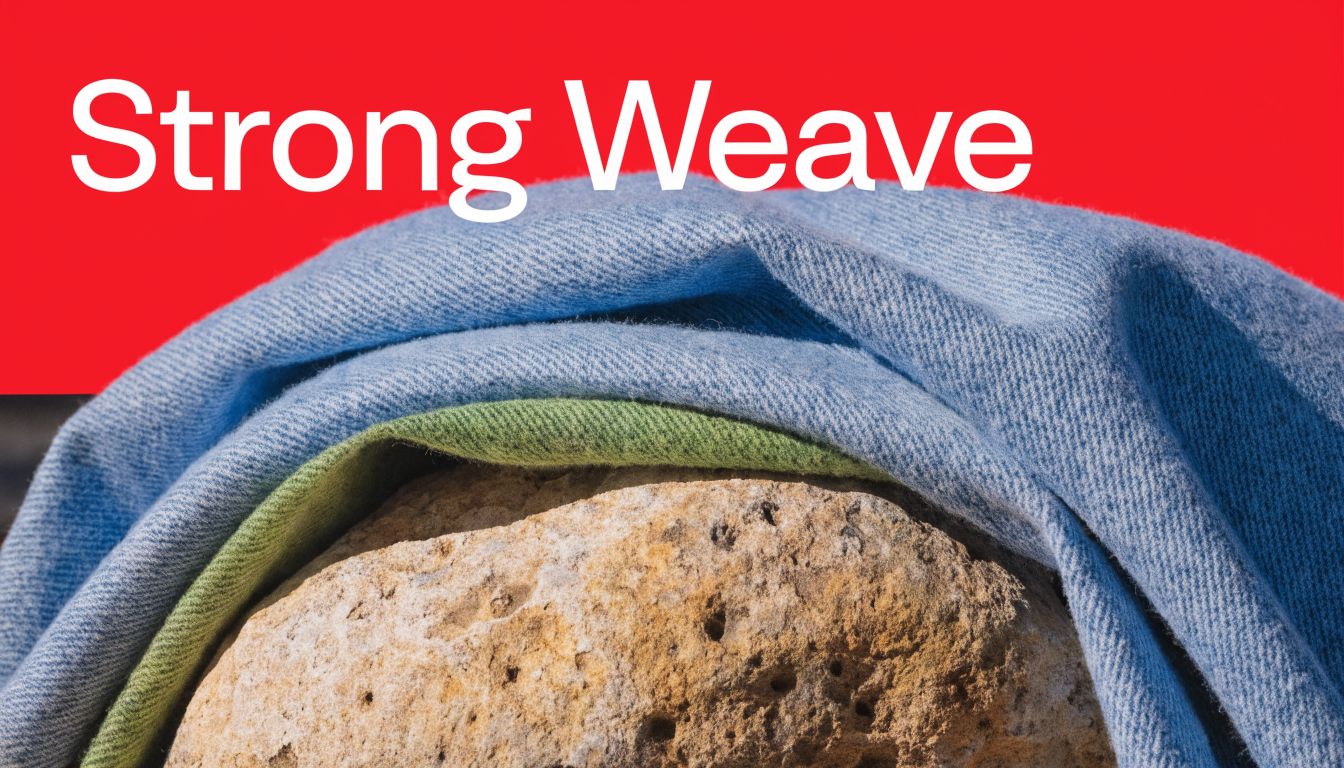
That diagonal weave does real work. According to this explanation of twill cap construction, cotton twill's weave produces 20 to 30% greater durability compared to plain weave fabrics. The same source notes that the structure distributes stress more effectively and can handle embroidery machines running at up to 1000 SPM without puckering.
Why the weave matters in daily use
A plain weave can be fine for lightweight applications, but caps take abuse in a different way than shirts do. They get grabbed by the brim, tossed in a truck, stuffed in bags, worn in heat, and adjusted all day. Twill handles that kind of wear well because the fabric has a little body to it.
The result is a cap that usually feels like this:
- Sturdy without feeling hard
- Soft enough for daily wear
- Stable enough for clean logo placement
- Durable enough for repeat use
That combination is why twill works for both promotional hats and retail-style caps. It doesn't collapse too easily, but it also doesn't feel overly technical or synthetic.
Why decorators like it
Embroidery needs a surface that stays put. If the fabric shifts too much, stretches weirdly, or puckers under stitch density, your logo pays the price. Twill gives decorators a more cooperative surface than many lighter or slicker materials.
Here's what that means in practice:
| Feature | What it means for your order |
|---|---|
| Diagonal weave | Better resistance to wear and handling |
| Fabric stability | Cleaner embroidery on common logo types |
| Good machine tolerance | Easier production on small runs and reorders |
| Balanced hand feel | Works for uniforms, merch, and casual wear |
A cap fabric doesn't need to be fancy. It needs to hold the logo, keep its shape, and still look right after repeated wear. Twill usually does all three.
For a buyer, the takeaway is simple. The weave isn't a minor technical detail. It's the reason cotton twill baseball caps tend to deliver fewer surprises once your logo goes into production.
How Cotton Twill Compares to Other Cap Fabrics
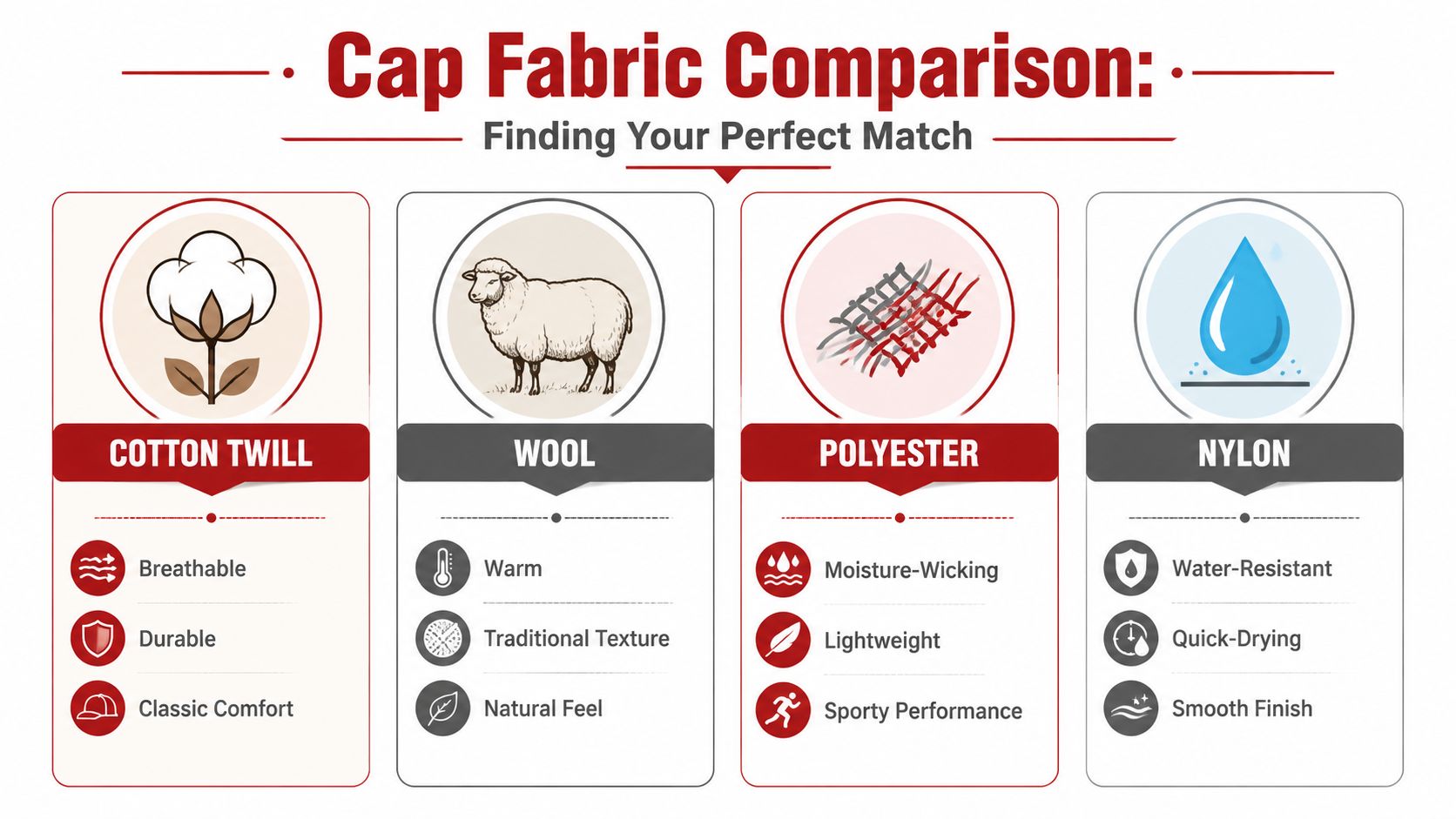
Cotton twill is the all-arounder. That doesn't make it the winner for every project. If you're ordering hats for a summer run club, a heritage brand, or a heavy-duty outdoor crew, another fabric might fit better. The right question isn't “What's the best fabric?” It's “What fabric matches the job?”
Cotton twill versus performance polyester
If your group is going to sweat hard, polyester has a real advantage. It tends to feel lighter, dry faster, and make more sense for training environments, golf events, and outdoor staff who need a technical look.
But there's a trade-off. Polyester can feel slick, and some logos that look great on twill can look a little colder or more corporate on poly. If your design has a classic stitched look, twill usually feels more natural. If your buyers care more about moisture management than texture, poly becomes the stronger option.
A practical split:
- Choose polyester for athletic use, hot-weather activity, or a sport-performance image.
- Choose twill for a broader audience, everyday wear, and a more traditional embroidered finish.
Cotton twill versus wool
Wool still has its place, especially if you want a vintage, heritage, or premium sports look. It can look rich and substantial. It also tends to feel less universal for everyday staff wear and promotions, especially if your audience lives in warmer climates or wants something easier to wear year-round.
Twill wins when you want less friction in the buying decision. More people will put it on and wear it without thinking twice. Wool wins when the material itself is part of the story.
Cotton twill versus canvas and other rugged fabrics
Canvas can be great for workwear-style branding. It feels tougher, more utilitarian, and often leans into a heavier look. That can help if your brand identity is built around trades, field gear, or outdoors-focused retail.
The downside is that canvas can feel too stiff for some buyers, especially in small-batch promo orders where the audience is mixed. Twill usually lands in the middle. It has enough structure to feel substantial, but it doesn't scare off casual wearers.
Quick comparison by use case
| Fabric | Best for | Main downside |
|---|---|---|
| Cotton twill | Most custom logos, staff hats, teams, promos, merch | Not the top choice for high-sweat performance wear |
| Polyester | Athletic teams, hot-weather events, technical branding | Can feel less classic and less natural for embroidery-first looks |
| Wool | Vintage looks, premium sports styling, heritage brands | Less versatile for broad everyday use |
| Canvas | Workwear, rugged branding, outdoors retail | Can feel heavier and less forgiving as a universal fit |
If you need one hat style that can cover uniforms, giveaways, and resale, twill usually gives you the fewest objections from the widest group of people.
For small businesses, that matters more than fabric theory. You don't just need a good cap. You need a cap that won't create regret after the first box lands.
Choosing the Right Style and Panel Construction
Fabric gets most of the attention, but the shape of the cap changes the final result just as much. A great logo on the wrong cap style can still look off. When buyers say, “The embroidery was fine, but the hat wasn't right,” they're usually talking about panel layout, profile, or structure.
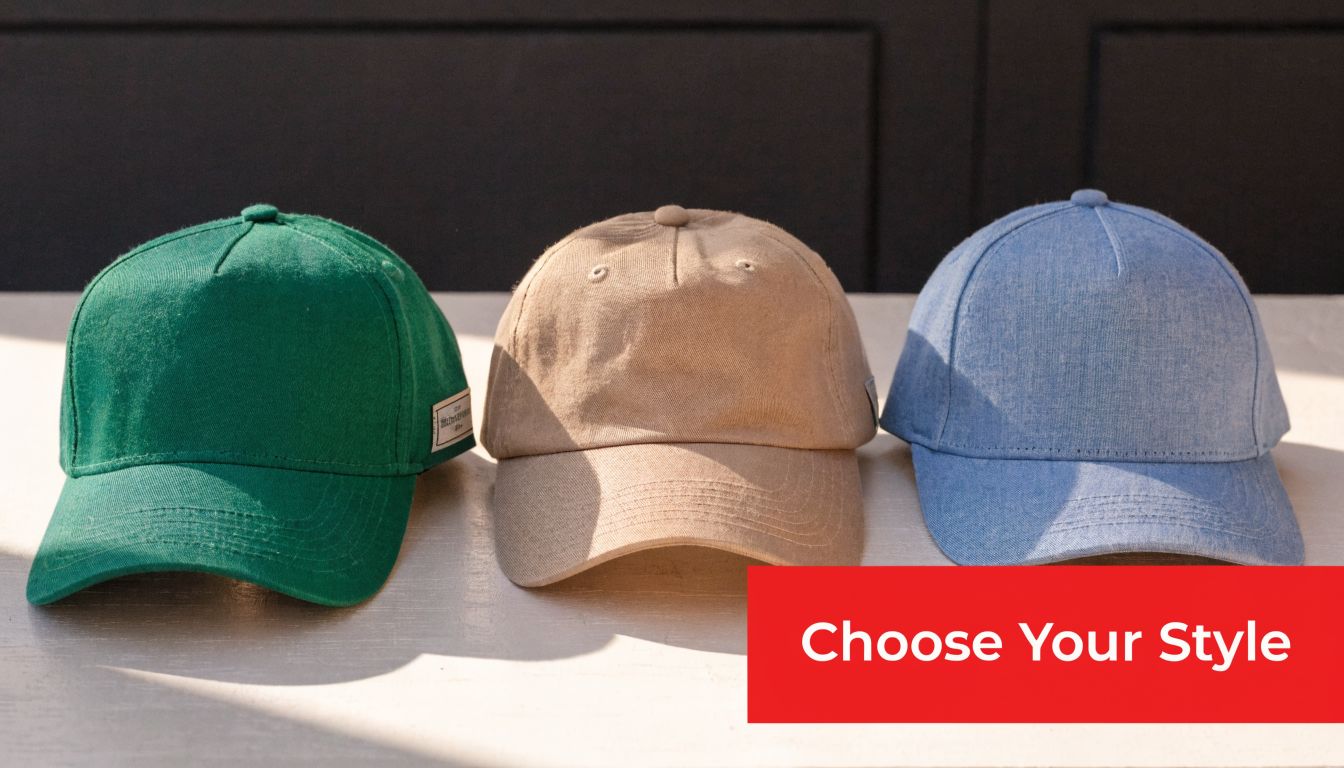
Why 6-panel is the default
A 6-panel cap is the standard shape commonly pictured. The crown uses six tapered panels that meet at the top, creating a balanced, rounded profile. According to this breakdown of baseball hat types, 6-panel construction with reinforced front panel fusing delivers seam burst strength averaging 75 to 100 lbs, outperforming 5-panel designs. The same source notes that adding 2% spandex can provide 5 to 10% stretch recovery, helping S/M and L/XL sizing fit 95% of adult head sizes.
That's why 6-panel twill caps are usually the easiest recommendation for mixed groups. They're familiar, stable, and forgiving when you don't know everyone's preferences ahead of time.
When 5-panel makes more sense
A 5-panel cap has a flatter front face. That can be useful when your decoration style needs one broad, uninterrupted area. Patches often look sharp there. Some streetwear brands also prefer the cleaner, boxier front.
Still, 5-panel isn't automatically better for embroidery. If the logo was built with a curved crown in mind, it may sit more naturally on a 6-panel cap. The front seam on a 6-panel doesn't ruin most logos. It only becomes a problem when the design is very wide, very centered, or highly dependent on tiny detail.
Structured and unstructured feel very different
Buyers frequently make an incorrect choice regarding cap structure. A structured cap has support behind the front panels, so it holds a more defined shape. An unstructured cap has a softer crown and breaks in faster.
Here's the simplest way to put it:
- Structured works best when you want a cleaner retail look, more front height, or stronger support for embroidery.
- Unstructured works best when you want a relaxed dad-hat feel and a softer, less formal silhouette.
If you want a deeper breakdown, this guide on structured vs unstructured hats is a useful reference.
Matching cap shape to the project
Use the brand vibe as the filter:
- Team and league orders usually work best with 6-panel structured or mid-profile styles.
- Coffee shops, breweries, and casual retail often lean unstructured because the softer look feels more wearable off the clock.
- Promotional campaigns usually benefit from a shape that appeals to the widest range of recipients, which often means a classic 6-panel.
- Streetwear drops might lean 5-panel or higher-profile snapbacks if the cap itself is part of the aesthetic.
The best blank isn't always the trendiest one. It's the one that makes your logo look intentional and makes the end wearer want to keep it.
A Practical Guide to Embroidery and Patches
Cotton twill is decorator-friendly, but “friendly” doesn't mean foolproof. A lot of bad hat orders happen because buyers hear that twill is easy to embroider and assume any logo will stitch cleanly on any cap style. That's not how it works.
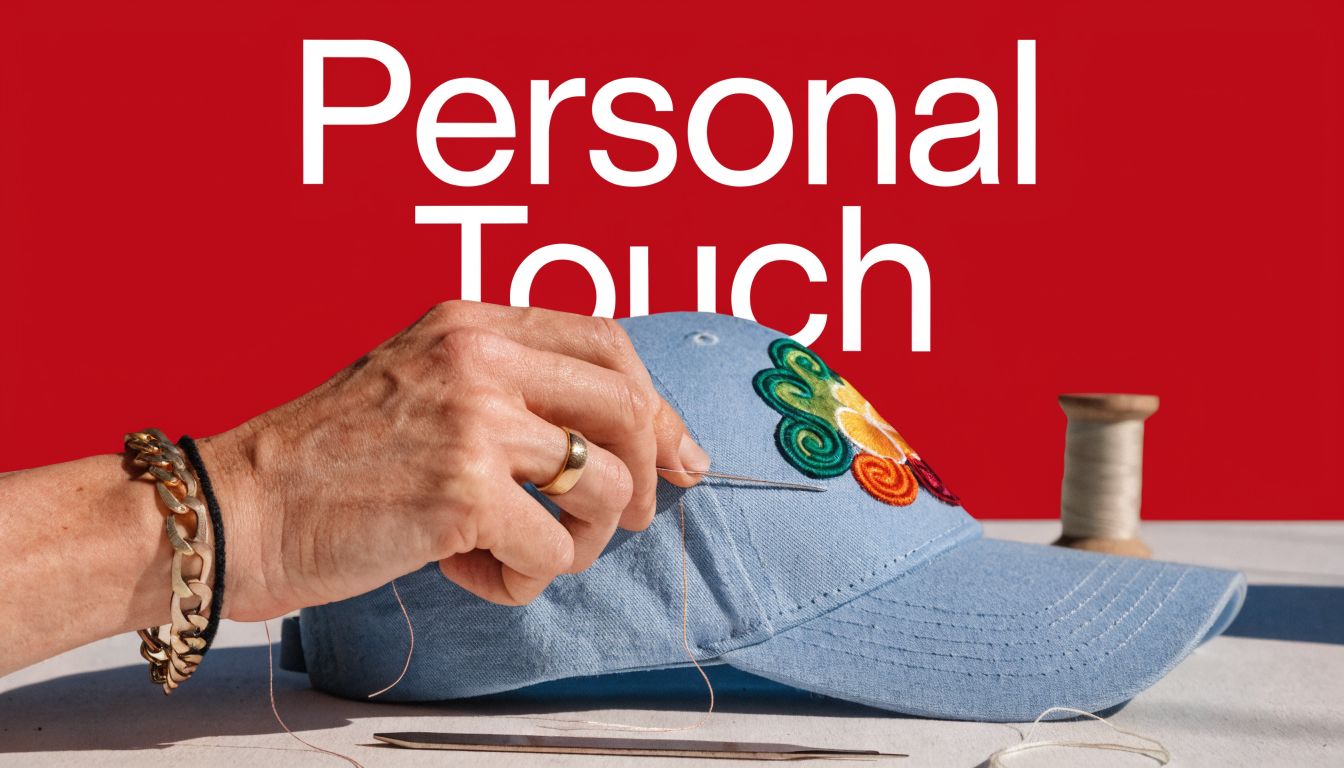
Twill gives you a solid base. The difference comes from digitizing, cap choice, and how realistic your decoration plan is for the size of your order.
What works well on twill
Most standard left-chest style logo thinking carries over nicely to headwear if the design is adjusted for stitch reality. Twill handles:
- Standard embroidery for business logos, team names, and simple graphics
- 3D puff embroidery on caps with enough structure in the front
- Embroidered patches when the artwork has too much detail for direct stitching
- Woven or leather-style patches when you want a different texture or cleaner small detail
For small-batch buyers, patches can be a smart way to avoid overcomplicating direct embroidery. If the logo includes fine lines, layered text, or tiny interior shapes, a patch often gives a cleaner result than forcing everything into thread.
Where buyers run into trouble
Unstructured twill caps can be the trap. They look easy because they're casual, but they need more care during decoration. According to this guide discussing suede and embroidery trade-offs, cotton twill is forgiving but still requires precise digitizing on unstructured styles. The same source notes 20 to 30% higher customer returns for twill embroidery failures in low-volume runs under 50 units due to nap variability in brushed variants. That's why a 6-piece test order can save a buyer from scaling a bad proof.
Shop-floor advice: If your logo includes small text, thin outlines, or tight spacing, test it on the actual cap style before approving a larger run.
This matters most for orders in the range of 6 to 24 hats. At that volume, one bad digitized file can wipe out the savings from choosing a lower-cost blank.
What good embroidery planning looks like
A clean result usually comes from a few simple decisions made early:
- Reduce tiny details. What reads well on a website header may disappear on a cap front.
- Match the logo to the cap profile. Tall structured fronts can handle different layouts than low-profile dad hats.
- Use puff only when the cap supports it. Soft unstructured caps aren't the best canvas for raised embroidery.
- Consider a patch first for complex artwork. It often looks more intentional than overworked direct stitching.
If you're unsure how art gets translated into stitches, this explainer on how to digitize a logo for embroidery is worth reviewing before you place the order.
Direct embroidery versus patches
| Decoration method | Best use | Watch out for |
|---|---|---|
| Direct embroidery | Simple to moderate logos, classic branded caps | Fine detail can get muddy if the file isn't adapted |
| 3D puff | Bold lettering, streetwear, athletic styles | Needs enough structure and simplified shapes |
| Embroidered patch | Heritage looks, badge logos, moderate detail | Patch border and placement need to be planned well |
| Woven patch | Small detail and cleaner line work | Less textured than embroidery |
| Leather-style patch | Premium casual branding | Better for simpler marks than dense artwork |
Don't judge a cap by the blank alone. Judge it by how your logo behaves once thread, backing, tension, and cap shape all enter the picture.
That's why experienced buyers test first. Twill gives you a strong foundation, but the finished result still depends on decoration choices that fit the cap.
Navigating Wholesale Orders and Lead Times
The fabric and style decision is only half the job. The other half is ordering in a way that doesn't create delays, surprise charges, or disappointing results. First-time buyers usually get stuck on three things: minimums, art prep, and timing.
What to prepare before asking for a quote
Have these details ready before you contact a supplier:
- Your logo file: Vector art is ideal, but a clean high-resolution file can still help start the conversation.
- Your cap choice: Know whether you want 5-panel or 6-panel, structured or unstructured, snapback or fitted.
- Your quantity range: Even a rough estimate helps. Ordering 6, 24, or 300 can change the best recommendation.
- Your deadline: If the hats are tied to an event date, say that up front.
That prep cuts down on revision cycles and gets you to a proof faster.
Terms that matter in small-batch buying
MOQ means minimum order quantity. For small businesses and teams, low minimums matter because they let you test a design before committing to a larger run.
Setup fees usually cover the prep needed to turn your art into something production-ready. On embroidered caps, that often means digitizing the logo for stitching.
Turnaround time depends on whether you're buying blanks or decorated hats. Blank orders move faster. Custom embroidery adds proofing and production time, so buyers should leave room for approvals.
A simple order checklist
Use this before you hit send on any custom cap request:
- Confirm the exact blank you want, or ask for a recommendation based on your use case.
- State the decoration method you expect, such as direct embroidery or patch application.
- Ask for a sample or small run if the logo is detailed or the cap is unstructured.
- Clarify reorder expectations if this may become an ongoing staff or team program.
If you're still sorting through styles, browsing wholesale blank baseball caps can help narrow the field before you request custom work.
Small orders don't need to be complicated. They just need clear inputs. The more specific you are about style, art, and quantity, the smoother the production process tends to be.
Your Cotton Twill Cap Questions Answered
Are cotton twill baseball caps good for very small orders
Yes. They're one of the best places to start for small custom runs because the fabric is widely available, decorates well, and exists across a lot of proven blank styles. If you're testing a logo, launching merch, or buying for a small crew, twill usually gives you the most flexibility.
Do cotton twill caps work better with embroidery or patches
Both can work. Direct embroidery is the classic option for clean logos with sensible detail. Patches are often better when the artwork is too complex, too small, or more badge-like in style. If the logo feels crowded on a cap proof, a patch is often the smarter move.
Is 6-panel still the safest style to choose
Usually, yes. The 6-panel design was standardized in 1954 by New Era's 59FIFTY cap, and its structured cotton twill construction helped make it the global standard for sports and fashion, according to MLB's baseball cap history timeline. For most buyers, that means a familiar fit and fewer surprises.
When should I skip cotton twill and choose another fabric
Skip twill when the job calls for something more specific than “good all-around custom cap.” Performance polyester makes more sense for training, running, and hot-weather activity. Wool makes more sense when the fabric itself is part of a heritage or premium story. Twill is the practical middle ground, not the answer to every brief.
Do unstructured twill caps cause more decoration issues
They can. Soft crowns don't support every logo equally well, especially if the design is dense or the front panel needs to stay crisp. That doesn't make unstructured caps a bad choice. It just means they benefit more from careful digitizing and, when possible, a test run before scaling.
What's the best move if I'm between two cap styles
Don't guess. Order samples or start with a small decorated run. A cap that looks perfect on a product page can feel completely different once it's on a real head with your actual logo stitched on the front.
If you're ready to test a design, compare blanks, or place a small custom order without overcommitting, Dirt Cheap Headwear makes the process straightforward. You can source blank hats from major brands, order custom embroidery with low minimums starting at six pieces per logo, and get help choosing the right cotton twill style for staff uniforms, events, teams, or resale.