
Winter Hat Styles: Your 2026 Wholesale Guide
Beanies account for over 40.0% of winter hat revenue, so they're the dominant wholesale choice. That doesn't mean every buyer should default to a beanie, because some orders need more ear coverage, room for long hair, or a cleaner decoration zone than a basic knit cap can offer.
The better question isn't “What winter hat looks good?” It's “What winter hat matches the temperature, the activity, the audience, and the way the logo has to sit on the fabric?” That's the difference between a hat people wear and a carton of inventory that looks fine in a mockup but misses the need.
Why Winter Hat Selection Is Not Just About Fashion
Winter hat buying often gets framed as a style choice, but wholesale decisions work more like product planning. A brand order has to balance comfort, fit, decoration, and budget at the same time, and those trade-offs show up before the first carton leaves the decorator.
That practical view also matches the market. Grand View Research estimates the global winter hats market at USD 25.7 billion in 2021, with a projection to USD 36.4 billion by 2030 and a 4.0% CAGR from 2022 to 2030. The same report says beanies accounted for over 40.0% of winter-hat revenue in 2021 and wool represented more than 54.0% of material share, which points to a category built around familiar, wearable, decoration-friendly basics. Grand View Research winter hats market report
The key buyer questions
A wholesale buyer usually needs to sort out four questions before placing an order.
- How cold will it be? A promo hat for a cool commute does not need the same build as staff gear for outdoor events.
- How will it be worn? A hat for walking, skating, or working outside has different fit needs than one worn for a quick photo op.
- Who's wearing it? Long hair, ponytails, protective styles, and different head shapes all change what feels comfortable.
- How will it be decorated? Dense knit, seams, and shape all affect embroidery placement and logo clarity.
Practical rule: if the hat cannot hold its shape, cover the right area, and accept decoration cleanly, it is not the right wholesale choice, no matter how good it looks on a model.
That is why winter hat styles should be treated like product decisions. A silhouette can support a team uniform, a merch drop, a fundraiser, or a retail assortment, but it has to match the job. A stiff, low-profile logo panel may help one program, while a softer knit body works better for casual retail. The wrong choice can still create complaints about tightness, overheating, awkward logos, or hats that stay in the box instead of getting worn. Dirt Cheap Headwear wholesale winter beanies
Popular Winter Hat Styles and Their Histories
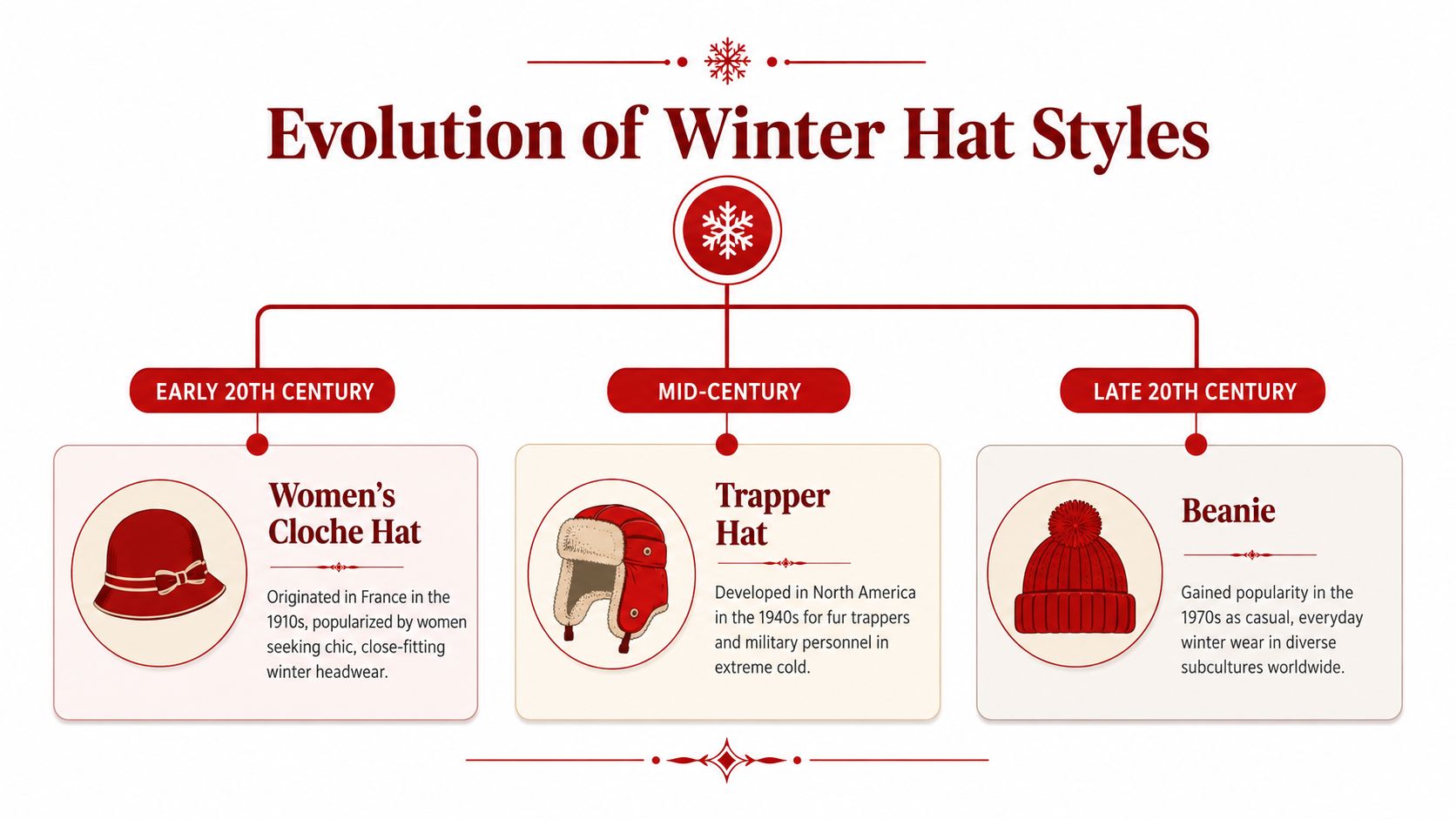
Winter hats didn't start as the simple knit caps most buyers think of today. In the early 20th century, women's hats were often smaller and sat lower on the brow, with the cloche hat becoming a defining shape. By the 1960s, everyday hat wearing had nearly disappeared except in cold months, and that shift pushed functional cold-weather silhouettes to the front.
From formal millinery to practical basics
The trapper hat traces back to Russian ushanka designs and early aviator caps. The historical record notes that by the 1940s, trapper hats were popular for blocking severe chill, which makes sense if you think about why they survived as a style. They were made to protect the ears and stay useful in serious winter weather, not just to finish an outfit.
The beanie took a different path. In the 1990s, skaters helped push knitted brimless hats into the mainstream, and the name stuck. That skate influence still shows up in how people wear them today, relaxed, easy to stack with outerwear, and simple enough to carry logos without overpowering the design. Brief history of women's hats, 1900 to 1960
The styles buyers actually compare
A wholesale team usually ends up looking at a familiar group of silhouettes:
- Classic beanie, a close-fitting knit cap that works for most everyday orders.
- Cuffed beanie, which adds a turned-up brim for extra warmth and a cleaner decoration zone.
- Slouch beanie, a roomier version that feels more relaxed and can help with hair accommodation.
- Pom-pom beanie, chosen when visual personality matters as much as warmth.
- Trapper hat, built for severe cold with ear coverage that goes beyond a standard knit.
- Balaclava, used when full-face coverage matters more than style minimalism.
- Knit visor, useful when an active wearer wants some sun shielding with winter comfort.
- Bucket hat in winter fabrics, which shows up in casual layering and trend-driven assortments.
If you need a quick reference for blank winter knit options, a wholesale winter beanies page is a practical starting point because it helps buyers compare basic silhouettes before they decorate.
Some hats are chosen because they photograph well. Others are chosen because they stay on at 6 a.m. in freezing wind. Wholesale buyers usually need both, but not always in the same product.
Materials and Construction Trade-offs
Material choice affects warmth, hand feel, price positioning, and how well a hat survives decoration and repeated wear. Two beanies can look nearly identical on a screen and still behave very differently once they are stitched, packed, and worn.
Wool remains the heavyweight in the category. That lines up with the broader market picture, which has long placed wool near the top for winter headwear because it carries a premium feel and dependable warmth. It is familiar to buyers who want a classic cold-weather look, but it usually sits higher in bulk cost. Acrylic is the workhorse alternative for large promotional runs because it is budget-friendly, holds color well, and can mimic the look of wool without the same price pressure.
Material comparison at a glance
| Material | Warmth feel | Care and wear | Wholesale positioning | Best fit for |
|---|---|---|---|---|
| Wool | Strong insulation, premium winter feel | Needs more care than synthetics | Higher cost in bulk | Retail programs, colder climates, premium branding |
| Acrylic | Solid everyday warmth | Easier to manage, color holds well | Budget-friendly | Large promotions, school orders, staff giveaways |
| Fleece-lined knit | Added warmth without changing the outer look much | Comfortable, softer touch | Mid-range | Outdoor crews, winter events, colder mornings |
| Cotton blend | Lighter warmth, softer hand | Better for milder weather | Often value-oriented | Transitional weather, indoor-outdoor use |
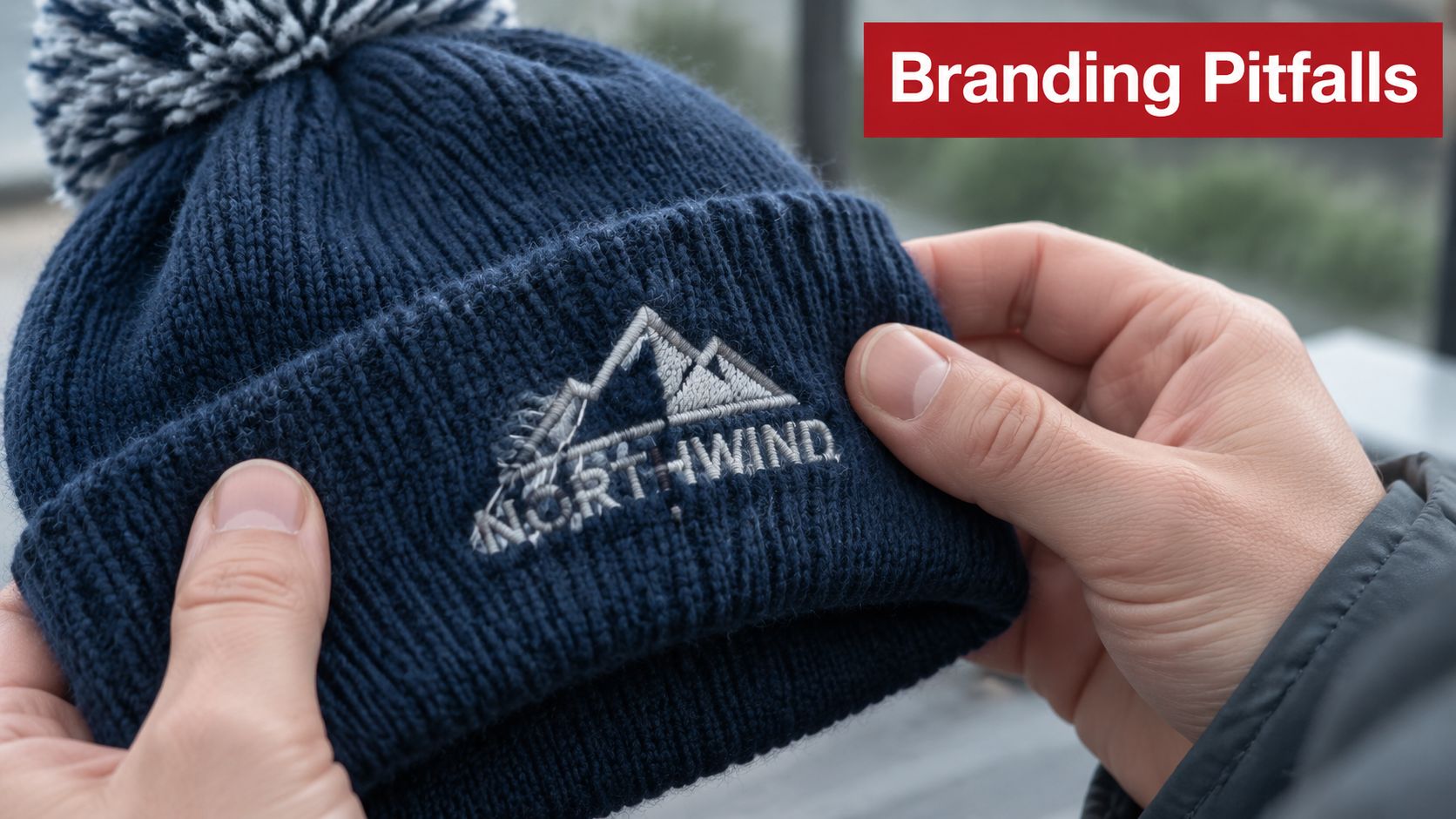
Construction matters just as much as fiber. Seam placement changes where a logo can sit, and a thick knit can make small lettering disappear. If you have ever approved art that looked crisp on a digital proof but came back cramped on fabric, you already know why structure matters.
What to look for in the build
- Flat decoration zones help embroidery sit cleanly.
- Reinforced stitching around stress points helps the hat keep its shape.
- Seam placement affects whether a logo lands centered or awkwardly split.
- Stretch recovery matters when the same style has to fit different head sizes.
If you are comparing blanks for decoration, a product page like stocking cap knit is useful because it lets you evaluate a knit silhouette before you commit to a larger order. For buyers thinking about cold-weather lining or insulated accessories in adjacent categories, shade fabric for quilting projects offers a helpful reminder of how lining materials change warmth, weight, and hand feel in a finished product.
Warmth and Fit Comparison by Condition
A hat that feels fine in a warm office can be the wrong call for a team setting up an outdoor tent at dawn. That's why temperature range should be part of the buying decision from the start, not something you think about after the order is already in production.
One practical guide separates winter conditions into three bands. Mild winters suit acrylic or cotton-blend beanies, moderate cold calls for wool or fleece-lined options, and extreme cold requires trapper hats, ushankas, or balaclavas. That framework is useful because it ties style to function instead of forcing every buyer into the same silhouette. Winter hat types guide
Match the hat to the conditions
- Mild weather, choose a lighter beanie or cotton blend if you want comfort without overheating.
- Moderate cold, pick wool or fleece-lined construction when warmth has to hold up through longer wear.
- Extreme cold, move to trapper-style coverage or full-face protection when ears and neck need real shielding.
Fit runs alongside warmth. People with long hair, ponytails, or protective styles often need roomier or slouchier silhouettes so the hat doesn't flatten their hair or pull tight at the crown. More structured options, on the other hand, stay in place better during movement and feel more dependable for active use.
A buyer comparing performance fabrics for another product category, like shade fabric for quilting projects, usually thinks the same way, by asking how the material behaves in real conditions rather than how it looks on a shelf. That's the right mindset for winter headwear too.
Common use cases
- Staff gear, go with a stable fit that won't slip when people are moving.
- Streetwear merch, choose a shape with relaxed volume and strong visual identity.
- School or team programs, prioritize comfort, easy sizing, and durability.
- Outdoor events, focus on coverage first, then decoration.
Recent trend coverage also shows demand moving beyond the basic beanie toward balaclavas, berets, and textured materials for 2025/26. That doesn't mean every catalog should chase novelty, only that buyers are asking for more function-specific choices than they used to.
Decoration and Branding Considerations by Style
The decoration question usually decides the final shortlist. A hat can be warm, stylish, and on-budget, but if the logo sits badly or the fabric fights the stitch, the whole order feels off.
Structured beanies with flatter brims are usually the easiest to decorate because they give embroidery a more stable surface. That makes them suitable for clean logo work, simple text, and even bolder treatments when the artwork can handle it. Slouchy styles can still work, but they're better with softer logos that don't depend on exact placement.
What works and what to avoid
- Cuffed beanies, strong for front embroidery because the fold gives you a defined panel.
- Slouch beanies, better for looser placements and simpler marks.
- Trapper hats and balaclavas, useful for coverage but trickier because seams, panels, or layered fabric can interrupt the design.
- Pom-poms, never treat the top as a logo area, since the decoration belongs on the body of the hat.
- Knit visors and bucket shapes, expect more limitations because the open or wider structure changes how embroidery sits.
You can also compare decoration methods by the final look you want. 3D puff embroidery works well on some structured knit styles when the logo has enough boldness and spacing. Fine-detail stitching is safer when the art is small, simple, and centered on a stable area. Patches can help when the knit itself is too textured for crisp thread work.
Practical rule: choose the decoration method after you've chosen the silhouette, not before. The hat shape should lead the art, not fight it.
For teams comparing production options, printing and embroidery is a useful reference because it keeps the focus on what the fabric can support, not just what looks good in a mockup.
How to Order Custom Winter Hats in Wholesale
The biggest ordering mistakes happen before production starts. Buyers choose a style too quickly, skip the proofing step, or assume the same logo will look identical across every fabric and color.
The wholesale workflow is more predictable when you treat it as a sequence. First, choose the blank style that fits the wearer's needs and decoration plan. Then confirm the minimum quantity, because some decorators can start as low as six pieces per logo depending on the order. After that, review the proof carefully, since embroidery can shift once it moves from screen art to fabric. Dirt Cheap Headwear notes low minimums, in-house embroidery, and responsive proofing support as part of its wholesale process, which makes it a practical option for brands that want a smaller test run before scaling.
A simple ordering sequence
- Define style and material. Decide whether you need warmth, hair room, or a flatter logo area.
- Submit the design proof. Check line thickness, placement, and color contrast against the blank.
- Approve the sample. Look at the actual size and stitch density, not just the mockup.
- Place the bulk order. Move forward only after the hat feels right in hand and on head.
Turnaround time depends on volume and decoration complexity, but standard orders are often completed within one to three weeks. That window can stretch when seasonal demand spikes, so holiday merch and event gear need a longer planning runway.
Before you approve production, check these points:
- Logo size against the knit texture.
- Thread color against the blank color.
- Placement so the mark doesn't land too high or too low.
- Hat stretch so the final fit still feels comfortable.
The embedded video below is useful if you want a visual walk-through of the wholesale hat ordering process.
Making the Final Decision
The cleanest way to choose winter hat styles is to answer three questions in order. What temperature will the wearer face? What activity will they do in it? What decoration method has to work on the final hat?
If the answer to the first question is extreme cold, reach for trapper coverage or a balaclava. If the activity level is high, a structured beanie or knit visor usually stays put better than a slouchier silhouette. If the logo is the priority, choose a flat, stable decoration zone before you fall in love with a trend-driven shape.
The practical takeaway is simple. Warmth, fit, and branding don't compete with each other, they narrow the field together. Once you know which one matters most, the right wholesale decision gets much easier.
Dirt Cheap Headwear works with blank winter hats and custom decoration for teams, brands, events, and resellers, so it's a useful place to source styles that need embroidery or small-run testing. If you're ready to compare silhouettes, materials, and logo placement for your next order, visit Dirt Cheap Headwear and start with the blank hat option that matches your weather, audience, and art.