
Winter Cap Wholesale: Custom Styles & Low Minimums
The first cold week of the season has a way of forcing decisions. Staff start asking for knit caps. Your team wants something branded for events. A customer asks whether you sell winter merch yet. Suddenly you're trying to figure out whether you need plain beanies, embroidered caps, or a full custom run, and every wholesale site seems built for either giant retail orders or vague “contact us” forms.
That’s where most first-time buyers get stuck. Not because winter headwear is complicated, but because winter cap wholesale has a lot of small decisions that affect cost, decoration quality, and whether the final product gets worn.
Your Guide to Sourcing Wholesale Winter Caps
A lot of winter hat buying starts the same way. You don’t wake up wanting to compare cuff heights, yarn blends, and embroidery files. You realize you need hats fast, and you need them to look intentional instead of like leftover promo merch.
That urgency makes people rush into the wrong order. They pick the cheapest blank, ignore the stitch area, approve a logo that’s too detailed, and then wonder why the hats feel stiff or the branding disappears when the cuff folds.

There’s real business behind getting this right. The global winter hats market reached USD 28.50 billion in 2024 and is projected to expand to USD 36.65 billion by 2030, with North America as the largest market because of strong purchasing power and pronounced winter seasons, according to TechSci Research’s winter hats market report.
What a smart first order looks like
A good first order usually does three things well:
- Fits the audience: Staff gifts, ski team gear, brewery merch, and retail resale all call for different shapes and materials.
- Matches the logo: A clean wordmark can work on almost anything. A dense crest or badge needs more planning.
- Keeps risk under control: You don’t want to sit on boxes of the wrong color or overbuy a style your audience won’t wear.
Practical rule: Buy the style people already wear, then customize it well. Don’t force a trendy silhouette onto the wrong crowd.
What this guide helps you avoid
Most expensive mistakes happen before production starts.
Common ones include:
- Choosing by photo only: Product photos don’t tell you how thick the knit is, how stretchy the cap feels, or how much room you have for embroidery.
- Ignoring cuff behavior: A logo can land perfectly on a flat mockup and still sew too high or too low once the cuff is worn.
- Ordering bulk before testing: If this is your first winter run, a smaller custom batch is often the safer move.
A wholesale winter cap order gets easier once you break it into parts: style, material, decoration, minimums, and use case. That’s the whole game. Get those five right, and the hats usually work.
Decoding the Different Types of Winter Caps
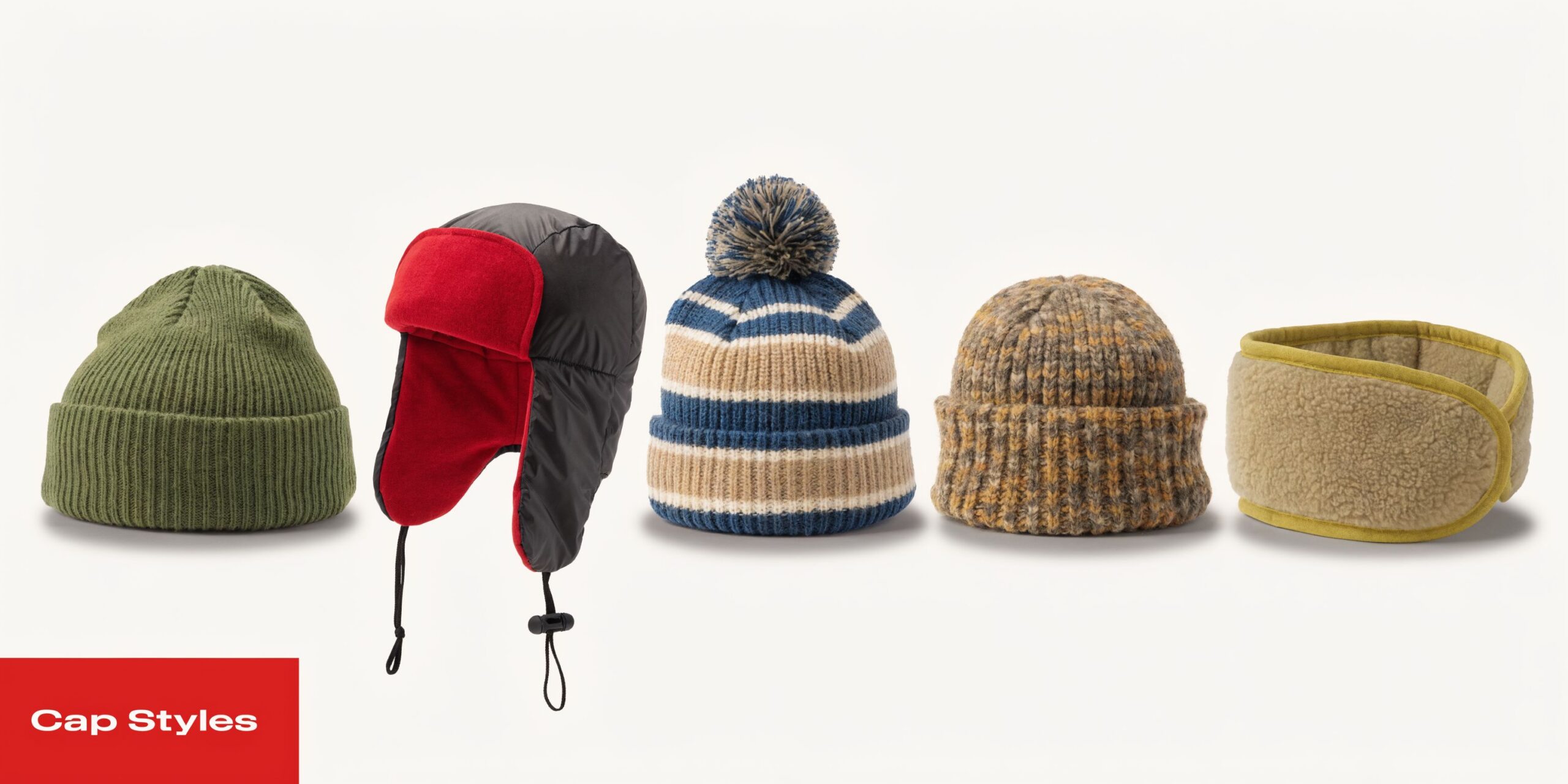
Style names matter more than most buyers expect. If you ask for “winter hats,” you’ll get everything from basic knit beanies to trapper hats and headbands. If you ask for the exact shape you want, the buying process gets much easier.
Start with the most common categories and narrow from there.
The everyday seller
The classic knit beanie is still the safest place to start. It’s easy to wear, easy to stock, and works for staff, teams, resale, and event merch.
Within that category, small shape differences matter:
- Cuffed beanie: The most decoration-friendly option. The fold gives you a clear front panel for embroidery.
- Uncuffed beanie: Cleaner and more minimal, but logo placement can be trickier because the knit stretches more visibly.
- Pom-pom beanie: Better for schools, family events, and casual merch programs than for corporate gifting.
- Slouch beanie: More fashion-forward, but not every audience likes the relaxed fit.
If you’re comparing options, browsing a focused collection of wholesale winter beanies helps because you can see how different cuff styles affect branding space.
The snug fit options
A skull cap sits closer to the head and usually reads more functional than cozy. It’s a solid choice for outdoor work crews, runners, and buyers who want less bulk.
This style doesn’t always give you the same visual impact as a thick cuffed beanie. But for active use, that lower-profile fit can be a plus.
A winter cap that feels too bulky often ends up unworn, even if it looks good in the box.
The cold-weather specialists
Some styles win because they solve a specific problem.
A trapper hat is built for serious cold and visual personality. Ear flaps make it stand out, and the style tends to work well for resorts, outdoor brands, and teams in harsh weather.
A balaclava serves a different need. It covers more of the head, neck, and face, which makes it practical for outdoor conditions, but it also crosses into fashion. According to Buy4Store’s wholesale winter hats guide for 2025 to 2026, balaclavas have emerged as a bestseller, while classic knit beanies, skull caps, and trapper hats remain strong, consistent sellers in wholesale channels.
That matters for buyers because it separates “catalog filler” from styles with proven demand.
Here’s a quick visual walkthrough before you shortlist your styles:
How to narrow your list fast
If you’re stuck between options, use this shortcut:
- For broad appeal: Choose a cuffed knit beanie.
- For active or low-profile wear: Choose a skull cap.
- For coldest climates: Choose a trapper hat.
- For fashion-forward or high-coverage demand: Choose a balaclava.
Don’t start with ten styles. Pick two. One safe seller, one niche option. That gives you range without creating inventory headaches.
Choosing Materials for Warmth Wearability and Brand Value
Material choice decides whether your hats feel premium, itch too much, run too warm indoors, or fall into the “cheap giveaway” category. Buyers often focus on color and logo first, but the fabric blend is what determines whether people wear the cap more than once.
The fastest way to choose well is to think in trade-offs. Warmth versus softness. Price versus perceived value. Structure versus flexibility.
Wool versus everything else
If warmth is the top priority, wool still sets the pace. In the global winter hats market, wool holds over 54% revenue share because of its thermal performance, and it can be up to 30% more effective than synthetic alternatives for insulation, according to Grand View Research’s winter hats market report.
That doesn’t mean wool is automatically the right buy for every order.
Wool works well when:
- Your audience spends real time outdoors
- You want a more premium hand feel
- You’re building retail merch, not just event swag
Wool can be less ideal when:
- Your budget is tight
- You need something easy-care and simple
- Your audience mostly wears the cap indoors or during commuting
The materials buyers usually compare
Most winter cap wholesale orders come down to a handful of common choices.
| Winter Cap Material Comparison | Warmth Level | Feel & Comfort | Price Point | Best For |
|---|---|---|---|---|
| Wool | High | Warm, premium, sometimes more textured | Higher | Outdoor retail, premium merch, colder climates |
| Acrylic | Medium to high | Soft, familiar, easy for broad audiences | Lower | Promotions, school orders, general resale |
| Fleece | High | Soft and cozy, often casual in look | Moderate | Workwear, outdoor use, lining-heavy styles |
| Cotton | Lower for deep winter use | Soft, breathable, lighter feel | Moderate | Mild winter wear, indoor use, lifestyle merch |
| Recycled polyester or performance blends | Varies by blend | Often smoother and more breathable | Moderate | Urban wear, active use, sustainability-focused programs |
For many buyers, the practical middle ground is a blend. You keep some of the warmth and upgraded feel without pushing the cap too far out of budget.
A knit stocking cap is a good example of where blend choice matters. In that format, the material affects stretch, cuff shape, and how clean embroidery looks once the cap is worn.
Feel matters more than specs on paper
Two caps can look almost identical online and wear completely differently.
A few real-world rules help:
- Acrylic is easier to distribute at scale: It’s familiar, affordable, and usually less intimidating for broad groups.
- Wool feels more intentional: It tells buyers or recipients that you didn’t choose the bottom shelf option.
- Fleece is practical, not subtle: Great for warmth-first use cases, less ideal if you want a polished retail look.
- Cotton makes sense in lighter winters: It can work for lifestyle branding, but it won’t satisfy buyers expecting true cold-weather performance.
If the hat is for employees, customers, or donors, comfort beats novelty almost every time.
Sustainability and performance are changing the conversation
More buyers now care about what the cap is made from, not just what it looks like. That usually shows up in two ways.
First, some brands want recycled polyester or other lower-impact materials because it aligns with how they position the rest of their merch. Second, active-use buyers increasingly ask for winter hats that don’t feel stuffy during commuting, walking, or outdoor work.
That’s why breathable performance blends have become more relevant in winter, especially for urban wear. A thick hat that overheats indoors often gets pocketed or left in the car. A slightly lighter cap that still holds warmth tends to get worn more often.
A simple way to decide
Use this filter before you order:
- Need max warmth: Start with wool or a wool-heavy blend.
- Need broad affordability: Start with acrylic.
- Need softness for utility wear: Look at fleece-lined or fleece-based options.
- Need eco-minded or active-friendly stock: Look at recycled polyester or performance blends.
- Need the safest all-around blank: Pick a knit blend with a clean cuff and stable stretch.
The right material doesn’t just improve wear. It protects the value of the decoration you’re paying to add.
Bringing Your Brand to Life With Custom Decoration
Once the blank is right, decoration makes the cap either look retail-ready or look rushed. First-time buyers often overcomplicate things in this area. They see every available option and assume more customization means a better result.
Usually, the opposite is true. The best decorated winter caps match the logo to the knit, the texture, and the available space.
Start with the logo, not the technique
A simple wordmark can handle almost any decoration method. A dense emblem, detailed mascot, or badge-style artwork needs more restraint.
Think about the effect you want:
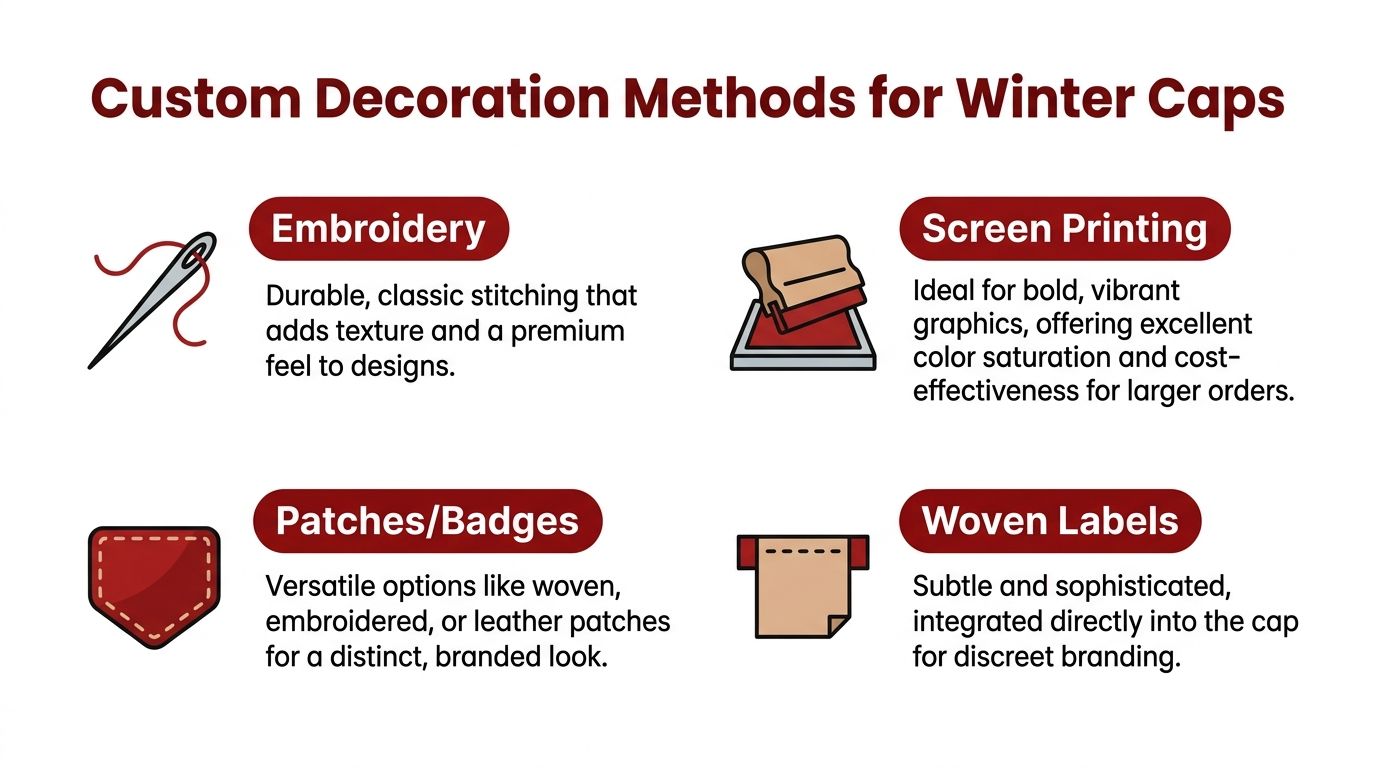
- Flat embroidery looks crisp, traditional, and dependable.
- 3D puff embroidery gives raised dimension. It works best with bold shapes, not tiny details.
- Patches create separation between the logo and the knit texture.
- Woven labels feel more subtle and fashion-oriented.
If you’re ordering from a shop that handles custom embroidery hats with low minimums, ask to see how your artwork translates on knit fabric before you approve production. A proof tells you a lot, but it doesn’t magically fix art that’s too fine for thread.
What works best on winter caps
Embroidery is still the default for a reason. It holds up, looks premium, and fits the texture of knitwear.
Here’s how I’d sort the common methods in practical terms:
- Flat embroidery for clean branding: Best for company names, school initials, simple icons, and most front-cuff applications.
- 3D puff for bold logos: Great on thicker beanies when the design has enough open space. Not good for small text.
- Patches for difficult artwork: If your logo has too much detail or color change, a patch often gives a cleaner result than forcing thread to do too much.
- Woven labels for subtle merch: Better for apparel brands and retail collections than for loud promotional use.
The small details that improve the finished product
Branding doesn’t stop at the front of the cap. Packaging and finishing touches can make a small run feel much more complete, especially if you’re selling the hats instead of handing them out.
One easy add-on is branded packaging or custom swing tags for retail presentation, pop-up events, or ecommerce fulfillment. They’re useful when you want the hat to feel like a product, not just a decorated blank.
Don’t judge decoration by the mockup alone. Judge it by how it looks on a stretched cap, worn on an actual head.
What usually does not work
A few choices repeatedly cause trouble:
Tiny text on thick knit
Thread fills in small spaces fast. What looked sharp in a vector file can turn muddy on the cuff.
Overly tall logos
Beanies rarely give you the same usable front area as a structured cap. Vertical artwork often has to shrink too much.
Technique mismatch
A refined, minimalist brand mark can look awkward in bulky puff embroidery. A rugged outdoor logo can look too flat in a tiny woven label.
If you want your winter cap wholesale order to look polished, choose one strong decoration method and let it do its job. Most hats don’t need extra flourishes. They need clean execution.
Navigating Wholesale Minimums Pricing and Timelines
This is the part that trips up small buyers. You find a style you like, get excited, and then run straight into a minimum order requirement that only makes sense for a chain store or a large event.
That gap is real. A major underserved area in this market is low-minimum custom embroidery. Most sellers focus on high-volume plain hats, while 70% of small merch creators seek MOQs under 12 pieces, according to this wholesale winter hats overview.
What MOQ really means
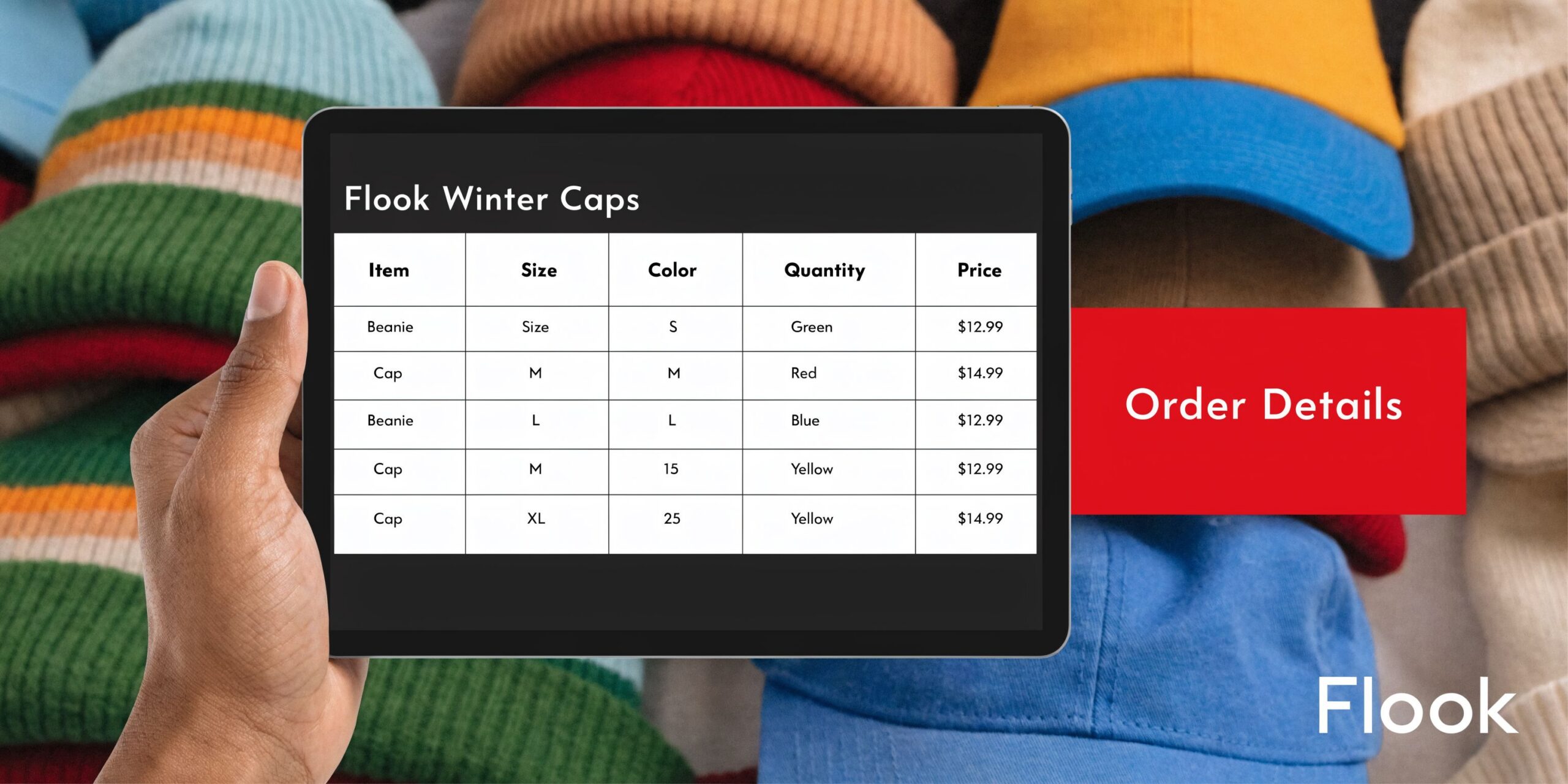
MOQ stands for minimum order quantity. In practice, it tells you whether a supplier is built for giant blank-hat volume, custom small runs, or something in between.
That matters because different buyers need different things:
- A school booster club may need a small first run to test interest.
- A startup may need employee hats without committing to deep inventory.
- A merch brand may want a short sample batch before scaling.
- A retailer may still want larger volumes but split across styles or colors.
High minimums aren’t automatically bad. They often make sense for large undecorated wholesale orders. But they’re a poor fit if you’re trying to validate a product, launch a seasonal merch drop, or order for a smaller group.
How pricing usually behaves
Even when exact pricing varies by blank and decoration, the structure is usually predictable.
Here’s what affects your quote most:
- Blank cap cost: Material, brand, and construction push this up or down.
- Decoration complexity: A basic embroidered wordmark is simpler than a dense multi-element design.
- Order size: Larger runs usually lower your cost per piece.
- Placement count: Front-only is simpler than front plus side or back branding.
- Patch or specialty finish: Add-ons can improve the look, but they also add process steps.
The cheapest quote is often the one with the most compromises hidden inside it.
A low-minimum custom shop can solve a lot of this for smaller buyers. For example, Dirt Cheap Headwear offers custom embroidered hats with minimums starting at six pieces per logo, which is useful for test runs, team orders, and smaller branded merch programs.
Timelines buyers should expect
The best way to avoid stress is to think in stages instead of one big delivery promise.
A typical order moves through:
- Style selection
- Artwork submission
- Digital proof review
- Approval
- Production
- Shipping
The place where buyers lose the most time is proof approval. Not because the shop is slow, but because internal decision-making gets messy. One person wants a bigger logo. Another wants a different thread color. Someone notices the beanie should’ve been black instead of navy. That back-and-forth adds up.
How to keep the order moving
A smoother order usually comes from simple discipline:
- Approve one final logo file: Don’t submit three slightly different versions and ask the shop to guess.
- Choose cap color first: Thread and patch decisions get easier once the base color is locked.
- Confirm the audience: Retail resale, employee gifts, and outdoor utility need different specs.
- Build in buffer time: Winter orders feel urgent because people wait too long. Don’t let your timeline depend on a perfect shipping window.
If you’re buying your first custom winter run, low minimums aren’t just convenient. They reduce risk. They let you test a style, check decoration quality, and reorder with confidence instead of gambling on a large batch.
Matching the Perfect Cap to Your Audience and Use Case
The right cap for one buyer can be completely wrong for another. A brewery merch rack, a ski team order, and a startup welcome kit may all involve “winter hats,” but they shouldn’t end with the same blank and the same logo treatment.
The startup team kit
A small company usually wants something clean and easy to wear outside of work. That means no gimmicky silhouette and no oversized decoration.
A cuffed knit beanie is the safest pick. Pair it with a soft acrylic or balanced knit blend and use flat embroidery for a tidy front logo.
Why it works:
- It feels polished without trying too hard.
It will be worn for commutes or weekends. - The cuff gives consistent placement for a simple wordmark.
The high school ski team
This buyer needs function first. The cap has to hold up in cold conditions, fit under or around winter gear, and still represent the team well.
A skull cap or a cuffed beanie in a warmer material works well here. If the logo is a mascot with detail, a patch may clean it up better than direct embroidery.
What matters most:
- Durability
- Legibility from a distance
- A fit athletes won’t constantly adjust
The apparel brand testing a winter drop
This buyer usually cares more about silhouette, hand feel, and finish details than broad mass appeal. The hat has to fit the rest of the collection.
A fisherman-style beanie, a soft rib-knit cuffed beanie, or a subtle label-driven style makes more sense than a generic promo cap. Decoration should stay restrained. Woven labels or a patch often fit better than a loud front logo.
Material can do much of the branding work. If the knit feels cheap, the whole product feels cheap.
The local brewery or coffee shop
Taproom and counter merch needs to be wearable by regulars, not just loyal superfans. People buying a hat with a drink or bag of beans usually want something simple.
A classic cuffed beanie in dark neutral colors is hard to beat. Flat embroidery or a small patch usually works best. If the branding is playful, a pom-pom beanie can work for holiday sales, but it shouldn’t be the only option.
For resale, choose the cap your customer would buy even if your logo weren’t on it.
The fundraiser or nonprofit event
This group often needs a manageable order size and broad appeal across ages. The cap needs to feel good, look clear, and avoid sizing headaches.
A basic beanie wins here. Keep the decoration direct. Don’t overbuild the product. The audience usually values comfort, clarity, and affordability more than specialty details.
When you match the cap to the person wearing it, the buying decision gets much simpler. The hat stops being a catalog item and starts becoming a usable product.
Your Wholesale Winter Cap Questions Answered
A lot of the final questions come up after you’ve already chosen a style. At that point, buyers usually aren’t asking “What is a beanie?” They’re asking the practical questions that decide whether the order moves forward.
Can I place a small custom order without overcommitting
Yes, if you work with a supplier that supports low minimums. This matters more than most first-time buyers realize because a small run lets you test style, fit, and logo treatment before putting more money into a bigger batch.
That’s especially useful if you’re launching a new merch item, outfitting a small team, or ordering for a one-time event.
Can I mix colors in one order
Often yes, but the answer depends on the supplier, the blank, and whether the decoration stays the same. Mixing colors can help you serve more tastes without multiplying your risk.
Keep one thing in mind. Too many color options can slow approval and make the order harder to manage. For a first run, fewer choices usually leads to a cleaner result.
What kind of artwork works best for winter caps
Simple vector artwork usually performs best. Clean lines, limited tiny details, and readable shapes translate better into embroidery and patches.
If your logo includes very small text or intricate gradients, ask whether a patch or simplified version will sew better. A cap isn’t a brochure. It needs visible branding, not every detail from the original file.
Should I prioritize warmth or breathability
That depends on how the hat will be used. Some buyers still need maximum insulation, especially for outdoor work or sports. But not everyone wants the hottest possible cap.
A recent trend shows that 40% of buyers prioritize breathable winter hats for urban and active use, which has helped drive a 35% surge in wholesale searches for merino wool and recycled polyester beanies from January through April 2026, according to Selini NY’s winter hats page.
If your audience moves between indoors and outdoors all day, a breathable blend may get worn more often than a heavy, heat-trapping cap.
Is one decoration method always better than the others
No. The best method is the one that suits the logo and the cap.
Use this shortcut:
- Choose flat embroidery for most clean logos.
- Choose puff embroidery for bold marks with simple shapes.
- Choose patches when embroidery would lose detail.
- Choose woven labels when you want subtle branding.
How far ahead should I order
Earlier than feels necessary. Winter demand compresses decision-making, shipping, and stock availability into a short window. Waiting until the weather turns usually limits your options.
The safest move is to finalize your art, cap style, and color choices before the rush starts. Buyers who wait until they need hats immediately usually end up choosing from what’s left, not from what fits their brand best.
If you’re ready to place a winter cap wholesale order and want blanks or custom embroidery without forcing a huge run, Dirt Cheap Headwear is set up for both small test batches and larger bulk orders. It carries wholesale beanies and other headwear, offers in-house embroidery with low minimums starting at six pieces per logo, and gives buyers a practical way to move from idea to finished winter merch without overcomplicating the process.