
What to Wear to an Event: A Simple Guide for 2026
You open an invite, read “cocktail attire,” “creative casual,” or worse, nothing at all, and immediately start spiraling. Is this blazer-and-loafers territory? A dress and heels night? Nice jeans? No jeans? Do you need a tux, or will showing up in one make you look like you misunderstood the assignment completely?
That stress is normal. Individuals don't typically need help owning clothes. They need help reading the room before they walk into it.
I've seen people get tripped up by vague invites, mixed-format schedules, and venues that look one way online and feel totally different in person. The fix isn't memorizing a giant list of dress codes. The fix is having a simple way to decode the event, then building an outfit that works for the whole day, not just the first photo.
If you want extra outfit inspiration while you're narrowing things down, Cedar & Lily Clothier's style guide is a useful reference point for occasion dressing. Then come back here for the practical part. We're going to make the decision easy.
That Invitation Just Landed Now What
A friend texts you a screenshot of an invite. “Doors at 6:30. Dress code: smart casual.” Great. That could mean polished denim and a knit polo. It could also mean everyone else shows up in structured separates and sleek dresses while one poor soul walks in looking ready for brunch.
That's why random outfit advice usually fails. It tells you what categories exist, but not how to choose between them in real life. And real life is messy. The event might start with networking, move into a seated program, then end at a bar. It might be at a hotel rooftop that gets windy at sunset. It might be a company event where you need to look sharp, approachable, and able to stand for hours.
Practical rule: Don't start with the clothes. Start with the context.
The right way to figure out what to wear to an event is simple. Read the clues. Rank the formality. Build one outfit that can handle the environment. Then add one detail that gives it personality.
That last part matters. You don't want to look generic. You want to look like you understood the assignment and still dressed like yourself.
How to Decode Any Event Invitation
The invite gives you enough information. You just need a system for reading it.
Start with the format, not the dress code
“Smart casual” means very different things at a rooftop investor mixer, a birthday dinner, or a daytime panel that turns into drinks later. Read the schedule first. If the event includes multiple phases, dress for the most polished part, then build in flexibility for the rest.
A simple example: a conference session at 3, cocktail hour at 6, outdoor after-party at 8. That outfit needs structure, comfort, and one layer for the temperature drop. This is also where smart accessories help. A clean cap or custom hat can make a group look coordinated outdoors, especially once the formal part is over.
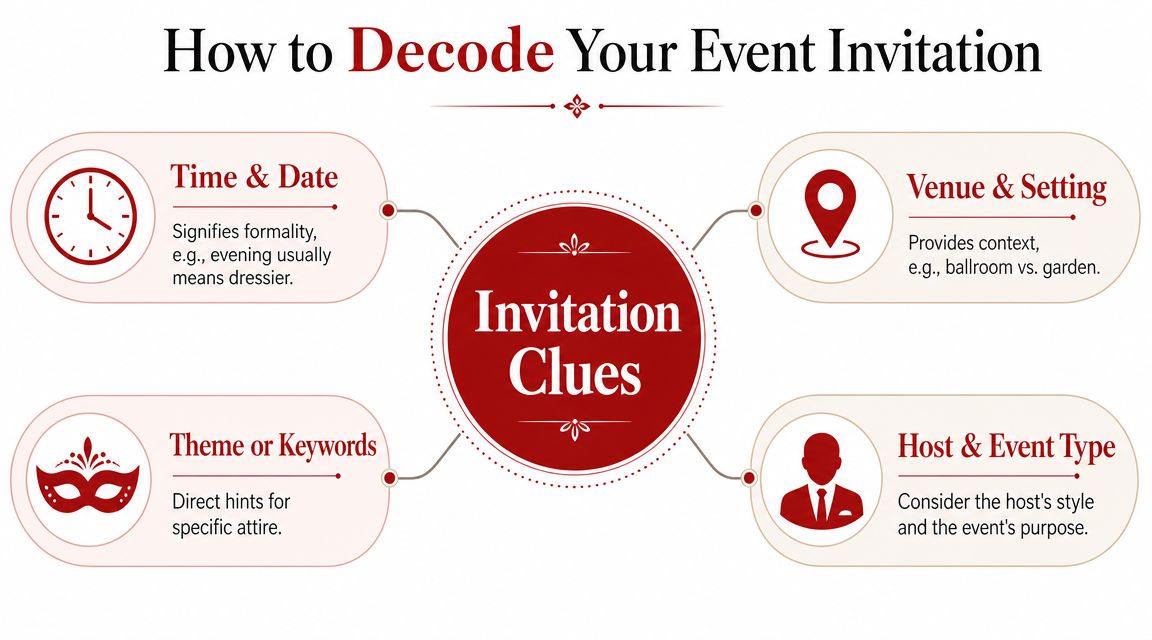
Use four clues and rank them
Not every clue matters equally. Use them in this order:
- Event type: wedding, fundraiser, company dinner, launch party, reunion
- Venue: hotel ballroom, restaurant patio, gallery, beach, backyard
- Time: daytime usually reads lighter, evening usually reads sharper
- Wording: smart casual, cocktail, festive, garden party, black tie optional
This order keeps you from getting fooled by vague language. “Festive” at a charity gala still needs polish. “Cocktail” at a beach resort still needs shoes and fabrics that can handle sand, wind, and heat.
Read the venue like a reality check
Venue indicates what polished looks like in that setting. A private club, formal hotel, and historic venue push you toward well-cut clothing and dressier shoes. A brewery, creative studio, or outdoor lawn gives you more room to relax the outfit without looking sloppy.
Past event photos help. So do the event host's social posts. They show the actual crowd, not the fantasy version on the invite.
A good guide from GEVME's advice on dressing for charity events makes the same point in practice. Context decides the right level of formality more reliably than buzzwords do.
Decide what you need to communicate
Clothes send a message before you say a word. Pick the message on purpose.
- Celebration: stylish, upbeat, a little personality
- Business: polished, competent, easy to approach
- Ceremony: respectful, restrained, properly dressed
- Creative or social: personal, interesting, still put-together
That last part matters for groups too. If you're attending with a team, your outfits should look related, not identical. Matching custom headwear in a clean color can solve that fast for outdoor events, brand activations, reunions, and travel-heavy group weekends.
Treat dress-code words as modifiers
Dress-code terms fine-tune the outfit. They should not run the whole decision.
“Smart casual” is the classic troublemaker because it sits between relaxed and dressed. If you want a sharper read on that middle ground, this guide to refined smart casual dressing is useful.
Here's the rule I recommend. If the invitation is unclear, choose a polished base outfit, then adjust one notch up or down with shoes, jacket choice, and accessories. That approach works better than guessing from one vague phrase and hoping for the best.
Outfit Formulas for Common Events
You don't need twenty outfit ideas. You need three reliable formulas that you can adjust.
Casual that still looks intentional
Casual doesn't mean careless. It means relaxed, clean, and appropriate for the setting.
Try these:
- Men: dark jeans or chinos, crisp T-shirt or polo, lightweight overshirt or casual jacket, clean sneakers or loafers
- Women: straight-leg jeans or relaxed trousers, knit top or simple blouse, denim jacket or soft blazer, sleek sneakers, sandals, or ankle boots
Keep one piece polished. Maybe it's the shoes. Maybe it's the bag. Maybe it's a sharp jacket. That keeps casual from drifting into “I gave up.”
Business casual that actually works
Business casual should look professional without looking stiff. That means structure, but not full formalwear.
Good formulas:
- Men: chinos or wool trousers, button-down or knit polo, blazer, loafers or derby shoes
- Women: dress trousers or midi skirt, blouse or fine knit, blazer or structured cardigan, flats, loafers, or low block heels
Dark neutrals make this easier. Navy, charcoal, black, olive, cream. You'll look more pulled together with less effort.
Smart casual is the tricky one
Smart casual is where people miss. They either go too corporate or too relaxed.
Use contrast:
- Men: dark-wash denim, unstructured blazer, open-collar shirt or fine knit, loafers or minimalist leather sneakers
- Women: polished jeans or dress pants, silk shell or fitted knit, relaxed blazer, heeled boots, dressy flats, or clean sneakers depending on venue
The point is balance. One relaxed piece. One polished piece. No sloppy fabrics, no beat-up shoes, no gym-adjacent anything.
If you're asking what to wear to an event with networking, walking, waiting, and temperature swings, build the outfit around flexibility first.
For trade shows and similar events, smart layers are preferred because venue temperatures often vary across air-conditioned halls, entry zones, and outdoor queues. Event guidance from MVP Visuals on trade show attire recommends a breathable base layer plus a removable blazer, cardigan, or light jacket.
Dress code cheat sheet
| Dress Code | Go-To Outfit for Men | Go-To Outfit for Women | Footwear | Avoid |
|---|---|---|---|---|
| Casual | Dark jeans, polo or clean tee, overshirt | Jeans or relaxed trousers, knit top, casual jacket | Clean sneakers, loafers, sandals | Gym clothes, worn shoes |
| Business Casual | Chinos or trousers, button-down, blazer | Tailored trousers or midi skirt, blouse, blazer | Loafers, flats, low heels | Hoodies, distressed denim |
| Cocktail | Dark suit or sharp separates, dress shirt | Cocktail dress, dressy jumpsuit, or polished set | Dress shoes, heels, elegant flats | Casual sneakers, daytime tote bags, wrinkled fabrics |
Dressing for Formal and Special Occasions
The invitation says formal, the venue is a ballroom, the ceremony starts outside, and the reception runs late. In these circumstances, people overdo it, underdress, or wear something beautiful that becomes miserable after an hour. Use a simple rule. Match the event's formality first, then solve for movement, weather, and duration.
Cocktail, formal, black tie, white tie
Cocktail sits in the middle. It should look refined and intentional, with enough polish for photos, dinner, and a nicer venue.
Go with:
- Men: dark suit, crisp dress shirt, polished leather shoes
- Women: cocktail dress, sharp dressy separates, or a sleek jumpsuit with jewelry that looks chosen, not random
Formal goes a step higher. If the invite says formal and stops there, wear evening clothes with presence. Men should reach for a dark suit at minimum, and women should choose a long dress, an elegant midi, or a dressy set in a fabric that reads evening, not office.
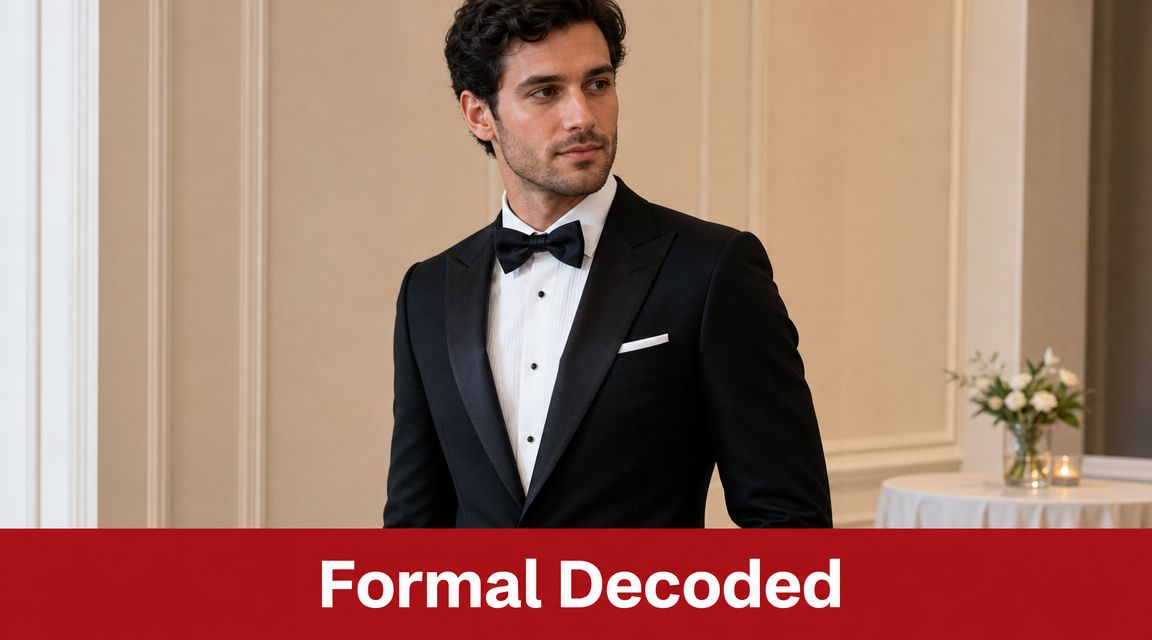
Black tie is clearer. Men wear a tuxedo. Women wear a floor-length gown, an elegant midi, or another evening look that clearly belongs after dark.
White tie is rare and extremely dressy. Men need tailcoats and the full traditional setup. Women need full-length evening gowns. If you ever receive a white tie invitation, adhere to the dress code precisely.
Read the event, not just the label
This is the part generic dress-code lists miss. A museum gala, winter wedding, charity ball, and awards dinner might all sound formal, but they do not wear the same in real life.
Check four things:
- Venue: hotel ballroom, private club, estate, tented garden, theater
- Timing: daytime formal is lighter and a little less severe than evening formal
- Surface and weather: grass, stone, stairs, wind, heat, cold
- Schedule: seated dinner only, ceremony plus reception, indoor-outdoor transitions, dancing, long speeches
That context tells you whether satin heels are smart, whether you need a wrap or tuxedo jacket that keeps you warm, and whether a statement hat belongs. If headwear is part of the look, make sure it suits the outfit and the setting. A good guide to wearing a hat with the rest of your outfit helps you keep it intentional.
Themed events need editing
“Garden glam.” “Western cocktail.” “Roaring twenties.” Fine. Treat the theme like seasoning, not the whole meal.
Use one or two themed choices:
- color
- fabric
- accessory
- hat
- jewelry
- boots or shoe style
Keep the base outfit tied to the actual dress code. A formal event with a theme is still a formal event. If you show up looking like a costume extra, you missed the assignment.
If you want a quick visual refresher on tuxedo basics, this helps:
My rule for getting it right
For evening events, choose the dressier option, then keep the accessories controlled. That works better than trying to outsmart the dress code.
A simple black gown beats a fussy semi-formal dress. A real tux beats a dark suit trying to pass as one. And for group occasions, coordinated formal accessories or custom headwear can pull everyone together without making the look feel forced.
The Complete Guide to Event Headwear
Headwear is often ignored until it's needed. Then suddenly it matters a lot. Outdoor weddings, race days, garden parties, festivals, team outings, charity walks, company retreats. A hat can either finish the look or wreck it.
When a hat makes sense
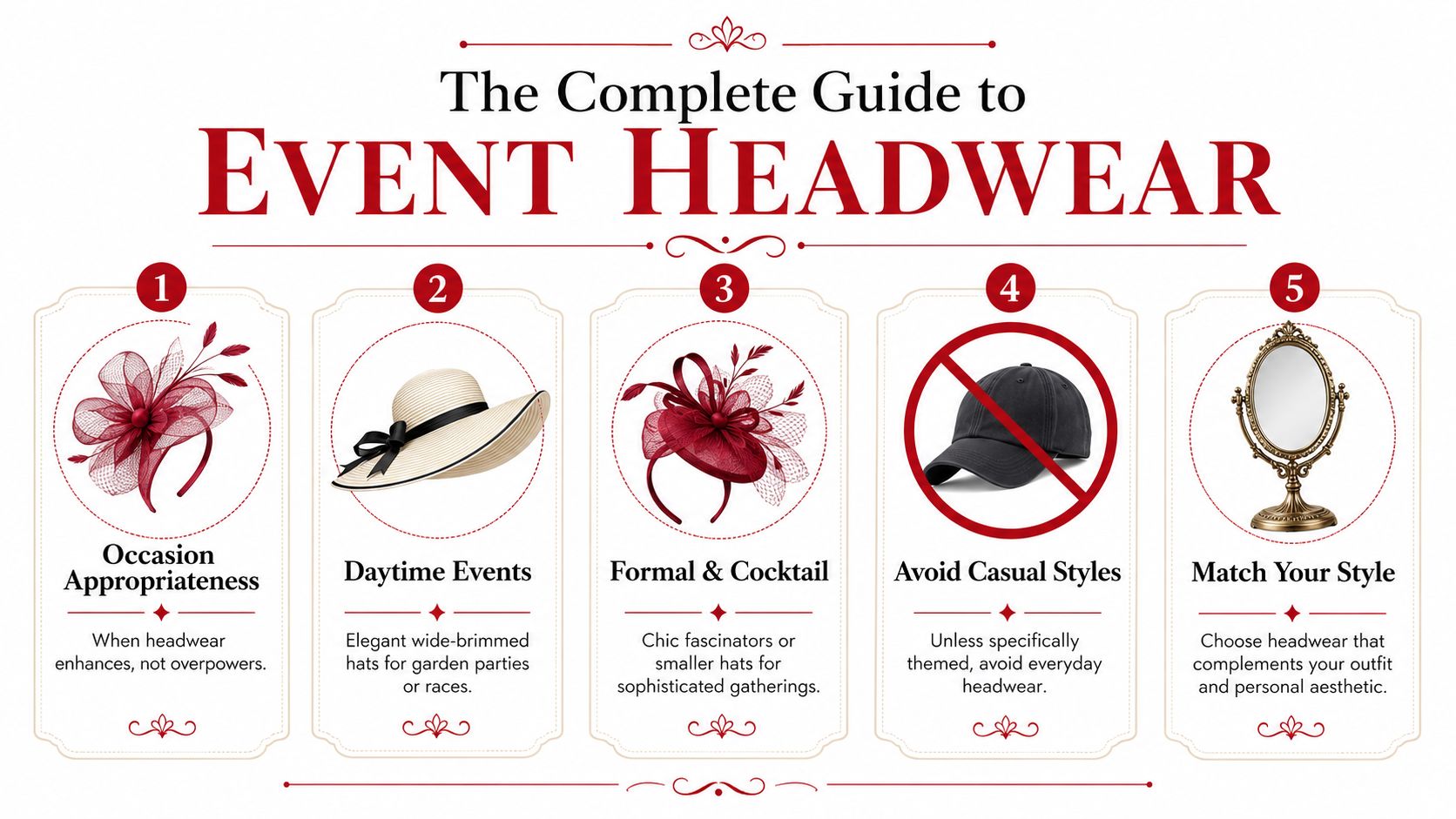
For daytime outdoor events, hats can be stylish and practical. Think wide-brim styles for garden parties or races, and smaller structured options when you want something dressy without going overboard.
For cocktail or formal settings, headwear should be deliberate. A fascinator or small dress hat can work. A random baseball cap cannot.
For casual events, you've got more freedom:
- dad hats for relaxed outdoor gatherings
- trucker caps for sporty or branded group events
- beanies for cold-weather casual settings
- bucket hats for festivals or summer social events if the vibe supports it
If you're unsure how to make a hat look intentional instead of accidental, this guide on how to wear a hat well with the rest of your outfit is useful.
Matching the hat to the job
The biggest mistake is choosing a hat that fights the outfit. A sharp look needs a clean silhouette. A relaxed look can handle more texture and personality.
Use this filter:
- Dressy daytime event: elegant brimmed hat or fascinator
- Casual social event: dad hat, rope cap, bucket hat
- Outdoor team event: snapback, trucker, visor, or performance cap
- Cold-weather group event: beanie
A hat should either support the outfit's formality or support the event's function. If it does neither, skip it.
Why custom headwear works so well for groups
This is the part most style guides ignore. Group events often need more than a good outfit. They need coordination.
Custom hats make sense for:
- company picnics
- nonprofit fundraisers
- charity runs
- staff uniforms at outdoor events
- school groups
- team-building retreats
- merch tables and brand activations
They give people a shared visual identity without forcing everyone into the same full outfit. That's especially smart when your group includes different sizes, climates, and comfort preferences. A branded trucker cap, beanie, dad hat, or snapback is easier to wear again than a one-off event tee, and it still makes the group look cohesive.
Quick Tips for All-Day Comfort and Travel
A good event outfit has to survive the whole schedule. Standing in line, walking between spaces, sitting through panels, stepping outside, going back into heavy air conditioning, then heading to dinner. If your look only works in the mirror, it failed.
Layer on purpose
Independent style coverage of cultural events and festivals repeatedly emphasizes layering, comfortable footwear, and pocketed outerwear because people move between outdoor heat and indoor cooling, and between sitting and standing, as noted by Who What Wear's advice on cultural event dressing.
The best all-day formula is simple:
- Base layer: breathable top or shirt
- Middle layer: knit, vest, or light structured piece
- Top layer: blazer, cardigan, or jacket you can remove easily
Pocketed outerwear gets overlooked, but it's useful when venue storage is limited and you don't want to carry everything in your hands.
Shoes decide your mood
If your shoes hurt, the rest of your outfit stops mattering around hour two.
Choose based on the schedule, not your fantasy schedule:
- Networking and walking: loafers, block heels, polished flats, dress sneakers if the dress code allows
- Formal event with limited movement: classic heels or dress shoes are fine
- Mixed-format day: prioritize support first, style second
If you're committed to heels, luxury heels for all-day comfort offers practical ways to make them more wearable.
Travel smarter than you pack
For destination events, wear your bulkiest layer in transit. Pack pieces that can do more than one job. One blazer that works at check-in, dinner, and a panel beats three single-purpose items.
Bring:
- A backup top: spills happen
- A foldable tote: useful for extras and giveaways
- Weather insurance: a compact layer or cap if rain is even possible
A simple water-resistant cap for unpredictable conditions can make sense for casual outdoor events, travel days, and branded group activities where function matters as much as style.
Ordering Custom Hats for Your Group or Event
If you're dressing a team, staff, volunteer group, or event crew, custom hats solve a lot of problems fast. They create a unified look without forcing everyone into the same shirt fit, jacket cut, or full uniform.
That matters because practical event attire is shaped by real working conditions. Event professionals are often advised to wear comfortable shoes, dark colors, layers, and garments with pockets because events can run for long hours on foot and storage is limited, according to BizBash's guidance for what industry pros should wear at events. A custom hat fits neatly into that reality. It's visible, wearable, and easy to keep on all day.
What to order
For most groups, start with the event type:
- Outdoor staff and volunteers: trucker caps, visors, performance caps
- Streetwear-friendly brand events: snapbacks, rope hats, dad hats
- Cold-weather activations: beanies
- General team use: classic dad hats or structured caps in neutral colors
If you're sourcing for a small team or a larger run, bulk custom embroidered hats for events and groups gives you a practical path to compare styles and decoration options. Dirt Cheap Headwear is one option if you need blank hats or embroidered headwear for businesses, teams, and events, especially when you want multiple style choices instead of one standard cap.
Event Attire FAQs
What if the invitation has no dress code at all
Use the framework. Check the time, venue, host, and event purpose. If it's evening at an upscale venue, dress up. If it's daytime in a casual setting, keep it polished but relaxed. Past event photos help a lot.
Are nice jeans ever okay
Yes, sometimes. Dark, clean, well-fitting jeans can work for casual, smart casual, and some relaxed networking events. They usually do not belong at cocktail, formal, or black-tie events.
Is it rude to ask the host what to wear
No. It's smart. Ask briefly and specifically. “Would you say this is more cocktail or smart casual?” gets better answers than “What should I wear?”
What's the safest fallback outfit
For men, dark trousers, a crisp shirt, a blazer, and polished loafers usually land well. For women, well-fitting trousers or a simple midi dress with refined accessories is a strong middle ground. The goal is to look intentional, not loud.
Should I wear a hat to an event
Only if it fits the event type, setting, and outfit. Daytime outdoor events are the easiest yes. Formal indoor events require more restraint. Casual caps are great for group outings, fundraisers, and outdoor brand events, but they don't belong everywhere.
If you're planning a staff event, fundraiser, team outing, or branded activation, Dirt Cheap Headwear is a practical place to source blank and custom-decorated hats for groups. You can build a coordinated look without overcomplicating everyone's outfit, which is exactly what good event style should do.