
How to Wear a Hat: A Style and Fit Guide for 2026
You put on a hat, check the mirror, and something feels off.
The brim looks too flat. The crown sits too high. Maybe the hat itself is good, but it still reads more costume than style. That is usually not a you problem. It is a fit problem, a proportion problem, or a context problem.
I see this on both sides of the business. One person wants a cap that feels natural with jeans and a hoodie. A business owner wants staff hats that look sharp on ten different head shapes and still keep the logo clean. The fix is the same in both cases. Learn how the hat should sit, what shape works on your face, and what message the style sends before you ever get to decoration.
A hat is not just an accessory. It changes your outline, frames your face, and tells people whether your look is polished, relaxed, athletic, rugged, or playful. If you sell, staff, coach, promote, or perform in hats, it also becomes part of your brand system.
More Than an Accessory Why Your Hat Matters
A bad first hat turns plenty of people off for years. Usually it is a cap bought in a rush, worn too high on the head, left too loose at the back, or chosen in a crown shape that fights the face instead of framing it.
I see the same mistake from two directions. A customer wants one hat that feels right with everyday clothes. A business owner wants fifty hats that staff will wear, with a logo that still looks sharp on different head shapes. In both cases, the hat has to do more than fill space on top of the head. It has to work with the person wearing it.
That is why how to wear a hat is partly personal style and partly selection strategy.
Hats used to follow social rules. Now they follow fit, proportion, and purpose. That shift changed the rules. The question is no longer whether you should wear a hat. The question is what shape, profile, and attitude the hat adds to your look or your brand.
What a hat does for a person
A hat changes your outline before anyone notices the details. The crown adds height or softness. The brim can sharpen the face, relax the outfit, or pull the whole look off balance if the profile is wrong.
The right hat can:
- Finish an outfit: A broken-in dad hat can make simple basics look considered instead of thrown on.
- Change facial balance: A higher crown or firmer front panel can add definition where a softer cap can make features look rounder.
- Set the tone: A backward snapback, a curved dad hat, and a clean fitted cap all send different signals.
- Handle real-life needs: Sun coverage, wind control, work use, travel, or just getting out the door on a bad hair day.
I tell clients this all the time. If the hat looks like part of you, it works. If it looks perched on top, something is off in the fit, the profile, or both.
What a hat does for a brand
The same rules apply to branded headwear, only the importance is greater because the hat has to flatter the wearer and carry the logo well.
A tall structured trucker can make a crew look more uniform and give embroidery room to read from a distance. A softer cap feels easier and less formal, but the wrong logo size can disappear on it. Choosing between those profiles is not a small style choice. It affects how the brand is seen, how often the hat gets worn, and whether the decoration holds its shape over time. If you need a quick comparison, this breakdown of structured vs unstructured hats is a useful starting point.
People notice the silhouette first. Then they notice the logo. If the base hat is wrong, good embroidery cannot rescue it.
A Guide to the Most Popular Hat Styles
Many buyers do not need to memorize every hat category on the market. You need a working feel for a handful of styles that show up again and again in personal wardrobes, uniforms, merch programs, and event orders.
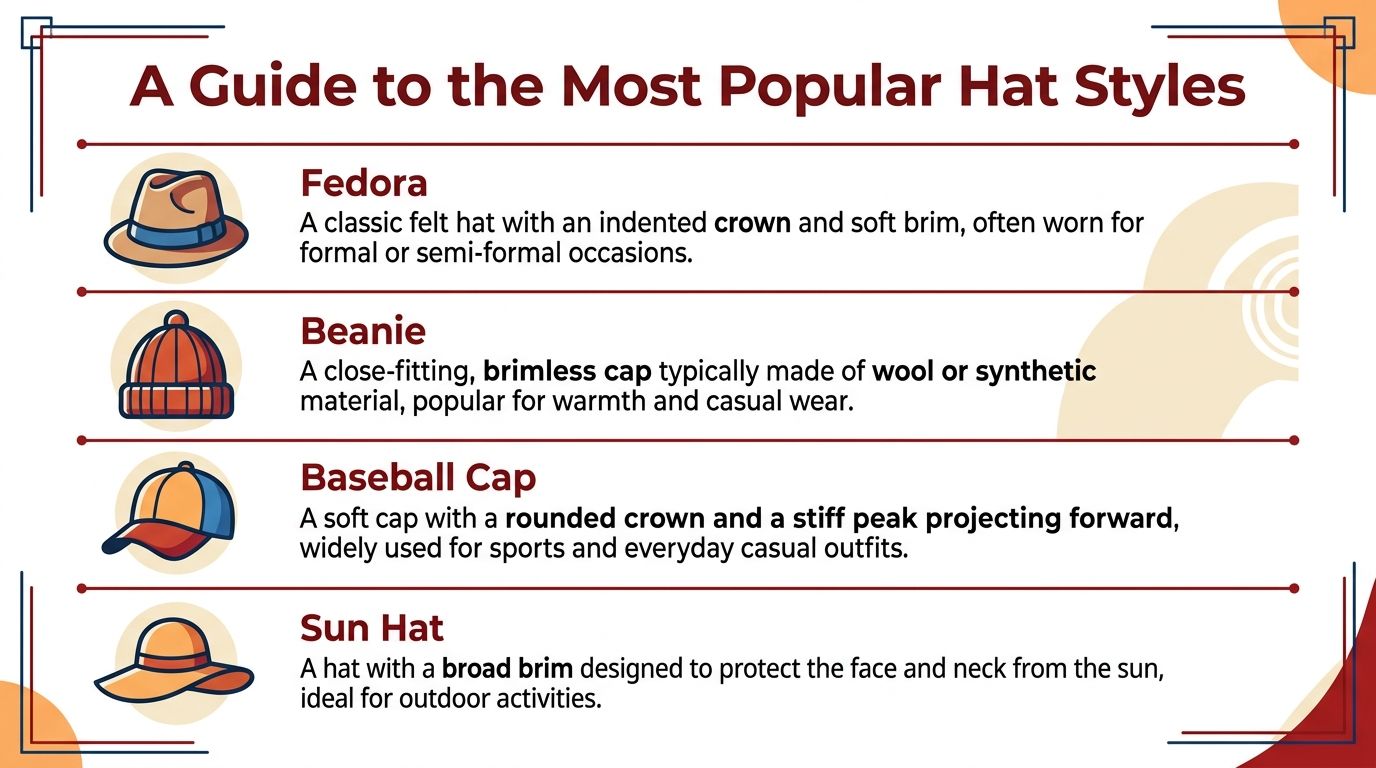
The quick read on shape and vibe
| Style | What it looks like | Best for | Branding note |
|---|---|---|---|
| Snapback | Flat or slightly curved brim, adjustable snap closure, often structured | Streetwear, teams, merch drops | Great for bold front logos |
| Strapback | Adjustable strap closure, often cleaner and softer than a snapback | Lifestyle wear, cafes, retail, creative brands | Feels more refined than a plastic snap |
| Dad hat | Low-profile, unstructured, curved brim | Everyday wear, relaxed outfits | Works well with smaller embroidery |
| Trucker cap | Structured front, mesh back, taller profile | Outdoor work, events, rugged branding | Big front panel gives the logo room |
| Fitted cap | No rear closure, fixed size | Cleaner finish, sports look, polished casual | Strong when exact sizing matters |
| Beanie | Brimless knit cap | Cold weather, outdoor crews, winter merch | Better for patches or simpler decoration |
| Bucket hat | Soft crown, downward brim | Travel, streetwear, summer events | More fashion-forward than a classic cap |
| Rope cap | Cap with rope detail across front seam | Golf, resort, retro-inspired branding | Distinctive style without being loud |
Structured versus unstructured
This is one of the biggest style forks.
Structured hats hold shape in the front panels. They look sharper, taller, and more assertive. They also tend to showcase embroidery more clearly because the front panel stays upright.
Unstructured hats collapse more naturally. They break in faster and feel easier on people who do not like a stiff crown. If you want a deeper comparison, this breakdown of structured vs. unstructured hats is a useful visual reference.
The everyday winners
Snapbacks
Snapbacks still own a big part of the casual market because they are adjustable and visually strong. They suit people who like a clean front and a more graphic presence.
For business use, I like them when the logo needs authority. Construction companies, sports organizations, automotive shops, and streetwear brands all benefit from that stronger shape.
Dad hats
Dad hats are forgiving. That is why so many first-time hat wearers do well with them.
The soft crown feels less formal and less “try-hard.” If someone says they hate hats because they feel bulky, I usually put them in a low-profile dad hat first. For branding, this style shines with understated embroidery, small logos, initials, or simple icon marks.
Trucker caps
A trucker cap has purpose built into its look. Mesh back, taller front, more airflow, more visual volume.
It reads practical even when worn casually. That makes it a natural fit for trades, outdoor events, breweries, equipment companies, and active lifestyle brands.
If your logo needs space and your audience likes a sturdier cap, the trucker is often the safest bet.
Specialty styles that still matter
Beanies
Beanies do not frame the face the way a brimmed cap does, but they are powerful for seasonal identity. Teams, winter events, and outdoor staff use them because they feel useful first and stylish second.
Bucket hats
Bucket hats are less universal, but when they fit the person or the campaign, they fit well. They soften sharp features and add fashion energy to an otherwise simple outfit. For promo use, they work best when the audience already leans trend-aware.
Fedoras and dress hats
These are the least forgiving. They require more intent in the outfit and more confidence from the wearer. Those new to hat-wearing can start with caps first. Move to dress hats once you understand proportion and occasion.
5-panel versus 6-panel
This detail changes the face of the hat.
A 5-panel cap has a single front panel and usually a cleaner, flatter front. It often feels more modern and skate-inspired.
A 6-panel cap has a seam down the front and a more traditional baseball-cap shape. It is the easier choice for broad use because more people already recognize and wear that silhouette comfortably.
Find the Right Hat for Your Face and Occasion
You see the difference fast in a fitting room. One person puts on the cap everyone is buying and it looks forced. Another tries a less obvious shape and suddenly the face looks more balanced, the outfit makes sense, and the hat feels like it belongs there.
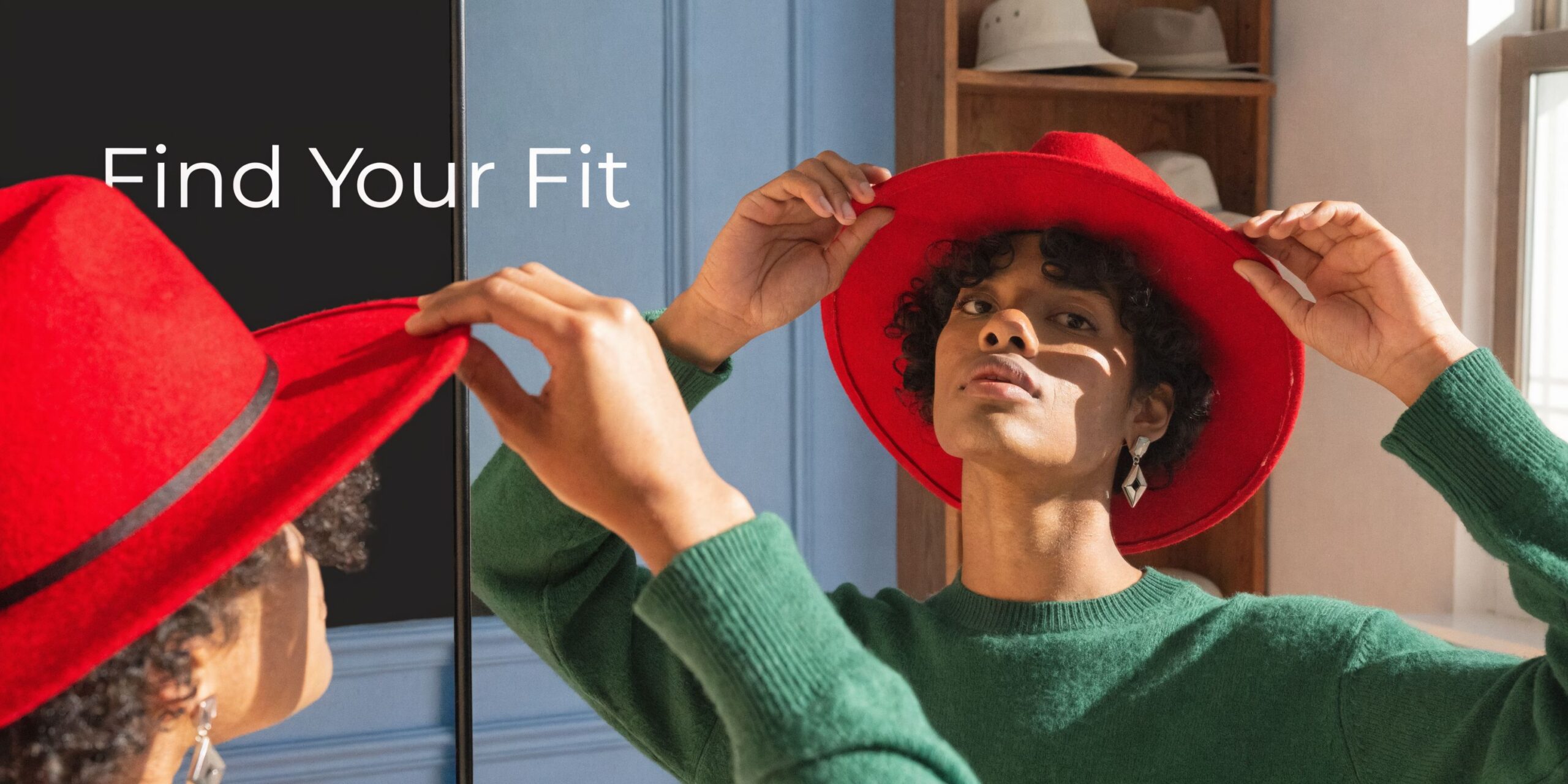
A hat's primary purpose is to work with your features and with the setting. The old social rules around hats have relaxed a lot over time, so the better question now is not whether you can wear one. It is whether the shape, scale, and message fit the moment.
That same judgment matters in branded headwear. A hat that flatters the wearer gets repeated use. A hat chosen only because the logo looked good on a mockup usually ends up in a drawer.
Start with your face, then check proportion
Face shape is a useful shortcut, not a strict rule. I use it to narrow the field, then I check head size, hairstyle, shoulder width, and how the brim interacts with the eyes and brow.
- Round face: Add structure or a little height. Higher-profile caps, structured truckers, and snapbacks usually create cleaner balance.
- Square face: Softer crowns and curved brims tend to sit better. Dad hats and relaxed caps can ease strong angles.
- Oval face: Nearly every style is in play. This face shape handles changes in crown height and brim shape well.
- Heart-shaped face: Keep the top from feeling too heavy. Lower-profile caps and cleaner silhouettes usually look more natural.
Proportion decides the final answer.
A fuller face does not automatically need the biggest crown on the wall. A narrower face does not benefit from a tiny cap pulled tight. The better move is a middle-ground shape that matches the scale of the head and shoulders. If you are unsure where to start, use a moderate profile and confirm your measurements with a hat size 8 fit guide before chasing a specific style.
Match the hat to the occasion
A good-looking hat can still be the wrong hat.
For daily casual wear, clean and easy wins. Dad hats, simple strapbacks, broken-in snapbacks, and seasonal beanies all fit naturally into errands, travel days, coffee runs, and relaxed workplaces.
For outdoor use, function has to lead. Trucker caps, performance caps, visors, and sun hats earn their place because they handle heat, glare, sweat, or weather better than fashion-first styles.
For events, staff uniforms, and promotions, wearability matters as much as logo visibility. I tell business owners this all the time. If the audience would never choose that silhouette for themselves, the branding will not save it. A slightly smaller logo on a hat people wear beats a perfect front decoration on a cap they avoid.
For dressier settings, keep the hat intentional. Cleaner materials, quieter colors, and less novelty make a stronger impression at weddings, dinners, and social events where the rest of the outfit has some polish.
Use color to connect the outfit
Color should support the look, not fight for attention.
Exact shirt-to-hat matching often looks stiff. Better results come from pulling a secondary color from the shoes, overshirt, bag, or jacket. If the outfit is flat, contrast helps. If the outfit already has pattern or strong color, the hat should calm things down.
That principle also carries over to branded hats. Brand colors that look strong on packaging can feel loud on a crown, especially on brighter cap styles. The best custom hats balance logo thread color, hat fabric, and the kind of places people will wear them. A cap can advertise the brand and still look like a real part of someone’s wardrobe.
The right hat does two jobs at once. It suits the person wearing it, and it fits the room they are walking into.
Nailing the Fit How to Adjust and Wear Your Hat
You notice fit fastest when a good hat looks off for no obvious reason. The brim keeps drifting, the crown sits too high, or the closure bites after ten minutes. That is usually not a style problem. It is a fit problem.
A well-made hat should settle onto the head without a fight. That matters for personal wear, and it matters just as much in branded headwear. If a staff cap needs constant tugging or leaves a mark by lunch, people stop wearing it, no matter how clean the logo looks.
Start with placement
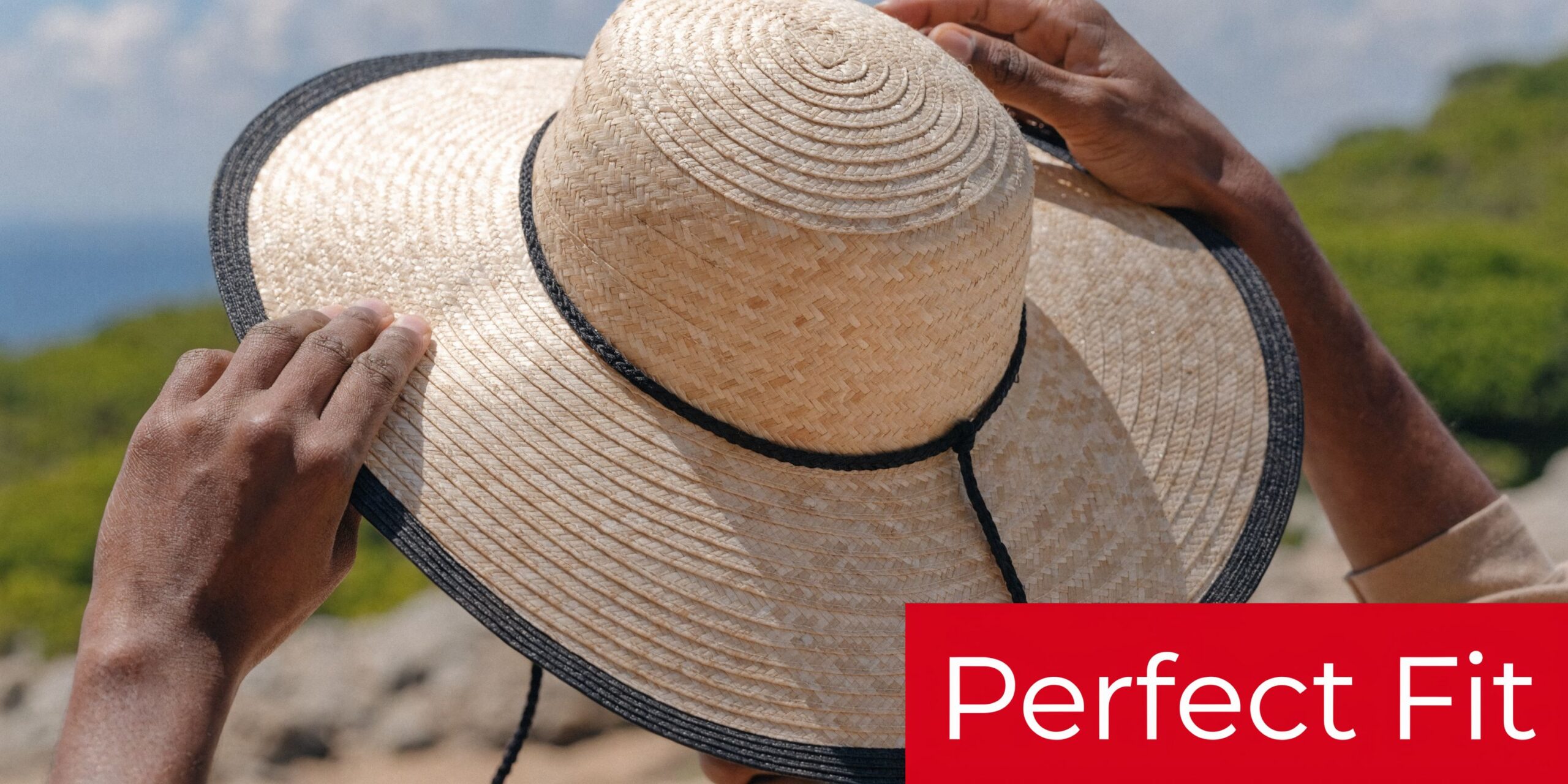
Put the hat on with both hands. Set the front first, center it over the forehead, then bring the rest of the crown down evenly. That simple habit gives a cleaner fit than pulling from one side, which often twists the hat before it settles.
The brim should sit level unless you are making a small style choice on purpose. For most caps, leave a little space above the eyebrows instead of dropping the front too low. Around the back, the closure should feel secure without forcing the band tight enough to leave pressure points.
A quick fit routine that works
- Hold the hat from both sides: Keep the crown straight before it touches your head.
- Place the front panel first: Line up the center seam or logo with the middle of your face.
- Lower it evenly: Avoid tugging one side lower than the other.
- Adjust for hold, not squeeze: The hat should stay put when you move, but it should not clamp the temples.
- Check the side view in a mirror: That is where high-floating crowns and over-low brims show up fast.
For fitted caps or uncommon sizes, a hat size 8 fit guide helps set a realistic baseline before you buy.
Straight, tilted, or backward
How you angle the hat changes the read immediately.
Straight and level is the safest choice. It looks cleaner, photographs better, and keeps front embroidery easy to see. I usually recommend this position for branded caps because it respects the shape the hat was built to hold.
A slight tilt can work, especially with softer styles or when the rest of the outfit has some personality. Keep it subtle. If one side drops far enough that people notice the angle before the hat itself, the look starts to feel forced.
Backward wear has its place too. It reads casual and younger, and it can be useful when the front crown feels too dominant with certain hairstyles. For businesses, though, backward wear is rarely the best choice if the front logo is the main branding element. Side embroidery or a rear mark can solve that trade-off.
A short visual demo helps here:
What throws the fit off
A few mistakes show up all the time in fittings.
- Over-tightening the closure: This creates pressure at the temples and makes the crown buckle.
- Wearing the hat too high: The hat looks borrowed and unstable.
- Forcing a hard tilt: Small angle changes can add character. Big ones usually look performative.
- Ignoring hair volume: Curls, thick hair, braids, and slicked styles all change how deep the crown can sit.
If you are unsure, center the hat, level the brim, and make the smallest adjustment possible. Small corrections usually look best.
Hat hair without the panic
Start with dry hair if you plan to take the hat off later. Damp hair sets into the shape of the band and crown much faster.
Softer styling products also recover better than stiff hold. If you wear hats often, the practical move is to style with the hat in mind instead of fighting it afterward. That is true for daily wear, and it is true for branded event hats too. The best custom cap is one people can keep on for hours and still feel comfortable taking off in public.
Modern Hat Etiquette and Simple Care Tips
Hat etiquette feels old-fashioned until you understand where it came from.
In 1571, Queen Elizabeth I required people over age 7 in England to wear a wool cap on Sundays and holidays, with fines for non-compliance, according to Fun Kids’ historical facts about hats. Rules like that treated hats as signals of status, profession, and piety. Modern etiquette is softer, but it still carries the same basic idea. A hat says something in public spaces.
When to take it off
The practical rule is respect.
Take your hat off in situations where the setting asks for acknowledgment, attention, or formality.
- At the dinner table: Especially in restaurants or hosted meals.
- During national anthems or formal observances: This still reads as basic respect.
- In more formal indoor settings: Ceremonies, certain worship spaces, and solemn events.
- When greeting in a clearly formal context: Not always required, but still a polished move.
Casual indoor spaces are different now. Coffee shops, stores, airports, and many offices do not carry the same expectation. Read the room.
When keeping it on is fine
There is no need to perform old-school etiquette in every modern setting.
A baseball cap in a grocery store, team beanie in an arena, or trucker cap in a workshop does not raise eyebrows. Function and setting matter more than rigid tradition.
If the space is casual and the hat fits the activity, wearing it indoors is usually fine. If the moment is formal or respectful, remove it.
Keep the hat looking good
Care is not complicated. Hats are often damaged in storage, rather than during wear.
Basic habits that help
- Store the crown supported: Do not crush it under bags or jackets.
- Handle by the brim and band with clean hands: This slows staining.
- Spot-clean early: Fresh sweat and dirt lift easier than old buildup.
- Let it air out: Do not toss a damp hat into a closed gym bag or trunk.
Match care to material
Structured caps need shape protection. Soft dad hats can handle a little more compression. Straw and felt styles need gentler handling and better storage. Knit beanies are the easiest, but even they lose shape if they stay stretched on hooks for too long.
A hat lasts longer when you treat it like gear, not clutter.
Branded Headwear How to Choose Hats for Your Business
A sales rep gets a box of branded caps for a trade show. The logo is sharp, the colors match the brand guide, and the hats still sit on the table by noon because the shape feels stiff and the fit looks off on half the team.
This is a key test. A business hat has to work as wearable gear first and brand exposure second.
I see this mistake all the time with company merch. Buyers approve the logo, then treat the cap itself like a blank surface. It is not. Profile, crown structure, closure, fabric, and stitch method all affect whether staff will wear it, whether customers will keep it, and whether your brand looks polished or cheap.
Start with the wearer, then choose the logo treatment
The first question is simple. Who will wear this hat?
A landscaping crew, brewery customer, gym staff, and SaaS event team should not all get the same cap just because the front panel is large. If the wearer prefers a relaxed shape, a tall structured snapback can make the whole program miss, even with good embroidery. If the audience likes a crisp, uniform look, a floppy washed cap can undercut the brand.
Use the brand and the wearer together:
- Rugged, service-based, or outdoor brands: structured trucker or structured snapback
- Friendly local businesses and lifestyle brands: dad hat or soft strapback
- Fitness, golf, and performance-focused teams: fitted cap or lightweight performance cap
- Merch lines with a vintage or streetwear angle: rope cap, washed cap, or select trucker styles
Personal styling and brand strategy meet in the same place here. The best hat for one person has to flatter their style. The best hat for a business has to do that at scale.
Match decoration to the cap
Good branding starts with a hat that can carry the logo cleanly.
Flat embroidery is the safest option across most styles. It stays readable on lower-profile crowns and softer fronts. 3D puff needs structure behind it or it can look uneven fast. Patches help when the logo has fine detail, small text, or linework that would fill in during direct stitching.
For business orders, I use four checkpoints:
- Cap silhouette
- Logo scale
- Stitch method
- How the hat will be worn
That last point gets overlooked.
A logo does not sit on a display stand. It sits on a moving head, often tilted slightly forward, sometimes worn low on the brow, sometimes pulled tight by a snap or strap. If your team wears caps low and snug, simplify the art and avoid tiny lettering. If your customer base prefers soft, unstructured hats, choose a logo version that still reads well on a less rigid surface.
If you are planning embroidery, it helps to review the practical differences in custom stitching on hats before finalizing the cap style. Stitch density, logo size, and crown shape have to agree.
Good business choices are usually the wearable ones
The best branded hat is rarely the one with the biggest logo or the flashiest decoration.
It is the one your staff reaches for on a Monday morning. It is the one a customer keeps in the car, throws on for errands, and wears often enough that your brand becomes familiar without feeling forced. That is true whether you are ordering fifty hats for a crew or building a retail merch program.
A clean mid-sized logo on the right cap usually beats an oversized logo on the wrong one. Better wear rate wins. Better repeat use wins. Better comfort wins.
A branded hat works best when the person wearing it feels like themselves, and your logo still reads clearly. Reverse that priority, and the hats tend to stay in the box.
If you need blank hats, expert decoration, or help choosing the right style for your team, merch line, or event, Dirt Cheap Headwear makes the process easy. You can source trusted brands, compare profiles and structures, and get custom embroidery with low minimums, fast turnaround, and guidance from people who work with headwear every day.
Pingback: Flexfit Hat Size Chart: Find Your Perfect Fit | Dirt Cheap Headwear
Pingback: What to Wear to an Event: A Simple Guide for 2026 | Dirt Cheap Headwear