
Screen Printing Services Explained for Hats and Apparel
You're probably standing in front of a stack of blank hats, shirts, or both, trying to answer a simple question that turns messy fast: what's the right way to put our logo on these? A coach wants caps for a tournament. A brand wants merch that doesn't look flimsy. An event planner wants something people will wear after the giveaway table closes. That's why people start searching for screen printing services, they're trying to turn a design into something wearable without guessing wrong on cost, quality, or timing.
For headwear, the decision gets even trickier. A flat tee is forgiving, but a curved cap panel, a small front area, and low minimums can change the whole conversation. If you've ever tried to compare decoration methods and felt like every shop was speaking a different language, it helps to understand shopper behavior with a practical qualitative lens, not just a price-first one. That's why this guide walks through the work in plain language, starting with how the process really behaves on hats and apparel.
Why Buyers Search for Screen Printing Services
A buyer usually is not searching for screen printing because they care about print methods for their own sake. They need finished pieces that can handle regular use, whether that means staff uniforms, merch for a product drop, or caps for a league, fundraiser, or booth giveaway. The central question is simple: which decoration method fits the design, the quantity, and the deadline without creating avoidable problems?
That question changes fast on headwear. A flat T-shirt gives a shop more room to work, while a curved cap panel leaves less space, less forgiveness, and more chances for the artwork to feel too big or too cramped. If you are comparing methods and every shop seems to speak a different language, the clearest next step is to understand shopper behavior deeply with a practical qualitative lens, not only a price-first one. Buyers who know that upfront can compare quotes with a clear head instead of treating every shop recommendation like a mystery.
For apparel, screen printing stays closely tied to textiles and decorated garments. Mordor Intelligence estimates the global screen printing services market at USD 8.16 billion in 2025 and projects USD 10.24 billion by 2030, with 4.63% CAGR over that period. The same source says textiles made up 56.12% of market share in 2024, and apparel and fashion represented 35.24% of the market, which fits how many buyers use it, on clothing and related commercial goods. Mordor Intelligence's screen printing services market overview
For hats, the search usually comes with a few extra worries. Buyers want a logo that stays crisp on a curved surface, does not look oversized, and does not turn into a guessing game because the art file is messy or the order is too small for the setup work.
What usually sits behind the search
- A team order: A coach needs caps that match uniforms and can survive repeated use.
- A brand drop: A founder wants a logo that looks bold without going full embroidered texture.
- An event rush: A planner needs gear that looks polished from six feet away.
- A reseller test: A decorator wants to try a headwear design before committing to larger quantities.
That mix of use cases matters because the “right” method changes with the job. Screen printing is one option, embroidery is another, and digital printing may fit certain artwork better. Buyers who know that upfront can compare quotes with a clear head, because they understand shopper behavior instead of treating every shop recommendation like a mystery.
How Screen Printing Actually Works
Screen printing is basically a stencil system with better control. A printer coats a mesh screen with emulsion, exposes it to light with the artwork in place, and washes out the unexposed areas so ink can pass through the open parts of the stencil. Then a squeegee pushes ink across the screen and onto the fabric or cap panel, leaving the design behind in the right spots.
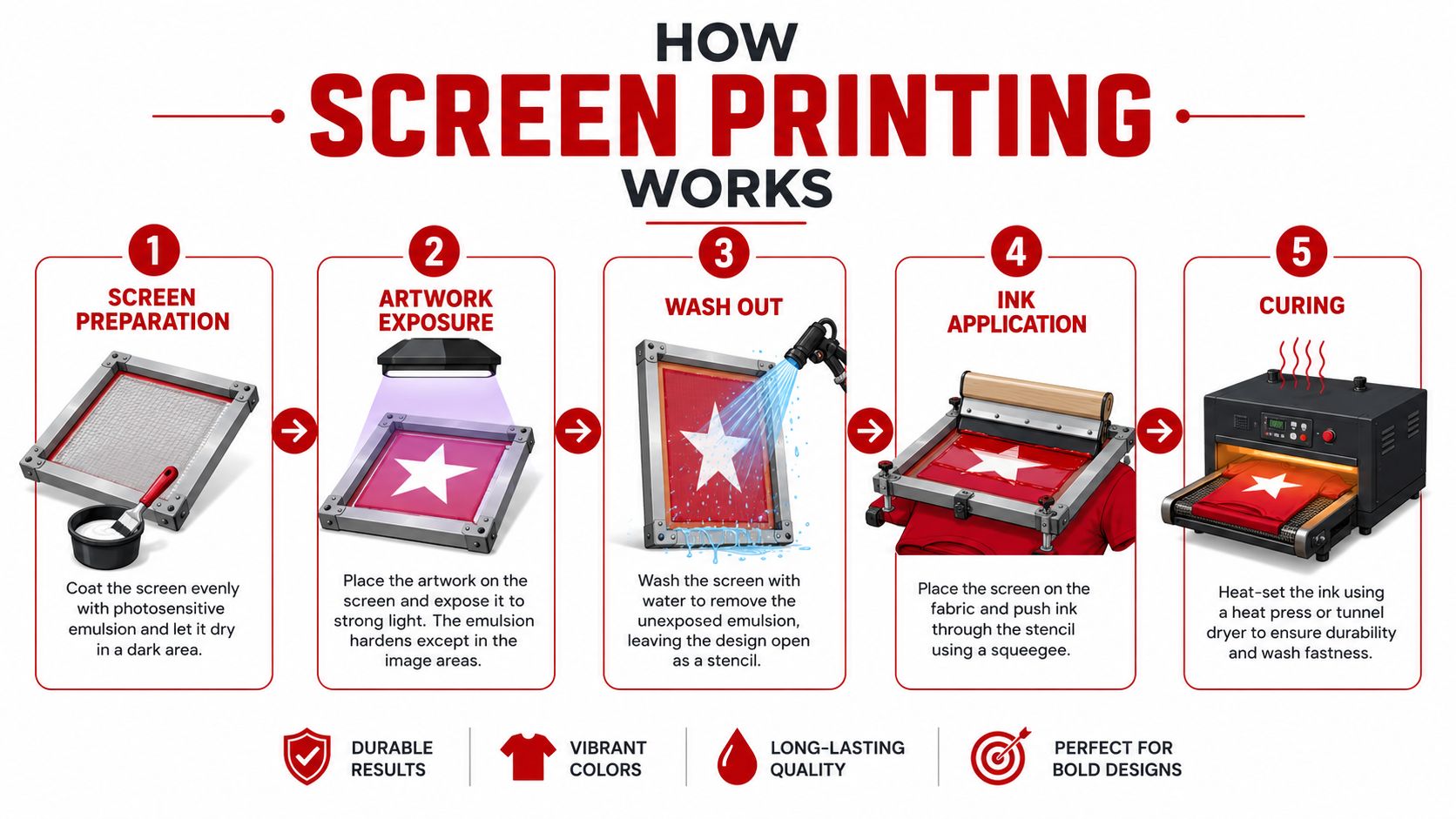
That process is why spot colors matter so much. Each color usually needs its own screen, so a two-color logo is simpler than a six-color one. Every added color means more setup, more alignment work, and more chances for the quote to move up. That's also why production teams like designs that are clean, flat, and repeatable.
Why it fits some products better than others
Screen printing thrives on surfaces that give the ink room to sit evenly. T-shirts, totes, and the front panels of structured caps are the obvious fits. Curved or tightly shaped surfaces can still be printed, but the more irregular the surface gets, the more the shop has to control pressure, placement, and consistency.
Practical rule: If the logo needs to look sharp from a distance and the design doesn't depend on tiny gradients or photo detail, screen printing usually makes sense.
A quick mental model helps. Imagine painting through a very precise cutout. If the cutout is neat and the surface is predictable, the result is clean. If the artwork is too detailed or the print area is awkwardly small, the method starts fighting the job instead of supporting it.
For a closer look at one production approach, the method guide at Dirt Cheap Headwear's screen printing methods page shows how shops think about decoration choices on headwear and apparel.
The curing step is the part buyers forget most often. After ink is applied, heat sets it so the print holds up during wear and washing. That's not a cosmetic extra. It's part of what turns a wet print into a finished product that can leave the shop.
Screen Printing Compared to Embroidery and DTG
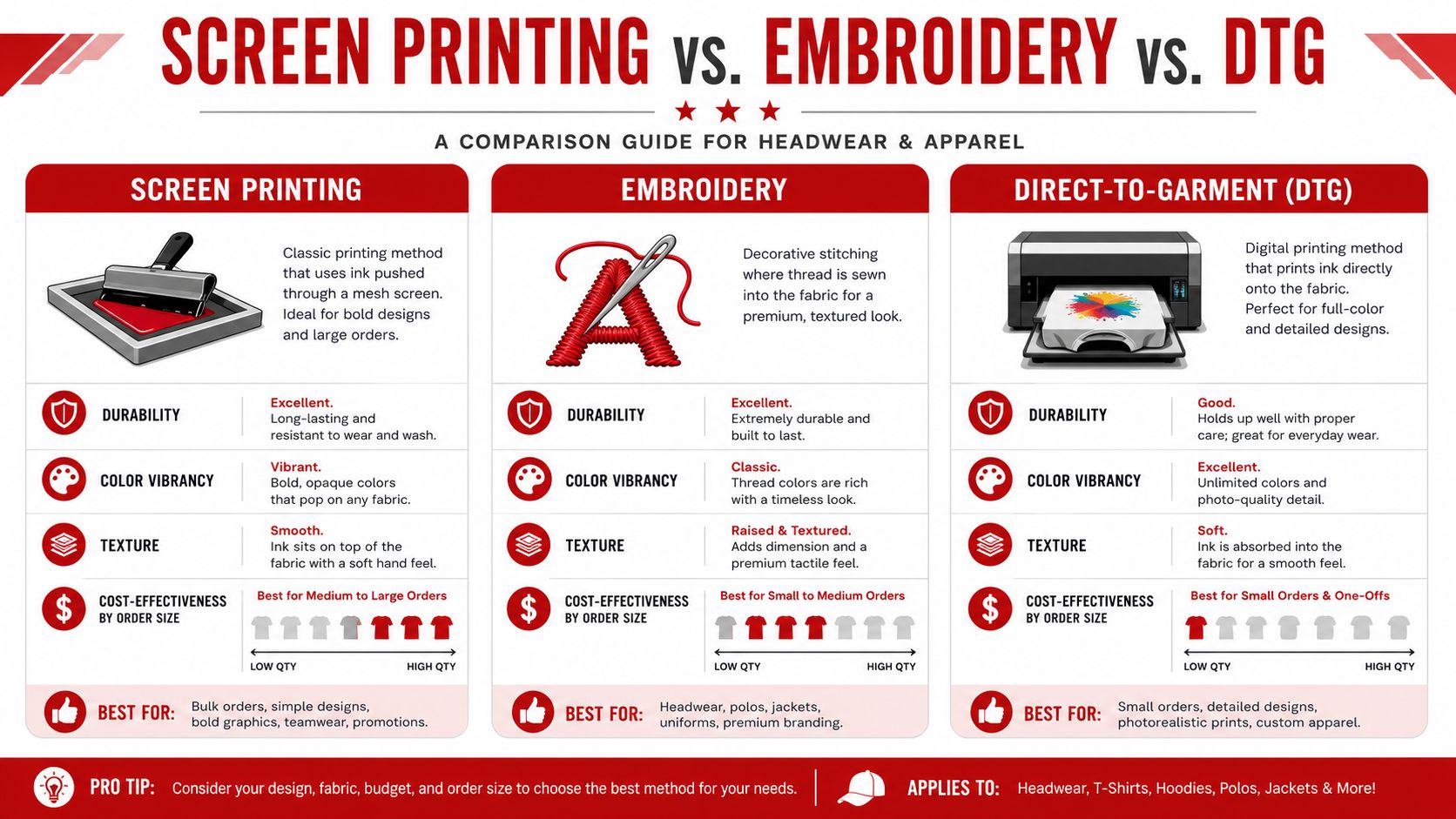
If you're ordering hats, this comparison usually comes down to feel, shape, and design type. Screen printing lays down ink, embroidery builds with thread, and DTG prints directly onto fabric with a digital printer. That means each method has a different look and reacts differently to curved cap panels, flat tees, and small graphics.
The look and feel difference
Screen printing gives you a flat ink finish that reads clean and direct. Embroidery gives you a raised, textured logo that feels premium and structured. DTG is better known for detailed digital art on fabric, especially when the design has lots of visual complexity.
On hats, that texture difference matters more than people expect. A small embroidered mark can feel refined on a cap, while a screen printed front logo can look bolder and more graphic. DTG is usually discussed more in apparel contexts than on caps, because it's built around garment printing rather than curved headwear panels.
Where each method tends to make sense
- Screen Printing: Good for bold logos, simple color blocks, and jobs where the same design repeats across many pieces.
- Embroidery: Useful when the logo should feel stitched, durable, and polished on headwear or jackets.
- DTG: A smart option when artwork depends on fine detail or complex color blending on fabric.
Screen printing wins when the design is straightforward and the buyer wants strong visual impact without thread texture.
Cost logic also differs. Screen printing gets more efficient as setup spreads across more pieces. Embroidery often makes sense for smaller logo placement on caps and premium apparel, while DTG is more flexible for detailed artwork and smaller runs on compatible garments.
For a headwear buyer, the simplest way to choose is to ask one question, “Do I want this to read like ink, thread, or a digital image?” Once you answer that, most of the comparison gets easier.
Artwork and File Prep for Screen Printing
Artwork is where a lot of first-time orders go sideways. A logo that looks fine on a screen can turn into a messy setup once a shop starts separating colors, checking line weight, and preparing screens. That's why vector artwork is strongly preferred for production screen printing, because the file scales cleanly and gives the shop the clean edges it needs.
Each spot color usually becomes its own screen, and that's why color count is such a big deal. Designs in the roughly 1 to 8 color range are often the practical sweet spot for production work, since every added color means more screens, more setup, and more cost pressure. Raster elements need care too, and print-spec guidance recommends 300 DPI minimum when raster artwork is involved. Screen print spec guidance from Yoycol
If your art isn't vector, the printer has to work harder to clean it up. A logo with gradients, tiny type, or photo detail may still be printable in some cases, but it usually fights the method instead of fitting it. The print area also matters, with a practical maximum around 14" x 17", which is another reason large, detailed compositions can become awkward on garments and especially on hats.
What to send first
- Vector files: AI, EPS, SVG, or PDF are the cleanest starting points.
- Known color count: Tell the shop how many distinct spot colors are in the design.
- Placement notes: Front panel, side, back, or another location should be spelled out.
- Raster backup: If the logo includes photo-based elements, send the highest-quality version you've got.
The useful habit here is to look at your own art and ask what a printer would have to separate by hand. If the answer is “a lot,” your quote and your turnaround both tend to get more complicated. For a practical walkthrough of file handling, this Photoshop screen printing guide is a helpful companion when your artwork starts in raster form.
Buyer rule: clean artwork saves time on the front end, and that usually saves money on the back end.
What Drives the Price of Screen Printing
Screen printing quotes can look confusing because the final number is really a stack of smaller decisions. The biggest drivers are the number of colors, the number of print locations, the garment or hat style, total quantity, and any specialty ink or rush handling. Once you know those pieces, the quote stops looking arbitrary.
A front print only is simpler than front, back, and sleeve placements. A one-color logo is easier than a multicolor lockup. A structured cap panel behaves differently than a soft shirt or tote, and the shop has to account for that in setup and alignment.
The pieces that usually move the quote
- Color count: More colors usually mean more screens and more setup.
- Placement count: Each additional location adds production work.
- Quantity: Larger orders spread setup across more pieces, so unit cost can improve.
- Ink choice: Different ink systems can require different handling.
- Substrate: Hats, tees, and other items don't all print the same way.
That's the basic pricing logic behind most screen printing services. If a quote feels higher than expected, it's often because one of those variables is doing the heavy lifting. A logo with two placements and multiple colors is not the same job as a single front print in one color.
If you're trying to compare quotes fairly, line up the same assumptions. Ask whether the price includes one location or several, whether the art was priced as a single-color job or color-separated work, and whether the hat or shirt style changes the production approach. For a more hands-on breakdown of quote factors, this screen printing cost guide is a useful reference point.
One more thing catches new buyers off guard. Small runs can be perfectly fine, but setup is still setup. That means a low piece count can feel expensive next to the same artwork ordered in a bigger batch, even when nothing is “wrong” with the order.
Minimums, Turnaround, and Common Use Cases
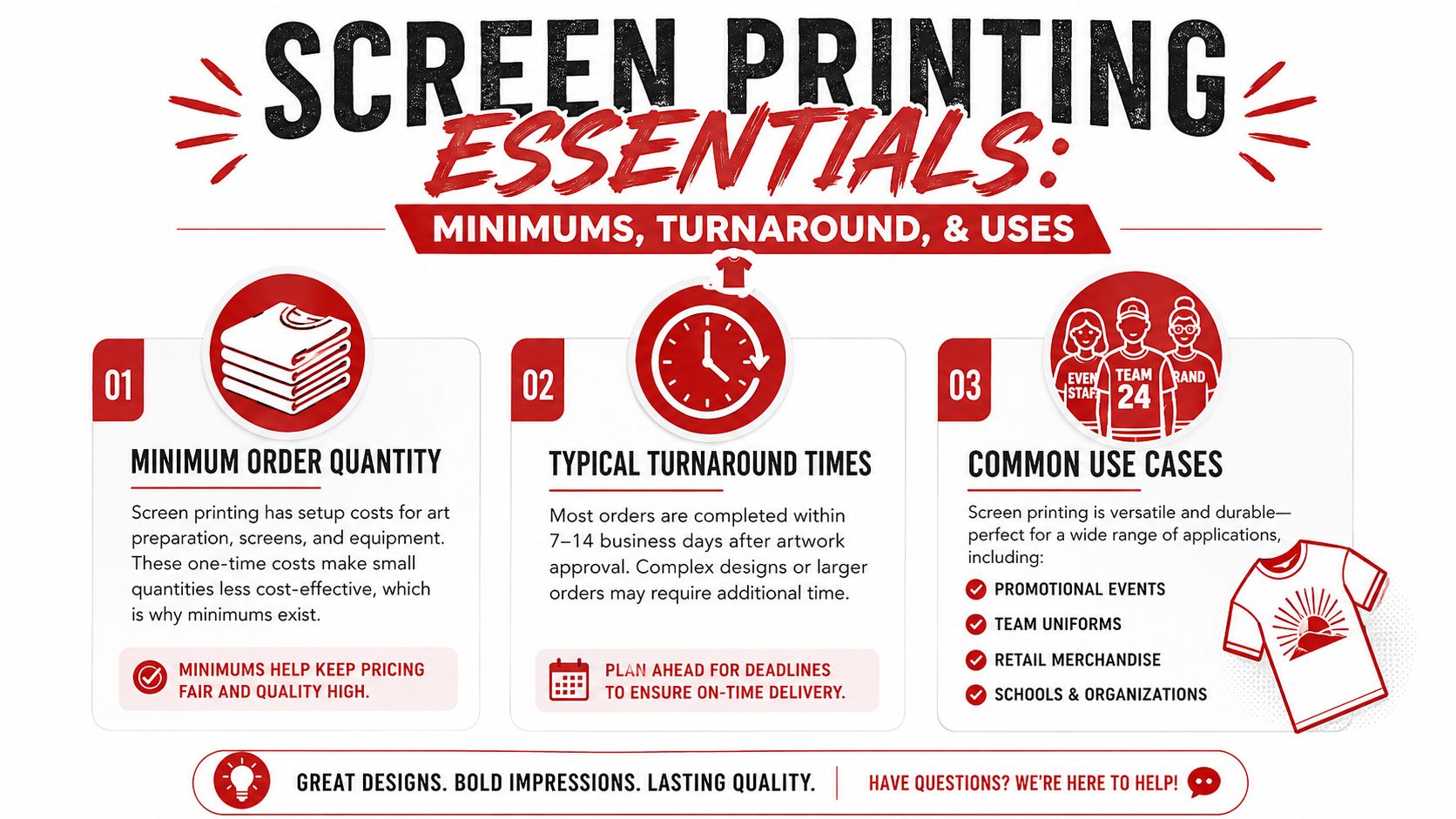
Minimums exist because setup takes real labor before the first finished piece ever comes off the press. On the headwear side, shops may treat decoration differently than on a tee, but the logic is the same. Screen printing isn't just “print a logo,” it's prepare, align, test, and then run a repeatable production job.
Dirt Cheap Headwear states a 24-piece minimum for screen printing orders, which is the kind of number that helps buyers gauge whether a project fits the method. On the business side, IBISWorld estimates the U.S. custom screen printing market at $12.8 billion in 2026, and also projects 5.9% CAGR from 2020 to 2025, which shows this is a mature, still-active category rather than a niche option. IBISWorld's custom screen printing industry profile
Jobs that fit the method well
A screen print order usually makes sense when the same design needs to show up consistently across a group. That could be team gear, fan merchandise, event apparel, fundraiser pieces, or branded hats for staff and volunteers. The method is strongest when the artwork is simple enough to repeat cleanly and the order size makes the setup worthwhile.
A local sponsor order is a good example. A school booster club needs matching caps for volunteers and wants the logo visible from across a parking lot. Screen printing can handle that kind of graphic clarity without turning the design into something fussy.
Turnaround depends on proof approval, production load, and shipping, so buyers should expect the timeline to start after the art is approved, not when the cart is first filled. The smart move is to get the proof right early, because approval delays usually slow the whole project down.
Ordering Screen Printing Services from Dirt Cheap Headwear
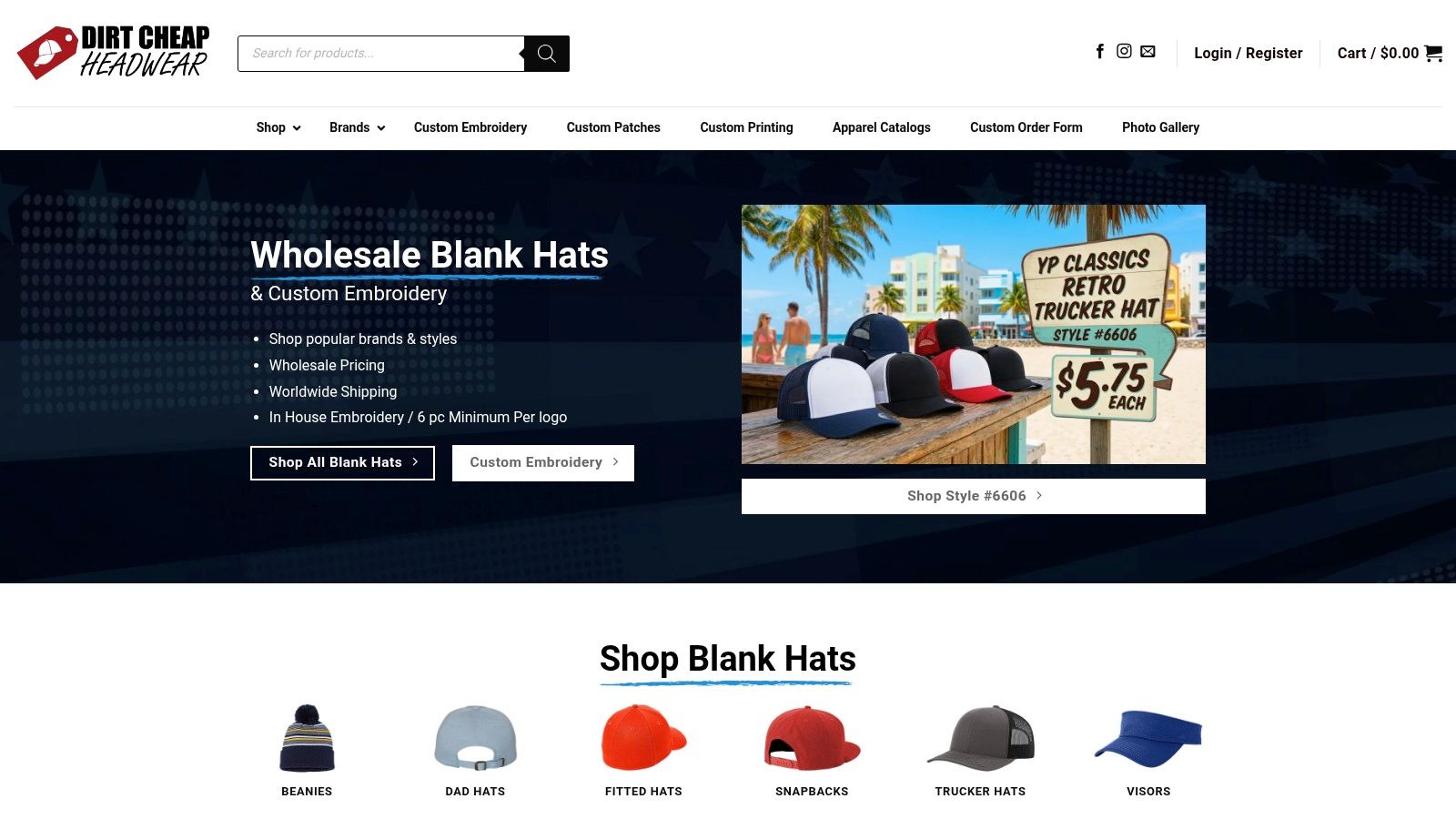
A buyer usually starts by choosing the blank item first, then the decoration second. That's how the order flow works at Dirt Cheap Headwear too. You can browse blank hats and apparel from brands like Richardson, YP Classics/Flexfit, New Era, Valucap, and Legacy, then move into the custom order process with your artwork and placement notes.
The order flow
Start with the style you want, then submit the custom order form with your logo, print location, and any notes about sizing or placement. After that, the shop sends a digital proof for approval. That proof matters because it's the checkpoint where a buyer can catch spacing issues, placement questions, or mismatched expectations before production begins.
The business also offers custom patches and printing alongside embroidery, and its in-house embroidery starts at just six pieces per logo. That's useful when one order needs mixed decoration methods, such as printed apparel with embroidered headwear or patches for a different part of the program. Support runs Monday through Friday, 9am to 5pm EST, so buyers who need help during business hours know when to reach out.
Practical rule: approve the proof only after you've checked placement, logo size, and color count against your original notes.
A screen print order can move smoothly when the buyer gives the shop clean artwork, a clear placement request, and a realistic quantity. If you're still narrowing down whether to print, embroider, or patch a headwear program, the order form is the right place to ask those questions before anything goes into production.
Key Takeaways and Common Questions
A buyer usually reaches screen printing services with a simple question. Will this design work on hats, shirts, or both? The answer depends on how the art is built, how many colors it uses, and how much print area the garment or cap gives you. On flat apparel, the method has more room to breathe. On decorated headwear, the curved surface and smaller target area make every choice more visible, so the artwork has to fit the product instead of forcing the product to fit the artwork.
Screen printing works best when the design is bold, the colors are straightforward, and the quantity makes setup worth it. For hats and apparel, the big decisions are artwork quality, color count, print placement, and whether the curved surface fits the method cleanly. A cap front behaves more like a small stage than a full shirt front. That means a logo that looks fine on paper can feel crowded on a hat if the spacing is off or the art is too detailed. If you remember nothing else, remember this, screen printing rewards simple, repeatable artwork and punishes guesswork.
Quick answers buyers usually ask
Can screen printing match brand colors exactly?
It can be closely controlled, but exact matching depends on the shop's process, the ink system, and the substrate. A proof is the place to lock that down. On hats, surface texture and shape matter too, so a color that looks right on a flat mockup can shift once it hits the crown or the front panel.
Can embroidery and screen printing go on the same order?
Yes. A lot of buyers use both methods across different items or even within a broader program. That mix is common when apparel needs a printed graphic but headwear needs a stitched logo, or when one piece needs more texture than another.
What if my artwork isn't vector?
Send the highest-quality version you have, then ask the shop what cleanup is needed. Raster files can sometimes be worked with, but they usually create more prep than vector art. That matters even more on hats, where small print areas leave less room for soft edges, tiny text, or extra detail that looked acceptable on a larger mockup.
A good screen print order is usually the one that starts with clean art, a clear placement request, and a realistic quantity. If the design has a lot of tiny detail, if the print area is tight, or if the item is a curved cap instead of a flat shirt, those choices should be checked before production starts.
Pingback: Screen Printing Versus Hat Embroidery: Best Use | Dirt Cheap Headwear