
Imperial Rope Hat: History, Style & Customization
You’re probably here because you’ve seen the same hat shape pop up everywhere lately. A clean front panel. A curved or slightly flatter visor. And that little rope stretched across the seam above the bill that makes the whole thing feel more finished than a standard cap.
If you’re a small business owner, team manager, merch seller, or event planner, the question usually isn’t just “what hat is that?” It’s “would that work with our logo?” That’s where the imperial rope hat gets interesting. It isn’t just a style trend. It’s a recognizable cap format with a real history in golf and resort headwear, and it has become a practical option for branded merch, uniforms, giveaways, and retail shelves.
The Hat You See Everywhere The Imperial Rope Hat Explained
The rope hat trend didn’t appear out of nowhere. The version widely recognized today is closely tied to Imperial Headwear, a company founded in 1916 with over 108 years of history in golf and lifestyle headwear, and its rope hat became a defining style in the 1970s. Imperial was also voted the #1 headwear brand for private and resort golf facilities for nine consecutive years by the Association of Golf Merchandisers, as noted on the Imperial brand history page.
That background matters because it explains why the hat feels familiar even when you can’t name it. Imperial didn’t just make a rope hat. It helped cement the look in golf culture, then that look spread into resorts, events, casual apparel, and branded merchandise.
For a buyer, the appeal is simple. A rope hat looks a little more intentional than a plain ball cap. It has some retro character, but it still feels current. That makes it useful for a brewery staff hat, a tournament giveaway, a school fundraiser, or a startup merch drop.
Practical rule: If you want a hat that feels more polished than a basic dad hat but less stiff than a formal uniform cap, the rope hat usually lands in the sweet spot.
People also get hung up on one common point. They assume “rope hat” is only a golf thing. It isn’t. Golf gave the style a strong identity, but today it works across brand types because the silhouette is easy to wear and the front panel usually gives decorators a clear space for a logo, patch, or wordmark.
What Exactly Makes It an Imperial Rope Hat
The easiest way to identify an imperial rope hat is to start with the feature that gives it its name. The rope is the braided cord that runs across the front of the hat where the crown meets the visor. It’s a small detail, but it changes the whole personality of the cap.
A standard cap can look plain. A rope hat looks styled on purpose.
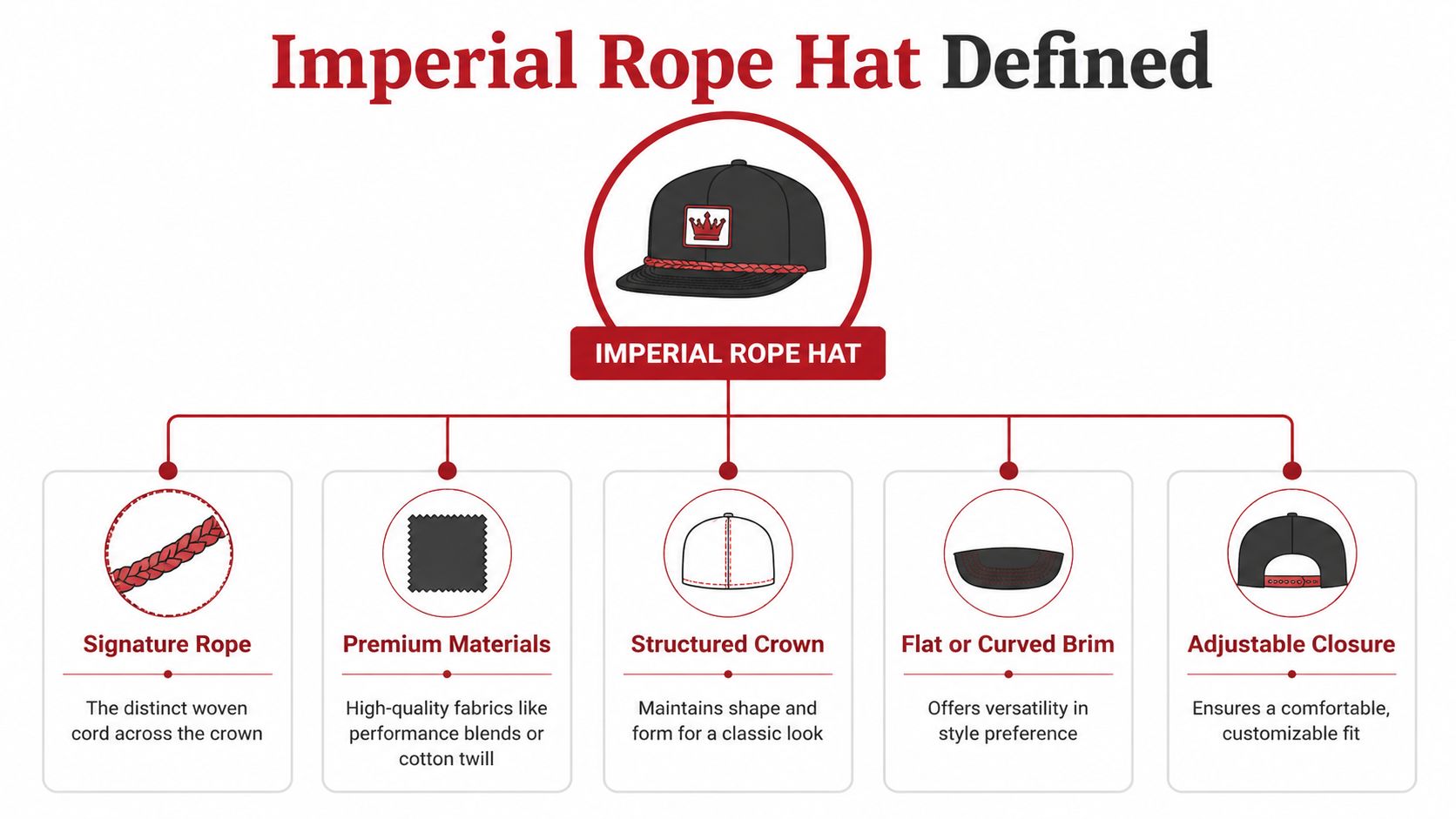
The rope is the visual signature
Think of the rope like the piping on a jacket or the stripe on a vintage warmup uniform. It doesn’t change the basic function, but it gives the item an identity. On an imperial rope hat, that detail creates a clear break between crown and brim, which helps logos stand out and gives the cap a retro sports feel.
That’s why people often notice the hat before they even notice the brand mark on it.
The design has older roots than most people realize
The style didn’t begin with modern promo wear. According to the mariner’s cap history overview, the modern imperial rope hat traces its style roots to 19th-century workwear, including caps worn by European sailors, before evolving into the woven-rope-accented golf variant that became popular in the 1970s. That same source also notes golf’s 60 million global participants, which helps explain why the style keeps showing up in pro shops, tournaments, and brand collections.
That history clears up a point that confuses a lot of buyers. The rope isn’t random decoration. It’s part of a long visual lineage of practical caps that later got refined into a sport and lifestyle look.
It’s more than one exact hat
“Imperial rope hat” can describe a family of styles rather than one single shape. You’ll see versions with:
- Structured crowns that hold their shape up front
- Different fabric stories like cotton canvas, corduroy, or performance blends
- Visor variations that lean more classic or more modern
- Adjustable backs that make group ordering easier
That flexibility is a big reason brands like the format. You can keep the same recognizable rope look while choosing a version that fits your audience better. A resort shop may want something heritage-driven. A team might want a sportier build. An event planner may care most about decoration space and easy sizing.
The rope is the clue. The construction tells you what kind of wearer the hat was built for.
Anatomy of a Classic Hat Features and Materials
When you’re choosing an imperial rope hat for custom work, it helps to stop thinking of it as one object and start thinking of it as a set of parts. Crown shape, panel count, fabric, visor, sweatband, and closure all affect how the hat wears and how well it decorates.
The frame of the hat
A lot of Imperial rope styles use a five-panel structured build. That means the front of the hat has a broad face for artwork, and the crown holds its form instead of collapsing. For decorators, that front panel matters because it gives logos a cleaner stage.
The visor is often pre-curved or gently curved, which makes the hat approachable for more people than a severe flat bill. On the back, snapback closures are common because they simplify group sizing. If you’re ordering for staff, boosters, or event participants, adjustable backs remove a lot of guesswork.
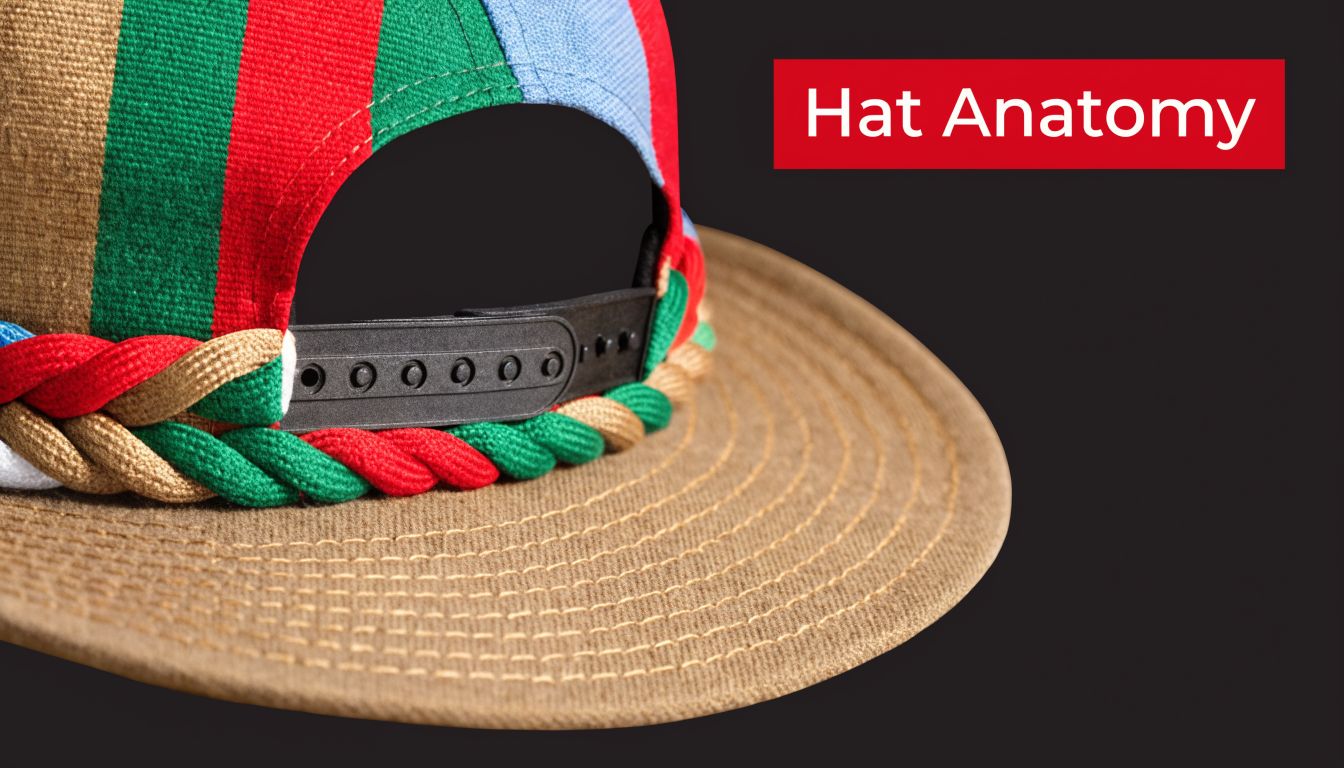
Traditional feel versus performance feel
Some Imperial rope hats lean into heritage. Think cotton canvas or corduroy. Those fabrics feel familiar and soft, and they pair well with vintage logos, resort branding, or old-school athletic graphics.
Other styles use modern performance materials. Many Imperial rope hats use 100% recycled polyester performance fabric with moisture-wicking properties and UPF 50+, blocking over 98% of UVA/UVB rays. That same material can move sweat away from skin up to 300% faster than standard cotton blends, according to the Arborwear Imperial rope cap product details.
That’s a big difference in real life. Cotton often feels relaxed and familiar. Performance fabric feels better when someone is outside, moving around, or working an event all day.
Rope Hat Material Comparison
| Material | Key Features | Best For |
|---|---|---|
| Cotton canvas | Classic hand feel, vintage look, easy casual styling | Resorts, retail merch, lifestyle brands |
| Corduroy | Textured surface, heritage character, standout shelf appeal | Seasonal merch, retro branding, premium casual drops |
| Recycled polyester performance fabric | Moisture-wicking, UPF 50+, lighter performance feel | Golf events, staff wear, outdoor teams, warm-weather use |
| Polyester spandex blend | Added stretch and movement, active feel | Sports use, active promotions, long wear days |
Why structure matters for decoration
The front panel doesn’t just affect appearance. It affects how the hat accepts embroidery and patches. A floppy crown can distort a clean logo. A more structured front usually gives the machine and the artwork a more stable surface.
If you’re still sorting out crown types, this guide on structured versus unstructured hats helps clarify why the front of the hat changes the final decorated look so much.
A simple way to think about it is this. Fabric is the skin, but structure is the skeleton. If the skeleton is firm enough, your logo looks more consistent from hat to hat.
Finding Your Perfect Fit and Profile
Fit is where many buyers make the wrong call. They focus on color and logo size, then forget that the hat still has to look right on an actual person’s head. With rope hats, profile matters almost as much as artwork.
What mid-profile actually feels like
Many Imperial rope hats use a five-panel structured mid-profile construction made for active use, and some polyester spandex blends provide 15 to 20% greater stretch recovery than 100% polyester, which helps reduce slippage during movement, according to the IMG Academy Imperial rope hat listing.
If “mid-profile” sounds abstract, consider the analogy of seat height in a car. A low-profile hat sits closer and lower, more like a compact fit. A high-profile hat sits taller and makes a stronger statement. A mid-profile lands between those extremes, which is why it works for a wider range of face shapes and style preferences.
Why five panels change the look
A five-panel hat creates a broad front face. That gives the cap a cleaner billboard for branding and a slightly smoother appearance from the front. On the head, that often reads as neater and more intentional than a softer, broken-up crown.
For teams and businesses, that can matter more than people expect. When everyone wears the same hat, small shape differences become noticeable. A consistent five-panel front tends to produce a more unified look in group photos.
A quick fit checklist
Use these questions before you place an order:
- Who’s wearing it most often: Staff members working outdoors may prefer a performance blend and stable fit over a softer casual feel.
- How prominent should the hat look: If you want the cap to show up clearly in photos, a structured mid-profile silhouette usually helps.
- Will people move around in it: Golf outings, volunteer crews, and sideline use benefit from materials that recover shape well.
- Do you need one-size flexibility: Adjustable closures make life easier when you’re ordering for mixed groups.
A good rope hat shouldn’t feel like it’s perched on top of the head. It should feel settled, like it belongs there.
How to Style an Imperial Rope Hat in 2026
The easiest mistake with a rope hat is treating it like it only belongs on a golf course. In practice, it works because it can swing between polished and casual without looking confused.
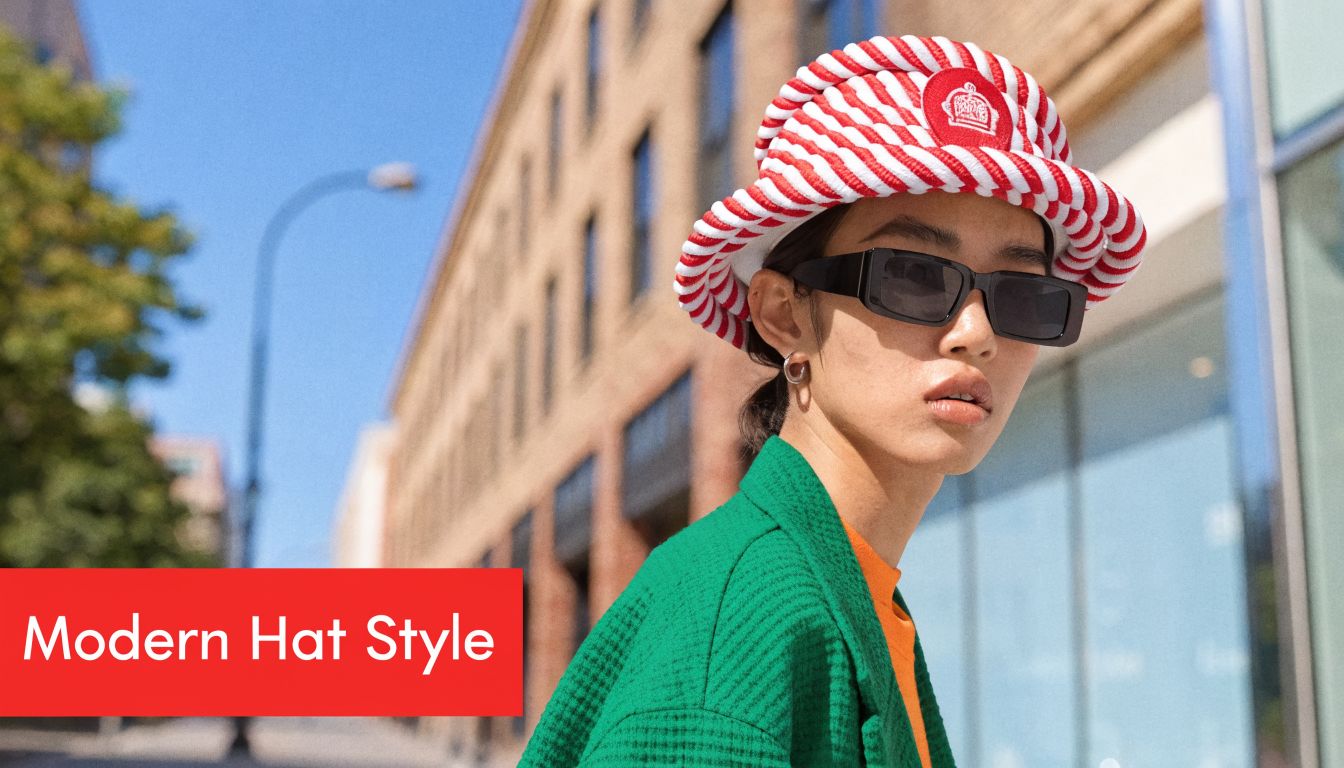
For teams and tournament groups
A golf foursome, booster club, or company outing can use rope hats without looking overly corporate. Pair the hat with polos, quarter-zips, or lightweight performance tops and the look feels coordinated rather than stiff. The rope detail adds enough personality that the group doesn’t look like it grabbed generic caps at the last minute.
This is especially useful when you want a keepsake people will wear again.
For breweries, coffee shops, and merch tables
A brewery logo on an imperial rope hat can feel more premium than the same logo on a basic promo cap. Earth tones, washed fabrics, and simple front embroidery tend to work well here. The hat becomes part uniform, part retail item.
For small brands, that’s valuable. You want something staff can wear on shift that customers also want to buy.
If you need inspiration on outfit pairing and everyday cap use, this article on how to wear a hat gives a helpful visual starting point.
For startup and event branding
A tech team at a trade show, a school reunion committee, or a nonprofit volunteer group can all use rope hats differently. Clean wordmarks look sharp on a structured front. Vintage-style mascots fit naturally on rope hats because the cap already carries some retro flavor. Patch applications can also work when you want a more crafted look.
Here’s a quick visual reference for the broader vibe and how rope-style headwear fits into current casual outfits:
Color pairing that usually works
- Navy and white: clean, coastal, easy for schools and clubs
- Khaki with dark embroidery: classic resort and outdoor look
- Black with tonal stitching: modern merch feel without being loud
- Green, cream, or red accents: vintage sports energy
The rope itself often acts like a built-in trim line. That means you don’t always need a busy logo. Sometimes a simple mark looks stronger because the hat already provides visual interest.
Customizing Rope Hats for Your Brand or Team
Many individuals hesitate at this juncture. They like the hat, but they worry the rope will interfere with decoration. That concern is fair. Rope hats aren’t identical to decorating a plain front cap, and the rope changes how a logo sits visually on the face of the hat.
The demand is real, though. Imperial’s rope hat collection points to a 15% year-over-year rise in branded rope hat orders for events, which shows that businesses keep choosing the style even as decoration questions come up. That detail appears on the Imperial rope hat collection page.
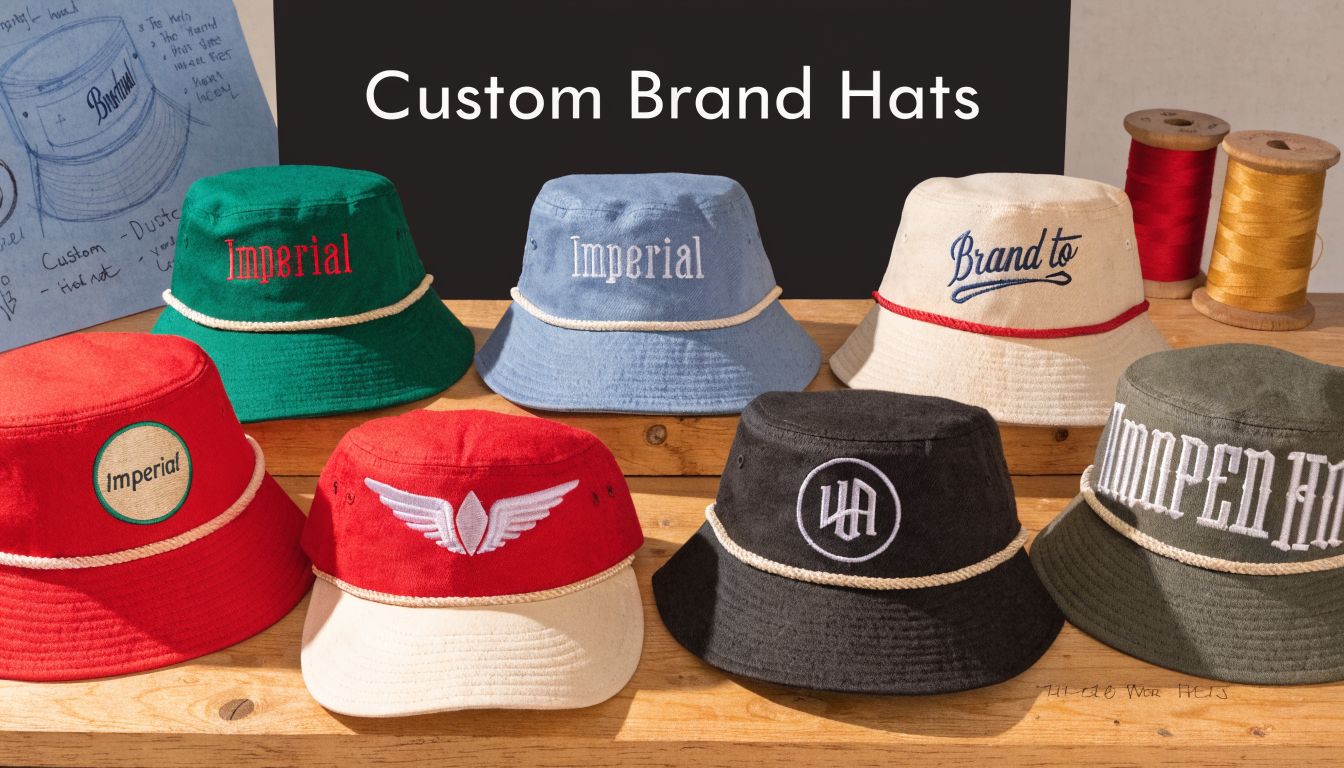
The main embroidery concern
The biggest issue isn’t whether a rope hat can be embroidered. It’s whether the artwork is designed with the hat’s layout in mind.
A rope sits across the lower front of the crown, so your design needs enough breathing room above it. If a logo is too short and wide, or if tiny text sits too close to the braid, the result can feel cramped. The hat may still sew fine, but it won’t look balanced.
That’s why rope hats reward simpler front designs. Bold wordmarks, initials, mascots, icons, and badge-style layouts usually translate better than fussy detail.
What decoration methods usually make sense
Different logo types call for different decoration choices:
- Flat embroidery: Great for clean brand names, team names, and simpler marks. It tends to read crisp on structured fronts.
- 3D puff embroidery: Useful when you want depth, especially for initials or chunkier lettering. The file has to be prepared carefully so the raised sections don’t compete visually with the rope.
- Patches: A smart option when the artwork has fine detail or when you want a heritage look. Woven or embroidered patches can give the cap a more crafted finish.
Keep the logo high enough to respect the rope. Treat the braid like a frame line, not empty space you can ignore.
What small buyers should ask before ordering
If you’re ordering for a local business, school, rec league, or event, ask these before approving artwork:
- Is the logo scaled for a rope hat specifically, not just reused from a standard cap?
- Will small text still be readable once it’s stitched?
- Does the design need flat embroidery, puff, or a patch to look right?
- Has someone checked how the logo sits above the rope, not just in the center of the panel?
One practical option for smaller runs is a vendor that combines wholesale blanks with in-house decoration and low minimums. Dirt Cheap Headwear’s logo digitizing and embroidery workflow is built around custom hat decoration, including small orders that start at six pieces per logo.
That kind of setup is useful when you don’t want to overcommit before testing a design. A small run lets you check logo scale, thread color, and overall balance on the actual hat before placing a larger reorder.
The safest path for first-time rope hat buyers
Start with one strong front mark. Avoid clutter. Don’t force a detailed chest logo from a T-shirt onto the hat without adapting it. Rope hats have personality already, so your decoration should support that instead of fighting it.
A clean cap with a well-sized logo usually looks more expensive than an overloaded design.
Keeping Your Rope Hat Looking Great
A rope hat doesn’t need complicated care, but it does benefit from a little restraint. Most damage happens when people treat a structured cap like a gym towel and toss it into rough wash cycles, hot dryers, or the back seat under a pile of gear.
Simple care habits that help
- Spot clean first: Use a damp cloth and mild soap on sweat marks or dirt before trying anything more aggressive.
- Protect the rope detail: Wipe around the braid gently instead of scrubbing across it, especially if the hat has collected dust or sunscreen residue.
- Air dry only: Let the hat dry naturally so the crown keeps its shape.
- Reshape while damp: If the front panel softens after cleaning, press it back into form by hand and let it dry that way.
What to avoid
- Don’t soak it unnecessarily: Long soaking can stress the structure and affect decorated areas.
- Don’t crush it in storage: A structured crown keeps its look better when it isn’t flattened under bags or jackets.
- Don’t use high heat: Heat is rough on synthetic fabrics, sweatbands, and embroidery.
- Don’t scrub the logo hard: Thread and patch edges can fuzz up if you attack them with a stiff brush.
Store it like a hat, not like laundry. Most rope hats last longer when they get basic shape protection and light cleaning instead of “deep cleaning.”
A little maintenance goes a long way, especially if the hat is part of a uniform program or retail merch line where appearance matters every time someone puts it on.
If you’re comparing rope hat options for branded merch, team wear, or a small custom run, Dirt Cheap Headwear offers wholesale blanks and decorated headwear with low minimums, which can be useful when you want to test an imperial rope hat design before committing to a larger order.
Pingback: The Fascinating History of Headwear | Dirt Cheap Headwear
Pingback: How to Buy Bulk Hats for Company Stores | Dirt Cheap Headwear