
5 Panel Hat vs 6 Panel Hat: Which Is Right for You?
You’ve got a logo ready, a launch date in mind, and a hat order sitting in your browser with one annoying decision left. 5 panel or 6 panel.
That choice looks small on a product page. It isn’t. Panel count changes how your logo lays out, how the crown sits on the head, how “team uniform” or “streetwear drop” the hat feels, and how much cleanup your decorator has to do to make the finished piece look sharp.
If you’re a new business owner, this is usually the moment where every hat starts sounding the same. Structured, mid-profile, snapback, trucker, low crown. It gets messy fast. The useful way to think about 5 panel hat vs 6 panel hat is simple: you’re not just picking a silhouette, you’re picking the surface your branding has to live on.
Here’s the quick side-by-side before we get into the key trade-offs.
| Feature | 5 panel hat | 6 panel hat |
|---|---|---|
| Front construction | One seamless front panel | Two front panels split by a center seam |
| Best branding use | Large graphics, prints, wide patches | Centered embroidery, classic logos |
| Shape | Boxier, flatter front | Rounded, traditional crown |
| Brand vibe | Modern, streetwear, event merch | Sports, corporate, team, everyday retail |
| Safe choice for first order | Best if your logo is wide | Best if your logo is compact and classic |
Choosing Your First Custom Hat
Most first-time hat buyers start in the same place. They know what they want the hat to do, but not what construction gets them there.
A coffee shop owner wants staff hats that look clean at the register. A brewery wants merch that doesn’t feel like generic promo swag. A landscaping company needs something employees will actually wear outside. A startup founder wants hats for an event booth and realizes their horizontal logo may not fit the same way on every crown.
That’s where the 5 panel hat vs 6 panel hat decision matters. If your logo is broad, graphic, or patch-heavy, one style gives you more freedom. If your audience expects a familiar baseball-cap look, the other style usually lands better right away.
A lot of buyers also struggle to picture the finished hat on an actual person. Before placing an order, it helps to use a visual tool like how to virtually try on any hat so you can compare crown shape and overall vibe before committing to a silhouette.
Practical rule: Don’t choose the hat you personally like most until you’ve checked whether it matches your logo shape, your audience, and the way you plan to decorate it.
The good news is this decision gets easier once you stop treating panel count as a style label and start treating it like a production choice. The seam placement, crown shape, and face of the hat all affect the final result.
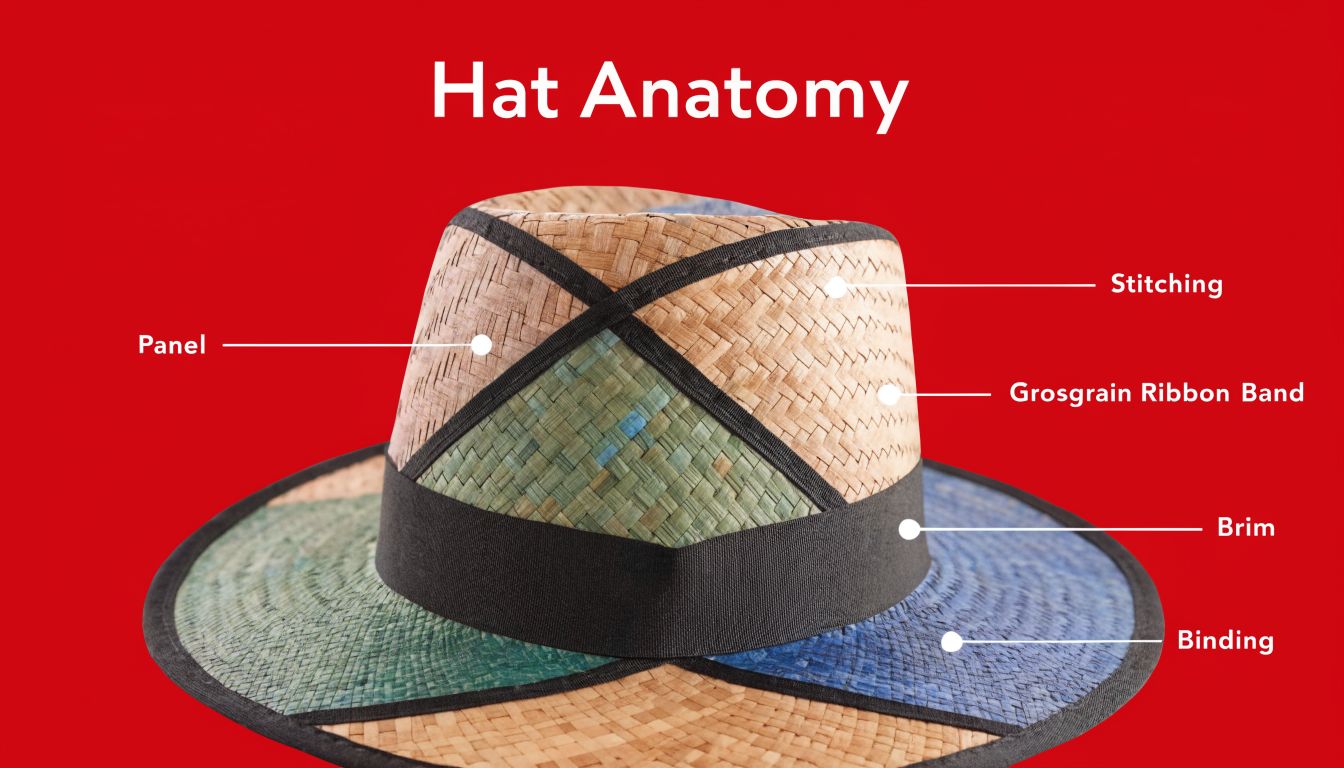
The Anatomy of a Hat Panel by Panel
A panel is one piece of fabric used to build the crown of the hat. More specifically, it’s one section stitched to the next to create the shape that sits on the head.
What makes a 6 panel hat
A 6 panel hat uses six triangular fabric pieces that come together to form a rounded crown. The front of the hat is split into two front panels, and those two pieces meet in the middle. That creates the center seam you see on most baseball caps.
That seam is the first thing decorators care about. It’s also the reason a 6 panel feels familiar to so many buyers. The shape wraps the head in a way people instantly recognize as a classic cap.
What makes a 5 panel hat
A 5 panel hat changes one key piece of the build. Instead of two front panels meeting in the middle, it uses one wide front panel. The rest of the crown is completed with side and rear panels.
That single front face removes the center seam. The hat usually ends up looking flatter across the front and a little boxier overall. For decoration, that uninterrupted front is the whole story.
Here’s the simplest way to remember it:
- 6 panel hat: rounded crown, center seam, traditional face
- 5 panel hat: single-panel front, flatter look, cleaner canvas
- Same category, different behavior: both can be great custom hats, but they solve different branding problems
If your artwork would look awkward folded down the middle, start by testing it on a 5 panel blank first.
The 6-Panel Hat A Timeless Classic
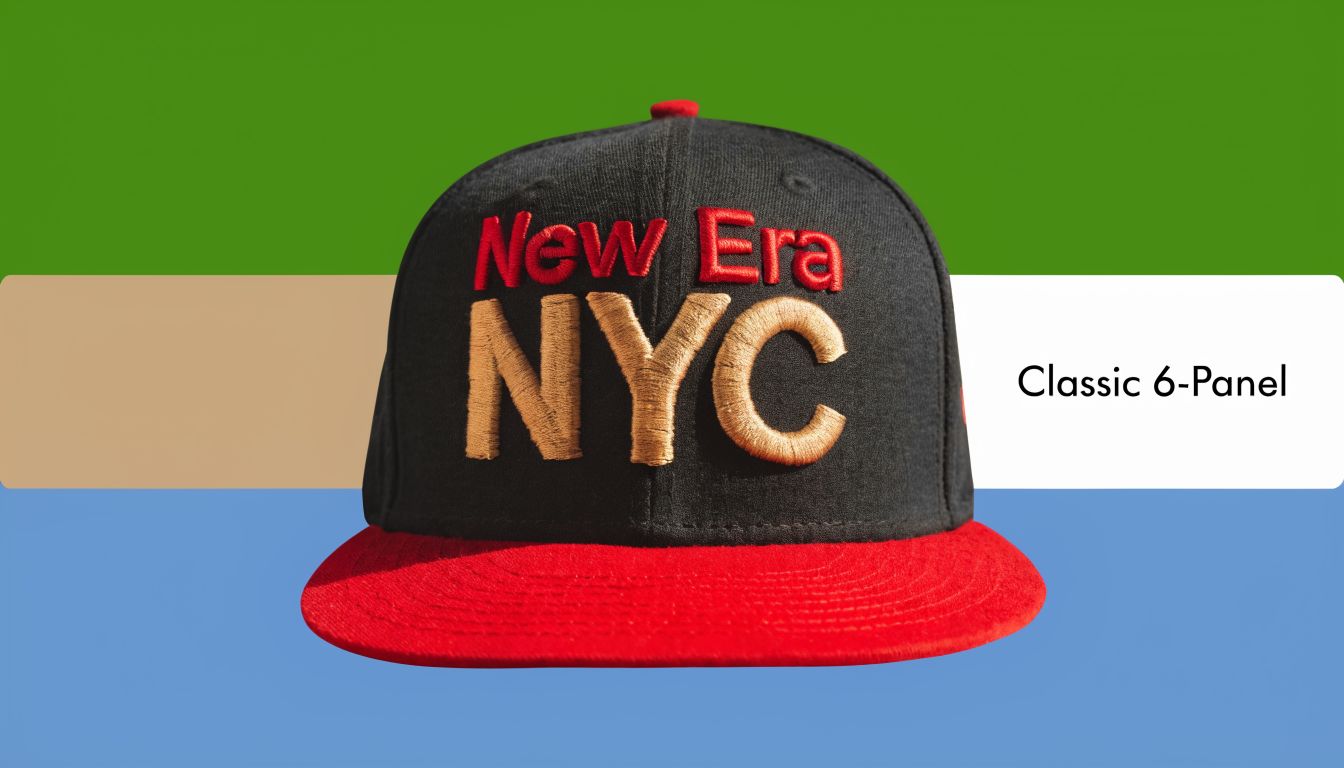
The 6 panel hat is still the default answer for a lot of good reasons. It looks established, it fits a wide range of customers, and it’s the shape commonly associated with the term “baseball cap.”
Why it became the standard
The 6 panel hat emerged in the late 19th century and became the industry standard, with brands like New Era supplying MLB since 1920. Today, it holds an 80-90% market share in structured baseball caps and accounts for around 70% of promotional hat orders, which is why it remains the dominant choice for sports and business, as noted in the history of the baseball cap.
That history matters because buyers bring those associations with them. When a school orders team caps, when a company orders uniforms, when a golf event needs something safe and wearable, this is the silhouette that already feels correct.
Where it works best
A 6 panel hat is usually strongest when the logo is centered, compact, and built for embroidery. Think:
- Lettermark logos
- Team initials
- Small crest designs
- Simple corporate marks
- 3D puff embroidery layouts that don’t need a giant front canvas
The seam isn’t always a problem. In many embroidery setups, it’s barely noticeable once the design is stitched well. But the logo has to cooperate. Tall, balanced artwork usually performs better than wide, horizontal artwork.
Here’s a useful visual reference for the traditional cap shape and how people typically wear it.
What new buyers often get right and wrong
New buyers get the 6 panel right when they want broad appeal. It’s easy to hand out, easy to resell, and easy to match with uniforms.
They get it wrong when they force oversized graphics onto a split front. That’s where the center seam can fight the art instead of supporting it.
A clean embroidered logo on a 6 panel usually beats an overstuffed front design trying to do too much.
If your brand needs a hat that feels traditional, athletic, or dependable, the 6 panel is still hard to beat.
The 5-Panel Hat A Modern Branding Canvas
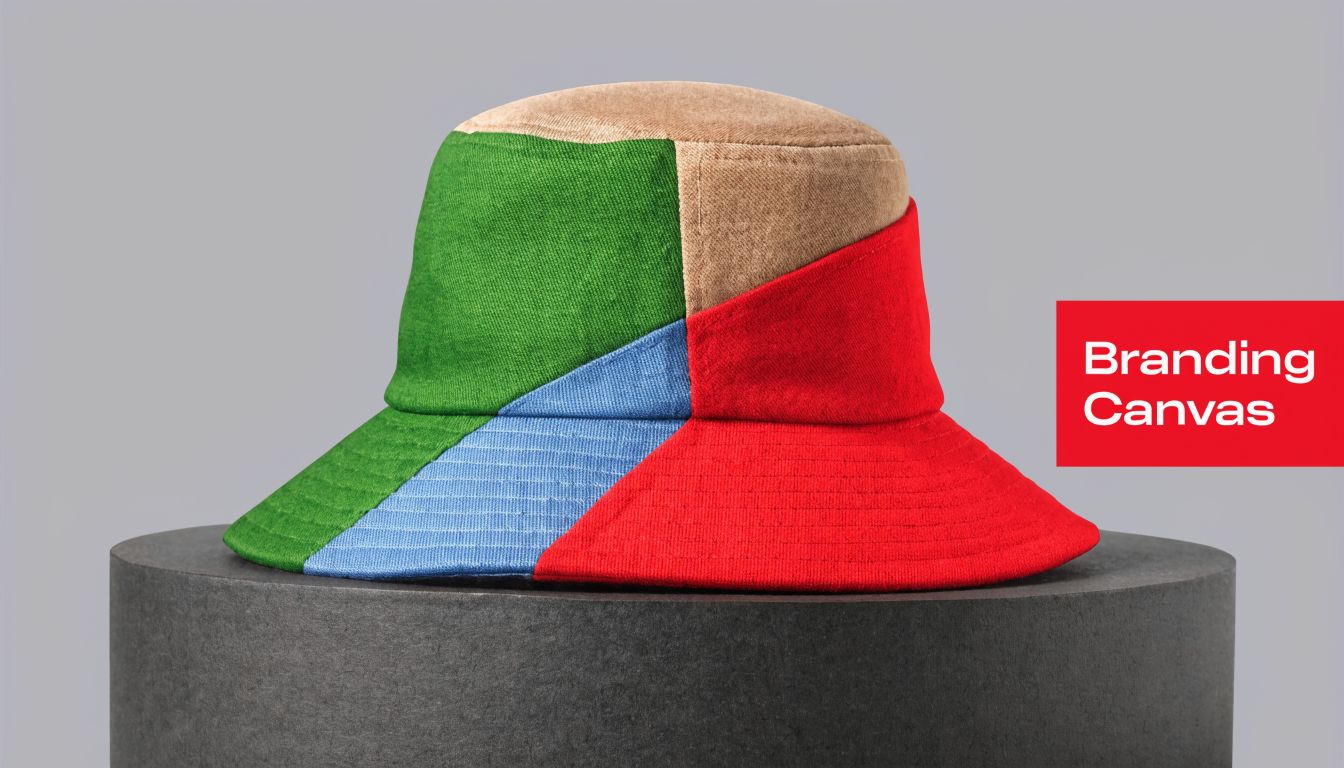
The 5 panel hat solves a different problem. It gives your design room to breathe.
Why decorators like the front panel
A 5 panel hat’s uninterrupted front provides a 20-30% larger continuous surface for graphics compared to a 6 panel, which makes it a better fit for wide-format decoration and bold front branding, according to this breakdown of 5 panel vs 6 panel hats.
That extra uninterrupted space matters if your logo is wide, if you want a large woven or PVC patch, or if you’re using print methods that don’t play nicely with a center seam.
In plain terms, a 5 panel gives you fewer compromises on the front of the hat.
The look it sends
The shape reads differently right away. A 5 panel usually has a flatter face and a more fashion-forward profile. On the shelf, it can feel more deliberate and more niche. That’s often exactly what apparel brands, music merch lines, skate shops, and event organizers want.
Good fits for a 5 panel include:
- Wide wordmarks
- Big front patches
- Graphic art instead of just a logo
- Festival merch
- Streetwear capsules
- Promo hats aimed at a younger audience
If you’re browsing blank options, a curated set of 5 panel hat styles makes it easier to compare crown shapes before you commit to decoration.
What doesn’t work as well
The 5 panel isn’t automatically better. It can feel too fashion-specific for some projects. A traditional service business, a school booster club, or a corporate team may look better in a 6 panel because that silhouette feels more universal.
Also, not every logo needs a giant front. Some brands look cleaner when the artwork stays compact and the cap itself does less.
The 5 panel wins when the front of the hat is the message.
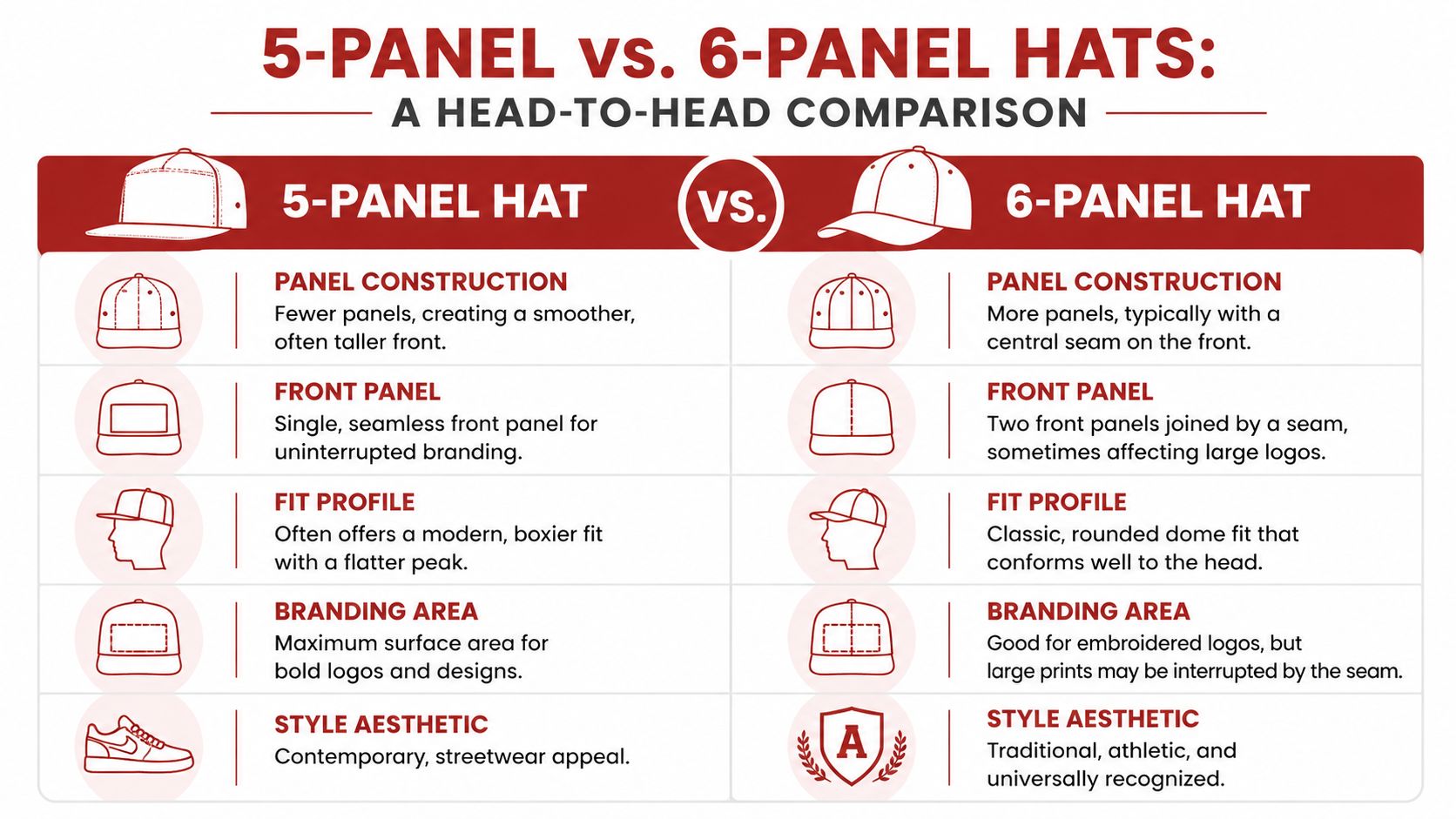
Head-to-Head Comparison Fit Branding and Style
Branding surface
This is the biggest downstream difference.
A 5 panel gives you one uninterrupted front face. That helps with large patches, printed graphics, and logos that would feel cramped or split on a seam. If your artwork is wide, rectangular, or very visual, the 5 panel usually gives the cleaner final result.
A 6 panel asks the logo to work across a center seam. That’s not a flaw. It’s just a design condition. Compact embroidery often looks excellent there, especially if the design is centered and balanced. But broad shapes can get awkward fast.
Here’s the quick decoration read:
| Decoration type | 5 panel hat | 6 panel hat |
|---|---|---|
| Large front patch | Strong choice | Good only if patch size stays moderate |
| Wide print graphic | Better surface | Less ideal because of center seam |
| Small centered embroidery | Good | Usually excellent |
| Traditional team logo | Fine | Usually the safer fit |
One more factor matters here. Hat structure changes decoration behavior too. If you’re comparing stiffer fronts and softer crowns, this guide to structured vs unstructured hats helps clarify why two hats with the same panel count can still decorate differently.
Fit and silhouette
A 6 panel tends to form a more rounded dome. Many people find it familiar and easy to wear because the crown shape follows what they already know from baseball caps and everyday branded hats.
A 5 panel usually presents flatter across the front. That can look sharper on the right person and the right outfit, but it also feels more opinionated. Some customers love that. Others try it on and immediately want the classic rounded cap instead.
A practical way to think about fit:
- Choose 6 panel for easier broad wearability
- Choose 5 panel for a more distinct front profile
- Use profile and structure to fine-tune the result after panel count is chosen
Audience and brand signal
New buyers sometimes miss the mark. They choose based on what looks cool in isolation, not on what the hat says about the brand.
A 6 panel usually communicates:
- established
- athletic
- uniform-ready
- classic
- broadly wearable
A 5 panel usually communicates:
- modern
- design-led
- merch-focused
- streetwear-aware
- more curated than generic
The wrong panel count won’t ruin a strong brand, but it can make the hat feel disconnected from the audience you’re trying to reach.
Cost in the real world
Most buyers expect one style to be dramatically cheaper. In practice, the bigger cost shifts usually come from the blank brand, fabric, closure type, structure, and decoration method rather than panel count alone.
What does panel count affect? Setup decisions. A 5 panel can make life easier for certain graphics because the front is uninterrupted. A 6 panel can be simpler when the logo is a standard embroidered lockup that belongs in the center. If the art and the hat are matched well, both can be efficient. If they’re mismatched, you’ll feel it in proof revisions, compromises, and sample disappointment.
Which one is the safer bet
If you need one hat style for a mixed audience, the 6 panel is usually safer.
If the hat is part of the brand expression itself, not just a place to stick a logo, the 5 panel often has more upside.
That’s the core of 5 panel hat vs 6 panel hat. One is the reliable standard. One is the better canvas.
How to Choose the Right Hat for Your Project
The easiest way to decide is to match the hat to the job. Not to trends, and not to what looked good on one sample you saw online.
Choose a 6 panel hat if
- You’re ordering team uniforms. Coaches, staff, and players usually want a cap that feels traditional and easy to wear.
- Your logo is compact. Monograms, initials, small shields, and center-chest style marks generally sit nicely on a 6 panel front.
- You need broad appeal. If hats are for customers, employees, donors, and sponsors all at once, the classic silhouette is the low-risk move.
- You want the baseball cap look people already trust. That matters for service businesses, schools, contractors, golf events, and company merch.
Choose a 5 panel hat if
- Your design is wide. A long wordmark or large patch usually looks cleaner on an uninterrupted front.
- Your merch is brand-first. If you’re building a fashion angle or trying to make the hat feel like part of a collection, the 5 panel often carries more personality.
- You’re decorating with bold front graphics. Screen-printed looks, oversized patches, and strong visual branding usually benefit from the flatter front.
- You want a younger or more style-aware feel. For events, creators, and lifestyle brands, the silhouette itself helps set the tone.
If you’re torn between both
Run this short check before approving anything:
- Look at your logo shape. Wide and graphic points toward 5 panel. Compact and centered points toward 6 panel.
- Think about the wearer, not just the buyer. What will your staff, fans, or customers choose off a table?
- Decide whether the hat is merch or uniform. Merch can take more style risks. Uniforms usually benefit from familiarity.
- Ask for a mockup on both silhouettes. A design can surprise you once it’s placed on the crown.
If the front design is doing most of the selling, start with a 5 panel. If the hat needs to disappear into everyday wear, start with a 6 panel.
A lot of successful small brands eventually carry both. They use a 6 panel as the dependable bestseller and a 5 panel as the more expressive drop piece. But for a first order, simplicity wins. Pick the style that matches the logo and the audience with the fewest compromises.
Pro Tips for Ordering Your Custom Headwear
After you choose the panel count, the next mistakes usually come from the details around it.
Match the material to the use
Cotton twill, polyester blends, nylon, mesh, and performance fabrics all change how the hat wears and how it decorates. Staff hats for outdoor crews need different fabric than a boutique merch drop. If the hats will see heat, sweat, or frequent washing, pick a material that suits real use instead of just choosing by color.
Don’t ignore structure and crown height
Panel count tells you how the crown is built. It doesn’t tell you whether the front is stiff or relaxed, or whether the crown sits low or high. Those choices change the look almost as much as the panel count itself.
Low-profile hats sit closer to the head. Mid-profile tends to be the broadest middle ground. High-profile hats put more space above the brow and can make logos more prominent.
Prep your art before you order
A lot of production problems start with the file, not the hat. If you’re stitching a logo, clean artwork and smart digitizing matter more than people realize. This guide on how to digitize a logo for embroidery is worth reviewing before you submit artwork.
Test visually before a large run
Even a strong mockup can feel different once the hat is worn. If you’re comparing colors, crown heights, or logo sizes, it helps to preview the product on a person instead of only on a flat template. Tools like product to model ai can help you pressure-test how the hat reads in a more realistic presentation.
A final ordering habit that saves headaches: start small when you can. A short test run tells you more than a long email chain ever will.
Frequently Asked Questions About Hat Panels
Are trucker hats usually 5 panel or 6 panel
Both exist. A trucker hat describes the mesh-backed style, not just the panel count. That said, a lot of trucker hats people recognize in promo and lifestyle merch use a 5 panel front because it gives a big, clean surface for a patch or graphic.
Can you put a patch on both styles
Yes. You can add patches to either one. The main difference is placement. A 5 panel usually gives you a cleaner home for larger front patches. On a 6 panel, patch size and shape matter more because of the center seam.
Is a 6 panel hat always better for embroidery
Not always. It’s often better for classic centered embroidery. But if the design is wide or the patch is large, a 5 panel can be the easier and cleaner option.
Is one style more durable than the other
Panel count alone doesn’t decide durability. Fabric, sweatband quality, stitching, structure, and how the hat is worn matter more. A well-made 5 panel can last just as well as a well-made 6 panel.
Is there a major price difference between the two
Usually, the bigger pricing changes come from brand, material, closure, and decoration choice. Panel count can affect production convenience, but it usually isn’t the only thing driving the final cost.
If you’re ready to turn your logo into a hat people will want to wear, Dirt Cheap Headwear makes it easy to source blanks, compare 5 panel and 6 panel options, and get custom embroidery with low minimums. Whether you need a small test run or a bulk order for teams, staff, or merch, their lineup covers the styles that work in everyday use.
Pingback: 2026 Hat Style Guide: Find Your Perfect Cap | Dirt Cheap Headwear
Pingback: Bulk Blank Snapback Hats: The Ultimate Wholesale Guide | Dirt Cheap Headwear