
Corduroy Hat Snapback Guide: Style, Specs, and Ordering
You've spotted the same pattern everywhere: a competitor launches a fall collection, textured caps appear in the product photos, and suddenly a smooth cotton baseball cap feels forgettable. You're considering a corduroy hat snapback for your own brand, team, brewery, or event, but one question keeps getting in the way. Is it a smart branded product, or just a seasonal fashion item that will sit in storage?
The answer depends on how you specify and use it. Corduroy brings tactile nostalgia and visible texture, while the snapback closure makes group ordering easier because one cap can accommodate multiple wearers. The fabric, however, can affect logo clarity, crown recovery, warmth, and repeat-order consistency. By the end, you'll know how to choose the wale, match the cap to the season, select embroidery or patches, and approve a wholesale sample without surprises.
Why Corduroy Snapbacks Are Having a Moment
A small apparel brand owner might first notice the style at a competitor's autumn launch. The campaign uses earth-tone clothing, workwear-inspired graphics, and a brown corduroy snapback with a simple embroidered mark. Customers touch the ribbed fabric, comment on the retro look, and treat the hat as part of the outfit rather than as disposable advertising.
That reaction makes sense. Current headwear trend coverage places customization, sustainability, functionality, and textured fabrics among the prominent demand themes for 2025, including corduroy baseball caps in the wider mix of styles (2025 headwear trend coverage). Corduroy feels familiar because its raised ribs connect with older workwear and outdoors styling, but a modern crown and clean decoration can make it feel current.
The snapback contributes a different kind of value. Its segmented rear closure uses pegs and holes to provide incremental adjustment, so a single style can serve a wider group than a fitted cap that requires customers to choose a specific size. That makes the format practical for staff orders, team merchandise, event giveaways, and small apparel drops.
Buyer's shortcut: Treat the corduroy snapback as a product with two jobs. The fabric creates emotional appeal, while the closure reduces sizing friction.
The seasonal question still matters. Broader corduroy interest tends to lean toward fall and winter, and search attention is more concentrated on corduroy trousers than hats. That doesn't make the cap a poor choice. It means you should position it as a deliberate seasonal capsule, a lifestyle product, or a textured complement to a more dependable year-round headwear program.
The safest decision isn't “corduroy is trendy, so order a lot.” It's “this audience likes tactile, nostalgic styling, this decoration method suits the pile, and this cap has a clear use window.” That logic protects a small business from buying inventory just because a competitor made the style look easy.
The Heritage Behind the Fabric and the Closure
Corduroy and the snapback developed separately, then met in a format that feels obvious today. The fabric came from a serious textile industry, while the adjustable cap grew out of baseball headwear and later became part of streetwear.
In the United States, corduroy production reached approximately 190 million yards in 1967 and then reached 185 million yards in 1970, which represented a 37% increase over 1969 output (historical corduroy production coverage). Annual U.S. consumption was estimated at about 225 million yards, including roughly 36 million yards imported as apparel or fabric. Those figures place corduroy in the category of established apparel material, not novelty trim.
Its identity changed over time. Corduroy first carried associations with work clothing and boys' knickers, then expanded into outerwear during the 1950s. Wide-wale versions, defined as seven or fewer ribs per inch, entered men's coats and rainwear during that decade. Production had already become industrially established by 1885, when machinery was imported to create an integrated operation in Crompton, Rhode Island.
The cap's story begins earlier than the modern fashion cycle. The Brooklyn Excelsiors wore a recognizable ancestor of the baseball cap in 1860, with a rounded crown, top button, and extended peak. The Brooklyn-style cap became popular by about 1900, and latex rubber became a common stiffening material inside caps during the 1940s. Adjustable one-size-fits-most caps with rear straps became available by the early 1970s, before the format gained strong associations with baseball merchandise, hip-hop, skateboarding, and streetwear during the 1980s and 1990s. For a wider overview of headwear development, this history of headwear provides useful background.
Why the history affects your order
The heritage isn't just a fun product description. It explains why a buyer should care about wale width, fiber composition, crown structure, and closure construction. Corduroy's ribs change how the surface reflects light and how a small logo reads. Baseball-cap construction determines whether the front holds its shape and whether the rear closure survives repeated adjustment.
A corduroy snapback is therefore a meeting point between a cut-pile textile and an adjustable cap format. Specify both sides carefully, and the finished product feels intentional. Specify only “corduroy hat,” and you leave too many variables open.
Corduroy Construction and Wale Count Explained
A customer may describe the desired cap as “classic corduroy,” while a factory needs a much tighter specification. Start with the ribs. Corduroy wales are the raised vertical ridges running across the fabric, and wale count means the number of ribs per inch. Closely spaced grooves create a finer visual pattern, like the grooves on a vinyl record. Wider grooves produce a bolder surface with more visible texture.
Three practical tiers cover most buying decisions:
| Wale Type | Wales Per Inch | Look and Feel | Best For |
|---|---|---|---|
| Fine | About 14 to 21 | Smoother, lighter, quieter texture | Small logos, refined lifestyle caps, lighter seasonal wear |
| Medium | About 8 to 14 | Noticeable texture with balanced wearability | Most branded hats, general merchandise, everyday styling |
| Wide | About 3 to 7 | Bold ribs, heavier visual presence, more pronounced pile | Fashion-led drops, vintage workwear looks, large simple marks |
For most branded programs, medium or fine wale is the safer starting point. Smaller ribs create a more even field behind embroidery and are less likely to compete with small lettering. Wide wale can look excellent, but its thicker pile and lower yarn density may increase seam-slippage risk under tensile loading. One cited textile test reported 37% higher seam slippage for wide-wale fabric under ASTM D1683-21 conditions, as described in this corduroy sewing and care guide.
The rest of the fabric specification
Wale count does not describe the whole material. Ask the supplier to identify:
- Fabric weight: Compare hand, structure, and seasonal comfort between samples.
- Fiber blend: Cotton and polyester differ in surface feel, recovery, care, and decoration response.
- Pile direction: The nap can appear lighter or darker depending on which way the ribs face.
- Crown structure: Buckram support helps the front resist distortion, while a softer crown creates a more relaxed appearance.
- Panel and seam behavior: Thick pile can affect seam placement and how the front behaves in a hoop.
A product listing such as a black corduroy hat option can help you compare visual direction. Your purchase order should go further than a color name and the word “corduroy.” Record the wale range, weight, blend, pile direction, crown construction, peak shape, and closure requirements in the approved specification. This gives the factory a repeatable target and helps your team compare samples without relying on memory.
The closure needs its own check. A snapback can look correct in a product photo yet feel weak after repeated adjustment, so test the snaps for secure engagement, clean release, and consistent alignment across samples. The peak shape also affects the final impression, especially when the ribs run strongly across the front.
A structured front is more forgiving for embroidery because it resists collapsing during hooping and stitching. A soft corduroy crown can feel comfortable and relaxed, but dense artwork may crease the panel or distort the outline. Match the pile, crown support, and embroidery density to the logo instead of asking one cap to handle every design.
Seasonal Styling and When Corduroy Snapbacks Shine
A corduroy snapback usually performs best when the customer can connect it with a season, a setting, or a recognizable lifestyle. Autumn brand launches, brewery merchandise, campus shops, outdoor labels, and limited releases all give the texture a natural role. The cap feels like part of a broader story about cooler weather, heritage clothing, music, travel, or relaxed weekend wear.
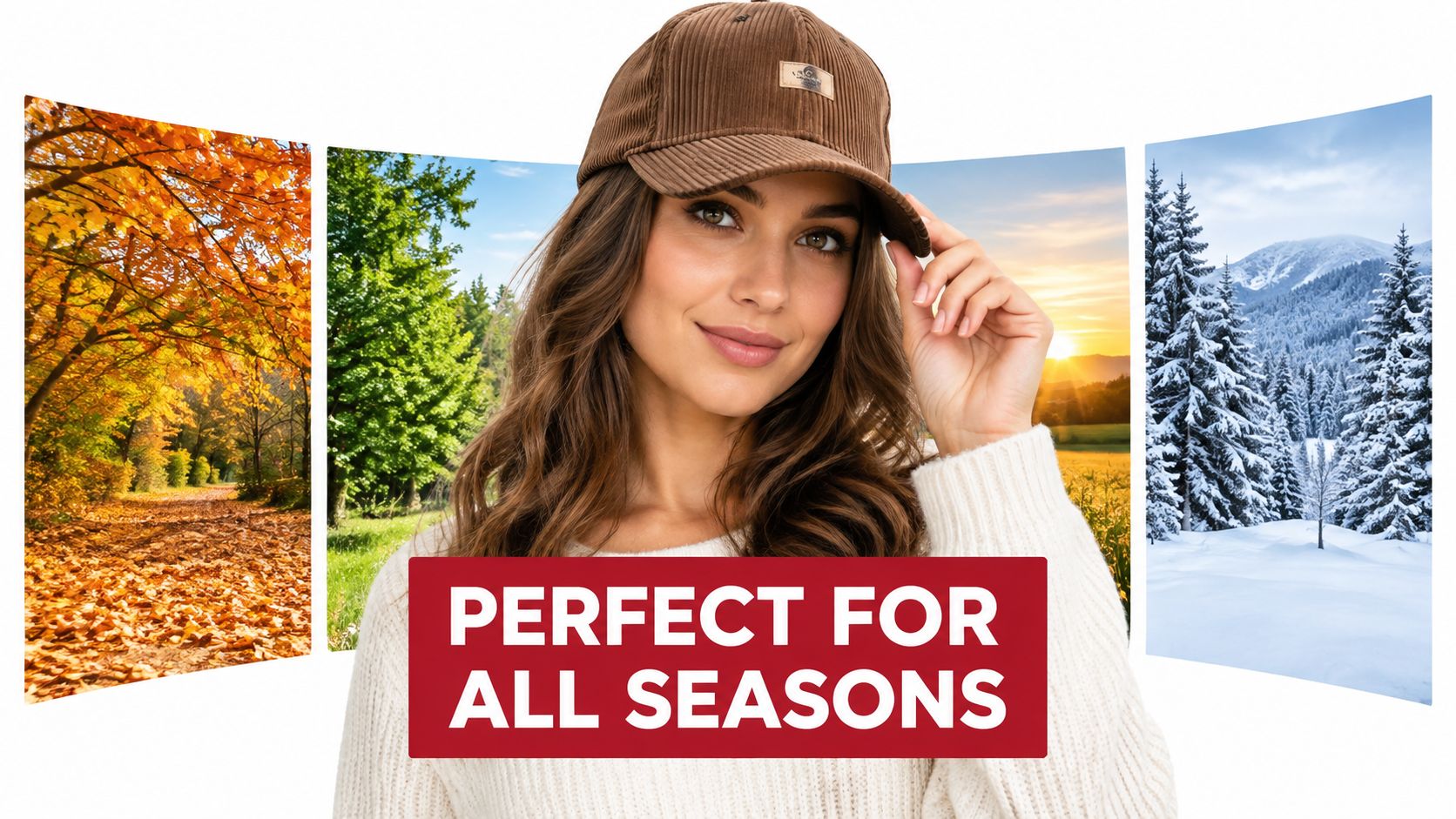
The material is less universal for hot-weather uniforms. A busy outdoor team, restaurant staff, or summer event may value ventilation, quick drying, and a lighter hand more than nostalgic texture. In those cases, a smoother cap or ventilated construction can serve as the main uniform, with corduroy offered as a separate retail or lifestyle piece.
Match the cap to the program
| Program | Corduroy fit | Practical direction |
|---|---|---|
| Autumn brand drop | Strong | Use tactile texture and a limited color story |
| Brewery or café merchandise | Strong | Pair with workwear graphics and simple decoration |
| Campus or lifestyle shop | Strong | Offer it as a seasonal statement item |
| Year-round staff uniform | Conditional | Use only if the environment and climate suit it |
| Hot-weather league or event | Often weak | Consider ventilation and lighter materials first |
| Limited release | Strong | Use scarcity and styling rather than broad utility |
Color does much of the seasonal work. Brown, olive, rust, navy, cream, and muted burgundy naturally support fall palettes, while a clean black or deep blue can carry the style beyond a single month. Pair the cap with denim, canvas, fleece, overshirts, or other visible textures instead of styling it beside only smooth technical fabrics.
A flat peak feels more fashion-led and graphic. A pre-curved brim leans toward familiar outdoor and casual wear. Neither is automatically better. Choose the shape that matches the product photography, audience, and logo placement.
For small brands choosing between a cap, patch, garment, or another tactile product, Tagada's craft trend picks can provide broader context for evaluating craft-led merchandise.
The demand pattern supports a measured approach. Corduroy coverage describes a renewed retro cycle, but interest is more seasonal and more concentrated on trousers than hats. Start with a capsule or test run if the cap is unproven. Keep a smoother, lighter option available when your program needs one year-round workhorse.
Here's a useful visual reference for thinking about how texture, season, and styling work together:
Embroidery and Patches on Corduroy
Corduroy can be decorated successfully, but the ribs change the rules. A small embroidered wordmark that looks crisp on plain twill may lose clarity when it crosses raised pile. Wide wale creates the strongest competition because each ridge has more visual weight. Fine or medium wale usually gives the needlework a calmer background.
Nap direction adds another variable. If the pile leans consistently, light catches one side of the ridges differently from the other. Turn the cap or change the lighting, and the fabric can appear to shift in tone. Your logo thread hasn't changed, but the background has, so a low-contrast design may become difficult to read.

Choose decoration by design density
Use the artwork as the starting point:
- Small lettering: Simplify the typeface, increase separation between elements, and avoid placing fine text across a heavy ridge pattern.
- Large simple logo: Embroidery can work well, particularly on medium wale with a structured front.
- Fine illustration: Consider a woven patch or a simplified embroidered version rather than forcing every line into thread.
- Raised dimensional mark: 3D puff may suit a bold, uncomplicated shape, but it can exaggerate pile interference around narrow details.
- High-detail identity: A patch can provide a more controlled base and preserve small graphic elements.
Patches sidestep some of the pile problem because the decoration sits on its own surface. Woven patches suit detailed, flat artwork. Leather can reinforce a heritage or outdoor direction. PVC offers a more technical, durable visual language. Each option changes the feel of the product, so the patch should look like part of the design rather than a rescue operation.
A structured, buckram-supported front generally gives the embroidery operator a more stable working area. Softer crowns can crease around dense stitching, especially if the artwork covers too much of the panel. Ask for a physical decoration sample when the design is dense or when the cap uses wide wale.
The snapback embroidery guide is a useful reference for evaluating placement and decoration choices, but your own logo still needs testing. The digitizer may need to remove tiny details, adjust stitch direction, increase spacing, or alter underlay so the artwork doesn't sink into the pile.
Decoration decision: Let the fabric remain visible. A logo that respects the corduroy texture often looks more premium than a dense design that tries to flatten it.
Ask the decorator to compare the mark with the nap running in its normal direction and against the nap. Review it under direct and angled light. Check whether the front panel recovers after hooping, whether the peak stays aligned, and whether the logo remains legible from normal viewing distance.
Ordering Wholesale Corduroy Snapbacks the Smart Way
A supplier's phrase “plastic snap” leaves several buying decisions open. Specify the polymer, attachment method, adjustment range, and closure testing before approving production. The closure is the small moving part customers handle repeatedly, so it deserves the same attention as the corduroy fabric.
A typical adjustable circumference is approximately 55 to 60 cm (hat technical specification reference). Treat that as a reference point, not a promise for every crown and snap. Request the actual range for your chosen model, then check the smallest and largest settings on people who will wear it.
Use this approval sequence
Request a complete tech pack. Record the wale range, fabric weight, fiber blend, pile direction, panel construction, peak shape, closure polymer, attachment method, and adjustment range. The document should also state shell material and peak profile. A six-panel example might specify a 300 g/m² polyester shell and a flat peak, showing why these details belong in the specification rather than in a casual product description.
Approve a physical sample. Check color, hand feel, rib consistency, crown height, stitching, and the connection between the front panel and closure. A screen image cannot show whether the pile looks uneven or whether the crown creases around the logo.
Test the rear closure. Open and close the snap repeatedly, use its maximum adjustment, and inspect the attachment points. Ask how the supplier tests the closure, rather than treating “snapback” as evidence of durability.
Test front-panel recovery. Decorate the actual corduroy when possible. After hooping and stitching, check whether the panel returns to shape and whether dense embroidery pulls the ribs into visible puckering. Compare the result with the pile running in its normal direction.
Lock the approved sample. Store the physical cap with the artwork proof, fabric details, pile direction, decoration method, and closure requirements. This becomes the reference for a later production run, much like a paint swatch prevents a retailer from approving a slightly different color by memory.
For a seasonal sourcing reference, browse apres-ski apparel wholesale collections to see how suppliers present texture-led products and wholesale categories. Use those examples for positioning, not as a substitute for testing your own cap.
Small businesses can begin with a limited commitment. Dirt Cheap Headwear offers custom embroidery and wholesale headwear, with low minimums starting at six pieces per logo. A small run can test color, decoration, fit, and customer response before expansion. Whatever supplier you choose, approve the exact product you plan to sell, not a similar-looking stock image.
Putting It All Together
A corduroy hat snapback makes sense when four decisions agree. The wale and blend should suit the logo. The crown should support the decoration. The season and audience should welcome texture. The closure should survive the way customers will wear and adjust the cap.
For most first orders, medium or fine wale gives you a manageable decoration surface without losing the corduroy character. A structured front helps dense embroidery, while a patch can protect detailed artwork from pile interference. A seasonal launch, brewery collection, campus shop, or limited lifestyle drop can give the style a clear reason to exist. A hot-weather uniform may need a smoother or more ventilated alternative.
Your working formula: choose the texture, match the season, simplify the decoration, test the sample, then repeat only from the locked specification.
The opportunity isn't just nostalgia. It's the combination of a tactile textile and a flexible closure. Corduroy gives the cap a story customers can see and feel, while the snapback format makes group sizing less complicated. For most businesses, though, the strongest role is as a seasonal or lifestyle product rather than the only cap in the program.
Start with a small custom run, track which colors and designs move, and keep the approved wale, blend, pile direction, decoration method, and closure details for the reorder. That turns a fashionable idea into a controlled merchandise test.
Dirt Cheap Headwear supplies wholesale caps and custom decoration, including embroidery, 3D puff, and patches, with low minimums starting at six pieces per logo. Visit Dirt Cheap Headwear to review corduroy snapback options and start a small, sample-led order.