
Best Dad Hat Brands: A Guide for Custom & Wholesale Orders
Ordering dad hats for a business sounds simple until you start shopping. Then you're staring at brand names, fabric specs, closures, crown notes, and decoration options, trying to guess which blank will look clean with your logo and which one will turn into a floppy, puckered mess after embroidery.
That's where most “best dad hat brands” lists fall short. They rank hats like fashion accessories. Buyers usually need something else. They need to know which hats work for promotional giveaways, which feel good enough for retail merch, and which hold up best when a shop stitches the same logo across a bulk order.
That practical angle matters because dad hats aren't some fringe style anymore. Industry coverage now places unstructured dad hats alongside major custom-headwear staples like Richardson truckers and Nike or Under Armour performance caps in the promotional space, which says a lot about how reliable and widely accepted the style has become for branded programs (Pinnacle Promotions' hat brand guide). If you're still narrowing down styles, this guide can also help you find your perfect custom hat before you lock in a dad cap for your order.
A good dad hat brand isn't automatically the most expensive one or the most recognizable one. It's the one that fits your use case, your decoration method, and the expectations of the people who'll wear it. If you want a broader look at styles buyers commonly compare while shopping, popular hat brands and categories are a useful place to keep your options straight.
Beyond the Hype Finding the Right Dad Hat
The first question isn't “what's the best brand?” It's what job does the hat need to do?
If you're ordering for a festival booth, a charity run, a startup launch, or staff uniforms, your priorities probably lean toward price control, broad fit, and dependable decoration. If you're building a merch line, the feel in hand matters more. People notice crown depth, fabric softness, buckle quality, and whether the hat looks good worn loose and casual.
Best depends on the project
A dad hat for giveaways needs different strengths than a dad hat for retail resale.
- Promo orders need consistency: The logo has to stitch cleanly, the fit has to work for a lot of people, and reorders should feel similar to the first run.
- Retail merch needs feel: Buyers judge softness, wash-and-wear character, and whether the hat looks lived-in in a good way.
- Team or staff hats need comfort: If people wear them all day, the wrong crown shape or scratchy fabric gets noticed fast.
That's why brand rankings by themselves aren't enough. A brand can be excellent in one lane and mediocre in another. Some blanks are workhorses. Others are better presentation pieces.
The best dad hat brands aren't “best” in the abstract. They're best when the hat's shape, fabric, and decoration behavior line up with the program you're running.
Why dad hats keep showing up in bulk orders
Dad hats have stuck because they solve several business problems at once. They feel approachable, they don't demand a particular age group or style tribe, and they support understated branding better than louder cap profiles.
That low-pressure wearability is a big reason they work so well for schools, nonprofits, breweries, coffee shops, local retailers, events, and internal company merch. People who'd never wear a tall structured snapback will often wear a relaxed dad hat without thinking twice.
The trick is avoiding the common buyer mistake. They choose by front-facing lifestyle photos and ignore the spec sheet. That's how you end up with a hat that looks great online but doesn't sew well, fits strangely, or feels too flimsy for the price.
The Anatomy of a Perfect Dad Hat
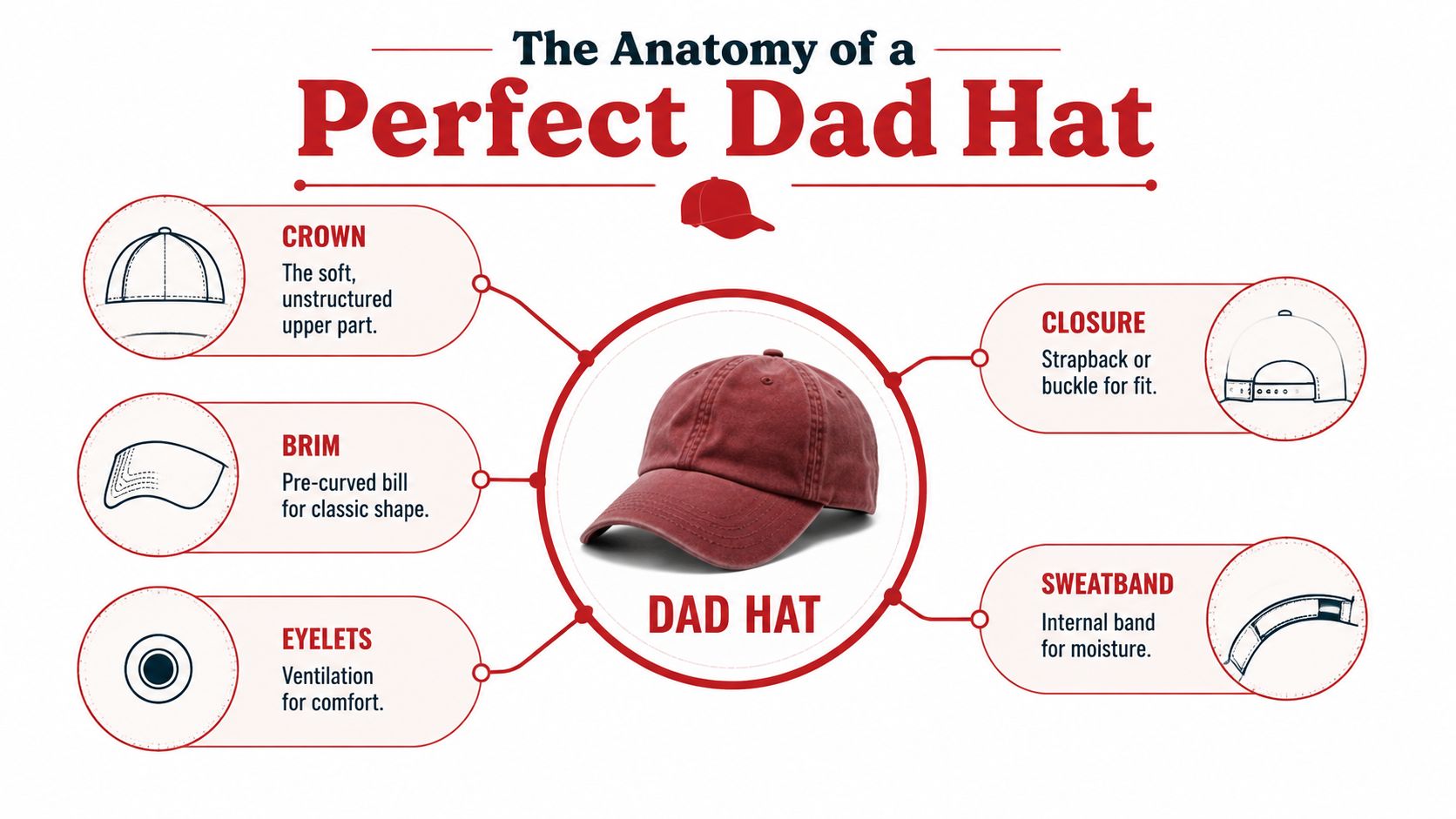
Before comparing brands, it helps to know what makes a dad hat a dad hat. Otherwise, brands end up getting credit or blame for details that really come down to construction.
A true dad hat is defined by its relaxed, unstructured construction, typically with 6 panels, a lower profile, and an adjustable closure. That shape is a major reason the style became a standard blank for branding, not just a passing trend, because it's comfortable for all-day wear and works well with embroidered logos (The Park Wholesale's dad cap guide).
The crown
The crown is the biggest defining feature. On a dad hat, it's soft and unstructured. There isn't heavy internal support forcing the front to stand tall.
It's the difference between a stiff blazer and a favorite broken-in hoodie. A structured cap presents the logo on a firmer wall. A dad hat follows the shape of the wearer's head, which makes it feel easier and more casual.
The brim and profile
The brim is usually curved, not flat. That gives the hat its familiar everyday look and helps it sit naturally on the face without feeling too styled.
The profile is also lower. The hat sits closer to the head instead of towering above it. For a lot of buyers, this is why dad hats get worn more often. They don't feel loud.
The closure and fit
Most dad hats use an adjustable strap, often with a buckle or similar closure. That matters more than people think.
A cheap closure can make even a decent blank feel disposable. A smoother strap system gives the hat a cleaner finish and lets more people fine-tune the fit without fighting the back opening.
Small parts that still matter
A few details don't get enough attention until something goes wrong:
- Eyelets: These add ventilation and affect the hat's finished look.
- Sweatband: This changes all-day comfort more than many buyers expect.
- Panel symmetry: If the panels aren't cut and sewn consistently, decoration placement can drift.
Practical rule: If the crown looks sloppy before decoration, embroidery won't rescue it. It usually makes the problem more obvious.
When buyers understand these basics, brand comparisons get easier. You stop shopping by label alone and start shopping by the hat's actual behavior.
Decoding Hat Materials and Construction
Material choice separates a hat that feels good for a week from one people keep wearing. With dad hats, fabric matters because the whole style depends on softness, drape, and comfort. The wrong material can make an unstructured cap feel cheap instead of relaxed.
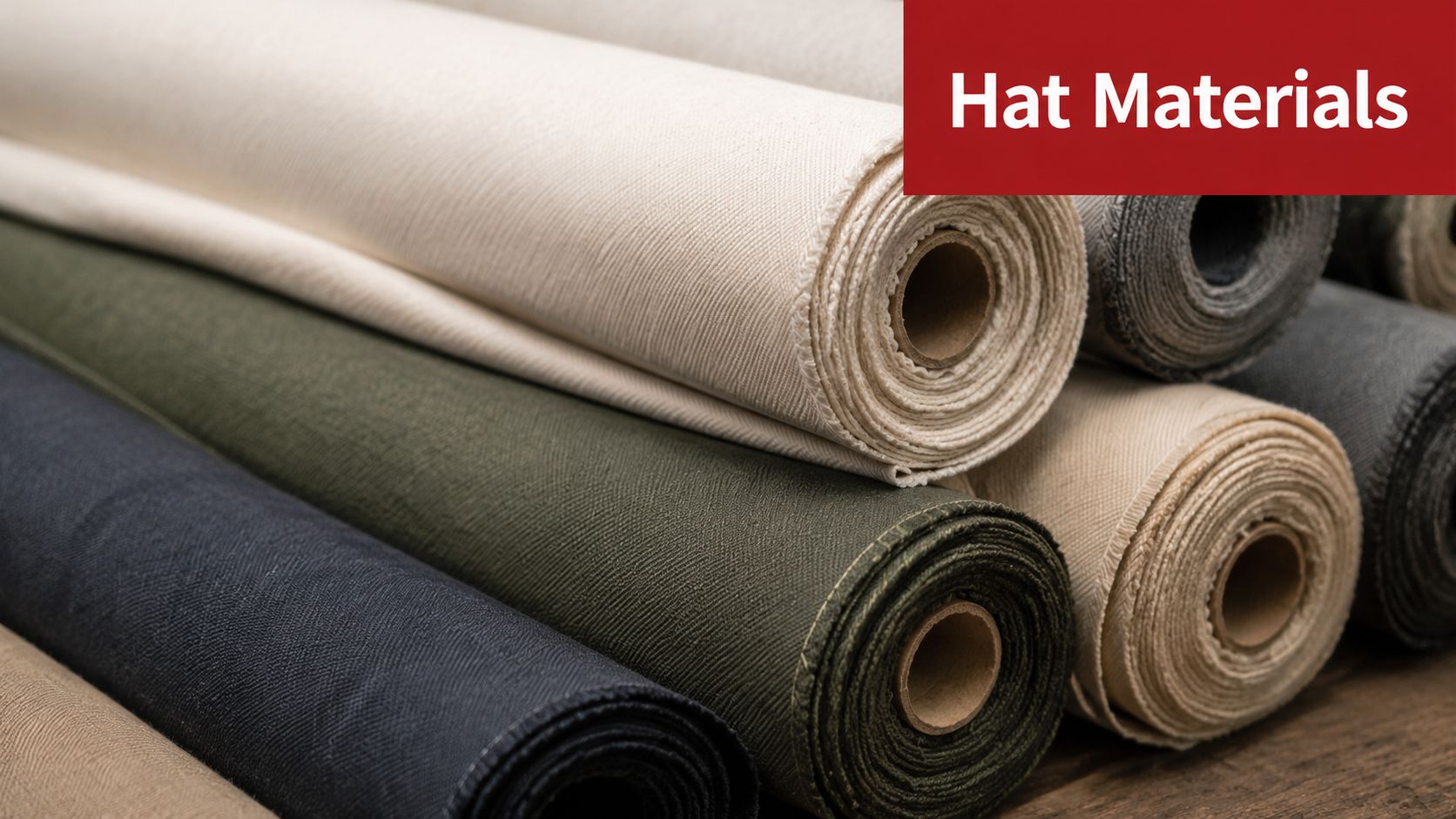
The most dependable decorated dad hat profile is usually an unstructured 6-panel cap with a curved brim and an adjustable strap. For fabric, 100% cotton is common because it feels breathable and comfortable, but it can be more prone to shrinking or losing shape when washed and dried with too much heat than more durable synthetic blends (Flexfit's dad hat overview).
Cotton twill versus blends
Most buyers end up comparing two broad camps.
Cotton twill
Cotton twill is the classic choice for a reason. It has the casual hand feel people expect from a dad hat, and it usually wears in nicely instead of looking rigid from day one.
That makes it a strong fit for:
- Lifestyle merch
- Coffee shops and breweries
- Campus organizations
- Brands that want a softer, vintage-leaning look
The trade-off is maintenance. Cotton can soften beautifully, but it's less forgiving if the end user treats it roughly in the wash.
Cotton-blend or synthetic-leaning options
Blends usually win on durability and shape retention. They're often the safer choice when hats will be worn in heat, at outdoor events, or by staff who aren't going to baby them.
They also tend to make life easier when:
- You need repeatable bulk decoration
- The order is for active or outdoor use
- You want a cleaner, more controlled surface
That doesn't mean blends always feel better. Some do. Some feel noticeably less natural than cotton, making physical samples helpful.
Construction details buyers skip
Fabric content alone won't tell you everything. The build quality shows up in a few places fast.
- Stitch consistency: Uneven stitching often signals uneven panels and less predictable decoration.
- Sweatband feel: If the inner band feels rough in hand, wearers usually notice.
- Closure hardware: A weak buckle or flimsy strap cheapens the whole hat.
- Brim control: A dad hat should curve naturally, not look warped.
If you need a refresher on how the crown itself changes fit and decoration behavior, this guide on structured versus unstructured hats is worth reviewing before placing a larger order.
A quick visual breakdown can also help when you're comparing spec sheets and finished caps:
What works and what doesn't
What works is matching material to use. Soft cotton often shines in retail-style merch. Firmer blends often make more sense for higher-friction promotional use.
What doesn't work is assuming “premium” always means better for your specific project. A soft luxury-feel cotton blank can be a headache if your logo is stitch-heavy and the crown won't support it. A tougher blend can outperform it in production even if it feels less romantic in the hand.
Why Some Brands Embroider Better Than Others
A lot of bulk orders go sideways because buyers focus on the logo file and forget that the hat itself is half the embroidery result.
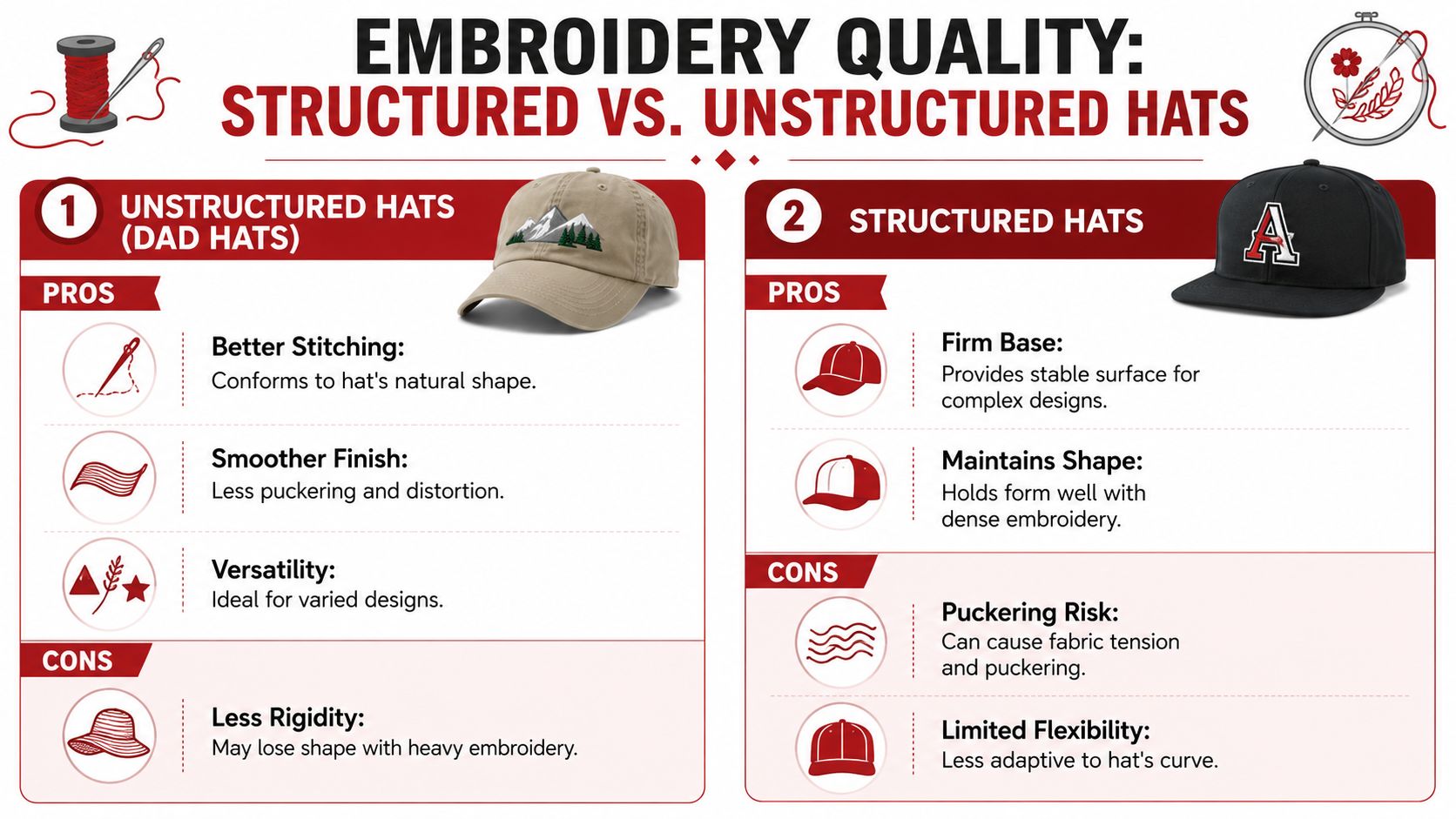
With dad hats, the challenge is obvious once you've seen a few bad runs. The crown is soft. That softness is part of the style, but it also means the fabric can shift, dip, or pull under thread tension. One blank may stitch cleanly. Another may pucker around the same design even if the logo file never changed.
For cleaner results, look for brands using consistent panel construction, stable front panels, and fabrics like cotton twill or durable cotton-blends that can support stitch density without collapsing. That stability is what helps reduce distortion and keeps logo placement more repeatable in bulk decoration (Dad Brand's product guidance on embroidery-ready construction).
Common embroidery problems on weak blanks
A logo can fail on a dad hat in a few predictable ways:
- Puckering around the design: The fabric bunches because the crown can't handle the stitch tension.
- Distortion in small text: Letters lose definition on softer or inconsistent panels.
- Off-looking placement: Even if the design is centered, an uneven front panel can make it appear shifted.
- Heavy top-heaviness: Dense embroidery can overpower a very soft crown.
None of those problems are fixed by picking a famous brand name. They're fixed by choosing the right construction inside that brand's line.
What to prioritize if the logo matters
If the hat is mainly a branding vehicle, prioritize the blank like a decorator would.
Start with the front panel
A slightly more stable front gives embroidery a fighting chance. Too soft, and the design sinks.
Match logo style to crown behavior
Small left-chest style marks, simple wordmarks, and modest center-front embroidery usually play nicely on dad hats. Dense fills and oversized graphics are more demanding.
Check run-to-run consistency
One good sample doesn't guarantee a smooth bulk run. The panel shape needs to stay consistent across the order.
If your artwork depends on razor-sharp edges and dense stitching, don't assume every dad hat can carry it. Some crowns are built for subtle decoration, not for forcing a structured-cap look onto a soft blank.
If you're planning logo application and want a broader look at decoration methods and stitch behavior, custom stitching on hats gives useful context before you commit to artwork placement.
The real trade-off
Dad hats can look excellent embroidered. They often look better than structured hats when the branding is tasteful and the blank is right. But they demand restraint.
The best-performing dad hat brands for embroidery usually aren't the ones chasing the boldest silhouette. They're the ones with predictable panel shape, reliable fabric tension, and enough surface stability to let the machine do its job cleanly.
Choosing the Right Brand Type for Your Goal
Ranking every hat brand from best to worst isn't that helpful for wholesale buyers. A better approach is to sort brand types by use case. That way, you match the blank to the job instead of forcing one style into every project.
One underserved part of the “best dad hat brands” conversation is exactly this. Most roundups talk about style and recognition, but buyers often need answers about fit, structure, and decoration compatibility for different projects, especially when clean stitching matters more than lifestyle photography (47 Brand's dad hat collection highlights the style positioning, while leaving those production questions open).
Dad Hat Brand Types by Use Case
| Use Case | Primary Goal | Key Features | Example Brand Types |
|---|---|---|---|
| Promotional giveaways | Broad appeal and budget control | Comfortable fit, simple decoration surface, easy sizing | Value-focused blanks such as Valucap and similar promo-first lines |
| Retail merch | Better hand feel and perceived quality | Softer fabrics, nicer closures, cleaner finishing | Premium casual blanks such as YP Classics or Legacy-style offerings |
| Team and outdoor wear | Durability and repeat wear | More resilient fabric behavior, dependable shape, practical comfort | Performance-leaning or athletic-adjacent options such as Nike, Richardson, or similar |
The workhorse promo blank
For events, fundraisers, volunteer kits, or mass giveaways, the best dad hat brand is often the one that's predictable and cost-conscious. It doesn't need luxury details. It needs decent hand feel, wearable shape, and enough construction consistency that the decoration looks professional.
This category works best when:
- the logo is simple
- the order volume matters
- the audience is broad
- the hat is part of a larger campaign, not the main product
These hats don't need to impress a fashion buyer. They need to get worn after the event.
The retail-ready blank
Retail merch changes the equation. Here, people touch the hat, inspect the buckle, look at the fabric texture, and decide whether it feels worth buying.
A premium casual blank earns its keep through subtle details:
- cleaner sewing
- softer but still controlled fabric
- better drape on head
- closures that don't look cheap
For this reason, brands like YP Classics or Legacy-style options often make more sense than budget promo blanks. The end user is judging the hat itself, not just the logo stitched on it.
Buyer filter: If someone will pay for the hat as merchandise, prioritize feel and finishing. If the hat supports an event, prioritize consistency and wearability.
The performance-leaning option
Some projects sit between classic dad hat styling and function-first wear. Sports staff, outdoor crews, golf events, and hot-weather programs often need a more practical blank.
Editorial coverage has framed dad caps as strong summer accessories, which makes material and weather behavior more relevant than many fashion-first lists acknowledge (The Gentleman's Journal's summer dad cap roundup). In these cases, a performance-minded brand type can make more sense than a traditional soft cotton blank.
Look here when:
- the hat will be worn outside for long stretches
- sweat and heat matter
- shape retention matters more than vintage softness
- wearers need something easy and comfortable, but not delicate
Quick decision guide
If you're torn between categories, use this simple screen:
- Choose value-first blanks if the project is promotional and broad.
- Choose premium casual blanks if the hat itself is part of the product.
- Choose performance-leaning blanks if comfort in active or outdoor settings is the biggest concern.
That's the answer to the best dad hat brands question. Not one winner. The right lane.
From Decision to Decorated Hats Your Next Steps
Once you've picked the right brand type, the order process gets much easier. Problems usually start when buyers request a quote with only a vague idea like “we need custom dad hats.” That's not enough for a smooth proofing and production process.
What to have ready before you ask for pricing
You don't need every detail finalized, but you should have the core pieces lined up.
Your logo file
Clean artwork matters. Vector art is ideal when available, but even if you're using another file type, make sure it's the sharpest version you have.Approximate quantity
Even a rough quantity range helps. A shop can guide you better when they know whether this is a small sample order or a bulk run.Hat style and brand direction
“Unstructured dad hat with buckle closure” is better than just “baseball cap.”Decoration placement
Front center, side hit, back text, or something more minimal. Placement changes the setup and the feel of the finished hat.
Understand proofs and sew-outs
A digital proof shows where the design will go and how it should look in layout. That's useful, but it isn't the same thing as thread on fabric.
A sew-out, when offered, gives a clearer read on how the logo behaves once stitched. On dad hats, that matters because soft crowns can change the look of small text, curves, and fill-heavy areas.
Don't approve a proof by looking only at the artwork. Check size, placement, and whether the design is realistic for an unstructured crown.
Watch the details that trigger regret
The most common ordering mistakes are easy to avoid.
- Picking by price alone: Cheap blanks can create expensive-looking embroidery problems.
- Ignoring crown softness: Some logos need more support than a soft dad hat can give.
- Skipping wear context: A hat for a summer event shouldn't be chosen the same way as a retail coffee-shop cap.
- Not asking about minimums: Small test runs can be smart, especially for first-time buyers.
Keep the order simple
Good custom orders usually come from clear instructions, not complicated ones. If you know the use case, choose the right brand type, keep the logo appropriate for the hat, and review the proof carefully, the process stays straightforward.
For first runs, a smaller batch can be the safest move. It lets you test fit, feel, and decoration before scaling the program.
Key Takeaways for Your Headwear Program
The best dad hat brands aren't the same for every buyer. They change based on what you're trying to accomplish and how the hat will be used after it leaves the box.
Keep these points in mind:
- Define the goal first: A giveaway hat, a merch hat, and a staff hat should not be judged by the same standards.
- Learn the build: Dad hats work because of their relaxed, unstructured shape. That same softness also affects how they fit and how they embroider.
- Pay attention to fabric: Cotton usually wins on comfort and casual feel. Blends often make more sense when durability and shape retention matter more.
- Treat embroidery as part of product selection: The blank is not separate from the logo result. The hat's panel stability and fabric behavior shape the final look.
- Buy by use case, not hype: Workhorse blanks, premium casual blanks, and performance-leaning options all have their place.
If you approach dad hats like a decorator instead of a trend shopper, your odds of getting a wearable, clean-looking final product go way up.
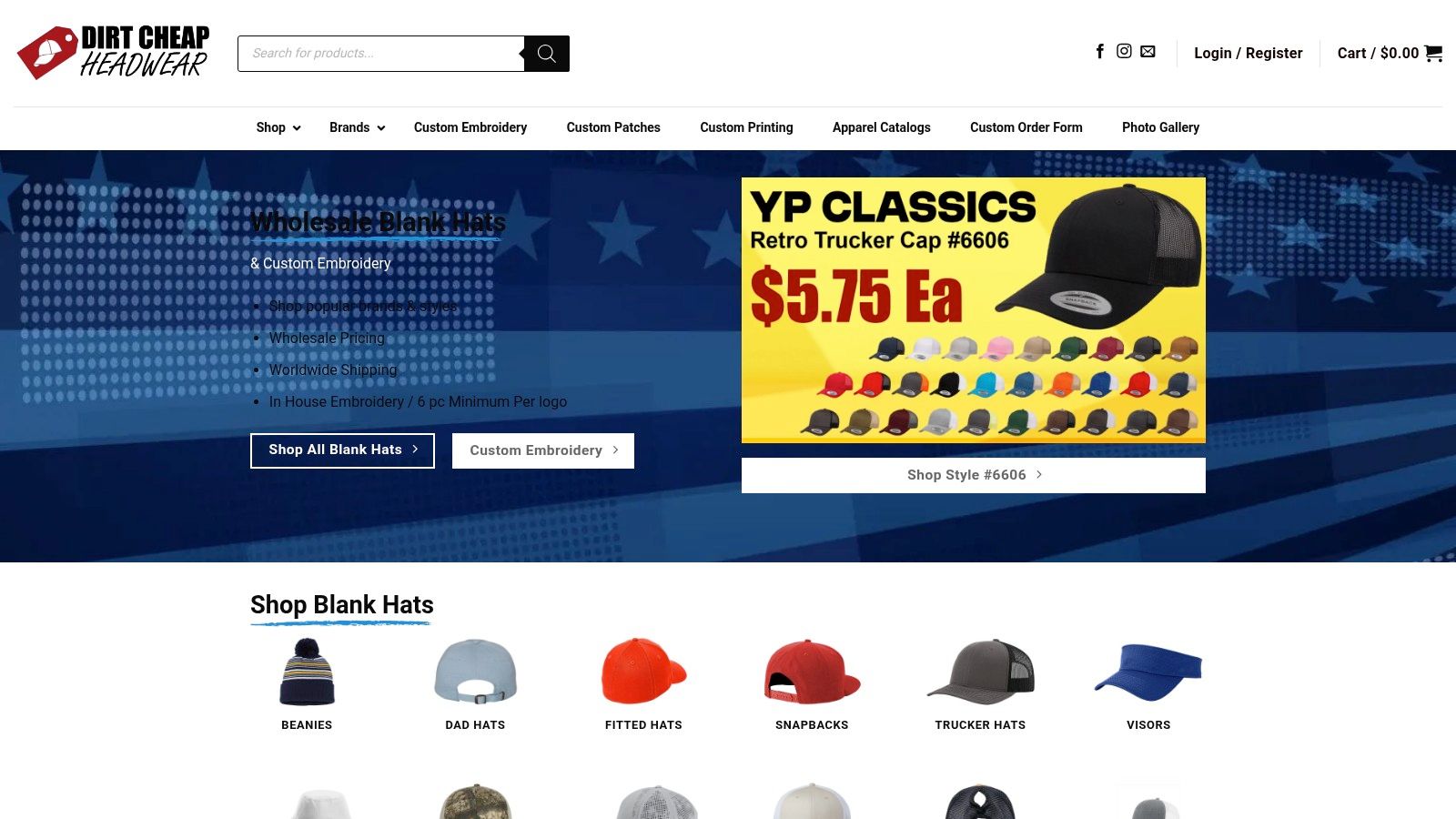
If you're ready to turn the right blank into a finished order, Dirt Cheap Headwear makes the process easier with wholesale hat options, low custom minimums, in-house embroidery, and support for both small test runs and larger bulk programs.
Pingback: How to Buy Hat Closeout Inventory Deals | Dirt Cheap Headwear