
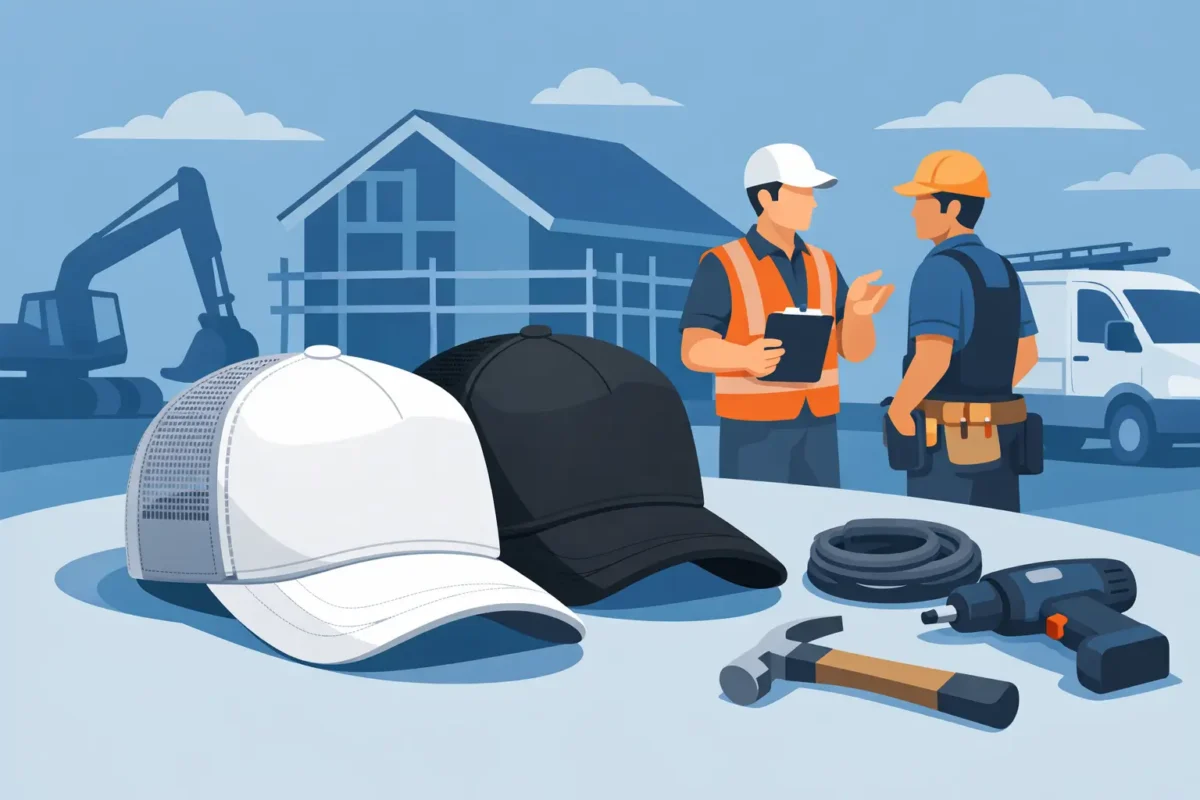
A contractor hat has to survive more than a quick photo at the jobsite. It gets tossed into a truck, worn through heat, dust, sweat, and long workdays, then pulled on again the next morning. That is why blank trucker hats for contractors need to be selected for fit, construction, color, and decoration potential, not just the lowest unit price.
For a plumbing crew, roofing company, HVAC shop, landscaping business, or general contractor, a dependable trucker hat can do two jobs at once. It gives the crew a practical daily hat and puts the company name in front of customers, neighbors, suppliers, and future hires. Buying the right blank in bulk keeps that program simple.
Why Contractors Keep Coming Back to Trucker Hats
Trucker hats are built for the conditions many crews actually work in. The mesh back allows more airflow than a full solid-crown cap, which matters during hot outdoor work. A curved bill helps cut glare, and an adjustable snap closure lets one style fit most members of a mixed-size crew.
They are also easier to replace than fitted hats. A contractor may need a dozen hats for a small team, then another run after bringing on seasonal help or opening a new service area. Snapback truckers reduce sizing issues and make reorders more predictable.
The trade-off is structure. A trucker hat does not offer the same all-around fabric coverage as a solid cap, and mesh can snag or show dust faster on certain sites. For crews working primarily indoors, in cold weather, or around frequent overhead obstructions, a structured twill cap may be the better everyday uniform option. For warm-weather field work, truckers are usually hard to beat.
Choosing Blank Trucker Hats for Contractors
Start with where the crew works, not with a logo mockup. A clean hat on a screen can look great, but the wrong crown height or fabric will spend more time in the truck than on employees’ heads.
Pick a crown that matches the job
Mid-profile trucker hats are the safe choice for most contractor orders. They offer enough front-panel space for embroidery or a patch without sitting excessively high on the head. They also work well for crews where not everyone wears hats the same way.
High-profile foam-front truckers create a bolder, more promotional look. They work for giveaways, trade shows, retail merch, and casual service brands, but they can feel less substantial for a hard-wearing uniform program. If your team wants a more work-ready appearance, choose a structured cotton or poly front with mesh backing instead of a lightweight foam front.
Low-profile truckers fit closer to the head and can appeal to crews that prefer a more relaxed, less traditional cap shape. The front decoration area is smaller, though, so a wide logo or detailed design may need to be simplified.
Check the front panel before planning decoration
Not every trucker hat handles every logo the same way. A firm, structured front panel supports standard embroidery well and keeps the design looking clean after repeat wear. It is also a stronger choice for raised puff embroidery when the logo is simple enough for that technique.
Foam fronts and softer unstructured panels can still be decorated, but they require the right artwork and application method. Small lettering, thin lines, and detailed building illustrations may not reproduce as cleanly as a bold company name, monogram, or simple icon. When in doubt, use a larger, cleaner version of the logo for the front of the hat and save detailed artwork for shirts, signs, or print pieces.
Look beyond the mesh color
Black mesh hides jobsite grime better than white or light gray, but the front-panel color matters most for branding. Black, charcoal, navy, and brown are practical uniform colors for construction, repair, and landscape crews. They pair well with light thread, leather-style patches, and simple one-color logos.
Khaki, heather gray, and olive can give a company a more modern outdoor-service look. They may show dirt sooner, but they often look sharp for sales staff, estimators, trade-show teams, and customer-facing crews. Bright colors can be useful for event hats or specific divisions, but they are not always the best choice for daily wear.
If visibility is a concern, use the colors required by your company safety policy and the jobsite. A bright hat can improve recognition, but it is not a replacement for required high-visibility PPE.
Build a Hat Program That Is Easy to Reorder
The cheapest purchase is not always the lowest-cost program. Contractor businesses usually benefit from choosing one or two core hat styles and sticking with them. That makes it easier to train office staff on what to order, keep crew appearance consistent, and avoid redesigning logos every time hats run low.
A practical setup might include a dark structured trucker as the standard field hat, plus a cleaner neutral-color trucker for office staff, sales reps, and customer events. Both can carry the same logo treatment so the brand stays recognizable without forcing every employee into the exact same look.
Order quantities should account for more than headcount. New hires, lost hats, customer giveaways, and seasonal workers can drain a small order quickly. For a crew of 10, ordering 12 may cover only the initial uniform issue. Ordering 24 or more often gives the business a workable reserve and a better per-piece value, depending on the blank style.
Keep a record of the exact hat brand, style number, color, logo size, thread colors, and placement used on the first run. Reorders are faster and more consistent when those production details are already established. This is especially useful for businesses with several locations, service vehicles, or crews that order independently.
Embroidery, Patches, and Printing: Use the Right Method
Standard embroidery is a strong default for contractor hats. It creates a durable, professional finish that holds up well for a company name, initials, badge logo, or short service line. It is a good fit for structured trucker fronts and brands that want a traditional uniform look.
Puff or 3D embroidery works best for bold lettering and simple shapes. It gives the logo more depth, but it is not suitable for tiny text or detailed artwork. A patch can be a better option when your logo includes fine lines, multiple small elements, or a design that needs a specific textured look.
Printed decoration can work for certain hat materials and designs, especially when color detail matters. Still, a contractor buying hats for long-term crew wear should consider how the decoration will look after repeated sun exposure, sweat, and handling. The right method depends on the blank hat and artwork, not just the initial appearance.
At Dirt Cheap Headwear, embroidery is completed in house, which gives buyers a more direct production path from logo submission to finished hats. The embroidery minimum is six pieces per logo, making it practical to test a crew uniform, outfit a small team, or add branded hats to a larger merch order without waiting to reach a huge minimum.
Avoid the Common Buying Mistakes
The first mistake is choosing solely by price. A very low-cost blank may be appropriate for a one-day giveaway, but it may not be the best hat for a foreman or technician who wears it five days a week. Better construction, a comfortable sweatband, and a stable front panel can improve wear rates and make the logo look better for longer.
The second is overloading the front with information. A hat is not a business card. Your company name, a simple icon, or a short recognizable mark will usually read better from a distance than a full list of services, a phone number, and a detailed illustration squeezed into one small area.
The third is ordering without considering the people wearing the hats. Ask a few crew members whether they prefer a taller crown, a curved bill, or a lighter fit. You do not have to offer unlimited options, but a quick field test with two styles can prevent a bulk order of hats nobody wants to wear.
Make the Hat Earn Its Place in the Truck
The best contractor trucker hat is the one employees grab before heading out the door. Choose a durable blank with a comfortable fit, keep the logo clear, and order enough units to handle real crew turnover. When the hats hold up and the branding stays consistent, every service call becomes one more chance for your company to be recognized.