
What Is a Snapback Cap: Features, Styles & Care Guide
A snapback cap is a type of baseball cap defined by its adjustable plastic snap closure at the back, which makes it a one-size-fits-most style. If you're comparing blanks for a merch drop, staff uniforms, or team hats, that one detail matters more than generally understood because it affects fit, inventory, and how the hat performs for decoration.
A lot of buyers start in the same place. You search for custom hats, then run into a wall of terms like snapback, fitted, dad hat, trucker, structured, unstructured, flat brim, mid-profile. The photos can look similar, but the hats don't wear the same, fit the same, or embroider the same.
That's why a simple fashion answer isn't enough. If you're ordering for a brand, school, team, or event, you need to know what the hat is made to do, how it sits on the head, and whether your logo will look clean on the front panel.
So What Exactly Is a Snapback Cap
You're pricing out hats for a staff order or a merch table, and two caps look almost the same on screen. One is called fitted. One is called snapback. That small difference changes how many sizes you need to buy, how easily the hats can be handed out, and how forgiving the order will be if you are outfitting a mixed group.
A snapback cap is a baseball-style cap identified by its adjustable plastic snap closure at the back. The closure has a row of pegs and holes that click into place, so the wearer can change the fit without switching to a different numbered size.
For a casual buyer, that may sound like a simple naming detail. For a brand owner or team manager, it affects purchasing. A snapback usually lets you cover a wider range of head sizes with fewer SKUs, which can make wholesale ordering and event distribution much easier.
The term also causes confusion because people often use it to describe the look of the hat instead of the part that defines it. A flat brim does not automatically make a cap a snapback. A high crown does not automatically make it a snapback either. The back closure is the identifying feature.
A useful way to sort this out is to separate closure from shape. Closure tells you how the hat adjusts. Shape tells you how it sits and how it presents your logo. Those are related, but they are not the same thing. That distinction matters in custom headwear because a buyer may like the look of a flat visor but still need to choose between a snap closure, strapback, or fitted construction.
Snapbacks sit within the broader baseball cap category, alongside options like fitted caps and stretch-fit caps. Each one solves a different business problem. Fitted hats can feel more exact but require size planning. Snapbacks trade that precision for flexibility, which is often the better call for promotions, team issue, retail shelves, and embroidered merch programs.
The style also comes out of the long history of baseball caps. Early baseball uniforms established the basic cap shape that later evolved into modern retail and team headwear. That origin still shows up in the design. Even if a snapback is sold as streetwear, it still follows the logic of a ball cap: a brim for shade, a crown that frames the front panels, and a clear space for team identity or brand decoration.
So the short definition is easy. A snapback is an adjustable cap with a plastic snap closure.
The more useful definition for buying is this: a snapback is a flexible cap platform that can simplify sizing, support a wide range of wearers, and often pairs well with the structured front panels many custom embroidery jobs need.
The Anatomy of a Snapback Hat
A new brand owner often spots the snap closure first and assumes that is the whole story. For custom ordering, the more useful question is how the hat is built from front to back. Construction affects how the cap fits, how your logo stitches out, and whether the finished hat feels polished in a retail box or giveaway stack.
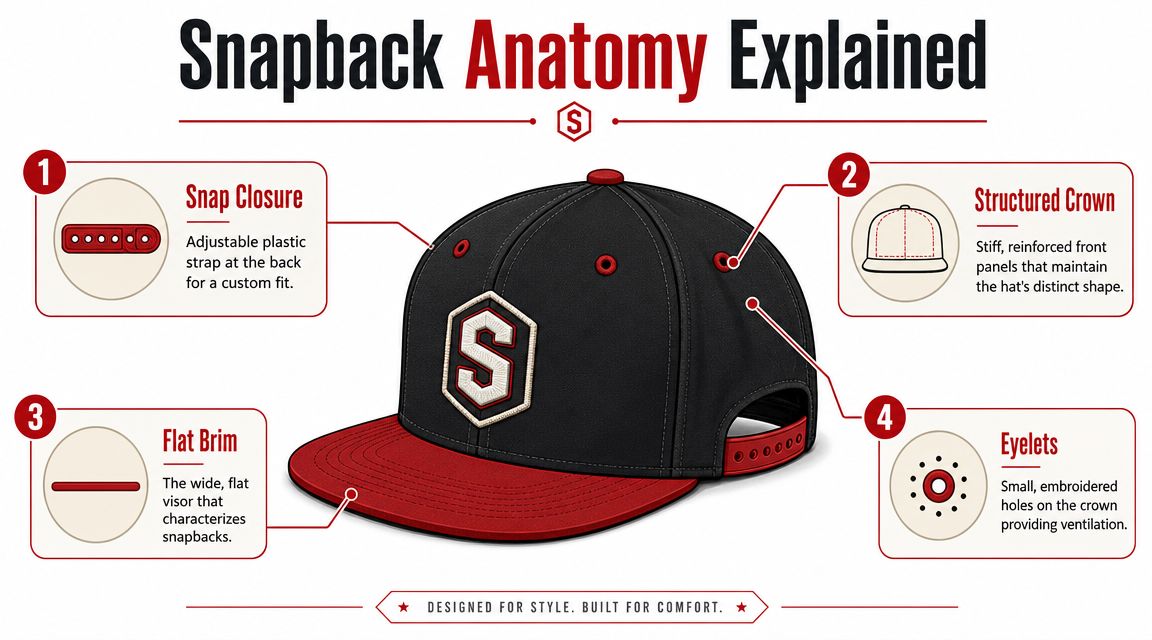
The closure
The snap closure is the adjustable strip at the back, usually plastic, with a row of pegs and matching holes. It works like a belt with set positions. The wearer picks the nearest fit instead of choosing an exact hat size.
That matters for bulk orders. A school, landscaping company, brewery, or event team can hand out one size to a mixed group without splitting the order across multiple fitted sizes. If you want a broader view of how snaps compare with straps, buckles, and fitted options, this guide to hat closure types is a useful reference.
The crown
The crown is the upper body of the hat, and it does a lot of the visual work. Many snapbacks use a structured crown, which means the front panels have added support so they hold a defined shape instead of folding inward.
For embroidery, that support acts like a firmer canvas. A structured front usually keeps bold lettering, centered logos, and patch applications looking cleaner because the surface stays more stable during stitching. Buyers who are decorating simple text or a wide chest-style logo across the front often notice this right away.
Profile also matters. A medium-profile snapback sits neither especially tall nor especially low, so it tends to suit a wide range of wearers and branding styles.
The brim
The brim, or visor, changes the personality of the hat faster than many first-time buyers expect. A flatter visor gives the cap a sharper, more graphic look. A slight pre-curve softens that effect and can feel more familiar to people who usually wear standard baseball caps.
This choice affects presentation as much as comfort. If your brand identity is bold and front-facing, a flatter brim often supports that look. If the hats are for staff uniforms, volunteer wear, or broad public handouts, a gentle curve can make the cap easier for more people to wear right away.
The panels and materials
A typical snapback has six panels sewn together to form the crown. That panel layout creates the centered front area where embroidery, printed patches, and woven badges usually sit best.
Material choice is just as practical as shape. Cotton blends often feel softer in the hand, while polyester content can help the cap hold its form and handle repeated wear a bit better. Many wholesale snapbacks use blended fabrics for that reason, along with reinforced front panels and one-size-fits-most sizing, as shown in this Pro Grade Digital snapback product overview.
If you are ordering custom snapbacks, check these details before you approve the style:
- Front panel reinforcement: Helps the cap stay steady during embroidery and supports cleaner logo edges.
- Crown profile: Changes how tall the hat looks on the head and how prominent the front logo appears.
- Visor shape: Affects both style and how easy the cap feels for everyday wear.
- Fabric blend: Influences softness, structure, breathability, and long-term wear.
- Panel layout: Shapes the decoration area and the overall silhouette.
In short, a snapback is not just a cap with a plastic fastener. It is a build choice. For wholesale buyers and team managers, that build determines whether the hat fits, or whether it also carries your logo well and feels right for the people wearing it.
Snapback vs Other Hat Styles
Many buyers often get tripped up here. “Snapback” sounds like a full style category, but the biggest point to remember is that snapback is mainly a closure style, not one single silhouette, as explained in Real Thread's comparison of dad hats and snapbacks.
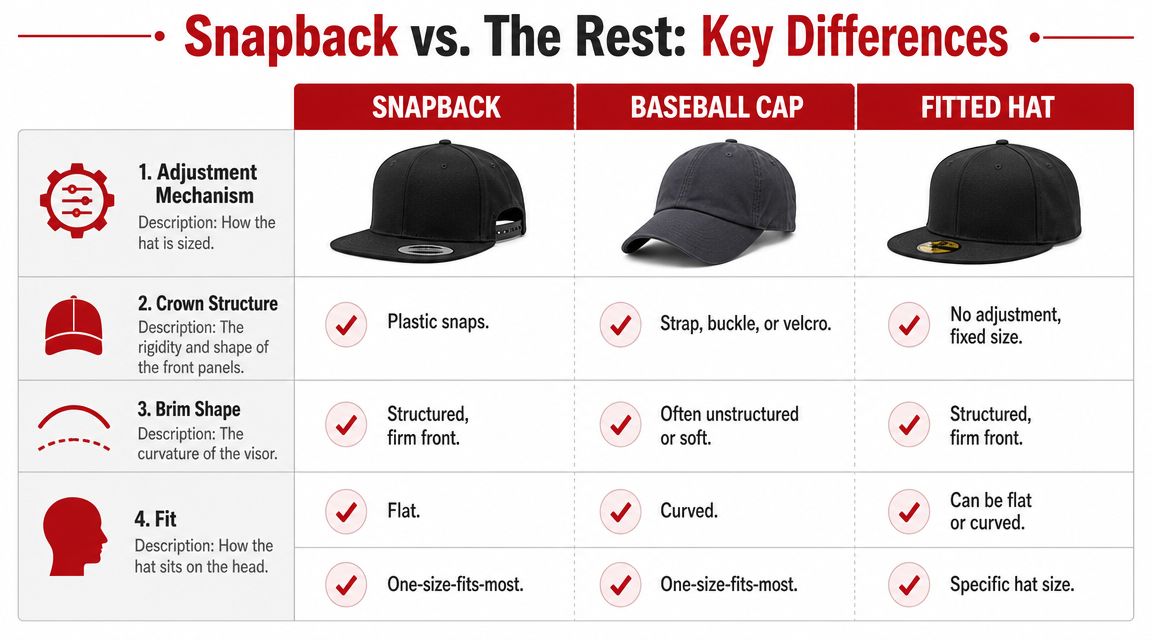
If you're ordering branded hats, that distinction saves a lot of frustration. A buyer may want the adjustability of a snapback but the relaxed feel of a dad hat. Those are not the same thing.
A quick style showdown
Here's the cleanest way to compare the most common categories.
| Feature | Snapback | Dad Hat | Fitted Cap | Trucker Hat |
|---|---|---|---|---|
| Closure | Plastic snap closure | Usually strap or buckle closure | No closure | Often snap closure |
| Crown feel | Usually structured | Soft and unstructured | Structured | Front can be structured |
| Brim shape | Usually flat or slightly pre-curved | Curved | Flat or curved | Usually curved or slightly shaped |
| Fit approach | One-size-fits-most | Adjustable | Size-specific | Usually adjustable |
| Overall impression | Bold, logo-forward | Relaxed, casual | Clean, tailored | Casual, breathable, promo-friendly |
What makes each style different
Dad hat usually means a softer cap with a curved brim and a strap-style closure. It tends to sit closer to the head and feel less rigid.
Fitted cap has no adjustable opening at all. You buy it in a specific size. That can feel more exact on the head, but it also makes ordering more complicated for groups.
Trucker hat often overlaps with snapbacks because many truckers use snap closures too. The difference is usually in the build, especially the mesh back and foam or structured front that give truckers a more ventilated, casual look. If you want a broader primer on closure options when comparing blanks, Dirt Cheap Headwear has a useful guide to hat closure types.
The safest way to order is to check three things on the product page: closure type, crown structure, and brim shape. Don't rely on the style name alone.
Why this matters for custom orders
A logo that looks strong on a structured snapback may look smaller or less crisp on a relaxed dad hat. A fitted cap may feel premium to some wearers, but it creates size management issues for teams and events.
For most group orders, people don't get in trouble because they picked a bad hat. They get in trouble because they picked a hat based on the wrong label.
How to Style and Wear a Snapback
You are ordering hats for a staff team or merch table, and the sample looks great on the shelf but awkward on actual people. That usually happens because styling was treated like an afterthought. With a snapback, the way it sits on the head, the height of the crown, and the size of the front logo all affect whether it looks sharp or bulky.
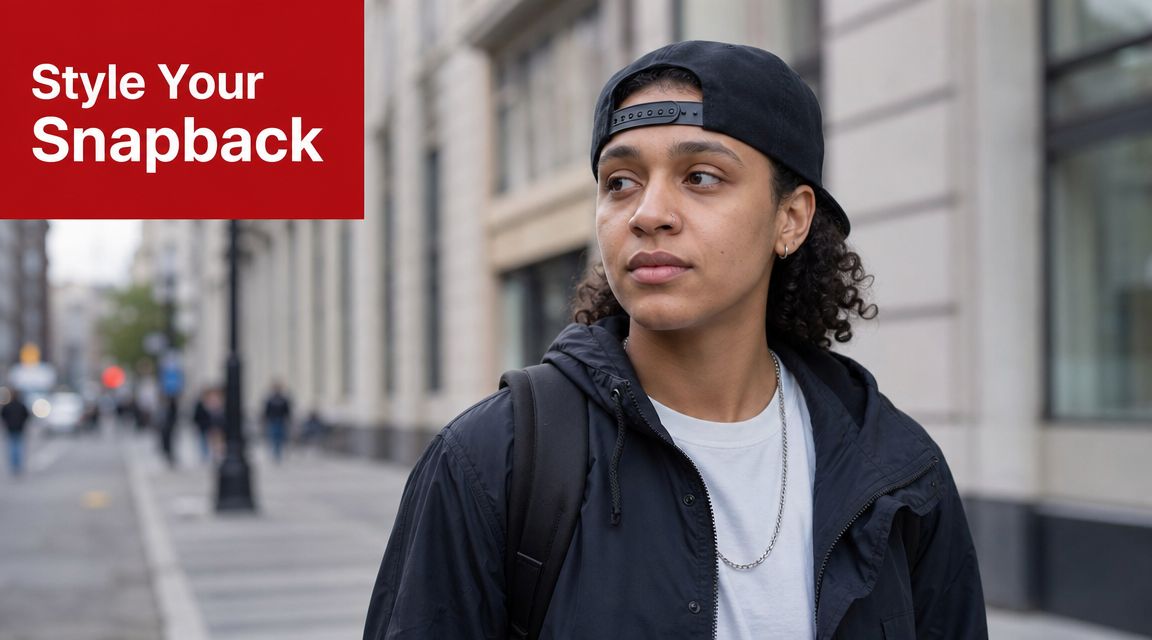
A snapback has a stronger visual frame than a soft cap. The front panel acts like a signboard for your logo, and the flatter brim gives the hat a cleaner outline from the side. That is why the same artwork can look confident on one snapback and crowded on another.
For everyday wear, the easiest approach is balance. If the hat has a tall, structured crown, keep the rest of the outfit simple enough that the shape of the cap does not fight with everything else. Hoodies, tees, overshirts, bomber jackets, and team pullovers usually pair well because they match the hat's casual, graphic look.
For custom orders, styling is not only about fashion. It also helps you choose the right blank. A thick 3D puff logo on a high-profile snapback creates a very different result than a small flat embroidery on a lower-profile version. If your audience wants an easy daily hat, cleaner artwork and moderate crown height usually get worn more often than oversized decoration.
A few practical combinations work well:
- For brand merch: use one clear front mark, with enough open space around it so the design reads from a distance.
- For staff uniforms: keep colors tight and simple so the hat looks intentional with polos, tees, or lightweight outerwear.
- For teams or events: choose a shape people can wear forward without feeling costume-like, especially if photos matter.
Some buyers worry that a snapback will feel too bold for regular use. The fit usually decides that more than the label does. A structured crown in black, navy, charcoal, or khaki often feels much easier to wear than a louder color with oversized front art. If you want examples of fit, brim angle, and everyday outfit pairing, this guide on how to wear a hat for different face shapes and styles is a useful reference.
Here's a quick visual walkthrough if you want to see fit and styling in action.
Forward, backward, or curved a bit
Wearing a snapback forward is the clearest choice for branded use. It keeps the logo visible, makes the brim useful in the sun, and gives the hat its intended shape.
Backward wear reads more casual. It can work for lifestyle merch or informal team settings, but it is less useful if the main logo is embroidered on the front panel.
Some wearers put a slight curve in the brim, even on flat-brim snapbacks. That softens the look and can make the hat feel less stiff on the face. For wholesale and custom orders, this matters because the brim style your audience prefers may not match the factory-flat look shown in product photos.
Keeping Your Snapback Looking New
A snapback holds its shape better when you treat it more like structured apparel than toss-it-anywhere gym gear. The front panel and visor are what make the hat look sharp, so careless cleaning can ruin the part you paid for.
Clean it without crushing it
Start with spot cleaning. Use a soft cloth, mild soap, and cool or lukewarm water. Blot dirty areas instead of scrubbing hard, especially around embroidery.
If the sweatband needs attention, clean that area gently and let it air dry. Don't soak the whole hat unless it really needs deeper cleaning.
Care shortcut: If the front panel has embroidery or a patch, clean the sweatband and stained areas first before deciding the whole cap needs washing.
For deeper cleaning
If the hat is heavily soiled, hand wash it carefully. Fill a clean basin with mild soapy water, dip a cloth or soft brush, and work in small sections.
Avoid bending the brim sharply or crushing the crown while cleaning. Structured snapbacks are built to keep a certain silhouette, and rough handling can leave dents or warping that don't fully bounce back.
A good routine looks like this:
- Brush off loose dust: Do this before water touches the fabric.
- Treat visible spots first: Sweat marks and fingerprints usually respond to gentle soap.
- Clean the band and underside: Those areas collect the most oil and wear.
- Air dry on a rounded surface: A clean towel stuffed loosely inside the crown can help the hat keep its shape.
Storage matters more than people think
Don't leave a snapback crushed in a bag or stacked under heavy gear. Store it on a shelf, hook, or cap rack where the crown can stay open and the brim stays flat.
If you're managing branded inventory, keep hats in a clean, dry space and avoid over-compressing them in storage bins. A hat can be new and still look bad if it's been flattened before it ever reaches the wearer.
Choosing Snapbacks for Your Brand or Team
You are ordering hats for a staff group, a school club, or a merch table. One person wants a clean front logo, another needs adjustable sizing, and you do not want to sort piles of small, medium, and large caps. That is where a snapback often makes practical sense.
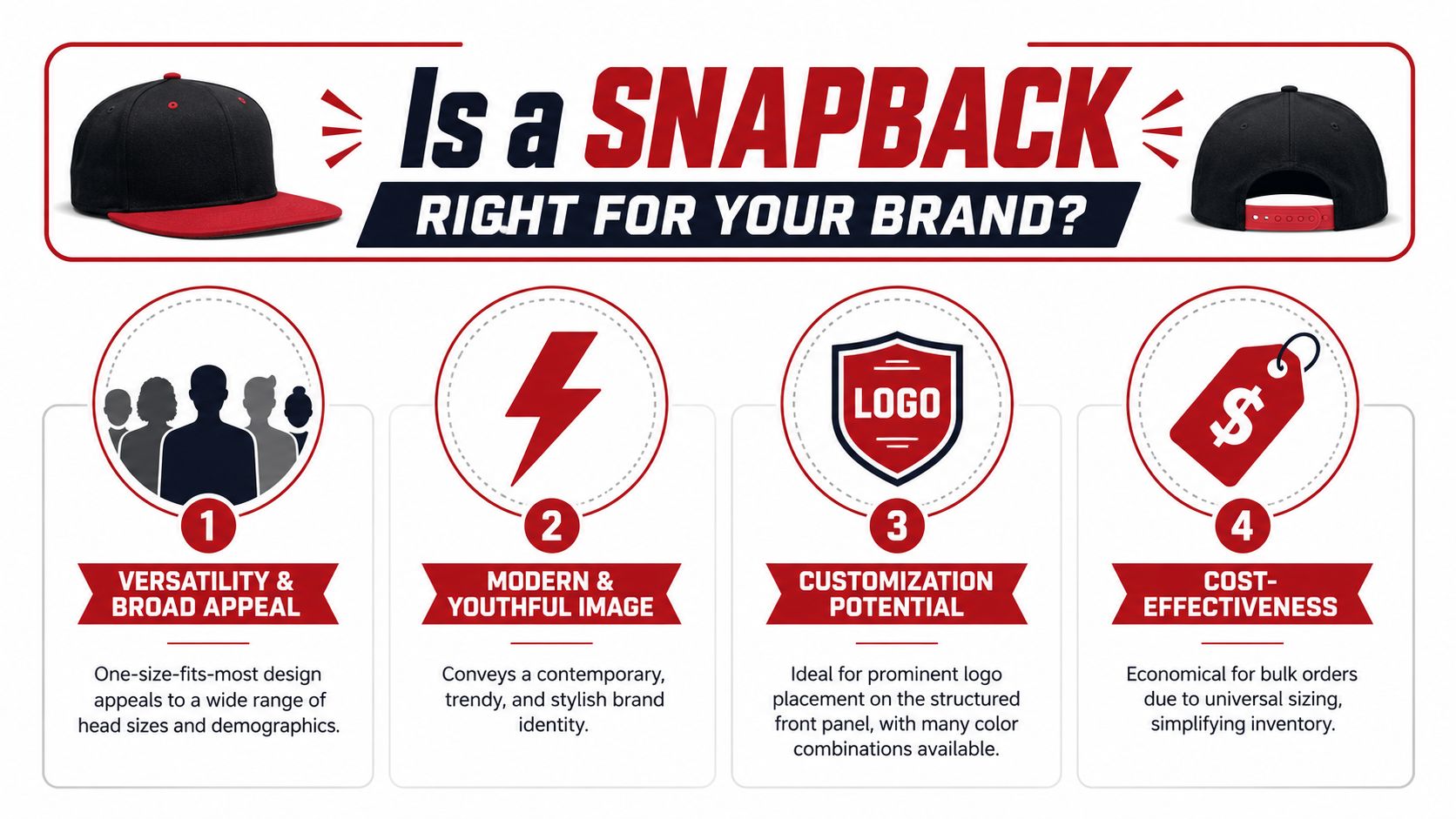
For buyers, the question is usually not just what a snapback is. The better question is whether its construction matches the job. A snapback gives you three things that matter in real orders: a fixed shape in the crown, an adjustable closure, and a front panel that usually handles embroidery and patches well.
When a snapback makes sense
A snapback is a strong choice when your logo needs a firm surface. The structured front panel works like a steadier base, so embroidered designs, woven patches, and raised puff embroidery usually sit more cleanly than they do on a soft, unstructured cap.
It also helps with inventory control. Since the plastic snap closure adjusts to fit many head sizes, you can cover a broad group without ordering size-specific fitted caps. That matters for event merchandise, employee uniforms, school programs, and team stores where simple stock management saves time.
Material matters too. If you want sharper embroidery and a more defined silhouette, cotton twill and poly blends are common picks because they hold structure better than very soft washed fabrics. If the hats will be worn outdoors or handled often, fabric choice affects how well the cap keeps its shape after shipping, decorating, and repeated wear.
When another style might fit better
A snapback is not always the right call. If your audience wants a softer crown and a broken-in feel right away, a dad hat may be the better match.
If breathability is the top priority, especially for summer promotions or outdoor crews, a trucker cap can make more sense because the mesh changes both airflow and overall look. If your group strongly prefers a size-specific fit, fitted caps still have a place.
The easy way to decide is to match the hat to the job. Choose a snapback when logo visibility, shape retention, and broad fit range matter most. Choose a softer style when relaxed comfort matters more than a crisp silhouette.
A simple buyer checklist
Before you place an order, ask:
- Who will wear it? Staff, fans, students, and resale customers often respond to different crown heights and profiles.
- What decoration are you adding? Large front logos, patches, and 3D embroidery usually perform better on structured snapbacks.
- How much sizing do you want to manage? Adjustable closures reduce sorting and reorder headaches.
- What impression should the hat create? Snapbacks usually read as sharper and more graphic than softer cap styles.
- What fabric supports the use case? Twill, acrylic wool blends, and polyester blends each affect shape, hand feel, and embroidery results.
If you are comparing blanks before decoration, start with a range of plain snapback caps for custom orders so you can narrow the options by profile, crown structure, fabric, and color.
A good snapback solves more than one problem at once. It gives your design a stronger presentation, keeps sizing simpler, and creates a hat people are likely to keep wearing after the event ends.
If you're ready to compare blanks or plan a custom order, Dirt Cheap Headwear offers wholesale headwear and in-house decoration for brands, teams, events, and resellers. It's a practical place to review snapback options by style, structure, and decoration needs before you commit to a run.
Pingback: How to Choose Blank Hats for Bulk Orders | Dirt Cheap Headwear
Pingback: How to Wear a Snapback Hat Without Looking Outdated | Dirt Cheap Headwear
Pingback: Snapback Hats in Bulk: The Smart Buyer's Playbook | Dirt Cheap Headwear