
Summer Hat Styles: A 2026 Guide for Your Brand
You're probably dealing with a familiar summer problem. The event date is locked, the staff shirts are already approved, and now someone asks for hats that look good, keep people comfortable outdoors, and still leave enough room for a clean logo. That sounds simple until you start comparing styles and realize a beach hat, a trucker cap, and a bucket hat solve very different problems.
For a business owner, coach, merch brand, or event planner, summer hat styles aren't just a fashion choice. They affect shade, comfort, decoration quality, and whether people keep wearing the hat after the event. A cheap-looking promo cap gets tossed in a car. A useful one becomes part of the regular rotation.
That practical side is why summer hats have lasted so long. Summer headwear has deep roots in sun protection, with historical evidence of straw hats being used in ancient Egypt and Greece to shield workers from the sun, a pattern described in this history of hat types and uses. Function came first. Style followed. For wholesale buyers, that still holds true.
Finding the Perfect Hat for Summer
A restaurant group ordering patio uniforms needs something different from a brewery stocking merch or a nonprofit planning a charity walk. The restaurant usually wants a clean, low-profile cap that fits most staff and embroiders well. The brewery may want a more trend-driven shape, like a rope cap or bucket hat, because the hat is part of the brand. The nonprofit often needs broad appeal, easy sizing, and enough sun coverage that volunteers will wear it all day.
That's where a lot of bulk orders go sideways. Buyers start with the look, then try to force the wrong hat into the wrong job. A structured trucker can be great for a landscaping crew or outdoor promo team. It's less useful if your audience is sitting poolside at a resort event and wants something lighter and more relaxed.
Practical rule: Buy for the use case first, then for the mood of the brand.
Summer hat styles work best when you evaluate them like equipment, not just accessories. Ask four questions before you even think about thread color:
- Who's wearing it. Staff, customers, volunteers, athletes, or VIP guests all have different tolerance for fit and style.
- How long they'll wear it. A hat for a short giveaway can prioritize visual impact. A hat for long outdoor shifts has to prioritize comfort.
- How the logo will be applied. Embroidery, patches, and printed applications don't behave the same way on straw, mesh, cotton twill, or performance fabrics.
- What the setting demands. Beach event, golf outing, summer festival, jobsite, or retail merch rack all call for different brim and crown choices.
If you get those answers right early, the rest of the buying process gets easier.
A Guide to Popular Summer Hat Styles
Some summer hat styles are built for utility. Others sell because they hit a specific look. In wholesale, you usually need both.

Bucket hats
Bucket hats are one of the easiest bridges between promo, retail merch, and event use. They feel casual, give all-around shade, and work for music events, streetwear brands, youth programs, and resort-style promotions. They also pack down well, which matters when orders need to be handed out in volume.
For decoration, bucket hats can be excellent if the logo is kept simple and placement is chosen carefully. Front embroidery works. Side embroidery can work even better for a subtle branded feel. If you're comparing blank options, a camo bucket hat for branded outdoor use shows how this silhouette can lean more lifestyle or more utility depending on fabric and print.
Wide-brim and beach hats
These are purpose-built for sun exposure. They make sense for lifeguard teams, resort staff, outdoor tour operators, golf events, and any group spending long hours in direct sun. They're not the easiest option for traditional front-panel embroidery, but they solve a real comfort problem that standard caps don't.
The mistake buyers make here is treating them like a generic promo piece. They're more specialized. When they fit the use case, they're memorable and useful. When they don't, they can feel too niche for broad distribution.
Straw hats including Panama and straw fedora styles
Straw hats carry a strong summer signal right away. They work well for hospitality brands, beach venues, destination events, and premium giveaways where the product needs to feel seasonal on sight. Panama-style and straw fedora silhouettes tend to read more polished than casual.
From a decoration standpoint, straw is often better suited to bands, tags, or patch-style branding than dense stitched logos directly into the body. The style sells on atmosphere, so over-branding usually hurts more than it helps.
Baseball caps and dad hats
For most buyers, this is still the safest lane. Baseball caps and dad hats are flexible, familiar, and easy to size across mixed groups. They work for staff uniforms, startup merch, school events, and retail counters. Cotton twill versions usually take embroidery cleanly, and unstructured dad hats often feel more relaxed in warm-weather settings than heavier structured caps.
If your order needs the widest audience fit, start here before moving into more seasonal shapes.
Visors
Visors are underrated for summer programs. They're light, open at the crown, and useful for golf tournaments, tennis events, runs, walks, and country club retail. They also leave room for ponytails and tend to feel less confining in heat.
Their branding area is smaller than a full cap, so logo discipline matters. Short wordmarks, icons, and cleaner marks tend to outperform complex art.
Trucker hats
Trucker hats remain strong for outdoor brands, team gear, breweries, fishing events, and workwear-adjacent merch. Mesh back panels help with airflow, and the larger front panel gives decorators room to work. They also handle patches especially well.
The trade-off is fit preference. Some people love the taller front. Others don't. For mixed audiences, that matters.
Boater hats
Boater hats are the most style-specific option in this group. They can be fantastic for themed events, hospitality activations, garden parties, and refined summer branding. They're less universal than caps or buckets, but that's also their strength. They feel intentional.
Here's the fast comparison buyers usually need:
| Style | Best For | Common Materials | Customization Notes |
|---|---|---|---|
| Bucket Hat | Festivals, streetwear merch, camps, resort promos | Cotton, washed twill, performance fabrics | Good for simple embroidery or side logo placement |
| Wide-Brim Sun Hat | Outdoor staff, beach teams, golf events, sun-heavy activations | Straw, performance fabrics, woven synthetics | Best with subtle branding, patches, or branded trim |
| Panama or Straw Fedora | Hospitality, premium giveaways, resort retail | Straw, paper straw, woven fibers | Better for bands, tags, or light-touch branding |
| Baseball or Dad Hat | Staff uniforms, startup merch, schools, everyday promo | Cotton twill, chino twill, performance blends | Easiest style for embroidery |
| Visor | Golf, tennis, races, summer sports events | Cotton twill, performance poly | Limited branding area, keep artwork simple |
| Trucker Hat | Outdoor brands, breweries, team gear, workwear looks | Cotton/poly front, mesh back | Excellent for patches and bold front embroidery |
| Boater Hat | Themed events, hospitality, upscale seasonal activations | Straw, woven fibers | Decoration options are more limited and need restraint |
What Makes a Great Summer Hat
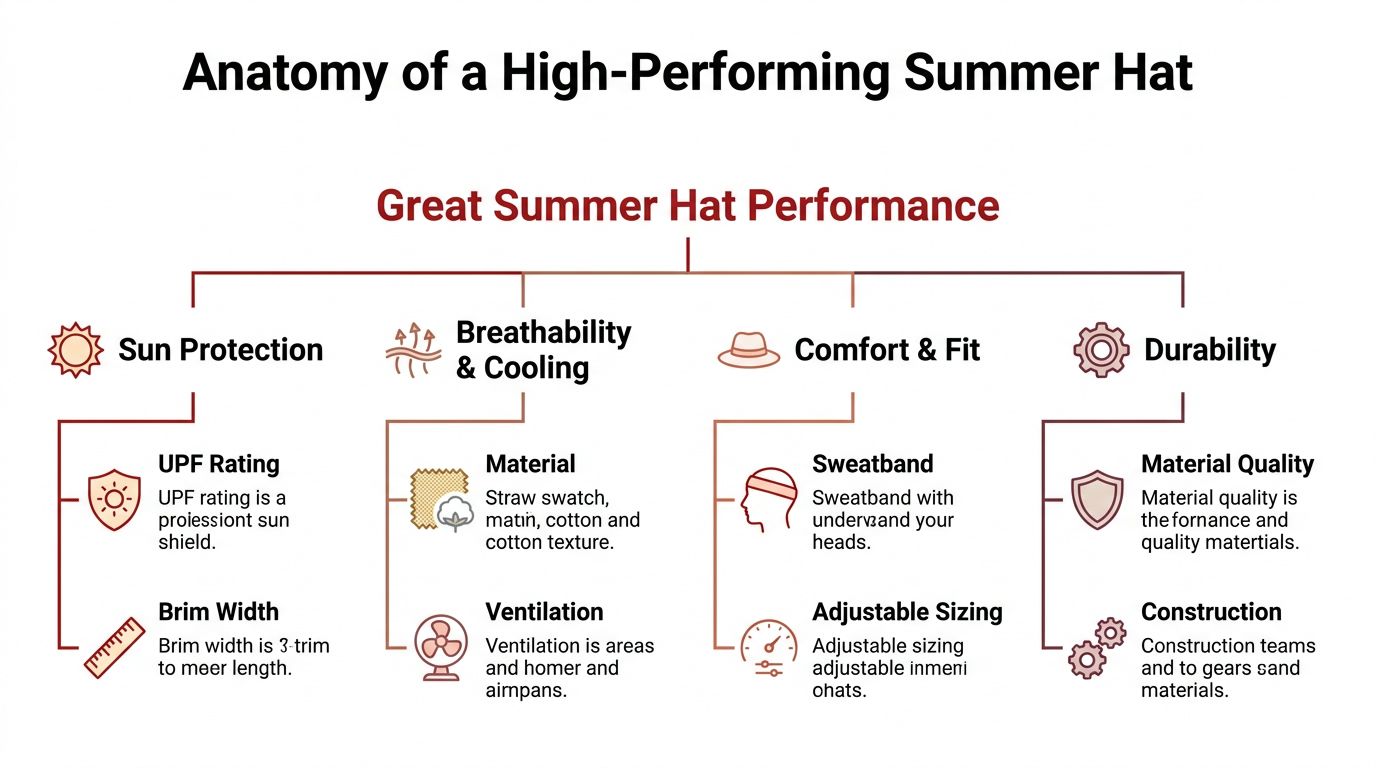
A buyer usually sees the problem after the order arrives. The hats looked right in photos, but the crown runs hot, the brim blocks decoration, or the material collapses after a few long shifts outdoors. A great summer hat has to do more than look seasonal. It has to wear well in heat, hold its shape through repeated use, and leave enough usable space for branding.
Start with brim and crown
For wholesale buyers, brim and crown shape affect comfort, sun coverage, and decoration all at once. Warm-weather hats usually perform better with a taller crown that allows more airflow and with a fabric sweatband that traps less heat than heavier interior finishes, as explained in this summer hat construction guide from Gentleman's Gazette.
Brim width is a practical decision, not just a style choice. A moderate brim works well for general summer wear, while broader brims give better coverage for outdoor crews, golf events, beach staff, and long hours in direct sun. The trade-off is branding space and everyday wearability. Once the brim gets wider, the hat often feels more role-specific and gives you fewer clean options for front-facing decoration. For buyers balancing shade with usability, this hat brim sizing guide for sun protection is a useful reference.
That trade-off matters.
A hat that protects well but cannot carry the logo cleanly is a weaker purchase for uniforms, promotions, and resale. In those cases, caps, truckers, and structured buckets usually give a better balance of comfort and brand visibility.
What helps with cooling
Material matters, but construction decides how the hat feels after a few hours outside. Straw can breathe well, but loose weave can reduce sun protection. Synthetic performance fabrics can wear cooler than buyers expect if the crown is ventilated, the sweatband is soft, and the interior is not overbuilt.
Use this checklist before placing a bulk order:
- Check the lining. Unlined or lightly lined hats usually wear better in hot conditions than heavily finished interiors.
- Check the sweatband. Soft fabric sweatbands are usually the better choice for summer programs, especially for staff who wear hats all day.
- Check crown depth. A crown that sits too low can trap heat against the scalp even if the outer fabric feels light.
- Check panel structure. Heavily structured front panels hold shape well for embroidery, but they can wear warmer than softer builds.
- Check the weave or fabric density. Airflow helps, but protection still depends on how tightly the material is built.
For branded orders, cooling and decoration often pull in different directions. The hats that feel lightest are not always the hats that embroider best. Soft straw, floppy sun hats, and open weaves can look strong on display but give you less control over stitch quality and logo placement. Structured cotton twill and poly blends usually give cleaner embroidery results, especially if you start with a logo digitized properly for hat embroidery.
Best materials by commercial use
Different use cases call for different compromises.
| Use Case | Material Direction | Why It Works |
|---|---|---|
| Staff uniforms | Cotton twill or performance poly | Clean branding, repeat wear, easier maintenance |
| Athletic events | Performance poly, mesh-backed builds, lightweight visors | Lighter feel and easier sweat handling |
| Resort or beach retail | Straw or woven seasonal styles | Immediate summer look and strong display appeal |
| Outdoor crews | Performance-focused builds with better ventilation and broader coverage | Better comfort over long wear periods |
| Promo giveaways | Soft cotton or relaxed casual caps | Familiar fit and broad audience acceptance |
If the hats will be sold online, presentation matters too. Material texture, brim shape, and crown profile all affect how the product reads in photos, especially on marketplaces with crowded listings. This guide to Amazon product imaging is useful for planning shots that show weave, structure, and decoration clearly.
A great summer hat earns its keep in four ways. It provides real shade, handles heat without becoming uncomfortable, gives you decoration space that works in production, and holds up well enough to justify the bulk buy.
How to Choose the Right Hat for Your Needs
The right choice usually comes down to one honest question. Do you need the hat to flatter the wearer most, or work the hardest in the sun? Those aren't always the same thing.

Style guides often push face-shape advice, and that's useful up to a point. But for summer wear, there's often a trade-off. A taller crown and wider brim are often the better choice for heat dissipation and UV protection, even when they aren't the most visually slimming option, a tension discussed in this face shape and hat fit guide.
Fit for groups, not just individuals
If you're buying for a team, don't over-correct around face shape rules. Group orders work better when you choose styles that are broadly wearable and easy to adjust.
A few practical guidelines help:
- Dad hats fit the widest range of casual settings and don't feel too aggressive on different face shapes.
- Bucket hats are forgiving because the softer structure doesn't create a hard front profile.
- Truckers make a stronger statement and are better when the brand already leans outdoor, athletic, or rugged.
- Wide-brim hats prioritize function first, so they're better for role-based distribution than general merch.
Match the style to the job
Here, buyers make the smartest decisions.
For a summer camp or nonprofit volunteer day, a bucket hat or relaxed cap is usually easier than a highly structured retail silhouette. For a corporate 5K, visors and lightweight performance caps make more sense because they feel active and don't trap as much heat at the crown. For brewery merch or surf-adjacent branding, truckers still earn their keep because they give you visible front decoration and a familiar outdoor look.
If you're outfitting crews who spend hours outside, think like an operations manager, not a merch buyer. Shade and comfort matter more than whether the hat is the most flattering profile in a group photo. That's also why articles about important gear for outdoor adventures can be surprisingly useful for commercial buyers. The same thinking applies to guides, marina staff, event crews, and any team working in direct sun.
The best-looking hat on a mockup can still be the wrong purchase if nobody wants to wear it for a full shift.
A short video can help when you're comparing shape and seasonal styling in real life.
Branding and Customizing Your Summer Hats
Once the style is right, decoration determines whether the hat looks like merchandise, uniform gear, or a rushed giveaway. Summer hats add a little complexity here because the lightest, coolest styles aren't always the easiest to decorate.
Embroidery works best when the base hat supports it
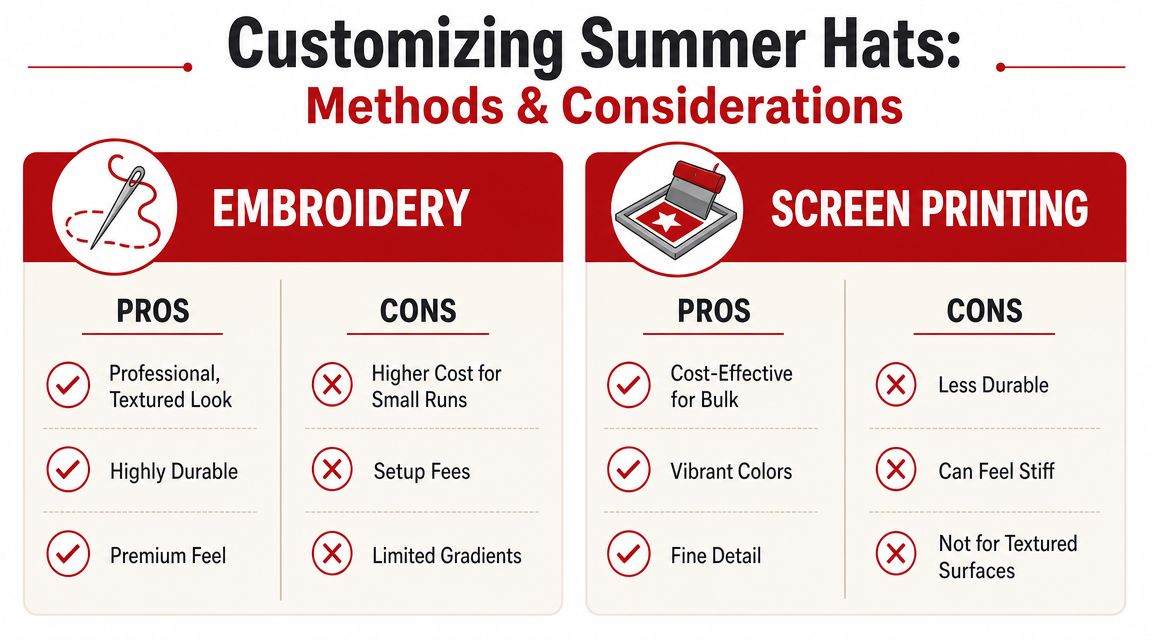
Embroidery is still the default choice for most branded caps because it lasts, looks finished, and holds up on repeat wear. It performs especially well on cotton twill, brushed cotton, chino-style caps, structured fronts, and many mid-weight bucket hats. It gets trickier on airy straw bodies, highly textured weaves, and very thin performance shells.
If your logo has small text, fine outlines, or layered detail, don't guess. Get the artwork prepared for stitching first. A logo digitizing guide for embroidery files is worth reviewing before you approve a mockup, because what looks sharp on a screen can stitch very differently on curved or soft hat surfaces.
Patches often solve what direct embroidery can't
Patches are the practical workaround when the hat material isn't ideal for direct stitching or when you want a more retail-style finish. They're especially useful on trucker fronts, rope caps, and selected bucket hats.
Different patch types create different impressions:
- Woven patches suit cleaner detail and flatter artwork.
- PVC patches fit outdoor, sport, and rugged branding where weather resistance matters.
- Leather-look patches work best when the brand has a heritage, outdoor, or premium casual angle.
A patch also helps when a logo is too dense for comfortable stitching on a lightweight summer hat. Instead of forcing a complicated embroidery file onto a weak surface, you move the complexity into the patch and keep the hat itself cleaner.
Don't overvalue natural fibers
A lot of buyers assume natural fibers are always the right move for summer branding. That's too simple. For repeated outdoor use, ventilation, brim size, and sweatband construction are better indicators of coolness than material alone, and some performance-poly options are the better choice for durability and all-day wear, a point discussed in this video on what actually keeps summer hats cooler.
That's especially relevant for staff hats, race-day gear, and repeat-use promotional programs. A visually summery straw look may work for a resort shop. A performance cap may be the smarter branded tool for crews, coaches, or outdoor reps.
Keep the logo method proportional to the hat. Lightweight hat, lighter decoration. Heavy front panel, bolder decoration.
Proofing and presentation matter
In bulk orders, the proof stage saves you from expensive disappointment. Check logo size, placement, thread count, panel seams, and whether the art is centered on the part of the hat visible when it's worn.
If you sell decorated hats online, presentation matters almost as much as decoration. Teams building ecommerce listings can borrow a lot from this guide to Amazon product imaging, especially around consistency, angles, and detail shots that help customers understand texture and finish.
For buyers comparing vendors, one practical option is Dirt Cheap Headwear, which handles blank sourcing and in-house embroidery with low minimums starting at six pieces per logo, according to the company's published service information. That kind of setup is useful when you want a small branded test run before scaling a larger summer order.
Summer Hat Care and Maintenance Tips
Good hats wear out faster when teams treat them like disposable promo items. A little care keeps them looking presentable longer, which matters for uniforms, merch programs, and event leftovers you plan to reuse.
Cleaning without ruining the shape
Use the lightest cleaning method that gets the job done. Spot clean sweat marks and sunscreen transfer first, especially on cotton caps and bucket hats. Don't soak structured hats unless the manufacturer specifically says that's safe, because water can distort the crown and bill.
For straw and woven summer styles, use a soft cloth or brush and work gently. Heavy scrubbing can fray the surface or break the weave.
Storage that prevents crushed brims
Storage matters more than people think. Don't stack hats under boxes in a supply closet and expect them to bounce back perfectly. Keep them on shelves, in bins with enough headroom, or lightly stuffed with tissue if you're holding seasonal inventory.
A few habits help:
- Keep hats dry before storing so sweat and humidity don't set odors or stains.
- Avoid extreme heat because it can warp bills, distort synthetic trims, and weaken adhesives on patches.
- Separate straw from heavier caps so firmer hats don't flatten lighter summer styles.
Quick reshaping tips
For soft bucket hats and unstructured caps, gentle hand shaping usually fixes minor crushing. For straw styles, reshape carefully and don't force the brim. If a hat is part of a staff program, it's smart to hand out simple care instructions with the order so the hats stay wearable beyond the first event.
Start Your Custom Summer Hat Order Today
The strongest summer hat orders get three things right. They choose a style that fits the setting, they prioritize wearability in heat, and they use a decoration method that suits the material instead of fighting it. That's what separates a hat people wear once from a hat they keep.
For broad appeal, baseball caps, dad hats, and selected bucket hats are usually the easiest place to start. For tougher outdoor use, performance-driven builds and wider-coverage styles often make more sense. For seasonal retail or hospitality branding, straw and resort-friendly silhouettes can create a stronger visual impact, as long as the decoration is handled with restraint.
If you're ordering in bulk, simplify the decision with a short checklist:
- Choose the audience first. Staff uniform, giveaway, resale merch, or event handout.
- Match decoration to material. Direct embroidery for the right cap bodies, patches when texture or structure calls for it.
- Think about repeat wear. The best summer hat styles aren't just seasonal. They're useful enough to stay in rotation.
- Review a proof before production. Small alignment and sizing issues are much easier to fix early.
For buyers ready to move from ideas to actual product selection, a practical next step is reviewing how custom embroidered hat orders are typically placed. That helps you line up artwork, style preferences, quantities, and decoration method before you request quotes.
A solid summer hat order doesn't need to be complicated. It just needs the right hat for the right job, with branding that respects how the hat will be worn.
If you're sourcing hats for staff, merch, team gear, or an upcoming summer event, Dirt Cheap Headwear is a practical place to start. You can browse blank styles, compare decoration options, and request a custom quote for a small test run or a larger bulk order.
Pingback: All Mesh Caps: The Ultimate Guide for Brands & Resellers | Dirt Cheap Headwear