
One Size Fits Most Hats: The Ultimate Buyer’s Guide
You're probably looking at a hat order because the simple option is staring you in the face. One SKU. One style. One price. One less headache when you've already got shirts, signage, shipping dates, and logo approvals to manage.
That's why one size fits most hats sell so well in wholesale. They remove friction. If you need hats for a company event, a school fundraiser, a field crew, a merch table, or a first branded drop, OSFM sounds like the clean answer.
Sometimes it is.
Sometimes it creates a slow-motion customer service problem. The hats arrive, many customers are fine, a few individuals never wear them, and the ones who speak up tell you the fit feels off. That gap matters more than new buyers expect, because branded hats only work when people keep them on their heads.
A good buyer doesn't ask whether OSFM is good or bad. A good buyer asks whether it's the right trade-off for the audience, decoration plan, and reorder strategy.
The OSFM Promise What It Means for Your Brand
A new business owner usually meets OSFM hats during a rushed decision. You need branded headwear for a launch, a staff uniform, or a promo giveaway. You've got a mixed group of wearers, and you don't want to chase everyone for measurements or split the order into multiple sizes.
That's the promise. Less complexity at the buying stage.
For brand use, that simplicity has real value. You can move faster on approvals, carry fewer variants, and avoid guessing how many smalls versus larges you'll need. If your hats are meant to be easy swag, event merch, or casual team gear, OSFM often lines up with how people buy.
The catch is that “easy to order” and “easy to wear” aren't the same thing. A hat can look perfect on the quote and still underperform once it reaches actual people. That's especially true when your group includes different ages, hair volume, head shapes, or people who already know they never fit standard hats well.
Product presentation matters too. If you sell online, your product page needs to explain fit clearly so customers know what they're buying. A lot of stores get this wrong by writing generic copy that says nothing useful. If you want a strong model for clearer ecommerce copy, these Shopify product description examples are useful because they show how to describe practical product details without sounding stiff.
Practical rule: If the hat is mainly a brand touchpoint, OSFM is often a smart tool. If the hat is the product itself, fit deserves more attention.
That's the lens that matters. Are you buying hats to simplify distribution, or are you building something people will judge like real apparel? The answer changes everything from style choice to embroidery placement to how much fit risk you can tolerate.
Deconstructing One Size Fits Most
OSFM is a design strategy, not a literal promise. It functions similarly to an adjustable office chair. It works for a lot of people because the product has some built-in flexibility, but nobody would claim it's custom-fit for every body.
That same logic applies to hats. Manufacturers build OSFM styles around the middle of the size curve so one product can cover the broadest practical audience. In plain business terms, it's a way to reduce SKU count and make ordering easier.
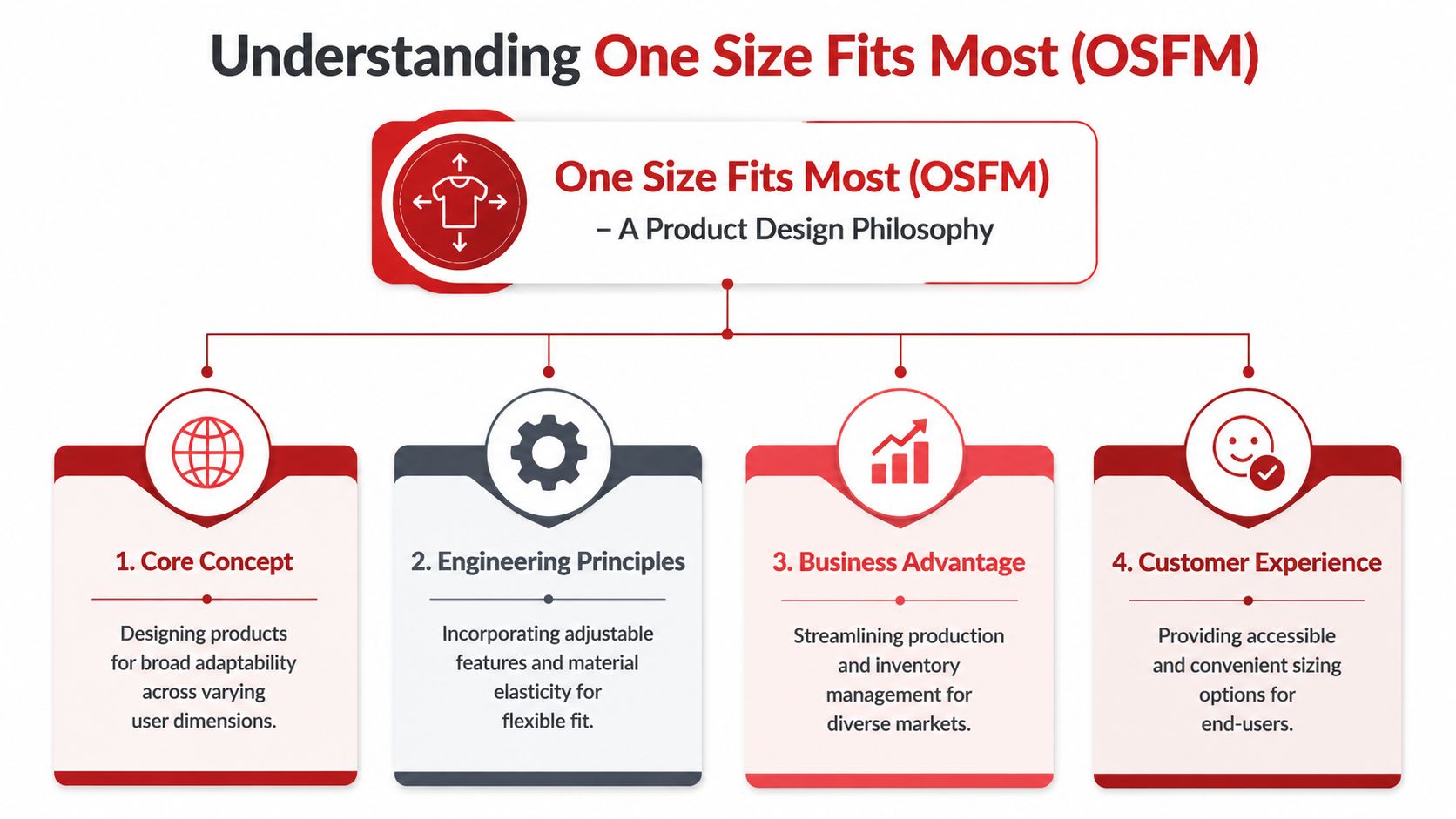
What OSFM is actually built around
The standard “one size” hat idea is generally built around a 22 to 23 inch head circumference, which reflects the median range rather than a universal fit, according to hat sizing analysis from Lamood Big Hats. The same source notes that about 15 to 20% of adults fall outside comfortable fitting ranges.
That single fact explains most of the tension around OSFM in wholesale.
If your audience sits near the middle, OSFM feels efficient and practical. If your audience includes more people outside that comfort zone, the exact same decision starts to look careless. That's why experienced buyers stop treating OSFM as a blanket answer and start treating it as a situational tool.
What this means for product planning
For a brand, the upside is obvious:
- Fewer SKUs to stock: You don't have to split inventory across multiple fitted sizes.
- Cleaner forecasting: Reorders are simpler because you're replacing one style, not juggling a size matrix.
- Faster merchandising: Event teams and first-time merch sellers can launch with less planning friction.
The downside is less visible at first:
- Some recipients get left out: Not angrily, sometimes. They just stop wearing the hat.
- Brand perception can slip: A poor fit makes even a nice embroidery job feel lower-end.
- You may need style-specific communication: Different crown profiles and constructions change how forgiving a hat feels.
If you're comparing silhouettes, crown height and structure matter alongside size label. The same buyer who likes a relaxed dad hat may hate a structured cap even when both are sold as OSFM. That's why understanding structured vs unstructured hats helps before you commit to a large run.
OSFM works best when you respect it as a compromise product, not a magic product.
The Three Mechanisms of OSFM Fit
OSFM hats don't all work the same way. Buyers often focus on the front panel, fabric color, and logo area, then overlook the mechanism doing the actual work in back or inside the band.
That mechanism affects fit, decoration, and how premium the hat feels in hand.

According to the custom cap size chart from Customized Wear, OSFM hats are typically engineered to cover 21⅝ to 23⅞ inches and use structural design or elastic elements to handle up to a 10% variation in head circumference from the base size.
Adjustable closures
The most familiar OSFM setup is the adjustable closure. Snapbacks, strapbacks, hook-and-loop backs, and buckle closures all fall into this category.
For wholesale, this is the easiest mechanism to explain to end users. People already understand how to tighten or loosen the hat, and that reduces confusion at handout events or team distributions.
This category works well when you need:
- Quick fit changes: Good for giveaways, rotating staff, or mixed recipients.
- Broad style recognition: Snapbacks and truckers are easy for most buyers to picture.
- Simple replenishment: You can reorder the same style without rebuilding a size curve.
The trade-off is decoration space. A closure interrupts the back of the hat, so if you want rear embroidery, an oversized patch, or a clean full-wrap concept, the hardware can get in the way. Some back closures also make the hat feel more casual than premium.
If closure style is part of the decision, this guide to hat closure types helps narrow down what suits your program.
Stretch-fit construction
Stretch-fit hats aim for a cleaner look. Instead of a visible adjustment system, the hat relies on material give and internal band design. From the front and back, it reads closer to a fitted cap.
For brands that want a polished retail look, stretch-fit can be a strong middle ground. You keep some flexibility while avoiding the plastic snap or fabric strap visual. It also gives decorators a cleaner surface if the design depends on uninterrupted lines.
The risk is user expectation. People can't manually adjust the fit, so if the stretch range doesn't suit them, there's less room for forgiveness. Stretch-fit also asks the buyer to be more careful about the audience.
A short video can help if you're comparing how fit systems feel in real use:
Elastic-only styles
Beanies and some casual hats use a simpler elastic approach. There's no visible closure, and the fit comes from knit structure or built-in stretch.
These styles are easy to distribute and easy to decorate, especially when the design is front-focused. They also avoid the back-of-cap problem entirely. For winter promos, nonprofit drives, and laid-back merch, they're often more forgiving socially because customers expect a softer fit from the category.
A hat can be OSFM on paper and still feel very different in practice depending on whether the fit comes from a snap, a strap, or stretch in the body of the hat.
That's why a seasoned buyer never selects “one size fits most” as if it were one thing. It's a family of fit solutions, and each one creates different outcomes.
How to Measure Heads and Match to Hat Styles
If you're ordering for a staff group, a team, or a merch audience, one simple measurement step can save a lot of regret. The standard method is to measure half an inch above the ears and eyebrows, and the measurement should be taken 2 to 3 times for accuracy, according to Sports by Sager's hat sizing guide. The same guide notes that the average men's U.S. hat size falls between 7¼ and 7⅜, or 22¾ to 23 inches, which sits inside the common OSFM range.
That doesn't mean every buyer should gather measurements for every casual order. It does mean you should know when measurement is worth the extra effort.
A simple measuring process that works
Use a soft tape measure. Place it where the hat will sit, not high on the crown and not around the widest part of the skull. Keep it level, snug, and comfortable.
Then repeat it.
A lot of sizing mistakes come from a crooked tape, a loose pull, or a rushed first reading. For team orders, include a one-page guide in your email or order form. If you want a clear visual reference, these apparel sizing tips from Raccoon Transfers are useful for showing customers what a proper fitted hat measurement looks like.
Don't ask people, “What hat size are you?” Ask them to measure where the hat sits.
Hat size conversion chart
| Circumference (Inches) | Circumference (CM) | Fitted Size | Alpha Size | Common OSFM Range |
|---|---|---|---|---|
| 21⅝ | 54.9 | Below average fitted conversion varies by brand | Small | Lower end of some OSFM styles |
| 22 | 55.9 | 7 | Small to Medium | Within many OSFM styles |
| 22¾ | 58 | 7¼ | Medium | Typical OSFM comfort zone |
| 23 | 58.4 | Between standard fitted increments depending on brand chart | Medium to Large | Typical OSFM comfort zone |
| 23⅞ | 60.6 | Upper fitted conversion varies by brand | Large | Upper end of some OSFM styles |
This table combines the verified OSFM range and standard measurement references already discussed. Brand charts still vary, so always confirm the exact style before placing a large order.
If you need a brand-specific reference for stretch styles, a Flexfit hat size chart is helpful when buyers are choosing between a more forgiving fit and a more exact fit.
Matching the measurement to the style
A measurement only becomes useful when you tie it to a hat type.
For example:
- Richardson trucker hats: Usually a strong choice for event merch and teams that want a familiar profile and an adjustable back. Good for broad distribution and easy wear.
- YP Classics dad hats: Better when you want a softer, lower-profile look that feels casual and retail-friendly. Strap adjustments make them accessible for mixed groups.
- Valucap beanies: A practical option when the audience is less likely to care about exact fitted sizing and more likely to value comfort and seasonality.
Different programs need different levels of precision. A campus giveaway can tolerate more fit variance than a premium branded merch line. A coaching staff may prefer consistent team style over exact individual fit. An online store should be more careful because the customer is choosing the hat itself, not accepting it as a free extra.
The Business Case For and Against OSFM Hats
A lot of first-time buyers choose OSFM because it feels lower risk. In one sense, that's true. You avoid overcommitting to the wrong size mix and you simplify purchasing.
But that's only one side of the ledger.

Where OSFM earns its keep
For bulk buying, OSFM is often the right answer when operational simplicity matters more than custom fit.
It's especially useful for:
- Events and giveaways: You can hand out one style without building a size collection table.
- First merch drops: New brands can test demand without getting trapped in a multi-size inventory position.
- Staff and volunteer programs: Managers can reorder the same hat quickly and keep extras on hand.
- Decoration workflows: One body style usually means simpler production planning and fewer approval variations.
There's also a hidden benefit. A single OSFM style can keep your visual presentation consistent. Every hat on the table has the same profile, same panel shape, same closure, and same logo size. That consistency matters for uniforms, sponsor events, and merch displays.
Where OSFM starts costing you
The cost isn't always on the invoice. Sometimes it shows up later as underused merch, quiet dissatisfaction, or awkward exceptions for people who know standard hats don't work for them.
That problem gets sharper when:
- The hat is sold as premium merchandise: Customers expect a better fit if they're choosing and paying for it.
- Your audience includes fit extremes: The convenience of one size can feel exclusionary.
- Back decoration matters: Snap closures and adjustment hardware can block or cheapen a rear design.
- The style is image-sensitive: Fashion-forward buyers notice crown shape, depth, and closure details fast.
A fitted or multi-size program is harder to manage, but it can protect the brand experience when the hat itself is a core item.
Buyer's shortcut: OSFM reduces inventory complexity. It does not remove fit responsibility.
Satisfaction improves when you guide the wearer
One practical fix is simple. Don't just distribute hats. Give people a sizing note first.
According to Panama Jack's hat sizing guide, customer groups that use a structured measurement program report 30 to 40% higher satisfaction with OSFM purchases than groups that receive hats without sizing guidance.
That matters because it changes how to think about OSFM. The hat isn't the whole product. The instructions are part of the product too.
If you're ordering in bulk, add a short insert, email a measurement graphic before distribution, or let managers gather basic size feedback in advance. Those small steps won't turn OSFM into custom sizing, but they can prevent the avoidable problems that make a simple order feel sloppy.
Key Takeaways and OSFM FAQs
The smart way to buy one size fits most hats is to match the hat to the job.
Choose OSFM when the order needs to be simple, fast to distribute, and easy to reorder. It makes sense for giveaways, staff hats, casual event merch, and early-stage branded programs where inventory control matters more than perfect individual fit.
Choose specific sizing when the hat is a premium product, when your audience is more particular about fit, or when you already know your group includes people who struggle with standard sizing. That extra complexity often pays for itself in better wear rates and fewer complaints.
A short buyer checklist helps:
- Start with the audience: Mixed public event, internal staff group, or paying merch customer?
- Check the fit mechanism: Adjustable closure, stretch-fit, or elastic.
- Look at decoration limits: Especially if you want rear embroidery or a clean retail finish.
- Decide how much fit risk is acceptable: Not every order needs the same standard.
- Add measuring guidance when possible: It improves the outcome.
OSFM FAQs
What's the best OSFM style for 3D puff embroidery
Structured caps usually give puff embroidery a stronger surface to sit on. A firm front panel helps the raised stitching hold shape and look crisp.
Can I mix OSFM and fitted sizes in one order
Yes. That's often the most practical compromise. Use OSFM as the main body of the order, then add fitted or alternate sizes for people who already know they need them.
How do youth OSFM sizes differ from adult
Youth sizing needs its own attention. Don't assume an adult OSFM hat will cover kids well just because the back adjusts. Youth programs usually perform better when you select styles made for that age group instead of forcing one adult solution across everyone.
If you're weighing OSFM against fitted options, Dirt Cheap Headwear is a practical place to start. They carry wholesale blank hats across major styles and brands, offer low-minimum custom embroidery, and can help you sort out which headwear program makes sense for events, staff use, teams, or merch lines without overcomplicating the buy.
Pingback: Snapback vs Fitted Hat: Which Sells Better? | Dirt Cheap Headwear
Pingback: Best Blank Hats for Gyms: Staff and Merch Picks | Dirt Cheap Headwear