
Leopard Print Beanies: A B2B Custom Order Guide
Most advice about leopard print beanies is aimed at shoppers, not buyers. That’s backwards if you run a brand, a team, a shop, or an event program.
A retail customer sees a fun winter accessory. A business buyer should see a product with strong visual identity, easy seasonal appeal, and a real opening in wholesale customization. The retail side gets all the attention. The B2B side is where the opportunity still feels underworked.
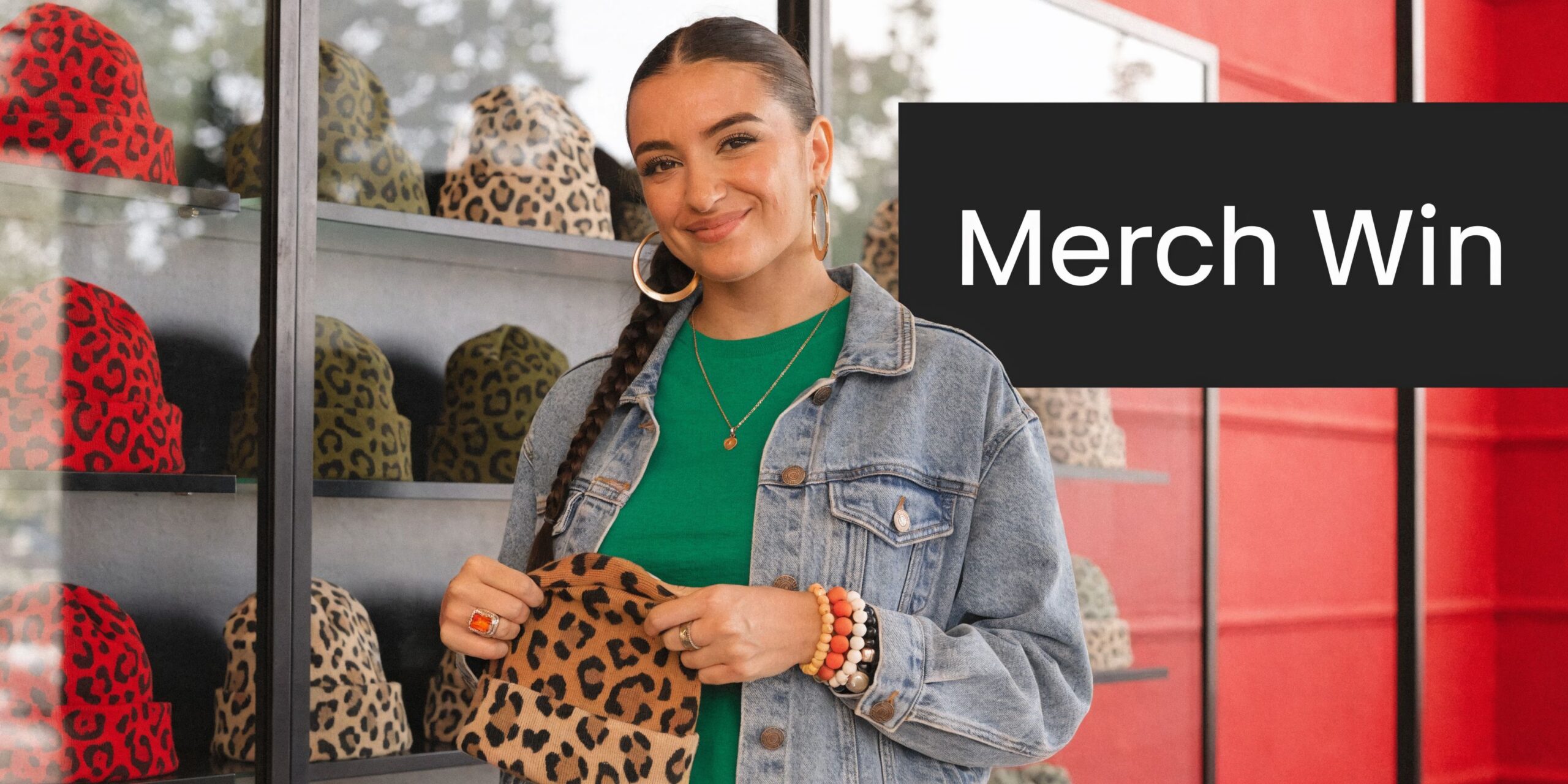
Why Leopard Print Beanies Are Your Next Merch Win
Retail advice usually treats leopard print beanies like an impulse buy. For a business, that’s the wrong frame.
These hats work because they don’t behave like plain promo merch. They already have personality before you add a logo, patch, or embroidery. That gives small brands and resellers a shortcut. You’re not starting from a blank black cuff beanie that has to do all the work on its own.
Leopard print beanies first broke out in the early 2010s, then surged again in 2025 to 2026, driven by social media and marketplace demand. One Etsy listing posted on January 2, 2026 reached 70 favorites, and leopard prints accounted for 15 to 20% of printed knit hat searches in Q4 2025 across the US, UK, and EU, according to this Etsy leopard print knit beanie listing. That matters if you’re choosing products for resale or branded merch. You’re not betting on a random novelty item.
Why the B2B angle is stronger than the retail angle
A shopper buys one. A business buyer can build a whole small collection around it.
That’s the difference.
A leopard print beanie can sit in several lanes at once:
- Boutique merch: It feels more styled than generic winter giveaway headwear.
- Team add-ons: It works for fan gear, sideline staff, and booster club sales.
- Event merch: It reads as wearable, not disposable.
- Reseller inventory: It gives an online store something eye-catching without needing a huge assortment.
If you’re trying to improve product presentation online, it helps to think like a merchandiser, not just a decorator. This practical guide to mastering merchandising e-commerce is useful because it focuses on how product organization and presentation influence buying decisions.
Practical rule: If a product looks strong before decoration, it’s easier to sell after decoration.
What makes them easier to move
Some custom hats need a long explanation. Leopard print beanies don’t.
They photograph well. They read instantly on social. They also give buyers an easy styling story. Neutral outerwear, denim, black fleece, varsity looks, coffee shop uniforms, boutique winter drops. The print does a lot of visual work on its own.
For a first run, that lowers your risk in a way many trend items don’t. You don’t need a huge order to see if your audience responds. You need a smart blank, a clean decoration method, and a realistic plan for who will wear it.
Choosing the Right Leopard Print Beanie Blank
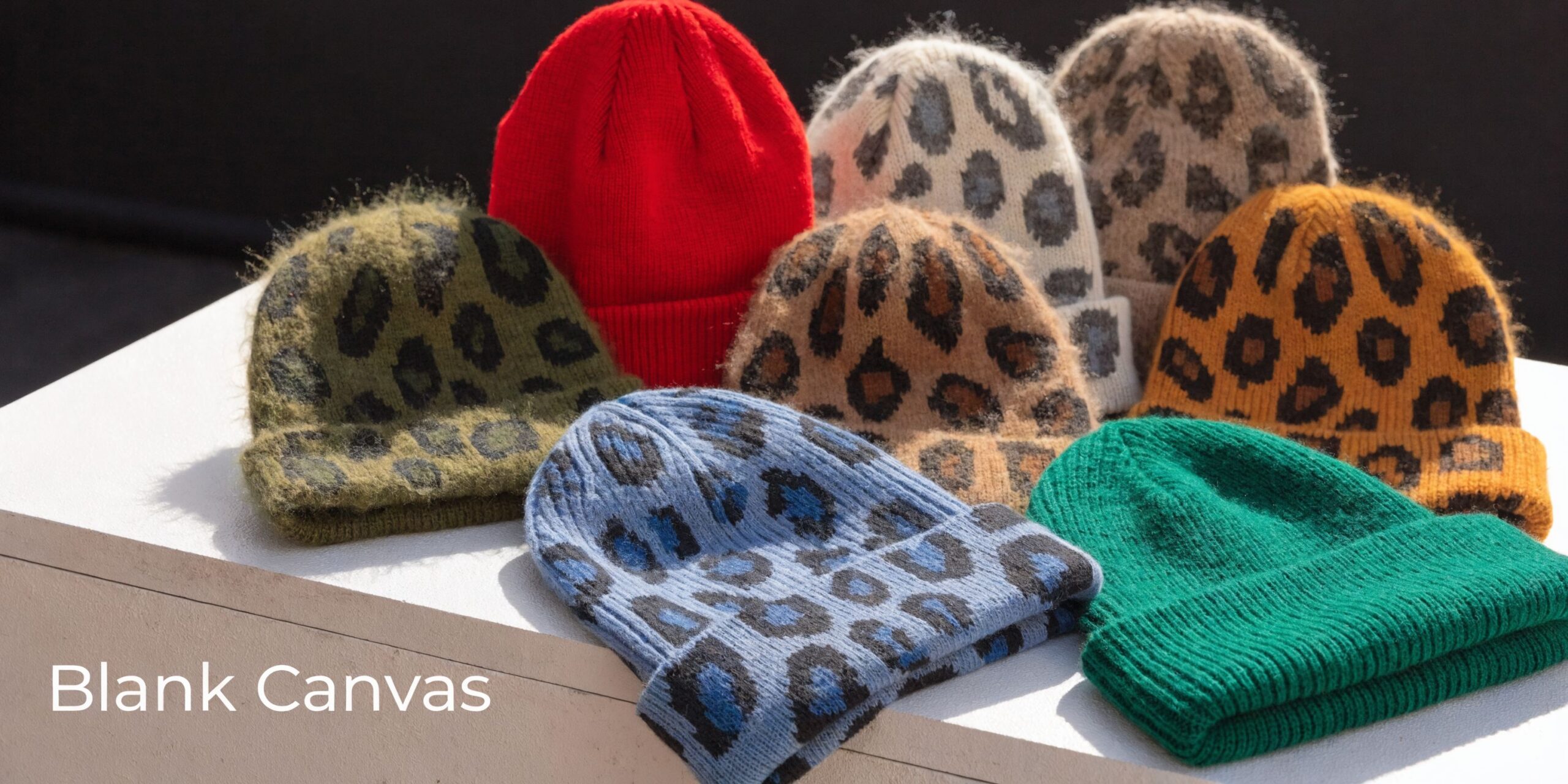
The blank matters more than most first-time buyers think. If you choose the wrong knit, your logo won’t sit right. If you choose the wrong silhouette, the beanie can look great on a shelf and awkward on a head.
Many problems blamed on decoration start at the blank stage.
Start with silhouette, not fabric
Buyers often jump straight to wool versus polyester. Start with shape first.
Cuffed beanies
This is the easiest choice for most custom orders. The cuff gives you a defined decoration zone, better logo visibility, and fewer surprises when the hat is worn.
Use cuffed styles for:
- Staff gear: Coffee shops, retail teams, brewery merch.
- School programs: Clean front placement is easier to approve.
- Small brand drops: They look more finished on a product page.
Slouchy beanies
Slouchy fits lean fashion-forward. They can work well for boutiques, creators, and softer lifestyle branding.
They’re less forgiving for detailed front logos because the body moves more on the head. If you want a slouchy look, keep the decoration bold and simple.
Pom beanies
Pom styles sell on personality. They fit fan gear, winter events, and gift-oriented merch.
They can be customized well, but the pom pulls attention upward. If your logo is subtle, it may compete with the overall styling.
On patterned knit hats, the best silhouette is usually the one that gives your logo a clear resting place.
Then choose your material based on the decoration plan
Sustainability and durability questions are getting more important, especially after post-2025 wool shortages. Some retail versions use 13% wool blends, while many wholesale-ready options are 100% polyester, which scales better for embroidery because it avoids felting issues, as noted in this Etsy wool slouchy beanie reference.
That doesn’t mean one material is always better. It means each one behaves differently.
| Blank material | What works | Watch for |
|---|---|---|
| Polyester | Stable for embroidery, easier bulk consistency, good for repeat production | Can feel less premium if your audience expects wool-rich texture |
| Acrylic jacquard | Common for patterned knits, holds color well, useful for fashion-focused programs | Stretch can affect small detail if the knit is loose |
| Wool blend | Premium hand feel, warmth story, boutique appeal | More care questions, more risk around embroidery behavior |
Questions smart buyers ask before ordering
The best blank is the one that matches your end use, not the one that sounds most premium.
Ask these before you approve anything:
- Who’s wearing it: Staff, fans, boutique customers, donors, or resale shoppers all expect different things.
- How is it being decorated: Direct embroidery, patch application, and print all need different surfaces.
- How will you talk about care: Customers will ask about washability, colorfastness, and skin sensitivity.
- Will you reorder it later: Consistency matters if this becomes part of an ongoing merch line.
If you’re comparing base options and want a broader look at what changes from one knit style to another, this overview of buying bulk beanies wholesale blank is worth reviewing before you lock in a style.
A simple buying filter
If you’re ordering your first batch, keep it practical:
- Choose a cuffed blank if your logo needs a clean front panel.
- Choose polyester or a stable acrylic knit if embroidery is your main decoration.
- Choose a slouchy fit only if the fashion angle matters more than logo precision.
- Choose wool blend options only if your audience will value that story enough to justify the extra care conversation.
The blank isn’t just the hat. It’s the foundation for every review, reorder, and product photo that comes after.
Mastering Customization for Leopard Print Beanies
Patterned beanies punish weak decoration choices. A logo that looks fine on a solid black cuff can disappear on leopard print.
That’s why the right method depends less on what you like and more on how your artwork interacts with a busy knit surface.
Direct embroidery works best when the logo is disciplined
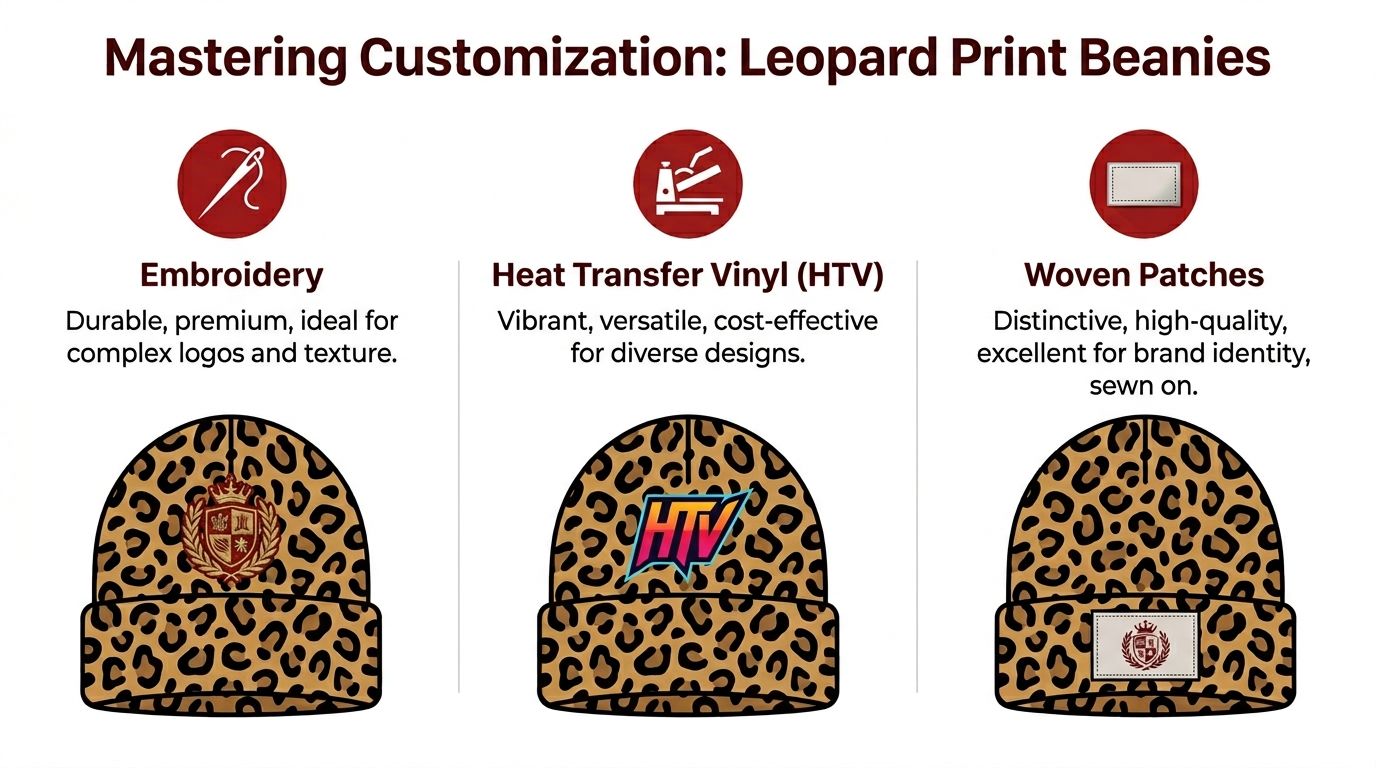
Embroidery is still the safest premium finish for most leopard print beanies, but only if the file is set up correctly.
For jacquard fabrics, digitizing should run at 400 to 600 stitches per square inch, and skipping proper underlay creates a 35% embroidery fallout rate. Using tear-away backing and running at 650 to 750 SPM on blanks from brands like Richardson or YP Classics produces 85 to 95% first-pass quality, according to this Hat Attack leopard beanie customization reference.
That sounds technical, but the buyer takeaway is simple. Fine details fail faster on patterned knit than bold shapes do.
Best use cases for embroidery
- Simple wordmarks: Strong block lettering reads clearly.
- Monograms: Especially good on cuffed styles.
- Bold symbols: Mascots, initials, icon marks.
- Raised 3D puff elements: Best when the logo has enough open space to breathe.
What doesn’t work well
Tiny taglines, thin outlines, and logos that depend on subtle negative space usually get lost.
If your logo has multiple fine lines, simplify it before sampling. Don’t ask knit texture to behave like smooth twill.
If you need help preparing artwork before production, this guide on how to digitize a logo for embroidery covers the file issues that most often slow down first orders.
A clean two-color logo usually beats a detailed full-brand lockup on leopard knit.
Woven and specialty patches often outperform direct stitching
A lot of first-time buyers assume embroidery is the premium option by default. On leopard print beanies, patches often look sharper.
That’s because a patch creates separation between the decoration and the print underneath. Instead of thread competing with the pattern, the patch frames the branding.
Woven patches
These are excellent when your logo has more detail than direct embroidery can handle on knit. They keep edges crisp and give you a retail-style finish.
Faux leather or rubber patches
These bring contrast and texture. They work especially well for outdoors brands, coffee shops, makers, and lifestyle merch.
The trade-off is tone. A rubber patch feels sporty. Faux leather feels more boutique. Neither is better. They just tell different stories.
Heat transfer vinyl can work, but use it carefully
The infographic mentions heat transfer vinyl, and it does have a place. It’s useful for short-run experimentation, bold graphic shapes, and nontraditional artwork that doesn’t translate well to stitching.
Still, leopard knit is not the easiest surface for it.
Use HTV when:
- your artwork is intentionally graphic,
- the application area is smooth enough,
- and you understand it’s more style-driven than heritage-driven.
Avoid it for heavily textured cuffs or highly stretchy placements. A poor application can look temporary fast.
Comparison by business type
| Buyer type | Best decoration choice | Why |
|---|---|---|
| Boutique apparel brand | Woven patch or clean embroidery | Looks retail-ready and intentional |
| Sports team or booster club | Bold embroidery | Durable and easy to recognize |
| Corporate event | Patch or simple embroidery | Professional without overcomplicating the artwork |
| Reseller testing a trend | HTV for quick concepting, then patch or embroidery for scale | Lets you test visuals before standardizing |
The production mistakes that cost the most
Most decoration failures come from one of three bad decisions:
- Overpacking the design: Too much detail for the knit.
- Ignoring the print: A brown-and-black logo on a brown-and-black hat vanishes.
- Choosing the method by habit: What works on trucker caps may not work on patterned winter knit.
I’ve seen the best results when buyers treat the beanie and the decoration as one system. The print is already loud. Your branding should either anchor it or frame it. It shouldn’t fight it.
Navigating the Wholesale Order Process
The hardest part of a first bulk order usually isn’t choosing the beanie. It’s getting through approval without unnecessary delays.
This category still has a real B2B information gap. Retail listings often show low-stock pressure, while guidance for sourcing custom-ready blanks is thin. That’s why wholesale programs with low minimums, including six pieces, matter for startups, teams, and resellers, as noted in this Zara animal print knit beanie reference.
What to prepare before you ask for a quote
Good orders move faster because the buyer sends useful information upfront.
Bring these basics:
Your logo file
Send the cleanest version you have. Vector is ideal, but a high-quality file can still help the decorator assess complexity.Your preferred decoration method
If you’re unsure, say that. It’s better to ask than to force embroidery onto art that belongs on a patch.Your quantity
Even a small test run is enough to get real feedback if the product and design are matched correctly.Your placement idea
Front cuff, side panel, fold, oversized patch. The location changes the whole look.
What low minimums do for you
Low minimums aren’t just convenient. They let you test like a business owner instead of gambling like a trend chaser.
A six-piece start can help you:
- Sample for photography: Get the product on body before you commit bigger.
- Test multiple audiences: One small run for staff, one for resale, one for events.
- Check decoration performance: Especially if your logo has never gone onto patterned knit before.
If you’re comparing broader cold-weather inventory before placing a mixed order, this collection of wholesale winter beanies helps frame what belongs in a larger seasonal program.
Order check: If your art, placement, and knit choice are still all changing at once, you’re not ready to approve production.
Terms that confuse first-time buyers
A few common ones:
- Digitization fee means the logo is being converted into an embroidery-ready stitch file.
- Proof is your visual approval step. Read it carefully.
- MOQ is the minimum order quantity.
- Lead time depends on stock, decoration method, and proof approval speed.
The cleanest orders happen when the buyer chooses one hero version first. One beanie, one logo treatment, one clear audience. After that, scaling gets much easier.
How to Market and Sell Your Custom Beanies
A custom leopard beanie usually sells best when it’s styled with purpose, not dumped into a generic accessories grid.
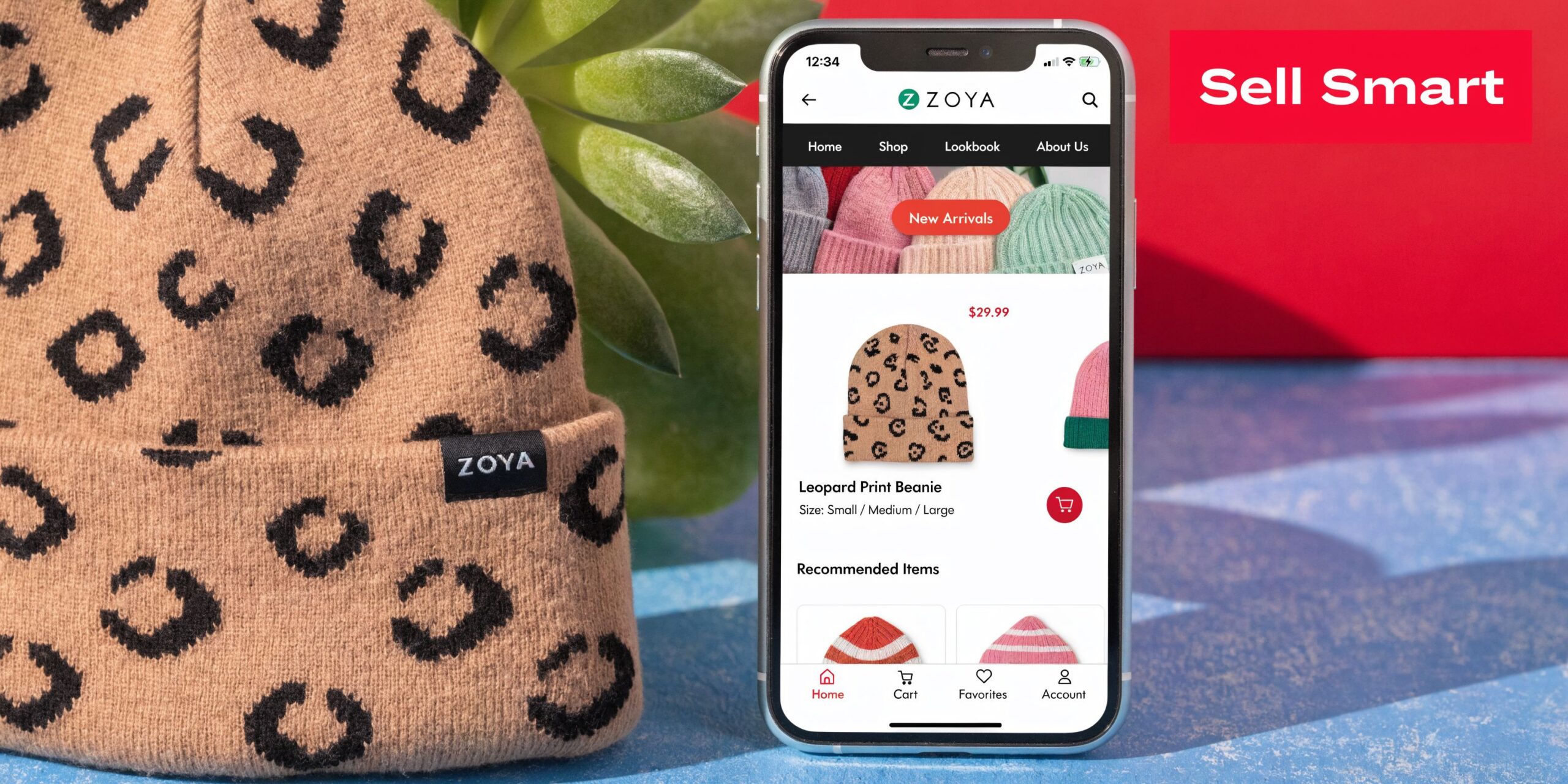
The strongest launches I’ve seen treat the beanie like a lead product for a moment, not a filler item for winter. That doesn’t require a giant campaign. It requires context.
For apparel brands and boutiques
An apparel brand should style leopard print beanies against simple layers. Black outerwear, cream fleece, washed denim, and neutral knits usually let the hat stay the focal point.
Product photos should do two jobs. Show the decoration clearly, then show the beanie in a full outfit where the print feels wearable instead of intimidating.
A lot of the same thinking used in creative commerce applies here. This piece on profitable art sales is useful because it shows how presentation, story, and perceived uniqueness all matter when you’re selling something visual online.
For teams and school programs
A sports team shouldn’t market this as just a hat. Bundle it into a winter fan story.
Good angles include:
- Fan pack add-on: Pair it with a scarf, hoodie, or game-day tote.
- Sideline identity: Coaches, parents, and supporters wearing the same beanie.
- Limited seasonal drop: Short ordering window creates urgency without overcomplicating the offer.
If the team logo is bold, front embroidery works well. If the mascot art is busy, a patch usually cleans it up.
For events, nonprofits, and corporate programs
A plain beanie often reads as generic giveaway merchandise. A patterned one feels selected. Leopard print beanies can surprise people in this context.
Use them for:
- donor gifts,
- winter volunteer kits,
- VIP attendee bags,
- staff appreciation bundles.
Video can help when the product has texture and personality. A short clip showing the beanie on head, folded, and close up on the logo answers questions that flat photos can’t.
Put the beanie on a person as early as possible in your marketing. Patterned headwear almost always sells better styled than flat.
For online resellers
Resellers should avoid writing product copy like it’s a plain knit cap.
Lead with the visual hook, then reassure the buyer on fit, feel, and decoration. The sale usually happens when the customer thinks, “I can wear that,” not when they read a list of generic features.
Strong listings usually include:
- a close-up of the logo area,
- one front-facing on-head photo,
- one side angle,
- and one outfit image that makes the print feel easy to style.
That’s enough to shift the product from novelty to merchandise.
Launch Your Leopard Print Headwear Program with Confidence
Leopard print beanies can be a smart merch move when you treat them like a product line, not a gimmick.
The winning formula is straightforward. Pick a blank that fits your audience, choose a decoration method that respects the knit and the print, and keep the first order focused enough to learn from. Most mistakes happen when buyers overdesign the logo, overestimate what a busy surface can handle, or order too many before they’ve tested the look in real use.
A small run is often the right starting point. It gives you product photos, fit feedback, and a cleaner path to reorders.
If you’re ready to turn the idea into a real program, start with one strong version and build from there.
Frequently Asked Questions About Custom Leopard Beanies
Can you embroider a leopard print beanie with a pom pom
Yes, but placement matters.
Keep the design on the cuff or the cleanest stable front zone. Don’t push artwork too high into the body where the pom construction and stretch can distort how the logo reads.
Is embroidery or a patch better on busy patterns
If the logo is simple, embroidery usually works well. If the logo has fine detail, a woven or specialty patch often gives you better edge definition and separation from the leopard print underneath.
What’s the safest first order for a new business
Start narrow. Choose one silhouette, one decoration method, and one logo version.
That gives you cleaner feedback than ordering multiple styles with multiple art treatments at the same time.
How should customers wash custom leopard print beanies
Give care guidance based on the material and decoration you chose. In general, buyers should expect gentle care to protect both the knit and the applied branding.
This is especially important if your audience is already asking about washability, colorfastness, or skin sensitivity.
Are leopard print beanies only for fashion brands
No. They also work for school merch, winter event kits, team stores, boutique retail, and creator-led merch programs.
The key is matching the decoration style to the audience. A minimalist monogram says something very different from a mascot patch.
Can small businesses place test orders before scaling
Yes. That’s usually the smartest move.
A test run lets you check fit, logo visibility, photography, and buyer response before you commit to a deeper reorder.
Ready to build your own custom leopard print beanie order? Dirt Cheap Headwear helps businesses, teams, events, and resellers source blank headwear and add professional decoration with low minimums, fast turnarounds, and practical support that makes first orders much easier.
Pingback: Your Guide to Fleece Print Fabric: From Selection to Sewing