
Corduroy Bucket Hat: A Complete Brand & Style Guide 2026
You're probably looking at a corduroy bucket hat for one of three reasons. Your brand wants merch that feels more considered than a standard twill cap. Your team needs something wearable that doesn't look overly corporate. Or you've seen enough stores, cafes, creators, and event crews use them well that you're wondering if the style has real staying power or if it just photographs nicely.
That's the right question to ask.
A good corduroy bucket hat can do a lot for a brand. It brings texture, a softer streetwear feel, and a more fashion-aware silhouette than a basic promo hat. But it's also easy to choose the wrong one. The fabric can run too heavy for your climate. The logo can disappear into the wale texture. A shape that looks great on a product page can turn into a fit problem when you order in bulk.
Most articles stop at “corduroy is stylish.” That's not enough if you're buying for staff, resale, a drop, or an event. What matters is how the hat wears, how it decorates, how consistent the sizing is, and whether the finished piece still looks good after shipping, handling, and repeated use.
More Than a Trend The Rise of the Corduroy Bucket Hat
A lot of buyers arrive at this product the same way. They start with a plain idea. “We need a hat.” Then they scroll through other brands and realize a standard cap isn't giving them the look they want. The corduroy bucket hat keeps showing up because it signals something different. It feels relaxed, a little vintage, and a lot more intentional than a generic giveaway.
That reaction makes sense. The silhouette itself has a long history. The bucket hat dates back to the early 1900s, when Irish farmers and fishermen wore it for practical weather protection, and by the 1960s it had already moved from workwear into high fashion, which helps explain why it still works as both utility gear and style piece today (bucket hat history).
For a brand, that mix matters. Some hats read purely functional. Others read purely fashion. A corduroy bucket hat sits in the middle, which is why it works for merch lines, hospitality uniforms, creative teams, festivals, and retail add-ons.
Why buyers keep coming back to it
The texture does a lot of the work. Corduroy catches light differently than smooth cotton, so even a simple logo can look more premium if the decoration is handled properly. The silhouette helps too. Bucket hats soften the overall look of a uniform or merch collection.
Short version. This hat doesn't need loud graphics to stand out.
A plain corduroy bucket hat often looks more considered than a heavily decorated cheap cap. The fabric already gives you visual interest.
Where it works best
Some brand categories adopt this style faster than others:
- Creative retail brands lean on it because the shape fits modern casual styling.
- Coffee shops and hospitality teams use it when they want staff headwear that feels branded without feeling stiff.
- Events and merch drops benefit because the hat can work as both wearable marketing and actual resale product.
- Outdoor and lifestyle programs use it when they want a softer, more relaxed alternative to structured caps.
The key is treating it like a product choice, not just a fashion choice. If you're buying corduroy bucket hats, you're selecting a fabric, a silhouette, a decoration surface, and a use case all at once.
What Exactly Defines a Corduroy Bucket Hat
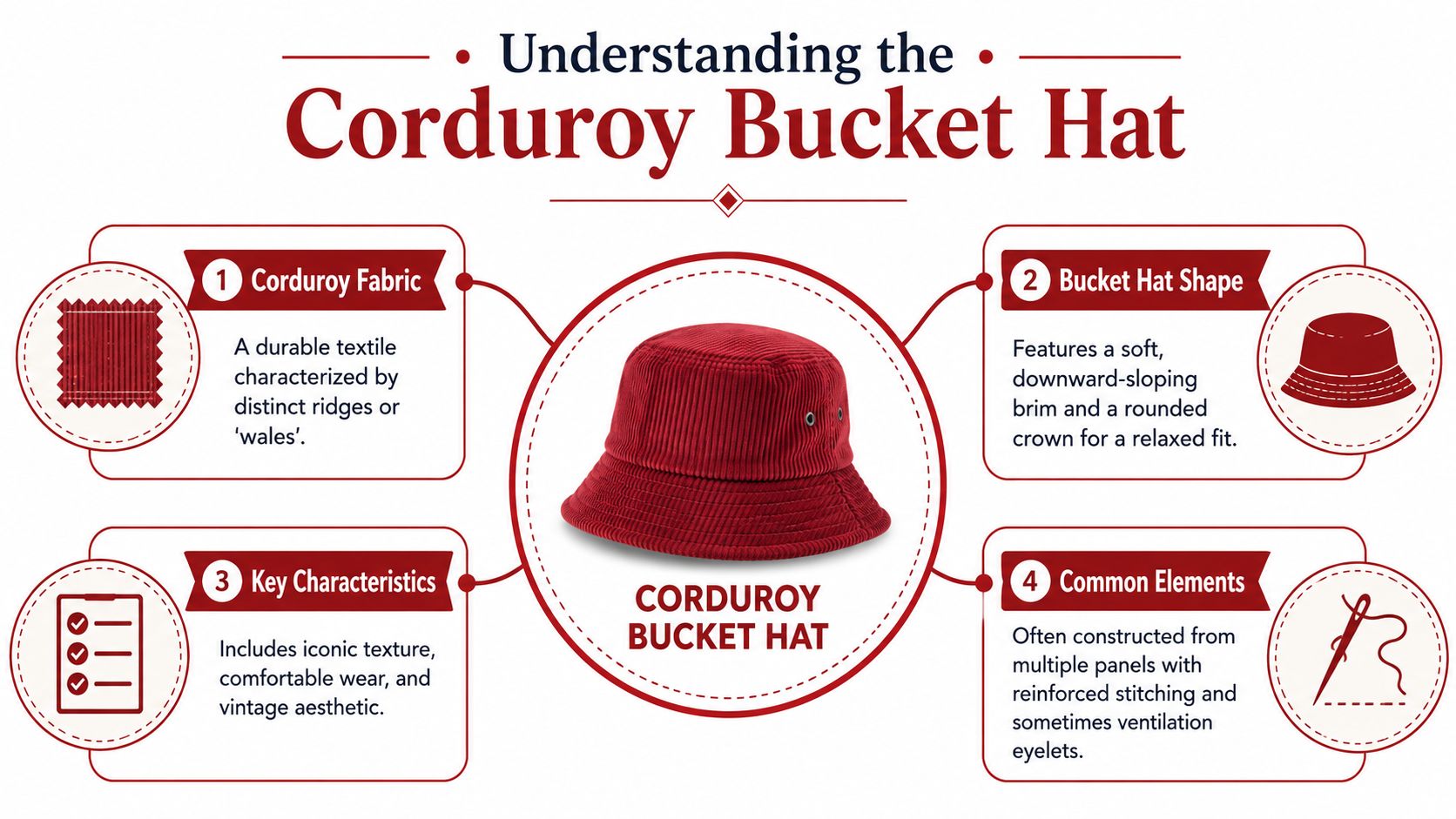
A corduroy bucket hat is not a separate hat family. It's a bucket hat silhouette made in corduroy fabric. That sounds simple, but buyers often blur the line between shape and material, and that leads to bad comparisons.
The shape comes first. A bucket hat is defined by its narrow, downward-sloping brim. That's what keeps it recognizable whether it's made in cotton twill, denim, canvas, or corduroy. One modern product example also shows how brands spec this style for apparel use, with a cotton corduroy bucket hat built from 98% cotton, 2% elastane in a 320 g/sqm fabric, which points to a more structured and durable build than a flimsy giveaway hat (modern corduroy bucket hat specification).
The fabric changes the whole read
Corduroy has raised ridges called wales. Those ridges are the reason the hat looks softer, richer, and more tactile than a smooth fabric version. They also change how the hat behaves in production.
Think of it this way. Smooth cotton is like a flat wall. Corduroy is more like a ribbed surface. On the rack, that texture looks great. Under embroidery, it becomes a technical variable.
Here's what the fabric usually affects:
- Visual depth because the ridges catch shadow and light
- Hand feel because corduroy tends to feel warmer and more substantial
- Decoration behavior because logos sit on a textured surface, not a flat one
- Seasonal perception because many buyers associate corduroy with cooler weather
The shape is still doing important work
The hat doesn't become “just fabric.” The bucket form still determines how it wears.
A soft crown makes the hat feel casual. The downward brim frames the face and keeps the style approachable. Compared with a structured snapback, it reads less aggressive and less sporty. Compared with a dad hat, it reads more fashion-forward.
Practical rule: If you want a branded hat to feel like merch instead of uniform issue, the combination of corduroy plus bucket shape usually gets you there faster than adding more graphics.
Common construction details to check
Not every corduroy bucket hat is built the same. Before you approve one, look at:
| Detail | Why it matters |
|---|---|
| Panel construction | Affects crown shape and front logo placement |
| Brim stitching | Helps the brim hold shape through wear and shipping |
| Sweatband quality | Changes comfort more than most buyers expect |
| Ventilation eyelets | Useful on heavier builds and outdoor use |
| Fabric recovery | Influences how crushed the hat looks after packing |
The best way to think about the product is this. The silhouette gives you recognition. The fabric gives you character. The construction determines whether the hat still looks good after real use.
Styling Corduroy Hats for Your Brand and Season
One of the biggest mistakes buyers make is assuming corduroy automatically means fall and winter. That's partly a styling habit, not a hard rule. The better question is whether the specific corduroy bucket hat you're considering makes sense for your climate, audience, and use case.
That distinction matters because existing product language often leans into “cozy” positioning, while the real buyer question is breathability. For business use, wale thickness, fabric weight, and lining are the practical factors that decide whether a corduroy bucket hat works beyond cold months (seasonality and warm-weather tradeoffs).

How different brands can style it
The same hat can land very differently depending on the rest of the outfit.
A creative agency or boutique retail team can pair a corduroy bucket hat with heavyweight tees, chore coats, and relaxed pants. That creates a considered uniform without looking overly managed.
An outdoor café or brewery can use earthy tones, simple front embroidery, and washed workwear layers. The hat feels casual enough for staff, but still retail-friendly if you sell the same style to customers.
Streetwear and merch brands usually get the strongest results when they resist over-designing it. Corduroy already brings texture. Clean embroidery, a patch, or a small side hit usually works better than trying to cover the hat with decoration.
Warm weather is possible, but only with the right build
A corduroy bucket hat can work in warmer conditions, but not every one should. Buyers need to check construction, not just color.
Use this quick screen:
- Choose lighter-feeling builds if the hats are for spring events, travel, or everyday retail wear.
- Avoid heavy linings for hot climates unless the product is clearly aimed at cooler evenings.
- Check sweatband and interior details because comfort starts inside the hat, not on the product photo.
- Match the fabric to the market. What sells well in a cool coastal city may feel too warm in a high-heat event setting.
If you're building an online apparel line around styles like this, inventory and product positioning matter just as much as aesthetics. Sellers working through launch decisions may find this comprehensive guide for South African fashion sellers useful because it frames assortment choices in a real e-commerce context.
For logo placement ideas and decoration planning, it also helps to review examples of bucket hat embroidery options before you commit to art.
Color does more than match a logo
Color can push the same corduroy bucket hat toward very different brand identities:
- Black or deep olive feels cleaner and more retail-oriented
- Rust, tan, or cream leans vintage and lifestyle-driven
- Team colors can work, but they usually look better when muted rather than overly bright
- Natural neutrals make resale easier because customers can wear them with more outfits
A good styling decision balances audience taste with practical wear frequency. If customers or staff can't match the hat easily, it won't stay in rotation.
Getting the Perfect Fit Finish and Longevity
Bulk headwear orders often go wrong in boring ways. The sample looked right, but the crown sat too shallow on some people. The brim looked smaller than expected once decorated. The front panel didn't give the logo enough breathing room. None of those problems feel dramatic until the boxes arrive.
Corduroy bucket hats need spec checking up front. Typical retail patterns list adult sizing in the 56–59 cm range, with crown depth around 3.5 inches and brim width around 2.5 inches, and those details affect both fit and where your decoration lands on the hat (fit dimensions for a corduroy bucket hat).
What to confirm before approving a bulk order
Fit starts with more than “one size fits most.” Ask for actual measurements and compare them against your audience. Staff uniforms, team programs, and resale merch all have different tolerance for fit complaints.
Use a simple approval checklist:
- Head circumference range so you know who the hat is likely to fit comfortably
- Crown depth because a deeper crown changes both feel and visual profile
- Brim width since that affects shade, style, and decoration balance
- Consistency between dye lots or restocks if you plan to reorder later
- Packing method because crushed corduroy can arrive looking worse than its true condition
Finish details buyers should inspect
Corduroy can make a mediocre hat look better online than it looks in hand. Texture hides flaws. That's why finish details matter.
Check the brim stitching for even spacing and firmness. Look at seam alignment where panels meet. Inspect the sweatband and interior cleanliness, especially if these hats are for resale rather than simple giveaways.
The fastest way to spot a cheap bucket hat is usually inside the hat, not outside it.
Care affects resale value and repeat wear
Corduroy rewards gentle handling. It also shows mishandling quickly. Crushing, rough washing, or inconsistent storage can flatten the wale texture and distort the brim.
For brand programs, include simple care guidance with the order or product page:
- Store it shaped, not folded when possible.
- Spot clean first instead of treating it like a basic gym cap.
- Avoid high heat because shape and surface texture matter as much as cleanliness.
- Let it air dry so the brim and crown keep their intended form.
If you're reselling the hats, care instructions aren't an afterthought. They help protect how customers perceive the product after purchase.
Customizing Your Corduroy Bucket Hat
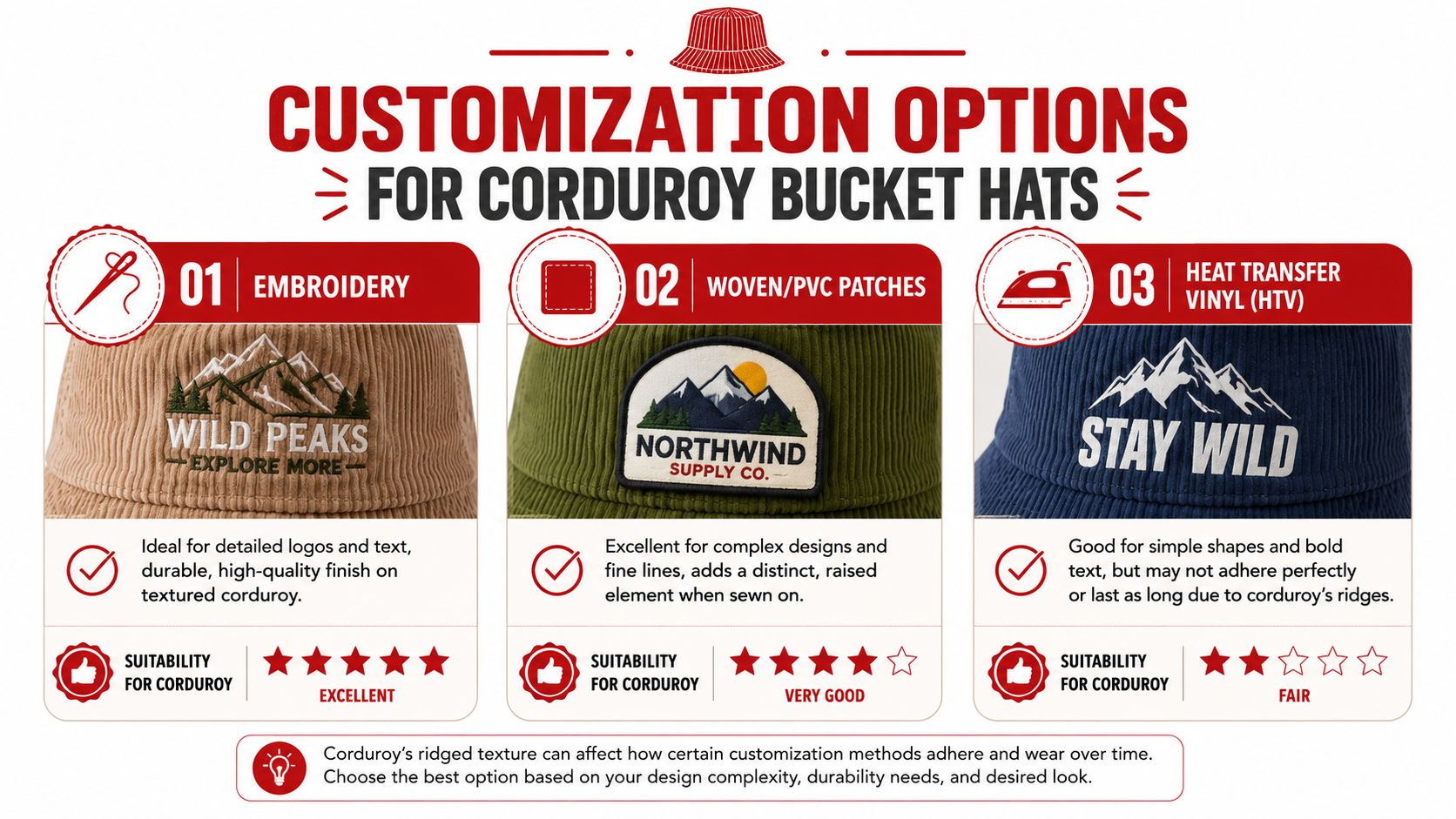
Many good ideas are undermined when a logo that looked sharp on a flat digital mockup doesn't always translate to corduroy. The fabric's raised ribs interrupt lines, absorb detail, and make some decoration methods look cleaner than others.
That problem is real. Corduroy creates a different decoration surface than smooth cotton, which can affect stitch visibility and logo distortion, especially on curved bucket-hat crowns (embroidery considerations on corduroy).
Direct embroidery works, but simplify first
Embroidery is still a strong choice for a corduroy bucket hat. It feels permanent, it matches the tactile quality of the fabric, and it usually holds up well in real wear. But art needs to be adjusted for the surface.
Fine lines, tiny counters inside letters, and overly delicate icons can get lost between the wales. Small text is the first thing to fail. If a logo depends on hairline detail, don't expect the fabric to suddenly become cooperative.
Direct embroidery works best when the design has:
- Bold shapes that won't break up visually
- Limited small text or none at all
- Clear spacing between elements
- A placement area that stays relatively smooth on the crown
Patches often solve the detail problem
For logos with more complexity, patches are usually easier to control. A woven or embroidered patch creates its own cleaner surface, then gets applied to the hat. That bypasses some of the visual noise caused by corduroy ribs.
This tends to work especially well for badge-style branding, outdoor labels, team insignias, and fashion-forward merch drops where the patch itself becomes part of the design language.
A quick comparison helps:
| Method | Where it shines | What to watch |
|---|---|---|
| Direct embroidery | Clean logos, text-light marks, classic merch look | Fine details can sink into texture |
| Woven patch | Complex logos, tighter line work, sharper edges | Attachment quality matters |
| Embroidered patch | Traditional badge look, bold stitched feel | Can feel heavier on softer crowns |
| HTV | Simple temporary uses or very bold shapes | Less forgiving on ribbed corduroy |
Placement matters more than buyers think
The front center is the obvious choice, but not always the best one. On some bucket hats, the crown curve and seam layout can make a centered logo look warped. Side embroidery, a smaller front hit, or a patch placed with more margin can produce a cleaner result.
If the logo has to fight the fabric, the hat wins. Adjust the art or change the decoration method.
For brands exploring dark colorways and textured merch looks, examples of a black corduroy hat style direction can help narrow down what kind of branding feels natural on this fabric.
What usually works in production
Experienced decorators tend to make similar calls on corduroy:
- Use simpler art than you'd use on a flat cap
- Test on the actual fabric, not just a digital proof
- Avoid oversized front logos that overpower the relaxed shape
- Choose patching when detail clarity matters more than stitched texture
- Ask for a physical sample if the order is for resale, not just internal staff use
This is also the one point where the supplier relationship matters a lot. Dirt Cheap Headwear offers custom embroidery and low-minimum decorated headwear, which makes it one practical option for testing a corduroy bucket hat program before scaling. That matters when you're still deciding between direct embroidery and patch application.
How to Buy Wholesale for Your Business Team or Event
Buying a corduroy bucket hat wholesale is less about finding “a cool hat” and more about matching the product to the job. The right hat for a brewery merch wall is not always the right hat for a school event, a nonprofit volunteer team, or an outdoor staff uniform.
The strongest wholesale orders usually start with use case first. Then fabric. Then decoration.
Match the hat to the environment
Material composition directly affects comfort. Some corduroy bucket hats use 100% cotton corduroy, while others use blends or added comfort features like a COOLMAX® mesh sweatband, which can make a meaningful difference for outdoor wear and warmer conditions (material and moisture-management options).
That changes how you should buy:
- For staff uniforms choose comfort and repeat wear over novelty. Interior sweat management matters.
- For retail resale prioritize silhouette, hand feel, and decoration quality.
- For festivals and events think about climate, packability, and whether guests will wear it after the event.
- For schools or nonprofits keep the logo readable and the colorway versatile.
A lot of disappointing wholesale programs come from choosing the hat that looks best in isolation instead of the one that fits the setting.
Questions to ask a supplier before you order
A good supplier should be able to answer practical questions without vague language. If the answers feel slippery, expect trouble later.
Ask about:
- Fabric specifics such as whether the corduroy feels lighter or heavier in hand
- Decoration recommendations based on your actual logo, not generic promises
- Restock consistency if this may become an ongoing program
- Sampling options before a larger run
- Packing and shipping method so the hats don't arrive crushed
- Turnaround communication if your event or launch has a fixed date
If you're comparing options and want a broader planning reference, this guide to custom bucket hat bulk order tips is a useful checklist for the questions buyers tend to miss on early orders.
When price should guide the decision and when it shouldn't
There's nothing wrong with a budget-sensitive order. But cheap and cost-effective are not the same thing.
A lower-cost hat can work for short-term promotions where broad distribution matters more than resale quality. It's a weaker choice for branded merchandise that customers will judge like apparel. If the hat is going on a retail shelf or into your staff uniform program, small quality misses become very visible.
Here's a quick way to view it:
| Buying goal | What should matter most |
|---|---|
| Large promo giveaway | Cost control and acceptable consistency |
| Staff wear | Comfort, easy branding, repeat wear |
| Retail merch | Fabric feel, finish, decoration quality |
| Brand launch or drop | Cohesive styling and photo-ready execution |
Video can also help when you're comparing shape and decoration ideas in a more visual way:
A simple wholesale decision filter
If you're narrowing options, use this order:
- Will people want to wear this more than once?
- Does the fabric suit the climate and use case?
- Will the logo still read clearly on corduroy?
- Can the supplier deliver the same result again if you reorder?
If the answer to any one of those is shaky, fix that before you place the order.
Common Questions About Corduroy Bucket Hats
Is a corduroy bucket hat good for branding or better left plain
It can be excellent for branding, but only if the logo is designed for texture. Simple marks, strong shapes, and patch-based branding usually perform better than overly intricate artwork.
Will corduroy make the hat feel too warm
Sometimes, yes. It depends on the specific build. Fabric weight, wale thickness, lining, and interior sweatband details matter more than the word “corduroy” by itself.
Is one size enough for a team order
Sometimes. Sometimes not. Bucket hats are often sold as one-size styles, but fit tolerance matters more when you're ordering for a mixed group. Confirm actual measurements before approval.
What decoration method is safest if my logo has fine detail
A woven patch is often the safer route when detail clarity is the priority. Direct embroidery can still work, but intricate art usually needs simplification first.
Do corduroy bucket hats hold up well over time
They can, especially when the stitching, brim construction, and decoration are done well. Care matters more than many buyers expect. Rough washing and bad storage can flatten texture and distort shape.
What file should I send for custom art
Send the cleanest version you have. Vector artwork is usually easiest for a decorator to work from, especially if the logo may need to be simplified for embroidery or patch production.
If you're comparing options for a branded corduroy bucket hat, Dirt Cheap Headwear is one place to source blank and decorated headwear for small runs or bulk orders, with custom embroidery and patch-ready programs that fit staff gear, merch, and event use.
Pingback: 7 Essential Hat Cleaning Tips for Lasting Style | Dirt Cheap Headwear