
Cheap Hats Scarves and Gloves
You're probably dealing with one of three jobs right now. You need winter gear for staff who work outside, you're planning a cold-weather event and want branded giveaways, or you're trying to stretch a tight budget across a school, team, church, or charity drive.
That's where buyers get trapped.
They search for cheap hats scarves and gloves, sort by the lowest price, and assume the job is done. Then the boxes arrive. The beanies feel paper-thin. The gloves fit nobody well. The scarf color is off from the mockup. Or the logo that looked clean on screen turns muddy once it's stitched onto a stretchy knit.
Low price matters. It just can't be the only filter.
Good bulk winter gear does two jobs at once. It keeps people reasonably warm, and it represents your organization well. If either one fails, the order gets expensive fast, even if the invoice looked small.
Why You Need a Smart Plan for Bulk Winter Gear
A first-time buyer usually starts with a simple target. Keep people warm without blowing the budget. That sounds easy until the options all look similar online and every listing claims softness, warmth, and value.
The pressure gets worse when the order has visibility attached to it. If staff wear the items in public, if volunteers hand them out at an event, or if donors receive them in a winter campaign, those accessories become part of your brand. People notice whether they look useful or disposable.
That's why planning matters more than bargain hunting.
The category is big for a reason. The global winter hats market was valued at USD 25.7 billion in 2021 and is projected to reach USD 36.4 billion by 2030, with demand tied to fashion awareness and environmental temperature changes. That tells you this isn't a niche purchase. It's a mainstream buying decision with a lot of competition, a lot of variation, and plenty of room to make a bad call if you only shop by thumbnail image.
Practical rule: Buy for the real use case first, then the unit price, then the decoration method.
A promo beanie for a holiday street fair has different requirements than winter gear for a delivery team. A charity handout needs a different balance than merch you expect customers to buy and wear repeatedly. The mistake is treating all cheap winter accessories like they serve the same job.
A smart plan starts with a few blunt questions:
- Who's wearing it: Staff, customers, students, volunteers, donors, or resale buyers.
- How long it needs to last: One event, one season, or repeat use.
- What matters most: Warmth, appearance, logo visibility, skin comfort, or simple affordability.
- What can't go wrong: Sizing, color consistency, shipping timing, or material feel.
Once you answer those, you stop shopping blindly. You start buying with a purpose.
Decoding Materials and Styles for Your Budget
Cheap winter accessories aren't one product category. They're a stack of trade-offs. Material, knit weight, finish, style, and decoration area all affect how the order feels in hand and how it performs outside.
It's similar to choosing ingredients for a recipe. The lowest-cost ingredient can work, but only if it matches the dish you're trying to make.
Start with the use case
If the order is for light promotional use, you can accept more compromise. If people need warmth or durability, material choice moves to the front of the line.
For gloves especially, use case matters. A cold-weather glove buying guide notes that material selection is critical, with high-performance string knits offering more protection while entry-level cotton or nitrile gloves can cost $5–$10 per pair but lack durability. That lesson carries over to winter accessories in general. Cheap materials can be fine for light use. They become a problem when buyers expect more than they can realistically deliver.
What usually works in the budget tier
Most low-cost winter sets use familiar material families. Product listings can vary, but these are the decision points buyers should look at.
| Winter Accessory Material Comparison | Pros | Cons | Best For |
|---|---|---|---|
| Acrylic | Budget-friendly, easy to dye, common for beanies | Can feel less breathable, can look basic if knit is thin | Giveaways, event merch, casual seasonal promos |
| Polyester fleece | Soft feel, decent warmth, comfortable for scarves and linings | Can pill over time, may look less premium | Staff bundles, school groups, quick-turn winter kits |
| Cotton blends | Soft hand feel, familiar everyday comfort | Usually not the warmest option once temperatures drop | Mild-weather wear, indoor/outdoor mixed use |
| Wool blends | Better insulation feel, stronger cold-weather positioning | Often pricier, can need more care, blend quality varies | Retail-style merch, upgraded staff gear |
| Stretch knit synthetics | Flexible fit, common in gloves and beanies | Thin construction can feel cheap fast | Bulk handouts where fit range matters |
If you're comparing options, wholesale beanie styles are often the easiest place to start because beanies give you the broadest mix of price points, knit weights, and decoration options.
Match style to the audience
Style is not a side issue. It affects whether people wear the item again.
A cuffed beanie usually gives you the safest branding area. It's easy to decorate, easy to size, and works for staff, teams, and events.
A slouch beanie reads more casual and trend-driven. It can work for lifestyle brands, but it's less universal for mixed-age groups.
Pom-pom hats can be fun for schools, holiday events, and winter merch tables. They're less useful if you need a clean uniform look.
Scarves split into two practical camps. Standard knit scarves feel familiar and easier to bundle. Infinity scarves look cleaner to some buyers but aren't always the most flexible choice for broad distribution.
Gloves are where buyers overestimate what budget gear can do. If the gloves are part of a safety or workwear expectation, don't assume a low-cost pair will hold up in rough handling. For event swag, that compromise may be acceptable. For crews unloading trucks at dawn, it usually isn't.
Buyers get into trouble when they expect a promo-tier product to perform like gear built for repeated outdoor work.
A simple selection filter
Use this when you're narrowing options:
- Need the safest all-around pick: Go with a cuffed knit beanie.
- Need a soft-feel bundle: Pair a fleece scarf with a basic beanie.
- Need broad fit flexibility: Stick to stretch knit hats and simple gloves.
- Need a better brand impression: Upgrade material before adding fancy decoration.
- Need true outdoor function: Ask tougher questions about fabric content, knit density, and intended use.
That last point matters most. Price tells you what you're paying. It doesn't tell you what the product will do once it leaves the box.
The True Cost of Ultra Cheap Accessories
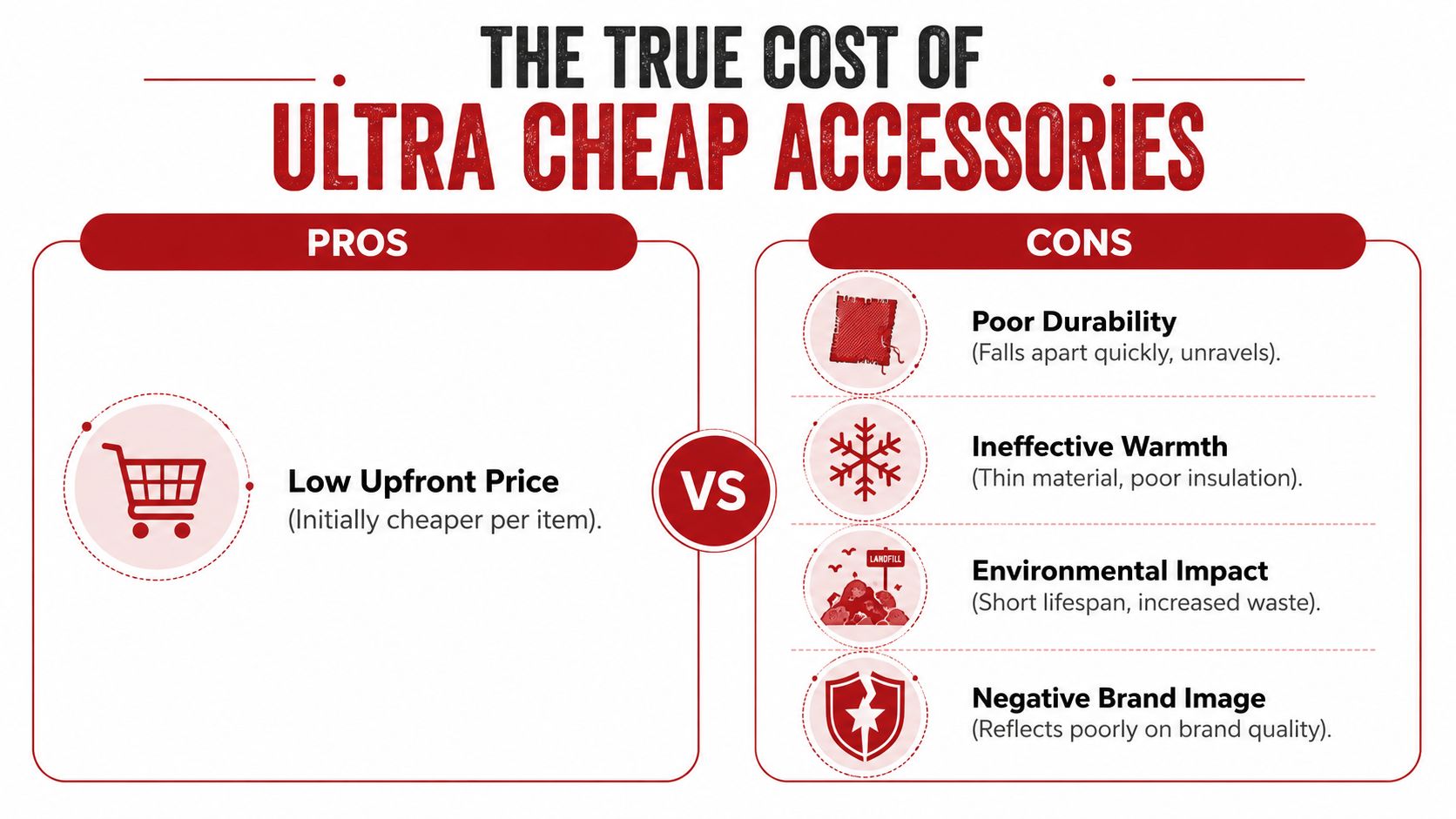
Ultra-cheap winter sets are tempting because they make the spreadsheet look clean. If you can buy more units for less money, it feels efficient.
But the lowest unit cost is only a good deal if the accessories are wearable enough that people keep them.
Bulk buyers have reported hats, scarves, and gloves sets priced as low as $0.50 per unit. The problem is that there's no industry analysis quantifying lifespan or failure rates for those budget tiers, which leaves buyers guessing about durability and true cost-per-wear. That gap matters a lot if you're ordering for repeat use, donor distribution, or public-facing staff.
Cheap upfront can mean expensive later
A hat that pills immediately, stretches out after one wear, or feels too flimsy to block wind does more than disappoint the wearer. It changes how your brand gets perceived.
If your logo sits on a weak product, people usually blame the brand before they blame the factory.
That's why I push buyers to think in cost-per-wear, even when there's no clean industry benchmark for the lowest tier. If someone wears the item once and tosses it in a closet, your cheap order wasn't efficient. It was just inexpensive at checkout.
A practical way to screen bargain products is to ask for proof beyond the price:
- Fabric clarity: Ask what the actual material content is, not just the marketing name.
- Close-up photos: Look for knit density, seam finish, cuff thickness, and patch placement.
- Decoration realism: Thin goods can distort embroidery fast.
- Sample-first logic: If the budget is large but the product is suspiciously cheap, order fewer first.
If you're browsing options, a good comparison of cheap winter hat styles can help you separate low-cost basics from items that only look affordable until quality issues show up.
Watch for these red flags
Some ultra-budget items give themselves away before you ever place the order.
If the listing talks more about price than material, stitching, or fit, treat it like a warning.
A scarf with no weight description. A glove listing with vague one-size language and no stretch detail. A “winter set” with polished mockups but no real photos. Those are all signs that you may be buying appearance, not performance.
Another common issue is false confidence around warmth. Buyers assume a winter item is automatically functional because it's labeled for winter. That's not how it works. Thin acrylic can still be a winter beanie. It just may not be a useful one in actual cold weather.
The sweet spot is rarely the absolute floor price. It's the lowest price that still clears the standard for acceptable wear, acceptable warmth, and acceptable brand presentation.
Customization That Elevates Your Brand
The blank product gets people through the cold. The customization decides whether the item feels like a throwaway or something worth keeping.
That's where a lot of first orders go sideways. Buyers spend all their attention on the product cost, then rush the logo decision. In practice, decoration method is what turns basic winter gear into staff uniform, team merch, event branding, or donor-ready packaging.
Embroidery, patches, and print each do a different job
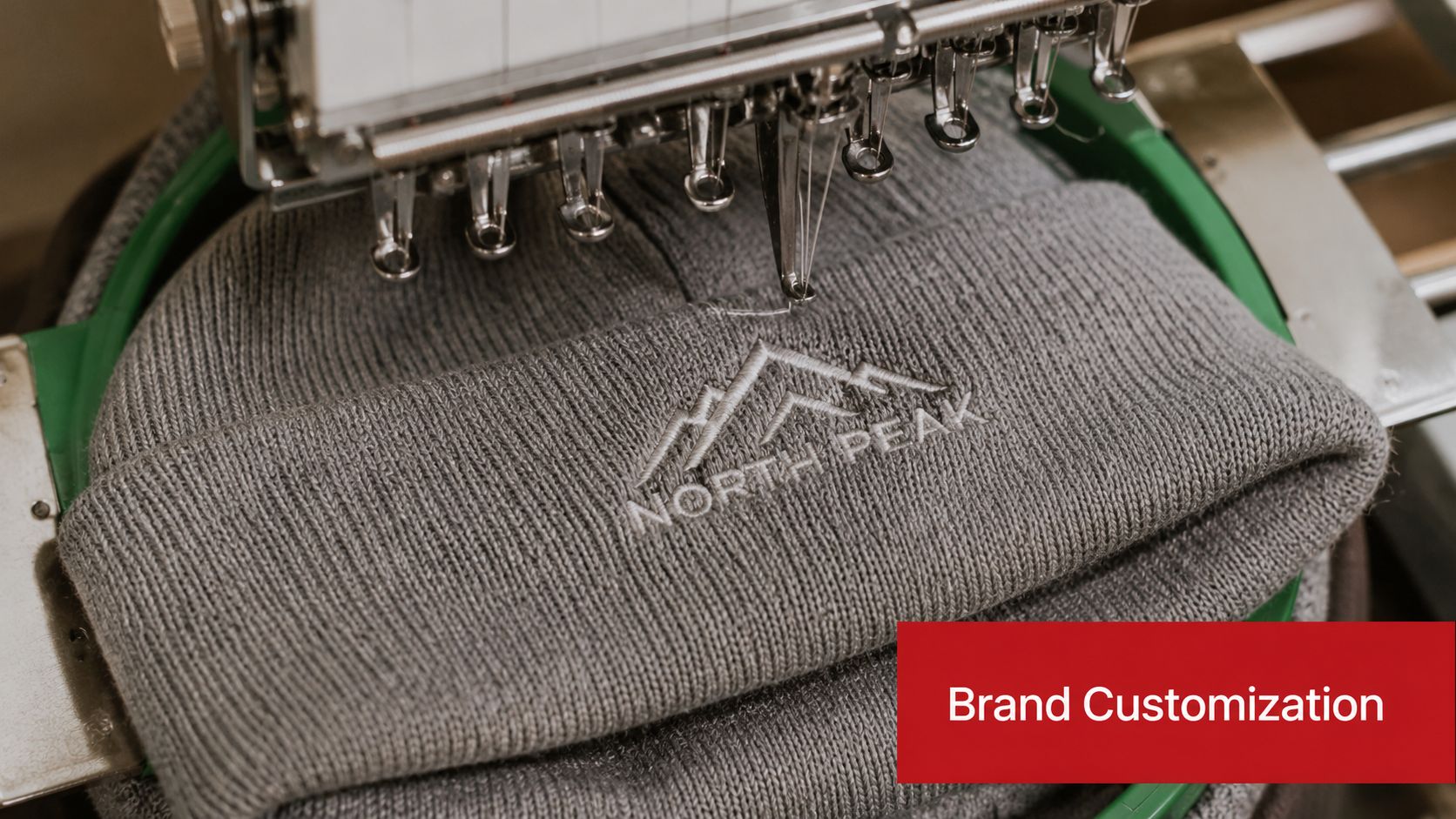
Flat embroidery is the default for a reason. It's clean, durable-looking, and works well on cuffed beanies where the logo area stays stable. If your artwork is simple text, initials, or a straightforward icon, flat embroidery is usually the safest move.
3D puff embroidery has more attitude. It works best on bold shapes and short lettering with enough spacing to hold the raised effect. On the wrong logo, it looks lumpy. On the right one, it gives a low-cost beanie more shelf presence.
Patches help when the logo is too detailed for direct stitching or when you want a more retail look. Woven and embroidered patches can rescue artwork that would otherwise turn muddy on a knit cap. They also let you create contrast on darker materials without overloading the fabric with thread.
Printing has a narrower lane in winter accessories. It can work on some scarves or smooth surfaces, but most knit products still favor embroidery or patch application because the texture is more forgiving.
The product still has to support the decoration
Buyers are asking a real question in the ultra-budget tier. Can you trust that a $0.50 “wool” hat is actually warm and safe for sensitive skin, or is it a synthetic blend with poor insulation? That same uncertainty affects decoration decisions. If the base item is weak, even good embroidery won't fix it.
A thin, stretchy beanie can pull stitches out of shape. A low-density cuff may curl or wrinkle under a patch. A scratchy blend can make a nice-looking piece unpopular the moment someone tries it on.
Decoration can elevate a product. It can't rescue the wrong product.
For small businesses testing ideas, one practical option is working with suppliers that offer low custom minimums. Dirt Cheap Headwear, for example, handles in-house embroidery and offers low minimums starting at six pieces per logo, which makes small test runs possible without forcing a massive commitment.
Files and approvals matter more than buyers expect
If your logo exists only as a screenshot pulled from a website or social profile, stop there and clean that up first. Embroidery works best from clean artwork, preferably vector-based source files when available.
Before production starts, lock down these details:
- Logo version: Don't send three variations and tell the shop to pick one.
- Thread colors: Match them intentionally. White thread on heather gray reads differently than white on black.
- Placement: Center front, cuff fold, patch position, and scale all change the look.
- Text size: Small slogans often fail first on knit goods.
A quick look at the production side helps buyers understand why those details matter.
The best custom winter piece is usually simple. One strong logo. One decoration method that fits the fabric. One product that feels good enough to wear more than once.
Navigating the Wholesale Ordering Process
A first bulk order feels more complicated than it really is. Most problems come from skipped steps, not from the process itself.
When buyers stay organized, ordering cheap hats scarves and gloves is pretty straightforward. The key is to treat it like procurement, not impulse shopping.
Step through it in order
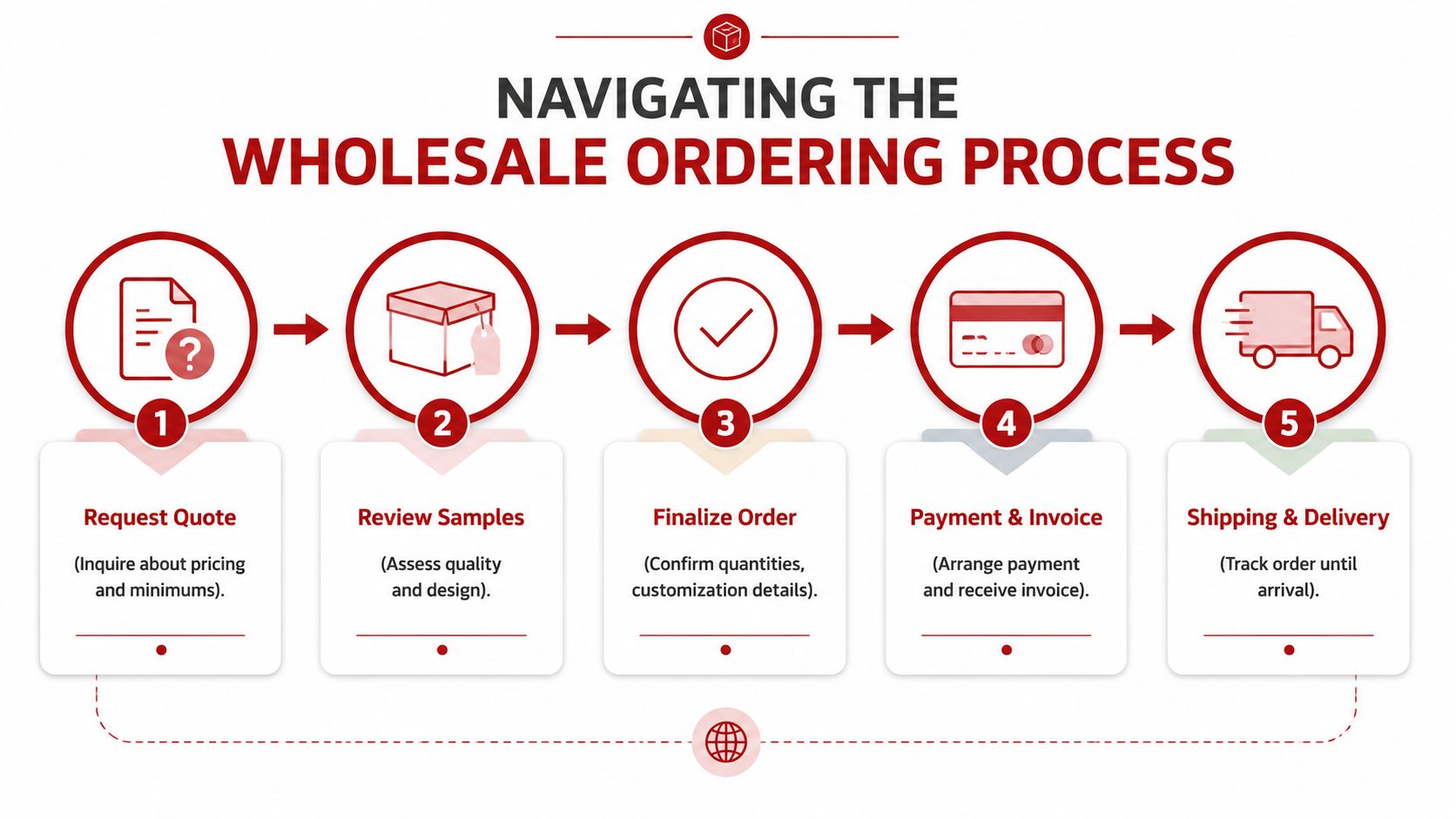
Start with product selection and quote requests. Don't ask for pricing until you know the rough style, color, quantity, and decoration method. Vague quote requests create vague answers.
Then move to sampling or at least product review. If a physical sample isn't practical, ask for real product photos and decoration examples on similar materials. Buyers coming from e-commerce or resale purchasing can also benefit from broader expert insights on Amazon wholesale, especially around supplier vetting, margin thinking, and product consistency.
Once you're comfortable with the item, finalize the order details:
- Confirm the SKU and color. Similar names cause expensive mistakes.
- Lock the quantity by size or style if you're mixing products.
- Approve artwork carefully. Spelling, spacing, and placement all need a second look.
- Verify ship-to information. A wrong suite number can derail the whole schedule.
Never rush the proof
The proof is where preventable mistakes live.
A digital proof tells you how the logo is being interpreted for production. It's not just a courtesy image. It's your last checkpoint before hats get stitched, patches get sewn, or goods get packed.
If the order includes embroidery, ask whether you'll also see a sew-out or stitched sample on a comparable item for larger or more sensitive runs. Digital proofs can't always show how thread behaves on soft knit fabric.
Treat the proof like a contract. If it's wrong there, it will be wrong on the product.
If you need winter styles specifically, looking at wholesale winter hats can help narrow the field before you request pricing, especially if you're comparing budget basics against better retail-looking options.
Build in more time than feels necessary
Production rarely gets easier when your event date gets closer.
Leave room for back-and-forth on stock, artwork cleanup, proof approval, decoration setup, and shipping transit. The more custom the order, the less you want to operate on a last-minute deadline.
A clean process usually looks like this:
- Early planning: Choose the item with the end use in mind.
- Clear approvals: One person signs off on final artwork and quantities.
- Written confirmation: Keep the approved details in email or invoice form.
- Arrival check: Open cartons promptly and inspect before the event date.
That last step gets skipped all the time. Don't wait until setup day to see what arrived.
Common Mistakes When Buying in Bulk
Most bad winter accessory orders don't fail because the buyer was careless. They fail because the buyer assumed the product would behave like the listing promised.
That's understandable. The broader global hats market was valued at USD 11.04 billion in 2025 and is projected to grow to USD 18.97 billion by 2034, with Asia Pacific dominating production and consumption. There are a lot of options moving through the market, and they do not all follow the same quality standard.
The common misses I see first
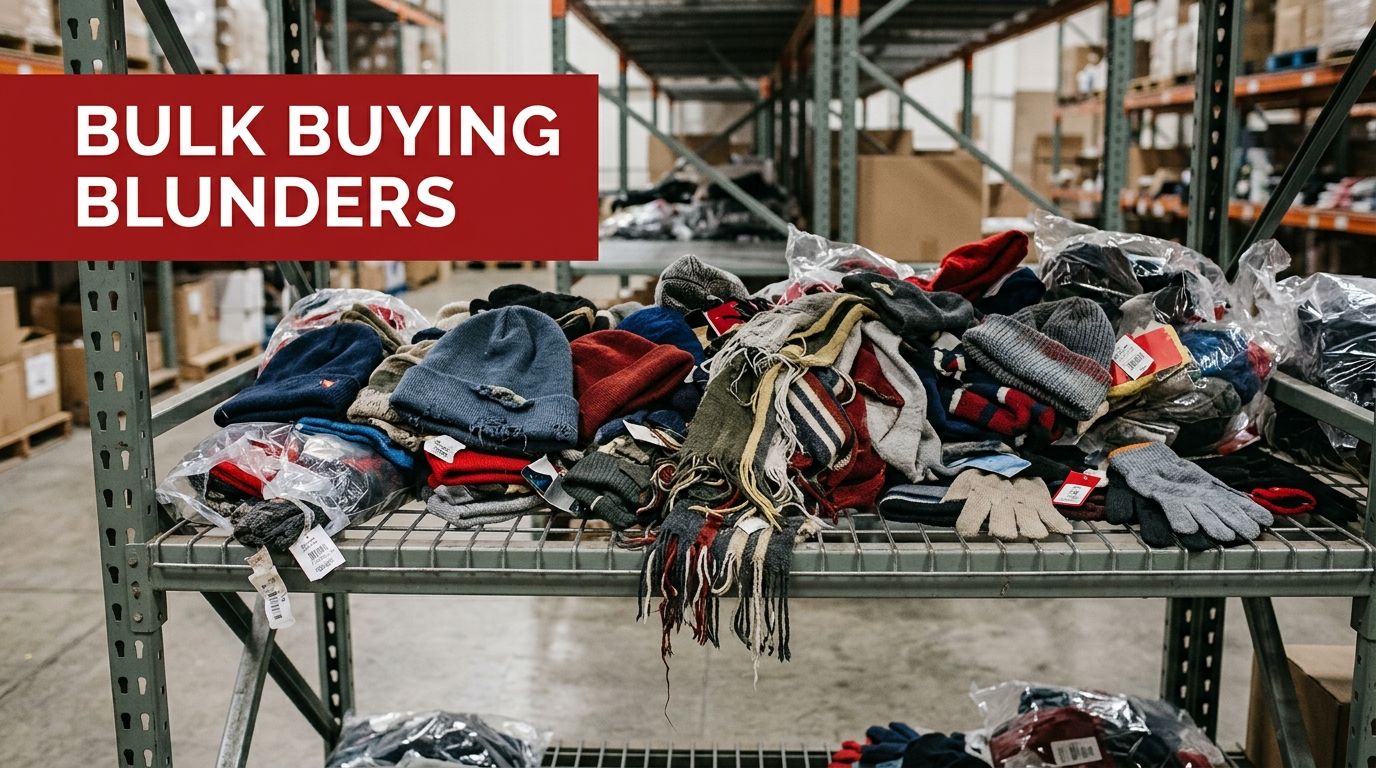
A restaurant group orders lightweight cotton-feel beanies for an outdoor holiday activation. They looked soft online. In cold wind, they underperform and staff stop wearing them halfway through the shift.
A startup submits a small web graphic for embroidery. The shop digitizes it as best it can, but the tiny text fills in on the knit. The buyer blames the embroidery when the actual issue was the artwork.
A school booster club waits too long. They approve the design late, stock changes, and shipping gets tight. Suddenly the “cheap” order needs rush handling and the whole budget gets squeezed.
Fixes that prevent expensive surprises
You don't need a complicated system. You need a buying checklist with a little discipline.
- Match material to actual weather: Mild-climate gear and cold-exposure gear are not the same purchase.
- Use artwork built for decoration: Clean logos beat detailed logos on knit goods almost every time.
- Approve with fresh eyes: Have someone else check spelling, colors, and placement before production.
- Ask what happens if stock changes: Substitution rules should be clear before you pay.
- Inspect on arrival: Open cartons early enough to solve any issues.
One mistake that hides inside “value”
Some buyers spread the budget too thin trying to cover hats, scarves, and gloves all at once. That can work, but only if all three items are allowed to be basic.
If your brand visibility matters, it's often smarter to put more of the budget into one item people will keep wearing. A better beanie can outperform a weak three-piece set in real-world use.
One solid branded item usually does more for your reputation than a bundle nobody wants to wear twice.
That's the part newer buyers miss. Bulk purchasing isn't just about unit count. It's about what survives contact with real people.
Making the Smart Purchase for Your Group
The best cheap hats scarves and gloves order usually doesn't come from chasing the lowest line item. It comes from balancing four things well: warmth, presentation, durability, and decoration.
If the accessories are for one-day visibility, you can lean harder into price. If they're for staff, resale, donor kits, or repeat use, the bar has to move up. That doesn't mean buying premium everything. It means choosing where quality matters most.
For most groups, the safest strategy is simple. Pick one dependable core item, usually a beanie. Choose a material that fits the climate and the audience. Keep the customization clean. Ask better questions than “What's the cheapest option?”
Sizing and audience fit matter too, especially if your group crosses age ranges or fan communities with different preferences. If you're bundling winter apparel with other branded pieces, this guide to sizing for pop culture fans is a useful reference for thinking through fit expectations before you commit to quantities.
A smart purchase protects your budget and your reputation at the same time. That's the sweet spot. Not the rock-bottom product. The one that does its job, wears well enough to keep, and makes your brand look organized rather than cheap.
If you're comparing options for a bulk winter order, Dirt Cheap Headwear is one place to review blank styles, custom decoration options, and wholesale pricing before you lock in your final product mix.