
Find Cheap Cowboy Hats: Bulk Buying Guide 2026
You've got an event date on the calendar, a staff team that needs to look coordinated, or a merch idea that sounds great until you start pricing hats. Then the usual panic kicks in. If the hats are cheap, are they going to look flimsy? If they look good, are you about to blow the budget?
That's where most first-time buyers get stuck.
A cowboy hat in a bulk order isn't just a costume piece. It can be uniform, promo item, resale product, or branded giveaway. If you buy the right one, it does its job and stays within budget. If you buy the wrong one, it shows up warped, fits inconsistently, takes decoration badly, or looks tired before your event even starts.
The good news is that affordable options are real. The global cowboy hat market reached USD 1.2 billion in 2024, and Polyester and Cotton dominate the affordable segment because their lower production costs make wholesale distribution easier for businesses and events, according to Business Research Insights on the cowboy hat market. That matters if you're buying for a team, a fundraiser, a venue, or a retail shelf. It means there are practical budget choices. You just need to know where corners are being cut, and where they aren't.
More Than Just a Hat It's Your Brand
A lot of buyers start with the same sentence. “I just need something inexpensive.”
What they usually mean is something a group can wear without looking like they grabbed leftovers from a costume bin. That's a different job entirely.
A cheap cowboy hat for a business order has to do more than cover someone's head. It has to match the setting. A country bar wants something different from a youth sports fundraiser. A western-themed corporate event needs a different look than a boutique that plans to resell decorated hats at the register.
What buyers are really trying to avoid
The fear isn't just low quality. It's low credibility.
If your staff is wearing hats that crease badly, sit awkwardly, or look glossy in the wrong way, customers notice. If your event giveaway feels disposable, people treat it that way. But when the shape is right and the branding is clean, even an affordable hat can look intentional.
Practical rule: Cheap cowboy hats work best when you buy for the job, not for the phrase “lowest price.”
That means asking a few blunt questions before you shop:
- One-day use or repeat use: A festival promo hat and a staff uniform hat are not the same purchase.
- Brand-first or function-first: Some hats are mainly visual. Others need to survive sun, handling, packing, and weather.
- Decoration plan: If you're adding a patch or logo, the surface matters as much as the color.
Where affordable hats make sense
For group buying, budget hats can be smart when the order has a clear purpose.
A summer event can use a lighter straw look. A western retail display can use felt-style hats to create a stronger silhouette. A restaurant promo team may need a style that reads “country” fast from across the room. In all of those cases, the hat is part of the presentation. It helps people remember the brand, the booth, the team, or the event.
That's why the right affordable hat doesn't feel cheap. It feels specific.
Decoding Cowboy Hat Materials on a Budget
Material is where most budget mistakes happen.
It's similar to picking shirts for a team order. You wouldn't buy heavy fleece for a summer road race, and you wouldn't buy thin promo tees for rough daily workwear. Cowboy hats work the same way. The material tells you how the hat will wear, how it handles weather, and whether your customization will still look good after use.
Straw, wool felt, and synthetics
The most affordable and widely available material is straw, and it has a clear advantage. It's breathable and lightweight, which makes it a strong choice for hot conditions, based on Jackson's Western on western hat materials. The trade-off is durability. Straw doesn't have the crush resistance you get from leather or fur felt, so it can deform more easily under pressure.
That makes straw a practical event hat, especially for warm-weather use. It's less ideal for a staff uniform that gets tossed in a vehicle or stacked in storage after every shift.
Wool felt sits at the accessible end of the felt category. It gives buyers the western silhouette many want without moving into premium felt pricing. But wool felt has a weakness. It has lower water resistance and durability than entry-level fur felt, and its looser fiber structure means it loses shape faster when exposed to moisture, according to Willow Lane Hats on choosing cowboy hat materials.
For bulk buyers, that means wool felt can look good at delivery and disappoint later if the hats are used outdoors in mixed weather.
Synthetic options like polyester and cotton blends fill a big part of the affordable market. They're common in wholesale because they're easier to produce at scale and usually easier to reorder consistently. For branding programs, that consistency matters.
Affordable Cowboy Hat Material Comparison
| Material | Average Cost | Durability | Best For |
|---|---|---|---|
| Straw | Lower-cost option in the affordable category | Lighter wear, more prone to deformation | Outdoor summer events, giveaways, warm-weather promos |
| Wool felt | Accessible felt price point | Moderate at best, weaker in moisture | Indoor use, short-run merch, lower-budget western styling |
| Polyester or cotton blends | Common affordable wholesale option | Depends on build, but generally consistent for bulk programs | Teams, event orders, branded promotions |
Match the material to the use case
A few practical matches usually work well:
- Hot outdoor events: Straw is the easy answer when breathability matters most.
- Visual western branding: Felt-look hats usually read stronger in photos and displays.
- Bulk group orders: Polyester or cotton-based options are often easier to source consistently across sizes and repeat orders.
If the hat needs to survive rough handling, rain, and repeated wear, the cheapest material usually stops being the cheapest choice.
The right question isn't “What's the best cowboy hat material?” It's “What material fits how this order will be used?”
Anatomy of an Affordable Cowboy Hat
A first bulk order usually goes wrong in one of two ways. The buyer picks a hat that looks good in a single sample but falls apart as a group order, or they choose a generic shape that leaves no room for the brand to stand out.
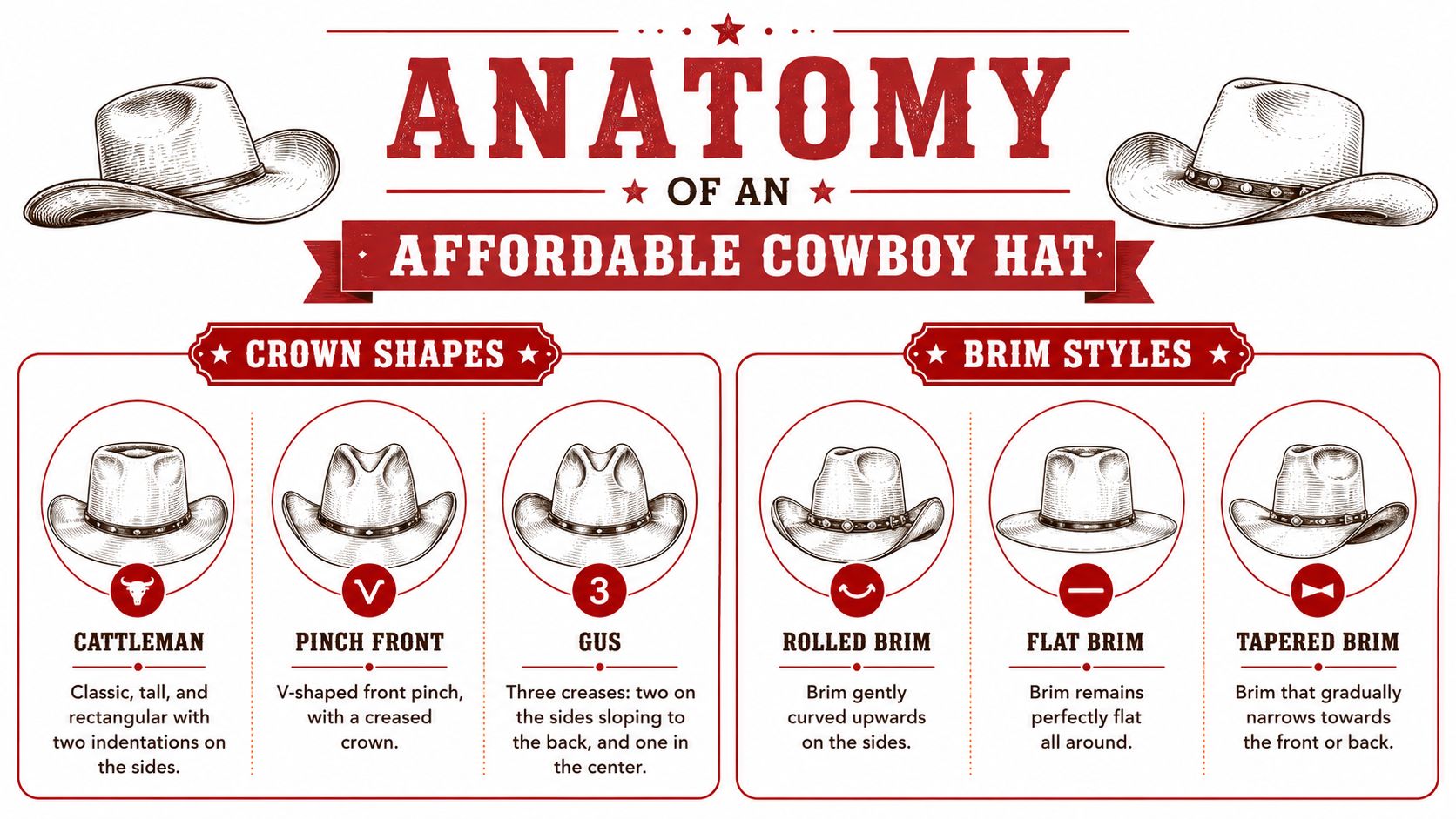
Shape does a lot of the selling before decoration goes on. Crown height, crease, brim width, and brim curve affect how the hat reads on staff, on shelves, and in event photos. For B2B orders, that matters because the hat has to work across dozens or hundreds of units, not just one good-looking sample.
Crown shapes that change the tone
A Cattleman crown is usually the safest bulk choice. It reads clearly as western, suits a wide age range, and gives decorators a predictable front profile for logos, bands, and patches. If the order is for staff uniforms, store merch, or sponsor gear, this shape causes fewer fit and styling complaints.
A Pinch Front crown feels sharper and more retail-driven. It can work well for concert merch, boutique resale, or a younger promo audience, but it is less forgiving if the brim or crown proportions are inconsistent from unit to unit.
A Gus crown has a stronger personality. It can be the right move for themed activations or a private-label western line, but broad team orders often do better with a shape that does not split opinions.
Brim styles and what they signal
Brim shape affects both appearance and day-to-day usability.
- Rolled brim: Easy western look with broad appeal. Good for resale tables and general staff wear.
- Flat brim: More trend-driven. Better for fashion-led merchandise than traditional ranch or workwear branding.
- Tapered brim: Distinctive silhouette. Better for a specific brand image than for a safe, high-volume order.
Small construction details matter
Budget hats still show their quality in the small parts. These are the details I check first on pre-production samples:
- Sweatband feel: A rough or flimsy band leads to comfort complaints fast, especially at events where people wear the hat for hours.
- Brim stiffness: If the brim waves or droops unevenly, the whole order looks cheaper.
- Shape consistency: Ten hats with ten slightly different crowns will look messy in a team photo or retail display.
- Trim area for decoration: Bands, patch placement, and front crown space need to match your branding method. If you plan to add stitched branding, review the available panel area against your machine embroidery pricing options before you approve the style.
One practical rule helps here. Judge the hat as a group, not as a single sample in your hand.
A good affordable cowboy hat for business use should hold a consistent silhouette across the case pack, leave usable space for decoration, and still look intentional after shipping and handling. As noted earlier, the low-cost segment is crowded. Shape is often the fastest way to separate a hat that looks promotional from one that looks retail-ready.
If the order is meant for repeated reorders, stay conservative on silhouette and strict on consistency. A clean, repeatable shape usually saves more money than a flashy style that only works in the first batch.
The True Cost of a Cheap Hat
The lowest ticket price can still be the most expensive choice in the order.
That sounds backward until you start looking at replacement cycles, brand appearance, and how often the hat gets worn. For a business, cost isn't just what leaves the card today. It's also what you'll spend replacing weak product, redoing decoration, or dealing with gear that makes your team look sloppy.
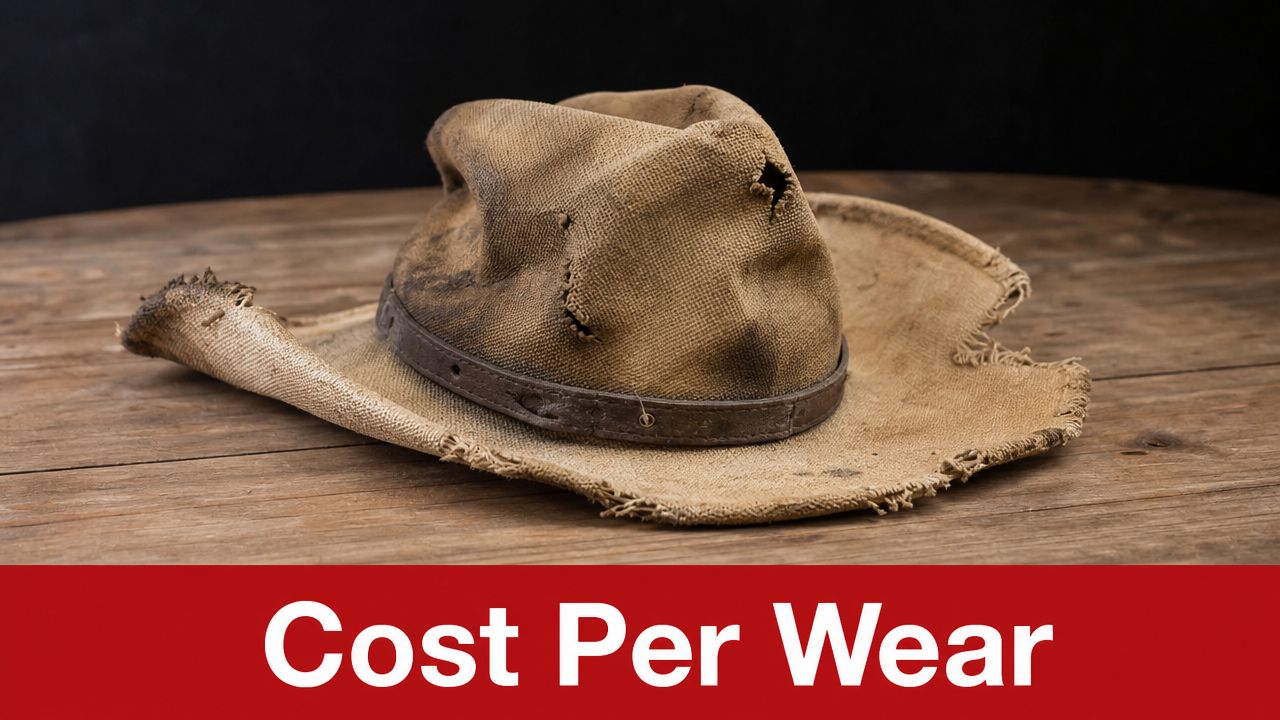
Cheap upfront doesn't always stay cheap
There's a useful rule in hat buying. Don't judge the order by unit price alone. Judge it by cost per wear.
The “True Cost of Cheap Hats” argument is simple. Budget cowboy hats under $60 often lose shape after minimal rain exposure and may need replacement every 2 years instead of 10. A higher-quality felt hat at an 80% higher initial cost can last 5x longer, according to this breakdown of the long-term cost of cheap hats. If you're buying for repeated staff use, resale, or a long-running promo program, that changes the math fast.
Where buyers lose money
The expensive mistakes usually show up in three places:
- Replacement orders: The original “deal” disappears when you have to reorder earlier than planned.
- Brand presentation: A sagging brim or misshapen crown makes the logo look worse too.
- Decoration waste: If you're adding embroidery, patching, or another custom mark, weak blanks make every decorated unit riskier. Before approving artwork, review the practical details around machine embroidery pricing for custom hats so the decoration cost lines up with the life of the product.
Buy the cheapest hat for a one-time giveaway if that's the job. Don't buy the cheapest hat for a program that has to keep working.
A better way to judge value
Ask these questions instead of chasing the lowest number:
- Will this hat still look good after storage, handling, and wear?
- Does the material recover shape well enough for repeat use?
- Is the decoration method worth putting on this blank?
- If the team wears it often, will you be embarrassed by how it ages?
That's the dividing line. A cheap cowboy hat can be a smart buy. A disposable hat sold as a long-term solution usually isn't.
Wholesale and Bulk Buying Strategies
The first bulk order usually gets overcomplicated. Buyers compare too many retail listings, chase mismatched colors, and try to save money by piecing together inventory from different places. That almost always creates more problems than it solves.
For group buying, consistency matters as much as price.
Start with the order plan, not the catalog
Before you choose a hat, lock down the job it needs to do.
A resale order needs margin. A team order needs enough visual consistency that everyone looks intentional in photos. An event order needs reliable timing. If you don't know which of those matters most, every supplier listing will look equally tempting.
Mass-produced polyester or cotton cowboy hats can be sourced for under $60, while handmade hats from artisans often run between $500 and $1,000, based on this pricing comparison on cowboy hats. That price gap is exactly why wholesale matters for businesses. You're not buying heirloom pieces. You're buying scalable headwear that needs to look right, arrive on time, and fit a real operating budget.
What makes a bulk order go smoothly
New buyers usually focus on unit price. Experienced buyers focus on the full order process.
- Forecast demand once: It's often better to place one well-planned order than a string of rushed small orders.
- Ask about minimums early: Low minimums help when you're testing a design or ordering for a smaller staff group.
- Confirm decoration compatibility: Not every cheap cowboy hat is equally patch-friendly or embroidery-friendly.
- Get clarity on lead time: A good price doesn't help if the hats arrive after the event.
A practical prep step is reviewing a clear wholesale blank hats buying guide before you request quotes. It helps you ask better questions on material, stock depth, and decoration fit instead of just asking “What's cheapest?”
Treat product photos like part of the sale
If you're reselling hats online or pre-selling them for an event, your visuals do a lot of the work. That's why many small brands now use tools that boost sales with AI product photos when they need cleaner mockups and faster merchandising without booking a full shoot.
That matters even more with western headwear, because shape, color, and styling context influence buying decisions quickly.
A short walkthrough helps if you're new to custom headwear ordering:
Bulk buying habits that save headaches
Order for the worst day, not the best day. If your event is outdoors, your hats will get handled, stacked, worn, and moved around more than you expect.
A clean bulk strategy is simple. Choose one supplier path, confirm stock, align the blank with the decoration, and place the order early enough that changes don't become emergencies. That's how cheap cowboy hats stay affordable instead of turning into a scramble.
Customization From Logos to Patches
A blank cowboy hat can work for a themed event. For a business, it usually leaves value on the table.
Once you add branding, the hat becomes a uniform piece, retail product, sponsor item, or fundraiser asset. The trick is matching the decoration method to the hat itself. A lot of first-time buyers choose based on what looks cool in a mockup. The better approach is choosing what will hold up on the material you bought.
Embroidery or patch
Direct embroidery works best when the surface is stable enough to hold clean stitching. If the hat body is too soft, too textured, or too irregular, the logo can distort. Simple logos are often more successful in these situations. Thick outlines, compact shapes, and limited small detail usually stitch better than intricate artwork.
Patches solve a lot of problems for cowboy hats because they create a cleaner branding surface. If the material has texture or shape variation, a patch often gives you a neater result than stitching straight onto the hat. For buyers comparing options, this guide to buying custom hat patches wholesale is useful for sorting out where patches make more sense than direct embroidery.
Match the decoration to the material
Many budget straw hats in the $60 to $100 range are fashion-grade, with tighter weaves built more for style than durability, according to this explanation of fashion-grade straw hats. That's a key point for customization. If the hat is refined for fashion rather than function, don't assume it's the best candidate for permanent decoration.
A few practical rules help:
- Straw hats: Better for lighter branding approaches and shorter-term programs if the weave and structure are delicate.
- Felt-style hats: Often better for patches or cleaner front-facing decoration if the body is firm enough.
- Fashion-first blanks: Fine for merch drops or event wear, less ideal for rugged long-term staff use.
Placement matters more than buyers think
The band area is often the cleanest branding zone on a cowboy hat. It gives you space to add identity without crowding the crown. Front placement can work too, but it depends on shape. A tall crown gives more room. A heavily curved or tapered area can make even a good logo look awkward.
For better results, keep these standards in mind:
- Simplify the art: Small text and fine lines usually disappoint.
- Respect the hat shape: Decoration should work with the crown, not fight it.
- Ask for a proof: A flat logo file doesn't always preview well on a curved product.
- Think about resale: Subtle branding often sells better than oversized branding.
The best custom cowboy hat isn't the one with the most decoration. It's the one where the decoration looks like it belongs there.
If you're ordering for a team, store, or event, customization should add identity without exposing the limits of the blank. That balance is where affordable hats start looking premium.
Your Smart-Buying Checklist
A first bulk order usually goes wrong before the supplier even sends a quote. A restaurant group orders 200 hats for staff and retail, approves the cheapest blank, then finds out too late that sizing is inconsistent, the crown shape fights the logo, and reorders will not match the first batch. The fix is simple. Do the pre-flight work before you ask for pricing.
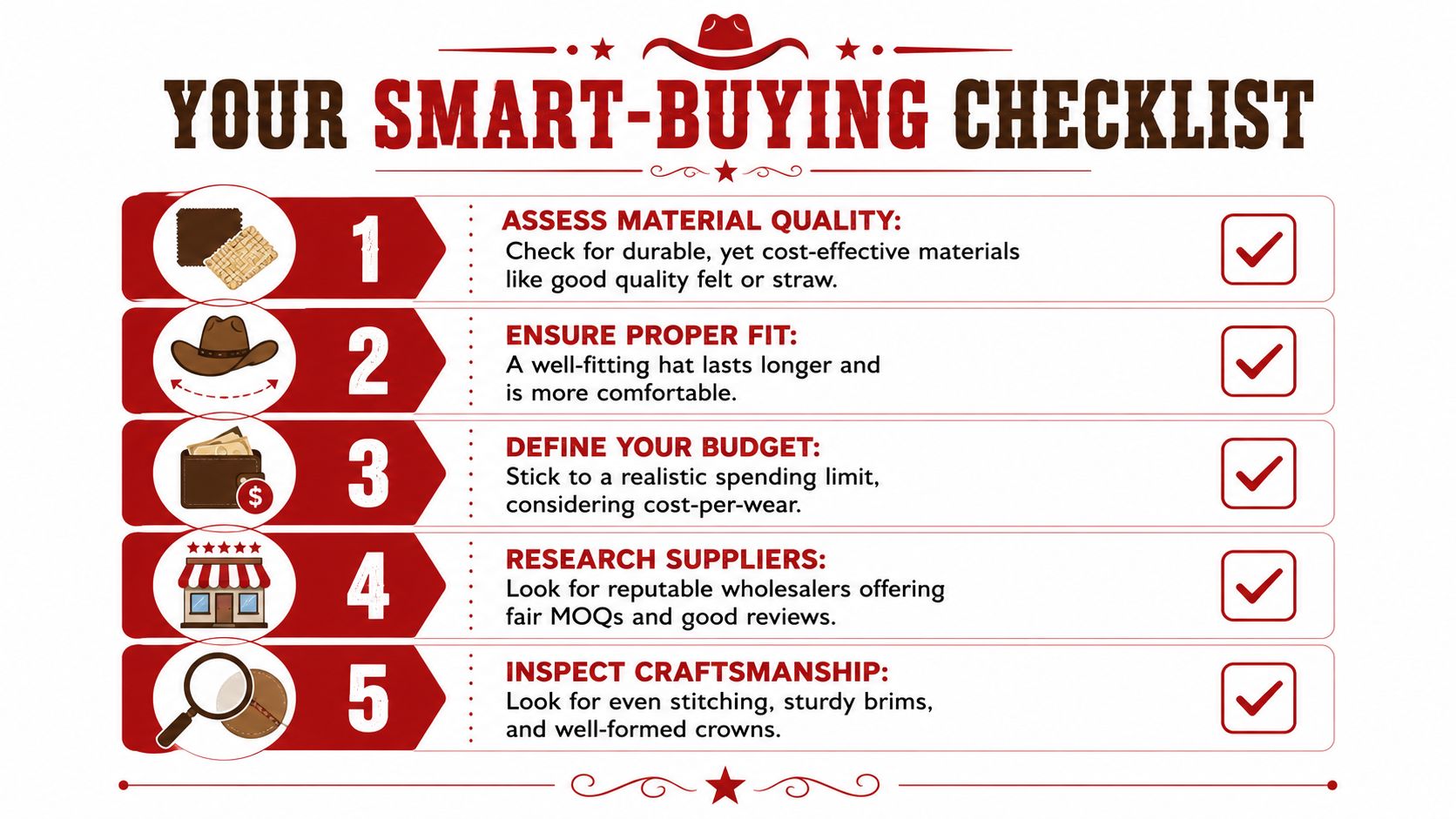
Pre-flight check before you call a supplier
Have clear answers to these questions before you request samples or a quote:
What is the actual sell-through or distribution plan?
Separate staff wear, promo giveaway, event merch, and retail resale. Mixing all four into one hat order usually creates compromise product that satisfies none of them.What is the acceptable failure rate?
For a one-day event, a few bent brims or light cosmetic flaws may be tolerable. For resale or uniforms, those same flaws turn into returns, replacements, and margin loss.Will you need a matching reorder later?
Ask upfront whether the supplier can repeat the same color, shape, trim, and decoration placement in 60 or 90 days. A cheap first run can become expensive if the second run looks different.Who owns the final approval on fit and appearance?
Too many orders stall because marketing approves the logo, operations wants a tougher hat, and purchasing only watches unit cost. One decision-maker saves time and avoids change fees.What landed cost are you judging, not just unit price?
Include sampling, decoration setup, freight, damaged replacements, and storage. That is the number that tells you whether the hat is actually affordable for your business.
Mistakes that cost buyers money
The expensive errors are usually operational, not stylistic.
- Ordering exact demand with no buffer. Bulk programs need extra units for size swaps, damaged cartons, late additions, and press samples.
- Approving from a flat mockup only. Curved crowns, hat bands, and patch scale can look very different on the finished product.
- Ignoring carton and shipping details. Cowboy hats take space. Freight can change the economics of a low-cost hat fast, especially on lower-volume orders.
- Skipping the reorder conversation. If the program works, you will want more. Confirm continuity before the first PO goes out.
- Using one hat for every channel. Staff uniforms, sponsor giveaways, and retail shelves often need different specs, even if the branding stays consistent.
One more check matters. Ask what happens if the shipment arrives with shape issues, decoration defects, or count shortages. A responsive supplier with a clear remake or credit policy is often the better value than the lowest quote on the page.
Cheap cowboy hats work in B2B buying when the order is built around usage, margin, and repeatability. That is how you protect cost-per-wear, reduce waste, and keep a budget program from turning into a replacement program.
If you're ready to order blanks or custom-decorated hats without turning the process into a guessing game, Dirt Cheap Headwear is built for exactly that. You can source wholesale headwear, get low-minimum custom decoration, and move from idea to proof to finished order with a team that handles this work every day.
Pingback: Custom Embroidered Cowboy Hats: A Buyer's Guide for 2026 | Dirt Cheap Headwear