
Blank Leather Patches for Hats Wholesale: A Buyer’s Guide
You're probably here because someone handed you the same ugly problem every merch buyer eventually gets handed, a logo needs to go on hats fast, the artwork isn't the issue, and the key question is what blank leather patches you should buy in bulk without getting stuck with the wrong material, the wrong size, or a supplier who can't ship on time. That's the part most guides skip, and it's the part that decides whether your order turns into a clean repeat program or a pile of awkward samples.
Blank leather patches for hats wholesale are a sourcing decision first and a decoration choice second. Treat them that way, and the whole buy gets easier. Treat them like a craft supply, and you'll miss the stuff that matters, like lead time, backing, fit on the crown, and whether the supplier's spec sheet is specific enough to keep your reorders consistent.
Why Blank Leather Patches Are a Wholesale Buy Decision First
A buyer usually finds this out the hard way. A team manager wants hats for a tournament, a small brand needs a run for a drop, or a reseller sees demand spike and wants stock ready before the next order lands. At that point, you are not buying a nice-looking accessory. You are buying a component that has to fit the production schedule, the decoration method, and the margin target.
That is why blank leather patches for hats wholesale belong in the sourcing conversation before the design conversation. They are sold as blanks because the supplier expects you to decorate them, private-label them, or pass them through a shop that will. For buyers who also handle promo programs, even an application flow like apply for influencer gifting is a reminder that branded products rise or fall on timing and fit, not just the artwork.
The hat business gives you the demand backdrop. The global hat market was valued at about USD 28.02 billion in 2023 and is projected to reach USD 34.14 billion by 2030, implying a CAGR of roughly 2.9% (buckleguy.com). That does not make every patch SKU a winner. It tells you the category has enough volume that buyers should plan for replenishment, not one-off novelty buys.
Fast-turn support matters just as much. One supplier says blank patches can ship within 1–4 business days because of the manufacturing process (patchcrafters.com). That is useful if you are buying against an event deadline or keeping a decoration line moving. The other signal is assortment depth, since marketplaces showing 1–48 of over 1,000 results for leather patch hats on Amazon point to a mature category, not a niche experiment.
Practical rule: buy the patch like a supply chain input, not a sample. If the supplier cannot answer MOQ, lead time, and finish consistency fast, keep moving.
Genuine Leather vs Leatherette vs PU
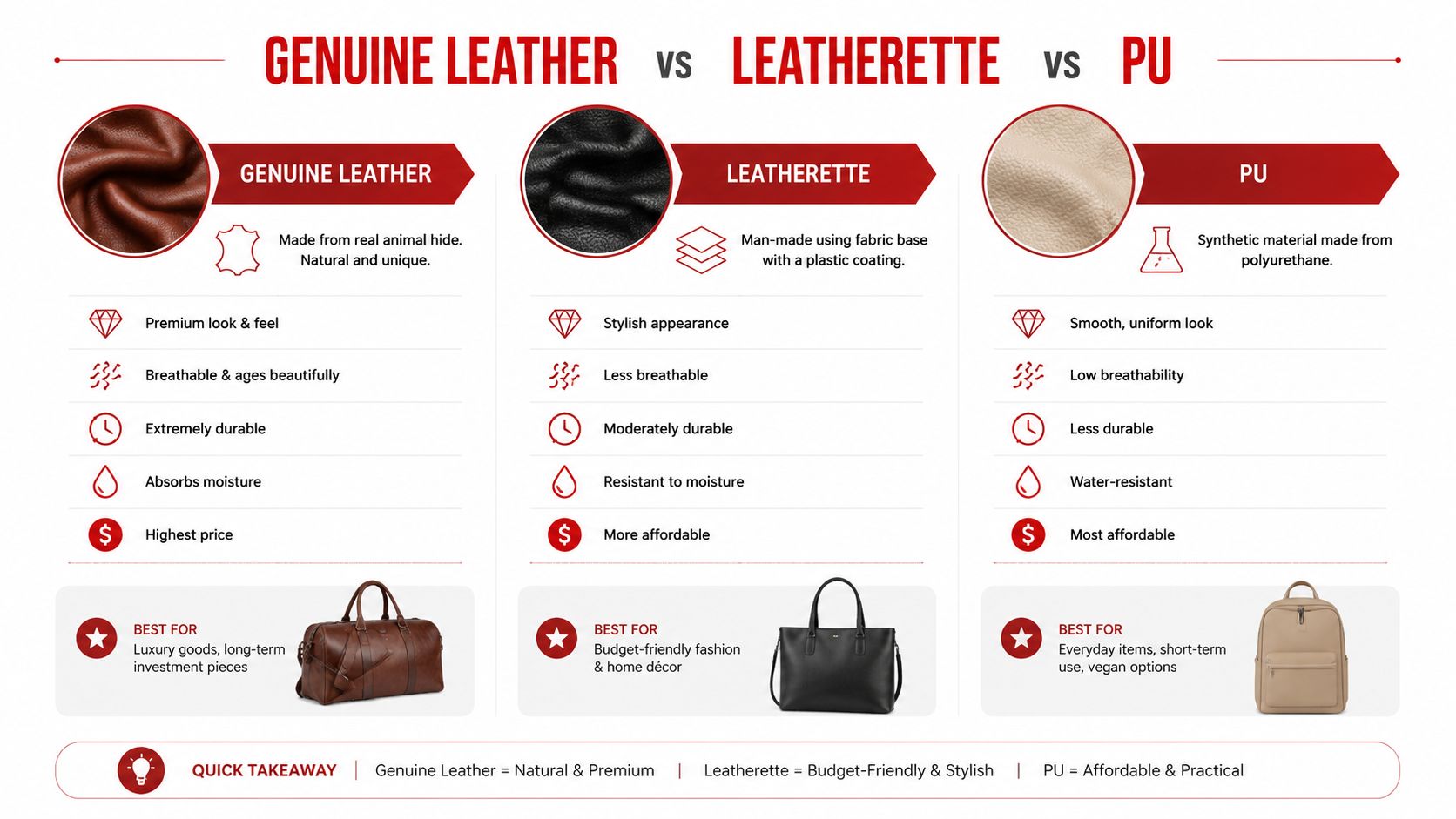
Material choice changes how the patch is made, how it sits on the hat, and how cleanly you can reorder the same look later. For wholesale buyers, that is a sourcing decision first and a decoration choice second. If the material does not match your production setup, the art direction is the least of your problems.
Genuine Leather
Genuine leather is the premium option. It gives you natural texture, depth, and a more traditional patch feel, which is why brands use it when they want the hat to read as more substantial on shelf and in hand. Decoration supplier specs list natural leather patch thickness at about 1.5 mm, with a minimum character height of 1 mm and a minimum element width of 0.3 mm (Stahls). That spec matters because it sets the baseline for what the material can hold. Fine-line logos can work, but only if the artwork respects the substrate.
Buyers should also pay attention to variation. Genuine leather can bring more visual character from piece to piece, which is part of the appeal and part of the risk if you need tight color matching across a bulk order. If your program depends on a uniform finish, this is the material that can surprise you in the sample stage if you do not review it carefully.
Leatherette and PU
Leatherette and PU are the production-friendly options. They are easier to standardize, which matters when you are handling reorders or keeping a shop floor moving on a tight schedule. The same supplier specs show leatherette and PU blanks commonly landing around 1.85–2.15 mm including adhesive, with PU sublimation blanks around 0.045 inches (Stahls). That makes them easier to keep consistent across batches, and it supports methods like laser engraving, UV printing, or heat transfer with more repeatable output.
That consistency is the key selling point. If you want the same patch color, the same edge behavior, and the same decoration result from order to order, leatherette and PU usually give you fewer headaches than genuine leather. They are the better fit for buyers who care about throughput, predictable presentation, and fewer surprises when the cartons arrive.
The decision rule
Pick genuine leather when you want natural texture and a more premium story. Pick leatherette when color consistency matters more than organic variation. Pick PU when your decoration line depends on throughput and you want a cleaner path for automation. That is the blunt version, and it keeps you from buying the wrong material for the wrong job.
If the artwork is tiny and detailed, material choice matters less than the detail limit. Ask the supplier for minimum type size before you approve anything.
Sizing Your Patches to the Hat Front Panel
Sizing is where a lot of first-time buyers waste money. A patch that looks fine on a flat bench can turn ugly on a curved crown, especially if it rides a seam or bridges too much panel curvature. Once that happens, the edge starts working against the hat instead of sitting on it.
Use the panel, not the mockup, as your reference
Industry guidance puts the usable vertical height on most adult caps at 2–2.5 inches, and it recommends leaving at least 0.25 inches (6 mm) of clearance on all sides so the patch doesn't cross seams (Max Emblem). That clearance isn't cosmetic. It reduces edge lift and keeps the perimeter from fighting the crown's curve during wear and laundering.
Common stock sizes that actually make sense
| Patch Size | Best For | Recommended Clearance | Notes |
|---|---|---|---|
| 3 x 2 inches | Most adult front panels | 0.25 inches on all sides | Safe default for broad compatibility |
| 3.5 x 2.5 inches | Larger structured fronts | 0.25 inches on all sides | Works when the panel is tall enough |
| 2.3 to 2.5 inch circles | Compact logo marks | 0.25 inches on all sides | Good when you want a tighter visual footprint |
| 3.5 x 2.1 to 2.5 inch rectangles | Wider wordmarks | 0.25 inches on all sides | Useful when logo width matters more than height |
The engineering logic is simple. If the patch gets too tall or too wide, the adhesive or stitch line has to bridge the panel curvature, and that concentrates stress at the perimeter. Low-profile and unstructured hats are the biggest troublemakers because their front panels bend more sharply than structured caps. That's where peeling starts.
Buy the size that fits the hat you'll stock, not the one that looks best in a mockup file.
Sew-On, Adhesive, and Heat-Seal Attachment Methods
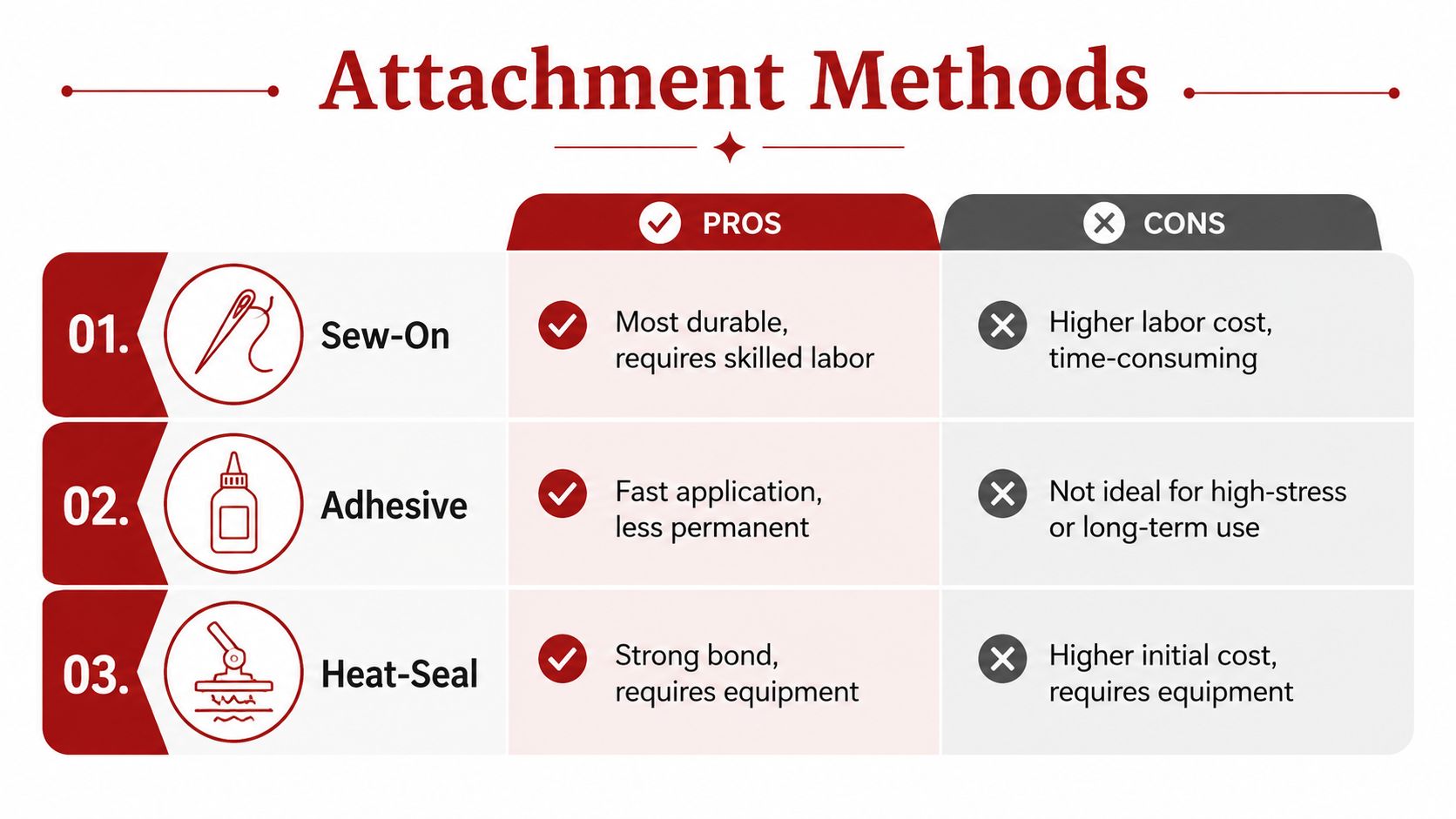
Attachment method decides whether a wholesale order moves cleanly through production or turns into a headache on the floor. A patch can look right on paper, and still fail the moment the backing does not match how the hats will be applied.
Sew-on
Sew-on is the dependable choice. It takes more time and more hands-on labor, but it holds up well when durability matters or when the end customer may need a replacement later. For premium retail hats, or for mixed inventory that different shops will apply from the same blank stock, sew-on gives the widest compatibility.
Adhesive
Adhesive is the quickest route, and it gives you the least room for error. It works for fast application and short-term use, but it is the weakest option under washing and repeated wear. If the order is for an event, a photo shoot, or a short promotion, adhesive can be a practical call. If the hats are meant for repeat customers, I would not make it the standard.
Heat-seal
Heat-seal is the volume workhorse. It belongs in a production setup where speed matters and the crew can control the press. For the actual application sequence, use a plain-language walkthrough like how to put a patch on a hat, then build the process around repeatable press settings.
Heat-activated backs are usually pressed with medium pressure in a professional hat press, and thicker leather needs extra bottom heat because the material insulates and slows adhesive activation. That detail matters more than most buyers expect. If the heat does not travel through the patch body, the bond can look finished while still being undercured. For setup discipline, the pro tips for hat presses guide is a solid reference for keeping results consistent.
Practical rule: if the order has to go out fast and be reordered cleanly, heat-seal beats adhesive and usually beats sew-on on speed. If your crew cannot hold press settings steady, do not treat heat-seal like a simple press-and-forget choice.
Customization Options That Actually Work on Blanks
A buyer can ruin a blank leather patch order by choosing decoration first and material second. The blank sets the rules, and the decoration process has to stay inside them. If the artwork, the finish, and the substrate do not line up, the result looks cheap even when the patch cost did not.
Match the method to the material
Laser engraving is the cleanest fit for natural leather and many PU blanks because it cuts a sharp mark without forcing a second color pass. Embossing and debossing give the patch a more premium, tactile read, but debossing usually needs a die and a setup that only makes sense when the same artwork repeats across a real run. Screen printing can work too, as long as the art stays simple and the surface stays consistent. UV printing gives you color flexibility, while sublimation belongs on blanks made for that workflow, usually PU or polyester-coated material.
The detail limit still matters. On natural leather, supplier specs call for a minimum character height of 1 mm and a minimum element width of 0.3 mm. That means a logo with hairline strokes, tiny taglines, or thin icon outlines has to be simplified before production. If you insist on keeping every detail, the patch will come back muddy instead of crisp.
Use this quick rule set
- Laser engraving: best for clean logos, one-color marks, and repeatable production.
- Embossing: best when texture and premium feel matter more than color.
- Debossing: best when you want a recessed, upscale look and you are ordering enough volume to justify tooling.
- UV printing: best when you need color and your substrate can take it.
- Sublimation: only for blanks built for that process.
For buyers who mix patch programs and stitched decoration, the comparison between embroidered patches vs direct embroidery is a useful reference point. The same rule applies here, the decoration method should follow the material and the production setup, not whatever looks easiest on a sample photo.
Pricing, MOQs, and Lead Times You Should Expect
If you order blind, wholesale costs will chip away at your margin fast. The patch line item matters, but the bigger surprise usually shows up in the minimum order rules, setup expectations, and how long your inventory sits before it reaches production.
Start with sourcing math, not decoration math
Treat blank leather patches as a sourcing decision first. The buyer who understands tiered pricing, reorder terms, and shipping windows makes better decisions than the buyer who chooses a finish and hopes the numbers work later. That is the same mindset covered in buying custom hat patches wholesale, because the economics of blanks and the economics of finished headwear need to line up before you place a deposit.
Blank patch suppliers usually price by quantity tier, and that is where the math starts. A smaller brand can sometimes buy blanks in one tier and still decorate them through a separate low-MOQ workflow, so do not assume the blank minimum and the decoration minimum are the same. Dirt Cheap Headwear, for example, operates with low minimums on its decorated headwear side, starting at just six pieces per logo, which gives you a useful reference point if you are comparing blank sourcing against outsourced decoration.
Lead time matters just as much. One supplier states that blank patches typically ship within 1–4 business days because of the manufacturing process (patchcrafters.com). That kind of turnaround is useful for event-driven orders, but it only covers the blank itself. If you are adding decoration, the production queue for that step still sits on top of it.
What to model before you place a deposit
- Blank MOQ: confirm how many pieces you need per size, material, and color.
- Decoration MOQ: verify whether your logo minimum is separate from the blank minimum.
- Turn time: keep blank shipping separate from decoration scheduling.
- Reorder consistency: ask whether the same material and backing can be repeated without spec drift.
The broader hat market still gives wholesale buyers a reason to plan for replenishment instead of one-off buys. A wholesale context note from buckleguy.com points to long-run demand, which is the right way to think about blank patches if you want them to behave like a repeatable SKU instead of a one-time accessory. That means you should care about stock continuity, not just the first invoice.
The smartest cost framework is straightforward. Buy blanks in the smallest tier that still protects your unit economics, then decorate them with the most repeatable method your team can handle. If you are weighing blank inventory against finished patch programs, the internal note at buying custom hat patches wholesale is the right companion reference for that decision.
Quality Checks and Supplier Red Flags
Photos lie. Not always on purpose, but they do. A patch can look clean in a listing and still arrive with weak backing, inconsistent edge finish, or a material batch that doesn't match the sample you approved.

Check the thing you'll actually complain about later
Start with thickness tolerance. If the patch feels noticeably different from sample to sample, your press settings and stitch results will drift. Then look at edge finish, because rough edges fray faster and look cheaper on retail hats. Ask for color consistency across dye lots, especially if you're reordering for a brand program where the patch has to match previous inventory.
Backing integrity is the fastest test to run before you commit to volume. A simple tape-pull check on an adhesive-backed sample tells you more than a glossy product photo ever will. If the adhesive lifts too easily, don't rationalize it away. That's the kind of problem that turns into returns and rework.
Supplier red flags worth taking seriously
- Vague spec sheets: if thickness, size, and backing aren't stated, assume you'll be the test batch.
- No sample policy: if a supplier won't send samples, they're asking you to buy blind.
- No published lead times: that usually means you'll be chasing updates later.
- Suspiciously low pricing with no material disclosure: cheap can mean recycled uncertainty, not savings.
- No reorder language: if they can't explain how they'll keep repeat orders consistent, the program isn't built for wholesale.
If the first reply feels evasive, don't wait for the third email to become honest. Professional suppliers answer spec questions directly, because they know buyers need repeatability, not poetry.
The first email should be blunt. Ask for material type, thickness, backing type, available sizes, MOQ per size, sample availability, and realistic lead time. If the answers stay fuzzy after that, move on.
Matching Blank Leather Patches to Your Use Case
A coffee roaster ordering 24 staff hats doesn't need the same setup as a reseller restocking mixed inventory. Same product family, different buying logic.
For a small business staff program, I'd keep it simple, a compact rectangle or circle, a premium-looking material, and a backing that matches the decoration method your local shop can run without drama. For a youth sports team, durability and fit matter more than finish tricks, so keep the patch size within the hat's front-panel sweet spot and avoid anything that crosses seams. For a 500-unit merch drop, use the material that repeats cleanly, then standardize the attachment method so production doesn't drift. For a reseller with weekly restocks, inventory flexibility beats novelty, so lean toward sizes and finishes that stay easy to reorder.
The shortest version is this, premium story for brands, repeatability for resellers, and simple compatibility for teams and events. If you match the patch to the use case instead of chasing the flashiest finish, you'll stop buying mistakes and start buying a system.
Dirt Cheap Headwear can source and decorate hats for brands, teams, and events, so if you're building a patch program and want a practical quote path, start with Dirt Cheap Headwear. Bring them your patch size, material preference, and deadline, and you'll get a cleaner answer on what's realistic for your order.