
Blank Black Hats: Buy & Customize for Your Brand
You're probably in one of three spots right now. You need hats for staff, an event, or a brand drop. You know black is the safe choice, but “safe” doesn't mean simple once you start comparing styles, fabrics, decoration methods, minimums, and turnaround.
That's where most first big orders get messy. A hat that looks good in a mock-up can stitch poorly. A cheap blank can fade faster than expected. A logo that works fine as flat embroidery can become expensive or muddy when someone switches it to puff at the last minute.
Blank black hats are one of the easiest products to get right if you understand the trade-offs before you place the order. They're also one of the easiest products to get wrong if you buy only on price. The difference usually comes down to matching the right blank, the right fabric, and the right decoration method to the actual job.
Why Start with a Blank Black Hat
A blank black hat usually solves the first problem clients bring in. They want something that feels clean, wearable, and easy to hand out without worrying whether the color will turn people off. Black works for restaurant staff, coaching crews, merch tables, golf outings, breweries, construction teams, and brand launches because it looks finished even before decoration goes on.
It also hides a lot of the headaches that show up with lighter colors. Finger marks are less obvious. Small shipping scuffs tend to be less noticeable. Logos often read sharper against a dark base, especially when the artwork is simple and the thread choice has enough contrast.
Why black keeps making sense
When someone places a first large hat order, they're usually balancing two concerns. They want something people will wear, and they don't want leftover inventory sitting in boxes. Blank black hats check both boxes better than most color options because they sit comfortably in uniform programs and retail-style merch at the same time.
That long-term demand isn't just a gut feeling. The global hats market is projected to grow from $11.63 billion in 2026 to $18.97 billion by 2034 at a 6.31% CAGR, which tells you the category itself has staying power.
Practical rule: If you're unsure what color to launch first, start with black and earn the right to get more experimental on the second order.
Who should begin here
Black blanks make the most sense for buyers who need broad appeal:
- Small businesses: Staff can wear them daily without the hat looking too promotional.
- Teams and leagues: Coaches, volunteers, and parents tend to accept black faster than louder colors.
- Merch brands: Black gives your logo the best chance to look intentional, not seasonal.
- Event planners: If attendance is mixed, black is the least risky pick for giveaways.
A blank black hat isn't exciting because it's trendy. It's exciting because it removes bad guesses from the ordering process.
Choosing Your Perfect Blank Black Hat Style
Most buyers don't need every style. They need the one that fits the job, the audience, and the logo. If you're buying blank black hats for the first time, start by deciding whether you're dressing a crew, building merchandise, or handing out a promo item. That answer narrows the field fast.
A strong starting point is the baseball cap category. A 2023 Headwear Inc. study found that baseball hats hold over 40% of the U.S. market share, which is why they're the safest first choice for most programs.
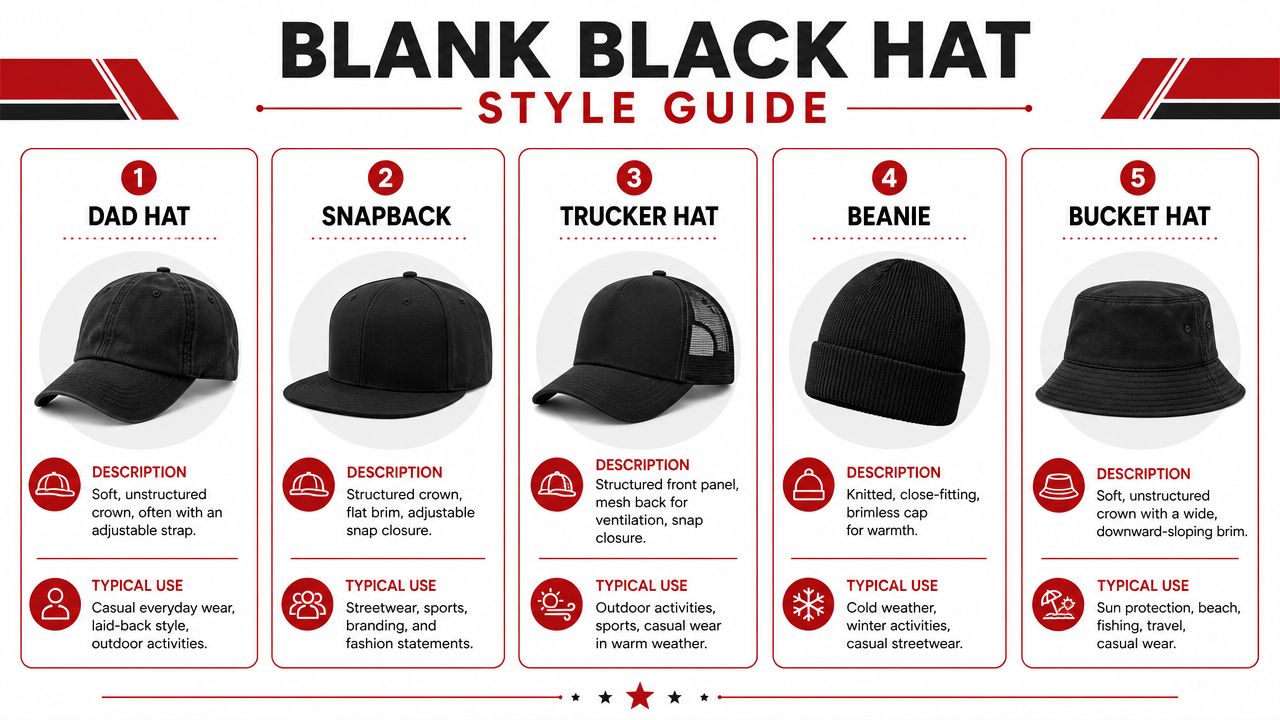
The core styles most buyers compare
Here's the quick side-by-side view:
| Style | Best for | Look | Watch out for |
|---|---|---|---|
| Dad hat | Cafes, lifestyle brands, casual uniforms | Relaxed, curved brim, softer crown | Fine-detail logos can sink visually on very soft fronts |
| Snapback | Streetwear, team merch, bold branding | Structured, sharper profile, flat or slightly curved brim | Can feel too rigid for some staff programs |
| Trucker | Outdoor brands, summer events, work crews | Breathable mesh back, structured front | Mesh can make the hat feel less premium in some retail settings |
| Beanie | Cold-weather staff gear, winter drops | Soft, simple, easy to wear | Logo placement choices are more limited |
| Bucket hat | Fashion merch, festivals, resort and beach use | Trend-forward, wider brim | Not ideal if you need a broad, conservative fit across all ages |
For a broader comparison of fit profiles and silhouettes, a detailed hat style guide breaks down common categories.
What works in the real world
Dad hats are easy sellers because they don't ask much from the wearer. They feel broken-in quickly, and they suit understated logos. If the artwork is minimalist, this style usually lands well.
Snapbacks are better when the front logo needs structure. A clean front panel helps embroidery hold its shape, which matters if you're using a bold wordmark or a patch. Brands like YP Classics/Flexfit and New Era are common reference points when buyers want that sharper profile.
Trucker hats work when heat and airflow matter. Richardson is one of the first names people mention here for a reason. The structured front gives decorators a dependable area for stitching, while the mesh back keeps the hat practical for outdoor use.
A lot of first-time buyers choose based on photos alone. Fit and front-panel structure usually matter more than the side profile in the product picture.
The styles that need a more specific use case
Beanies, bucket hats, and visors aren't bad choices. They're just less universal.
- Beanies fit cold-weather teams, ski events, winter merch, and trades that work outdoors.
- Bucket hats can look great for fashion drops or hospitality environments with a relaxed brand image.
- Visors suit golf events and some athletic programs, but they won't cover as many use cases as a cap.
If you're undecided, a 5-panel or 6-panel baseball-style black cap is usually the cleanest first move. It's familiar, widely wearable, and easier to decorate well than trendier silhouettes.
Decoding Hat Fabrics and Construction
A lot of bulk hat orders look right on the quote and disappoint six months later. The usual cause is not the logo. It is the blank itself: fabric that fades faster than expected, a crown that will not hold the decoration cleanly, or a build that felt good in a sample photo but does not suit daily wear.

Cotton, polyester, and nylon
Fabric choice drives both lifespan and replacement cost.
Cotton is the easy sell because it feels familiar right away. For coffee shops, casual merch, and brands chasing a softer broken-in look, it can be the right call. The trade-off is maintenance. Black cotton tends to show sun fade, sweat marks, and repeated wash wear sooner than synthetic options, so buyers should expect a shorter fresh-looking window in outdoor or high-use programs.
Polyester is usually the safer business decision for staff uniforms, sports, and event crews. It holds color better, handles moisture better, and keeps a cleaner appearance with regular use. If the order needs to survive heat, sweat, and frequent wear without looking tired halfway through the season, polyester or a performance blend usually earns its higher buy-in.
Nylon fills a narrower but useful role. It is light, often has a technical finish, and works well for running brands, golf events, and utility-focused styles. Some buyers love that crisp performance feel. Others find it less premium for everyday retail, especially if they want a softer hand.
If you are matching the blank to the decoration budget, start there. A durable fabric can justify a higher-cost logo application because the hat stays in circulation longer. That matters when you are comparing standard embroidery to options with a higher stitch and setup cost. A practical breakdown of custom hat decoration methods and setup trade-offs helps when you need to price the blank and the logo as one decision.
Structured versus unstructured
Construction changes how the hat wears and how well the front logo behaves on press or under the needle.
A structured cap has backing in the front crown, so the face of the hat stays upright. That gives embroiderers and patch shops a more stable surface. For front-and-center branding, especially bold lettering, puff embroidery, or larger patches, structured caps are usually the safer choice because they hold shape better in production and on the head.
Unstructured caps sit softer and closer to the head. They often feel better for lifestyle brands and casual retail. They can also create problems if the artwork is too dense or too tall. Heavy stitching on a soft front panel can ripple, collapse, or lose definition. That is a real cost issue, not just a style issue, because a logo that looks weak on a soft crown often leads to revisions, sew-outs, or a switch to a different blank after sampling.
Choose the crown for the decoration first, then choose the silhouette.
5-panel and 6-panel construction
Panel count affects more than the side profile.
A 5-panel cap gives you a broad, cleaner front surface with no center seam running through the artwork. That makes it useful for rectangular patches, screen-printed transfers, and simple front graphics that need uninterrupted space. It can look sharper for fashion-forward drops, but the fit is a little more specific and not every audience warms to it the same way.
A 6-panel cap is the safer volume play. It is the shape most buyers already know, and it tends to fit a wider range of head shapes without much explanation. The center seam can interfere with some artwork, especially wide patches or logos with fine symmetry, but for standard embroidery and general resale it is usually the lower-risk option.
What to prioritize by use case
Different jobs call for different blanks.
- Staff uniforms: Put durability, color retention, and easy reorder availability first.
- Retail merch: Focus on hand feel, shape, and how the decorated sample looks in person, not just online.
- Outdoor events: Choose polyester, performance blends, or nylon if the hats will see heat, sweat, and sun.
- Premium casual programs: Soft cotton, washed finishes, and unstructured builds usually feel more natural, but expect a shorter cosmetic lifespan.
- Large first orders: Ask for samples in two fabrics if you are unsure. Paying for extra samples is cheaper than sitting on 200 hats that looked right in a mockup and wrong in the field.
The best blank black hat is not the one with the nicest product photo. It is the one that still looks worth wearing after real use, real weather, and real decoration.
A Guide to Customization Methods
You approve a sample on a blank black hat, the mockup looks sharp, and the quote feels fine. Then the production proof comes back with a different stitch method, a setup charge you did not budget for, and a logo that reads worse on the actual cap than it did on screen. That is the point where decoration stops being a style choice and starts affecting margin, reorderability, and how wearable the hat is after a few months in the field.
Start by matching the artwork to the method, not by picking the method that sounds premium. If you want a practical breakdown of how shops price and produce each option, this custom hat decoration overview with common methods and setup considerations is a useful reference.
Flat embroidery
Flat embroidery is the baseline for bulk orders because it solves more problems than it creates. It holds up well, works on most cap profiles, and usually gives the cleanest price on black blanks once setup is spread across the run.
It also gives you more freedom with artwork. Small text still needs cleanup, but flat stitching handles finer outlines, tighter spacing, and mixed logo elements better than puff. For first orders, it is often the safest way to get a clean sample, an accurate quote, and a repeatable result on reorders.
Good use cases include:
- Company logos with moderate detail
- Team names on standard front placements
- Side or back embroidery like initials, numbers, or short taglines
3D puff embroidery
3D puff works best on bold logos with thick strokes and open space. On a structured black cap, it can look excellent. On detailed artwork, it can turn a readable logo into a crowded one.
Cost is the primary checkpoint here. Puff usually adds labor, machine time, and more digitizing work than flat embroidery, so the per-unit price often climbs fast on bulk orders. Dark hats can add another layer of complexity because the raised shape and thread choice have to stay crisp enough to read clearly against the black surface. In a custom shop, I tell clients to stop looking at the mockup and look at the stitch file and sample instead.
Use puff when the logo has room to hold its shape. Skip it for fine outlines, tiny copy, stacked details, or artwork with several small elements packed into one front hit.
Raised embroidery works best when the design is simple, thick, and easy to read from a few feet away.
Patches and mixed decoration
Patches solve a different problem. They are less about texture for its own sake and more about giving difficult artwork a cleaner home.
Woven patches hold small detail better than direct embroidery. Embroidered patches keep a stitched look but with more control around the edge. Leather-style patches change the feel of the hat completely, which can help if the program is meant to read as premium, outdoor, or heritage-focused. They also introduce extra production steps, and those steps affect both cost and lead time.
On black blanks, patches can create contrast without loading the front with heavy thread coverage. That matters if the logo has fine detail, multiple colors, or a shape that does not sew cleanly straight onto the crown.
| Method | Best for | Strength | Limitation |
|---|---|---|---|
| Flat embroidery | Most logos and uniforms | Durable and versatile | Less texture than puff |
| 3D puff | Bold wordmarks and large icons | Strong visual depth | Weak fit for fine detail |
| Woven patch | Detailed artwork | Cleaner small detail | Different feel than direct stitch |
| Embroidered patch | Badge-style logos | Classic stitched look | Extra production step |
| Leather-style patch | Premium or rugged branding | Strong material contrast | Not a fit for every brand |
A quick production demo helps if you want to see how decorated hats move from concept to finished piece:
What usually goes wrong
The same mistakes show up on first large orders:
- Front logos with too much detail for the panel size
- Choosing puff to justify a higher-end look instead of because the artwork fits it
- Picking a patch style without asking about added setup and application cost
- Using one logo file across every hat style without checking how it sews on each profile
For a first bulk run, keep the front art readable, ask for a stitched sample if the design is close to the limit, and compare pricing by finished method, not by blank alone. A black hat can hide flaws in a mockup and expose them in production. The right decoration choice keeps the hat looking sharp and keeps the order profitable.
Navigating Wholesale Orders and Turnaround
The ordering side gets easier once the design decisions are done. Most delays happen because buyers submit incomplete artwork, wait too long to approve proofs, or change decoration after the quote is built.
Minimums and where buyers get surprised
Minimums depend on two things more than anything else. The blank itself and the decoration complexity. Standard embroidery on common blanks is usually the easiest route for a smaller run. Specialty decoration and premium brand requirements can push the floor higher.
The trick is to ask one question early: “What's the minimum for this exact hat with this exact decoration?” That matters more than a general minimum listed on a website. A client may be able to run a smaller order on one black cap and need a larger commitment on another because of the brand, stitch type, or patch setup.
The cheapest quote on a bulk hat order can become the most expensive one if it forces changes after proofing starts.
How the timeline usually moves
A normal order has several phases:
Blank selection
Pick the style, fabric, color, and closure first. This is the easy part.Artwork review
The shop checks whether the logo is usable as submitted or needs cleanup.Proof approval
Nothing should move until the proof is approved. Small delays easily grow into big ones.Production
Embroidery, patches, or printing happen here.Packing and shipping
Address errors and last-minute split shipments usually show up at this point.
If you need a clearer sense of how shops usually map production windows, a practical hat embroidery turnaround guide explains the moving parts.
What changes the per-piece cost
Per-piece pricing rarely comes from the blank alone. The final number usually shifts based on:
- Brand choice: Premium labels cost more than basic blanks.
- Decoration method: Puff, patches, and specialty placements add work.
- Logo complexity: More detail can mean more setup and stitch planning.
- Order size: Larger runs often smooth out setup costs.
- Shipping needs: Rush freight and split deliveries can change the whole budget.
A smart first order keeps variables under control. One style. One logo position. One decoration method. One ship-to location if possible.
How to keep a first bulk order manageable
Buyers usually do best when they avoid over-customizing the first run. If you're testing blank black hats for staff or merch, don't launch with three hat styles, two thread palettes, and multiple patch options unless you already know demand.
Start with the version most likely to reorder cleanly. Once the first order lands well, expand the program.
Your Pre-Order Checklist and Pro Tips
The best bulk orders feel boring before they feel exciting. That's a good thing. A simple checklist catches the mistakes that cost money later.
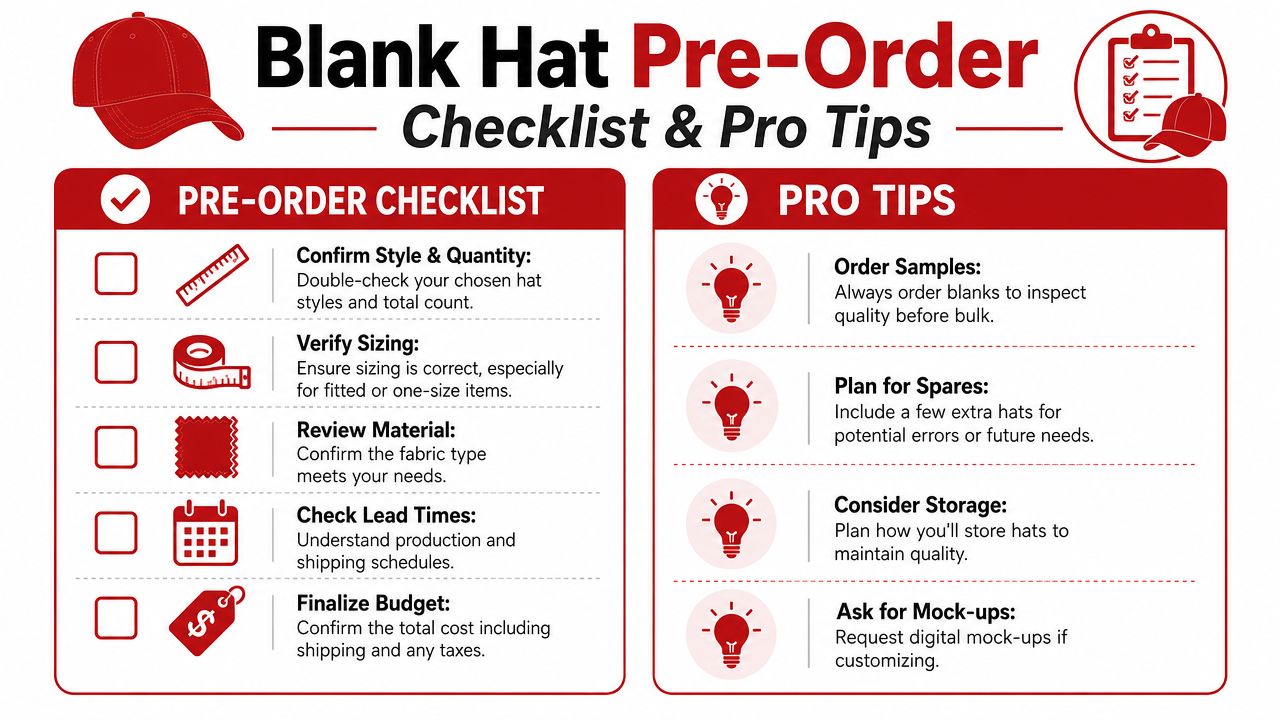
Pre-order checklist
Before you approve anything, confirm these items:
- Style and quantity: Make sure everyone is talking about the same exact hat, not just “a black snapback” or “a dad hat.”
- Fabric choice: Recheck whether the hat is cotton, polyester, nylon, or a blend. This affects wear, fading, and feel.
- Artwork file: Send the cleanest version you have. Vector art is ideal when available, but at minimum the file should be sharp and readable.
- Logo placement: Front, side, back, and patch positions all need to be specified.
- Closure and fit: Snapback, strapback, fitted, and flex styles won't suit every audience the same way.
- Delivery details: Confirm the exact ship-to address, recipient name, and any date the hats must arrive by.
Pro tips from the shop floor
Some choices save money without making the hat look cheaper.
- Simplify tiny details: Fine lines and small text often need cleanup anyway.
- Match the method to the logo: Don't force puff onto artwork that wants flat stitch or a patch.
- Order blanks or samples first: This matters more when the hats are for resale or a public-facing team.
- Build in extras: A few spare hats help with late additions, damaged units, or future photos.
Fast approvals save more time than rush requests. Most preventable delays start in the proofing stage.
Care matters too. Store finished hats in a clean, dry place. Don't crush structured crowns in overpacked boxes. For decorated black hats, gentle cleaning and air drying usually protect the look better than rough washing.
The short version
If the order is large, treat it like inventory, not swag. Confirm the blank. Confirm the logo. Confirm the deadline. Then approve the proof only when you'd be comfortable seeing that exact version on every hat in the box.
Launch Your Headwear Program with Confidence
A strong headwear program usually starts with a simple decision made well. Pick a blank black hat that suits the audience. Choose fabric based on how the hats will be worn. Use a decoration method that fits the artwork instead of chasing a look that doesn't serve the logo.
That's what keeps a first order from turning into a lesson you pay for twice.
Blank black hats work because they're flexible. They can look polished for staff, easygoing for events, and retail-ready for merchandise. The difference comes from the details you lock down before production starts. Style, structure, fabric, decoration, minimums, and timing all matter. None of them are hard to manage once you know what to ask.
If you're ready to move from ideas to an actual order, get your logo file together, narrow your style options, and quote the exact version you want. That's the fastest path to hats you'll be happy to hand out, sell, or reorder.
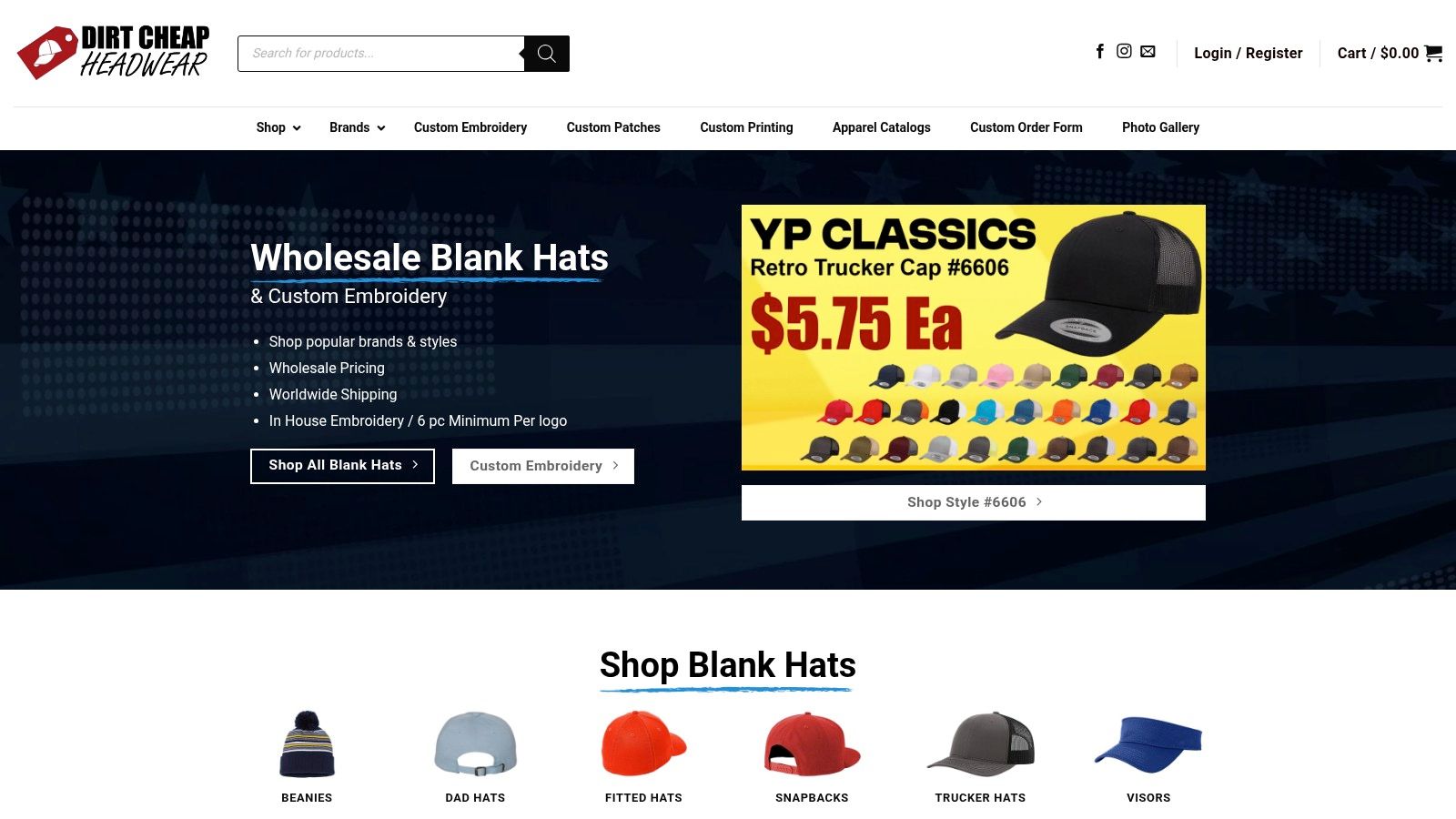
If you're ready to price out blank black hats or need help choosing the right style and decoration, Dirt Cheap Headwear makes it easy to source blanks, compare options, and get a custom order moving without guesswork.