
You notice a workout hat only when it fails. The brim starts bouncing during sprints. Sweat runs past the band and into your eyes. The crown turns heavy because the fabric soaked up everything your session produced. A hat that looked fine in the mirror suddenly becomes the most annoying thing you're wearing.
That's why the best hats for working out aren't just about style. They're about solving a specific problem for a specific kind of training. A runner needs something very different from a lifter. Someone training outdoors at sunrise has a different checklist than someone doing circuits in a packed gym. If you're buying for a team, a gym, or a brand, the stakes are even higher because one bad style choice gets multiplied across everyone wearing it.
A good workout hat should help you forget it's there. That usually comes down to material, construction, and how well the hat matches the way you move.
Why Your Workout Hat Isn't Just an Accessory
I've seen people put real effort into shoes, shorts, socks, and hydration, then grab the nearest old cotton cap on the way out the door. That works for about ten minutes. After that, the hat starts doing what bad gear always does. It distracts you.
A workout hat has one main job. Keep your head covered without making the session harder. If it can manage sweat, hold its shape, stay in place, and help with sun or glare, it earns its spot. If it slides, traps heat, or turns soggy, it becomes dead weight.
What a bad hat does to a good workout
The most common failure point is simple. Sweat control. When sweat reaches your eyes during intervals, lifting, or outdoor conditioning, your focus breaks. You stop thinking about pace or form and start thinking about wiping your face.
The next issue is movement. A hat that feels fine standing still can shift all over the place once you start running, jumping, rowing, or going upside down on a bench. That constant adjustment gets old fast.
A hat should disappear once the workout starts. If you keep touching it, it's the wrong hat.
The three things that matter most
When I help someone narrow down options, I look at three pillars first:
- Material: The fabric decides how the hat handles sweat, heat, and dry time.
- Construction: The shape of the crown and brim changes how stable the hat feels.
- Activity match: Running, lifting, yoga, field work, and outdoor training don't ask for the same design.
Treat your hat like any other piece of performance gear. You wouldn't wear lifting shoes for a long run. Same logic here. The right hat can improve comfort, keep your vision clear, and reduce fidgeting. That's not a small thing when you're trying to train well.
What Makes a Great Workout Hat Tick
The easiest way to judge a hat is to ignore the logo and study the build. Fabric first. Then airflow. Then structure. Then closure. Once you know what each part does, you can spot a good training hat in seconds.
Start with fabric, not color
A key reason workout hats became mainstream is the long shift away from cotton and toward synthetic performance fabrics. Modern exercise hats are commonly made from polyester or nylon because those materials dry faster and manage sweat better than absorbent cotton, which helps reduce the discomfort and extra weight of a hat that stays wet during training, as noted in this performance hat overview from Huega House.
That single choice changes everything. Cotton feels familiar, but it tends to hold moisture. Once it gets wet, it often stays wet longer than you want. During an easy walk, that may be tolerable. During a run, metcon, or long outdoor session, it usually isn't.
Synthetic fabrics are easier to recommend because they're built for repeated sweating and faster drying. They also tend to feel lighter once the workout heats up.
Workout Hat Material Comparison
| Material | Moisture-Wicking | Breathability | Dry Time |
|---|---|---|---|
| Cotton | Low | Moderate | Slow |
| Polyester | High | High | Fast |
| Nylon | High | High | Fast |
| Polyester with mesh panels | High | Very high | Fast |
Airflow matters more than people think
If your hat doesn't move heat out, your head feels cooked even when the rest of your outfit is dialed in. That's why mesh side or back panels, laser-cut vents, and lighter crown fabrics matter so much in warm conditions.
A lot of people confuse thick fabric with quality. For training, heavy often means hotter. Unless you need warmth, a lighter shell usually performs better.
Practical rule: If you're doing high-output work, choose the hat that feels slightly too light in your hand. It usually feels right once you start sweating.
Structure changes function
Not every baseball-style cap behaves the same way. Two hats can look nearly identical on a shelf and feel completely different during movement.
- Structured caps: These hold their shape through the front panels. They tend to feel more secure and more substantial. For lifting, outdoor work, or anyone who likes a stable brim that stays where it's supposed to, they're often the better choice.
- Unstructured caps: These have a softer crown and a more relaxed feel. They pack down more easily and can be very comfortable for casual gym sessions, travel, or low-profile wear.
- Flexible brims: Great for runners and anyone stuffing a cap into a pocket or gym bag between sessions.
For pressing, bench work, and machine-based lifting, many people like a lower-profile or unstructured cap because it feels less bulky against benches and pads. For outdoor strength sessions, a slightly more structured hat can provide better front coverage and a cleaner, more stable fit.
Closures decide whether the hat stays put
The closure is easy to ignore until the hat starts shifting.
- Snapback: Simple and adjustable, but some athletes find it less precise for movement-heavy sessions.
- Strapback or buckle closure: Usually gives a more exact fit and is often the safest all-around choice for training.
- Fitted styles: Clean feel, no adjustment hardware, but only if the size is right.
If you're buying online, closure style can be the difference between “good enough” and “I wear this every week.” Stability matters. The best hats for working out don't just wick sweat. They stay put without squeezing your head.
Choosing the Right Hat for Your Activity
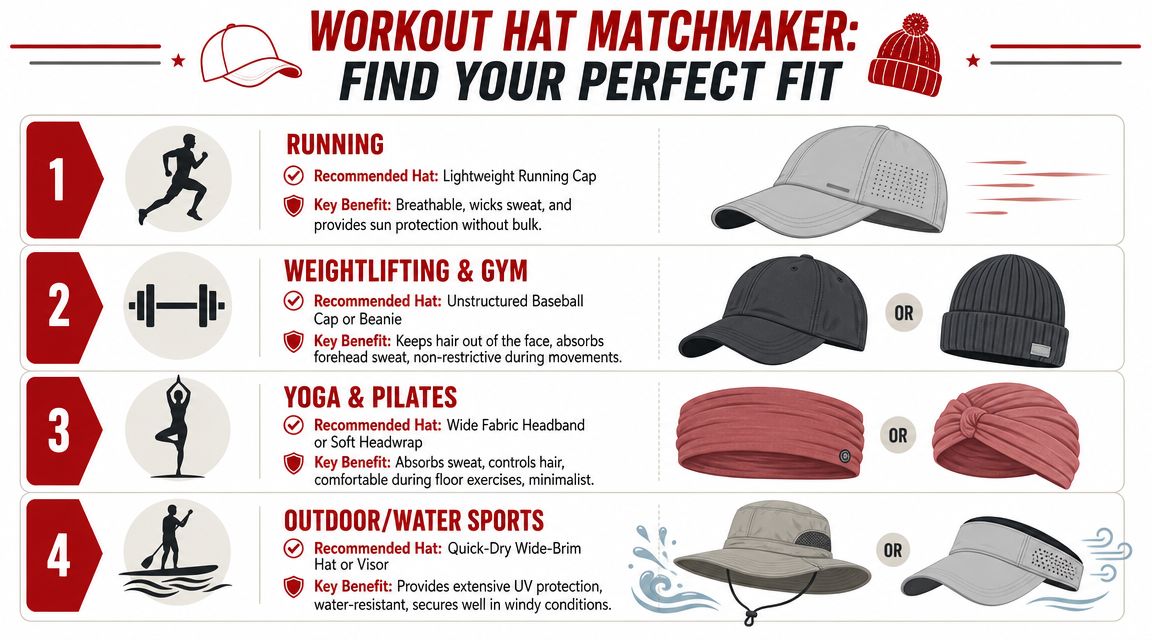
There isn't one perfect workout hat. There's a right one for the session in front of you. Start with your activity, then match the hat to the movement pattern, sweat level, and environment.
Running and outdoor conditioning
Runners usually need the most specialized setup. Outdoor training hats work best when they combine sun protection, fit stability, and optional reflective detailing. Runner-focused gear guidance also emphasizes airflow, while the brim or structured front helps reduce direct sun exposure to the face and eyes and reflective details can help with visibility in lower light, as described in Runner's World's running hat guide.
For running, prioritize:
- Low weight: Heavy crowns get annoying fast over distance.
- Ventilation: Especially through side panels or upper crown zones.
- A useful brim: Enough structure to block glare, not so stiff it feels clunky.
- A secure closure: You should be able to sprint without reaching up to fix it.
If you're browsing styles, it helps to look at examples from established mesh hat brands for breathable athletic builds. Even if you don't buy that exact style, it trains your eye to spot better ventilation layouts.
Weightlifting and general gym use
Lifters often need a different balance. You're usually not chasing maximum airflow the way a runner is. You need a hat that stays stable through setup, reps, and transitions between stations.
A good lifting hat usually has:
- A dependable sweatband: You want sweat contained before it rolls down your forehead.
- A controlled fit: Not loose, not tall, not floppy.
- Minimal interference with equipment: Benches, pads, and bars expose bad construction quickly.
For most gym lifters, a lower-profile baseball cap works better than a tall trucker shape. If the crown is too high, it can feel awkward during bench presses or any movement where your head contacts a surface. A soft beanie can also make sense in colder training environments or for warm-ups, but it's less versatile once the session turns hard.
HIIT, circuits, and CrossFit-style training
This category is where weak hats get exposed. Fast transitions, burpees, jumps, sled work, carries, and rowing all punish sloppy fit. You need breathability, but you also need a hat that won't bounce or rotate.
What usually works:
- Performance fabric over lifestyle fabric
- A closer fit over a roomy one
- A moderate brim over an oversized flat bill
An ultra-casual hat may survive bike intervals, then fail the moment you start box jumps or kettlebell work. For this kind of training, I'd rather have slightly more compression in the fit than slightly less.
Choose the most stable hat you can still forget about. Explosive workouts punish extra movement.
Yoga, Pilates, and lower-impact sessions
For floor-based or slower sessions, a full cap often isn't the best answer. If your forehead isn't the main issue and hair control is the bigger need, a soft headwrap or fabric headband often beats a brimmed hat. You don't want a brim pressing awkwardly into the floor during supine work.
Still, some people prefer a soft unstructured cap for walking into and out of class or for outdoor mobility sessions. Comfort matters more than structure here.
Water, trail, and adventure training
If your workouts involve wind, trail exposure, travel, or water-adjacent conditions, a quick-dry design becomes more important than a classic gym cap. Secure fit matters even more when conditions are less controlled. The more environmental variables you add, the less forgiving your hat can be.
Beyond the Basics Fit, Weather, and Hair
A decent hat can still fail if the fit is wrong, the weather is wrong for the fabric, or the design ignores how your hair sits during training. These details decide whether a hat gets worn weekly or left in the car.
Fit should feel secure, not tight
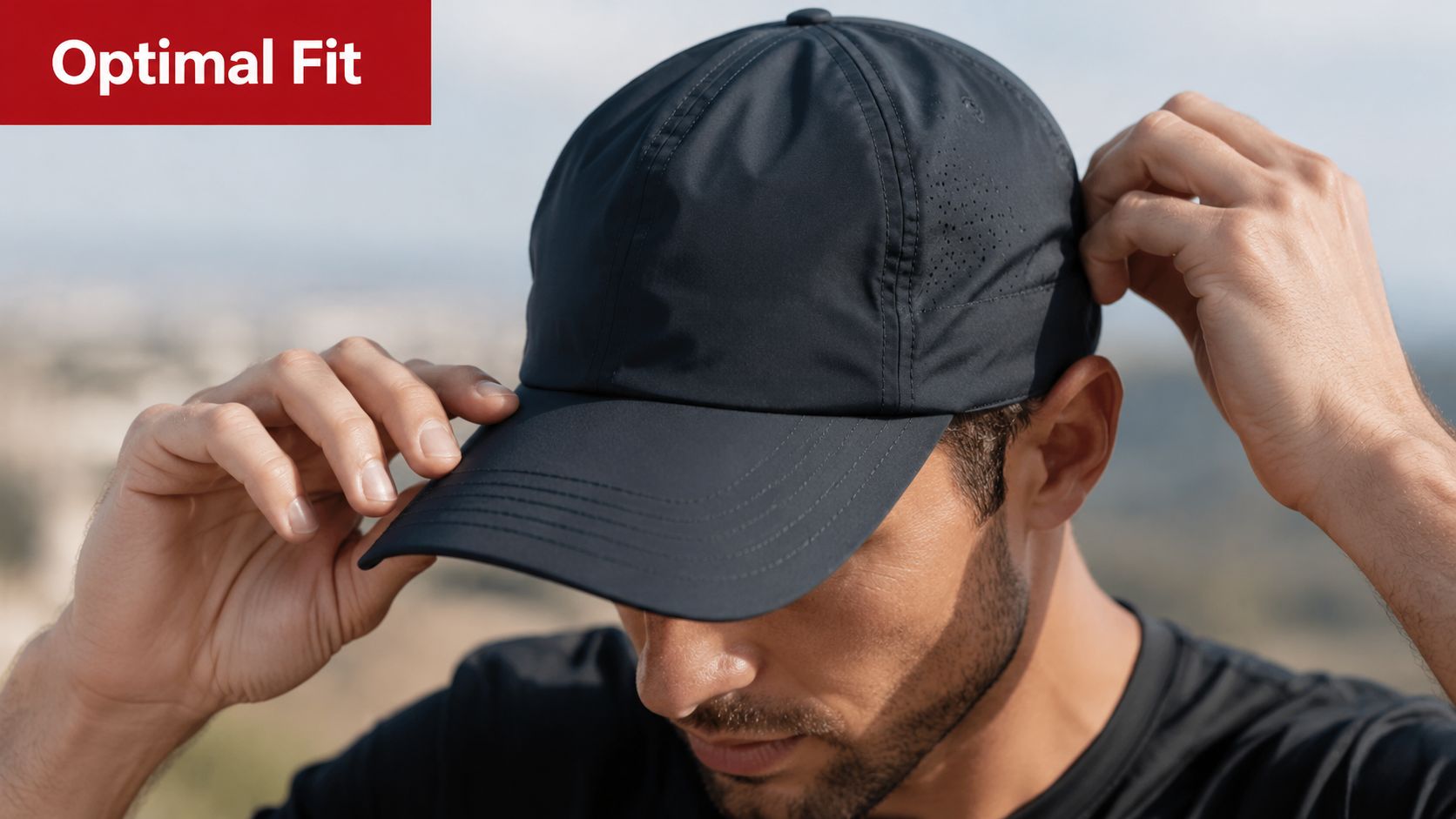
Start with the simplest test. Put the hat on, adjust it, and move. Nod. Turn your head. Simulate a jog. If the hat shifts right away, don't talk yourself into it.
A few fit cues help:
- The sweatband should sit evenly: Hot spots usually mean the size or shape is off.
- The crown shouldn't collapse into your eyes: That often happens when the hat is too large or too soft for the way you wear it.
- The closure shouldn't do all the work: If you have to crank it down to the last notch, the base fit probably isn't right.
For hot weather, lean lighter and more ventilated. For damp or variable conditions, fabrics that shed moisture and dry fast are easier to live with. If rain is part of the picture, a more technical shell can make a big difference, and looking at a water-resistant athletic cap style can help you spot features that hold up better outside.
Hair changes the fit equation
Many guides overlook a real gap in the market: fit and hair accommodation for women and people with long hair or braids. A lot of “best workout hat” content is still male-coded and doesn't address how hats behave with ponytails, buns, braids, or protective styles, even though those details affect stability, sweat pooling, and pressure points. Product assortments have started reflecting that need with ponytail hats and flexible performance styles, which you can see in active headwear assortments that include ponytail-friendly options.
If you wear your hair up, check for:
- Ponytail openings: Useful when you want the hat to sit lower without fighting your hair tie.
- Softer rear panels: Better for buns and bulkier styles.
- Less rigid seams: Helpful if you're prone to scalp pressure during longer sessions.
If you train outside often, hair health matters too. A hat reduces direct exposure on your scalp and part line, but your lengths still need care. This guide on protecting hair from sun damage is a useful companion if sun, dryness, and color fading are part of your routine.
Keeping Your Hat Fresh and Finding Your Next Favorite
A workout hat usually fails in two places first. It starts to smell because sweat sits in the sweatband, or it loses its shape because someone treats it like a gym towel and throws it into a hot wash cycle. Good care keeps performance fabrics doing their job, and it helps you judge whether you need a new hat or just need to wash the one you already own.

Performance hats rely on lightweight fabrics, airflow, and sweat management to stay comfortable during training. Orange Mud's technical hat guidance does a good job explaining why those details matter. The trade-off is simple. The lighter and more technical the fabric, the less abuse it tends to tolerate from heat, harsh detergent, and rough washing.
How to wash a workout hat without wrecking it
Washing a workout hat requires a gentler approach than washing cotton tees or socks.
Start with the least aggressive fix. Let the hat dry fully after each session. If it is only damp, that alone can prevent a lot of odor buildup. If it is loaded with sweat, salt, sunscreen, or chalk dust, rinse it soon instead of letting that grime bake into the fabric and sweatband.
A practical routine looks like this:
- Rinse sweat-heavy hats promptly: This matters most after long runs, hot classes, or outdoor sessions.
- Use mild detergent: Strong cleaners can break down fabric finishes and irritate the skin the next time you wear the hat.
- Skip high heat: Heat warps brims, shrinks inner bands, and can distort structured crowns.
- Air dry whenever possible: It protects shape better than a dryer and is safer for glued or fused components.
The same logic applies to other training accessories. Materials that dry fast and handle sweat well are easier to live with, which is part of why Nothing But Bands' nylon collection fits active use so well.
Buying for a team, gym, or brand
This part gets overlooked in consumer guides. The same features that matter to one athlete also matter when you are ordering hats in bulk for a staff team, run club, event, or merch line. You are still choosing for sweat level, climate, fit, and activity. You just have to make that choice for a group instead of one person.
That changes the buying process. A run club often does better with lightweight caps that dry fast and pack easily. A strength gym usually gets better long-term use from structured styles that hold their front panel shape, take embroidery cleanly, and stay put during lifts. Cheap promo hats often look fine on day one but get abandoned after a few hard sessions because the fabric traps heat or the fit gets sloppy.
If you are considering fitted athletic styles for a group order, a Flexfit sizing chart for choosing the right hat size helps avoid one of the most common ordering mistakes. Dirt Cheap Headwear also supplies blank hats and custom embroidery with low minimums, which makes it a practical option for smaller test runs as well as larger orders.
For a quick visual walkthrough on hat care and handling, this video is worth a look:
What to avoid when ordering custom athletic hats
The most common mistake is ordering for appearance first and training second.
Choose the blank based on how the hat will be used. If people will run in it, check breathability, sweatband quality, and weight. If they will lift in it, check crown structure, brim stability, and how the closure feels against benches or machines. If the hat needs to work for mixed use, pick the compromise on purpose instead of assuming one style will suit everyone.
Start with the blank people will keep wearing after the first sweaty session.
Look closely at the sweatband, closure, crown height, and fabric content. Those details decide whether your custom hat becomes part of someone's regular training kit or just another freebie left in a locker.
Your Perfect Workout Hat Awaits
The best hats for working out aren't one universal style. They're a match between your training, your sweat level, your environment, and your fit preferences. Once you start looking at hats that way, bad options become easy to spot.
That shift makes sense because workout hats have become a real performance category. In the 2010s and 2020s, brands and retailers increasingly separated running and training caps by sport-specific features such as flexible brims, sweat-wicking bands, and secure fit systems, which helped move these hats from casual add-ons into standard training gear, as reflected in dedicated exercise and fitness hat categories at sporting retailers.
If you want a visual example of what a modern technical style can look like, Swift Running's pink performance hat shows the kind of lightweight, activity-specific direction many buyers now prefer. And if you're deciding between fitted athletic options, a Flexfit hat size chart helps you avoid the most common sizing mistake.
Buy the hat that fits your workout, not just your outfit. That's how you end up with one you'll keep reaching for.
If you're sourcing workout-ready hats for a gym, run club, staff team, event, or merch line, Dirt Cheap Headwear is worth a look for wholesale blanks and custom embroidery. The key is simple. Start with a performance-minded hat people will want to train in, then add your logo.
Pingback: Custom Embroidered Running Hats: A Buyer's Guide for 2026 | Dirt Cheap Headwear