
Beanie Hats in Bulk: Styles, Materials & Customization
You're probably here because winter is getting close, your team or brand needs headwear, and the options all blur together after the first few supplier pages. One beanie looks cheap. Another looks great but might not stitch cleanly. A third has the right vibe, but you can't tell whether it's built for resale, giveaways, or both.
That's a normal place to start.
Most first-time buyers don't mess up because beanies are complicated. They mess up because they buy the right product for the wrong job. A soft slouch beanie can look great on a lifestyle brand page and still be a poor choice for a bold embroidered logo. A basic acrylic cuffed beanie can feel boring on paper and end up being the smartest buy in the whole order because it decorates well, packs easily, and works across a wider range of customers.
Your Guide to Buying Bulk Beanies
A small coffee shop owner I've seen this happen with usually starts the same way. They want something simple for staff, maybe a few extras to sell near the register, and they assume any knit cap with a logo will do the job. Then the questions start. Should it be cuffed or slouchy? Is acrylic too basic? Will embroidery look clean on rib knit? How many should they order if they're not sure what will sell?
Those are the right questions.
Beanie hats in bulk work best when you match three things before you ever ask for a quote: who will wear them, how the logo will be applied, and whether the beanie is meant for distribution or retail. A school booster club, a streetwear startup, and a construction company might all buy black knit beanies, but they should not all buy the same construction.
The blank is not just the product. It's the surface your brand has to live on.
That's where buyers save money and avoid disappointment. You don't need the most expensive beanie. You need the one that gives your artwork the best chance to look intentional, stay readable, and feel right for the use case.
Choosing Your Beanie Style and Material
Most buyers shop by appearance first. That's natural. But in bulk orders, style affects decoration, and material affects both feel and finish. If you choose those two pieces well, almost everything else gets easier.
Picking the right style for the job
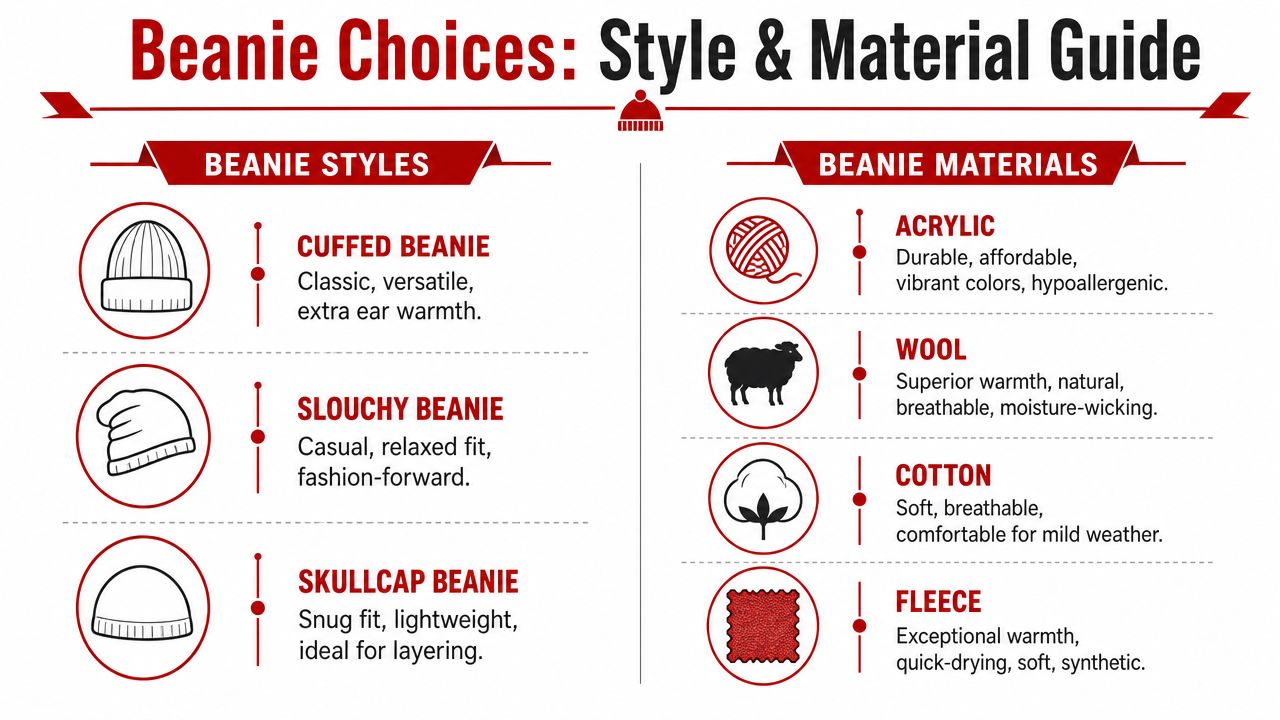
Here's the shortcut. If you want the safest, most flexible option, start with a cuffed beanie. The cuff gives you a stable front zone for embroidery or a patch, and the fold adds visual weight so the logo doesn't look like it's floating on a thin knit tube.
A slouchy beanie works when brand image matters more than logo dominance. It has a looser, more fashion-forward shape, but that extra drape can make front placement less predictable. It can still work well, especially with a smaller logo or subtle patch, but it's usually less forgiving than a cuffed style.
A skullcap or close-fitting knit cap is useful when the wearer wants a cleaner, lower-profile fit. These are practical for uniforms, outdoor crews, or under-hood layering. The trade-off is decoration space. You often have less room to work with, and the knit tension can make dense embroidery feel stiff.
Here's a simple comparison:
| Style | Best for | What works well | Common drawback |
|---|---|---|---|
| Cuffed beanie | Staff wear, teams, resale, promos | Embroidery, woven patches, bold front logos | Less fashion-driven than slouch styles |
| Slouchy beanie | Lifestyle merch, boutique retail | Small embroidery, understated branding | Logo placement can look less consistent |
| Skullcap | Uniform use, layering, practical wear | Minimal decoration, simple branding | Limited decoration area |
| Pom beanie | Teams, schools, spirited merch | Patches, embroidery with a playful look | Not every brand wants the extra visual detail |
If you're still narrowing it down, a classic stocking cap knit option is usually the cleanest starting point because it stays close to the category customers already recognize and buy.
Why acrylic keeps showing up in bulk orders
From a production-spec standpoint, bulk beanies are commonly built from acrylic knit or blended yarns because they balance warmth, elasticity, and decoration compatibility. One wholesale supplier describes a unisex beanie as a 64 g acrylic knit with a fold-up band, which matters because acrylic's low mass and stretch recovery make it suitable for scalable retail and promotional programs, while that fold-up band creates a more stable embroidery zone (unisex acrylic knit beanie spec).
That's the practical reason acrylic dominates. It's dependable.
Material trade-offs that matter
Not every buyer needs the same hand feel. Use this framework instead of chasing generic “premium” language:
- Acrylic: Best all-around choice for bulk decoration. It handles color well, stretches back into shape, and usually gives you fewer surprises on larger runs.
- Wool or wool blends: Better when warmth and texture matter more than easy, budget-conscious scaling. They can feel more premium, but they're not always the simplest base for every logo style.
- Cotton knits: Useful for lighter wear and softer hand feel. They can make sense for transitional weather, but they're usually not my first suggestion for a winter merch program that needs broad appeal.
- Fleece-lined or heavier builds: Worth considering for colder-use programs, but lining and thickness can affect how a decorated front panel sits and feels.
Practical rule: If this is your first beanie order, start with a cuffed acrylic knit in a neutral color unless you have a clear reason not to.
That choice isn't flashy. It's just hard to beat when you care about consistency, decoration quality, and fewer production headaches.
Customization Options From Embroidery to Patches
A blank beanie becomes merchandise when the decoration matches the knit. That's the piece many guides skip. They list embroidery, patches, and printing as if they're interchangeable. They aren't.
One of the biggest gaps in bulk buying advice is exactly this decision: how to choose the right beanie construction for decoration and resale. Most coverage stops at style names, even though buyers increasingly treat beanies as branded merchandise rather than simple winter basics, and logo visibility depends heavily on the build you start with (discussion of decoration and resale decision gaps).
Embroidery for the classic branded look
Direct embroidery is still the default for a reason. It's durable, familiar, and it gives a beanie a finished look without needing extra components. On a cuffed knit beanie, embroidery usually performs best because the folded band gives the machine a more stable target and the logo sits where people expect to see it.
This method works best when your design is clean. Bold text, compact icons, and simple linework usually translate better than tiny details. If your logo has very fine elements, ask yourself whether people need to read every detail from arm's length. On a beanie, they usually don't.
For buyers comparing options, wholesale beanies for embroidery are the safest place to start because the decoration method is already part of the product decision, not an afterthought.
Patches for texture and retail feel
Patches shift the look fast. They can make a basic knit beanie feel more like shelf merchandise and less like event swag. That's useful if you want perceived value without overworking the logo itself.
A few common patch directions:
- Woven patches: Good for cleaner detail and a flatter finish.
- Embroidered patches: More textured, more traditional, and often a strong match for bold logos.
- Leather-look patches: Better for heritage, outdoor, or gift-shop aesthetics than for loud promotional branding.
The catch is placement and edge control. On a soft or highly stretchy beanie, a patch can look slightly more rigid than the base fabric. That contrast can be attractive, but only when it looks intentional. If the patch is too large or the beanie too thin, the front can pucker.
If your logo is too detailed for direct embroidery, a patch often fixes the problem faster than trying to force tiny stitching into rib knit.
Printing when you want a lighter touch
Printing can work, but it's usually the third option on beanies, not the first. Knit texture doesn't behave like a flat tee or tote. The more textured or stretchy the surface, the more you need to think about how the print will sit, flex, and age.
That doesn't mean printing has no place. It can make sense for specific looks, lightweight applications, or designs that need a different visual finish than thread or a patch can provide. Just be careful not to pick printing because it sounds easy. On headwear, “easy” is often the wrong filter.
Match the decoration to the goal
Use this quick decision list before you approve artwork:
- Promotional giveaway: Go simple. A cuffed knit with straightforward embroidery usually gives the cleanest result.
- Retail merch rack: Consider a patch if the brand wants more texture and a stronger boutique feel.
- Uniform or staff wear: Choose readability over creativity. Clear front embroidery wins most of the time.
- Small test run: Don't over-design the first order. Pick one decoration method and one reliable placement.
The logo doesn't need to do everything. It needs to look intentional on the hat people are going to wear.
Sourcing Beanies Trusted Brands and Pricing
Once you know the build and decoration style you want, the next challenge is finding a supplier setup that matches your buying stage. That's where first orders often go off track. People compare unit prices too early and ignore the things that really change the outcome, like stock consistency, minimums, decoration setup, and shipping terms.
What to look for in a supplier
Wholesale beanie suppliers commonly position the category around large-volume merchandising, but some also emphasize no minimum order quantity for wholesale beanie hats. That combination matters because it shows how beanies moved from a basic knit cap into a standardized blank for decoration and resale, accessible to both larger programs and smaller buyers testing an idea (wholesale beanie ordering flexibility).
That flexibility matters more than most new buyers realize. If you're launching merch for the first time, the wrong minimum can trap you in too much inventory. If you're ordering for an event or established retailer, low minimums matter less than stock depth and predictable replenishment.
How pricing actually moves
Beanie pricing usually changes for practical reasons, not mysterious ones. These are the big levers:
- Blank quality and brand positioning: A basic acrylic knit and a more retail-oriented fashion beanie won't be priced the same, even before decoration.
- Order size: Larger runs usually spread setup and handling more efficiently.
- Decoration complexity: Dense embroidery, oversized logos, patch application, and multiple placements all affect the final cost.
- Color and SKU mix: One beanie color is simpler to decorate and pack than a mixed assortment.
- Timeline pressure: Rush work can make a normal order more expensive to process.
This is also where freight terms matter. If you're comparing suppliers across states or countries, it helps to understand how to reduce e-commerce shipping risks before you commit to a large shipment, especially when ownership and liability can change at different points in transit.
Trusted brand thinking without overcomplicating it
Buyers often ask which brand is “best.” That's usually the wrong question. A better question is which blank fits your use case with the fewest compromises.
For practical ordering, think in tiers:
| Buying need | Better blank profile |
|---|---|
| Giveaways and broad promotions | Simple acrylic knit with easy stock availability |
| Team and school merch | Cuffed styles that decorate cleanly and reorder easily |
| Retail racks and boutiques | Styles with stronger hand feel, more shape, or patch-friendly construction |
| Small business test runs | Low-minimum blanks with straightforward decoration options |
If you want a broad starting point, wholesale winter beanies are easier to evaluate when you compare them by cuff depth, knit stability, and decoration fit instead of trying to decode every marketing label.
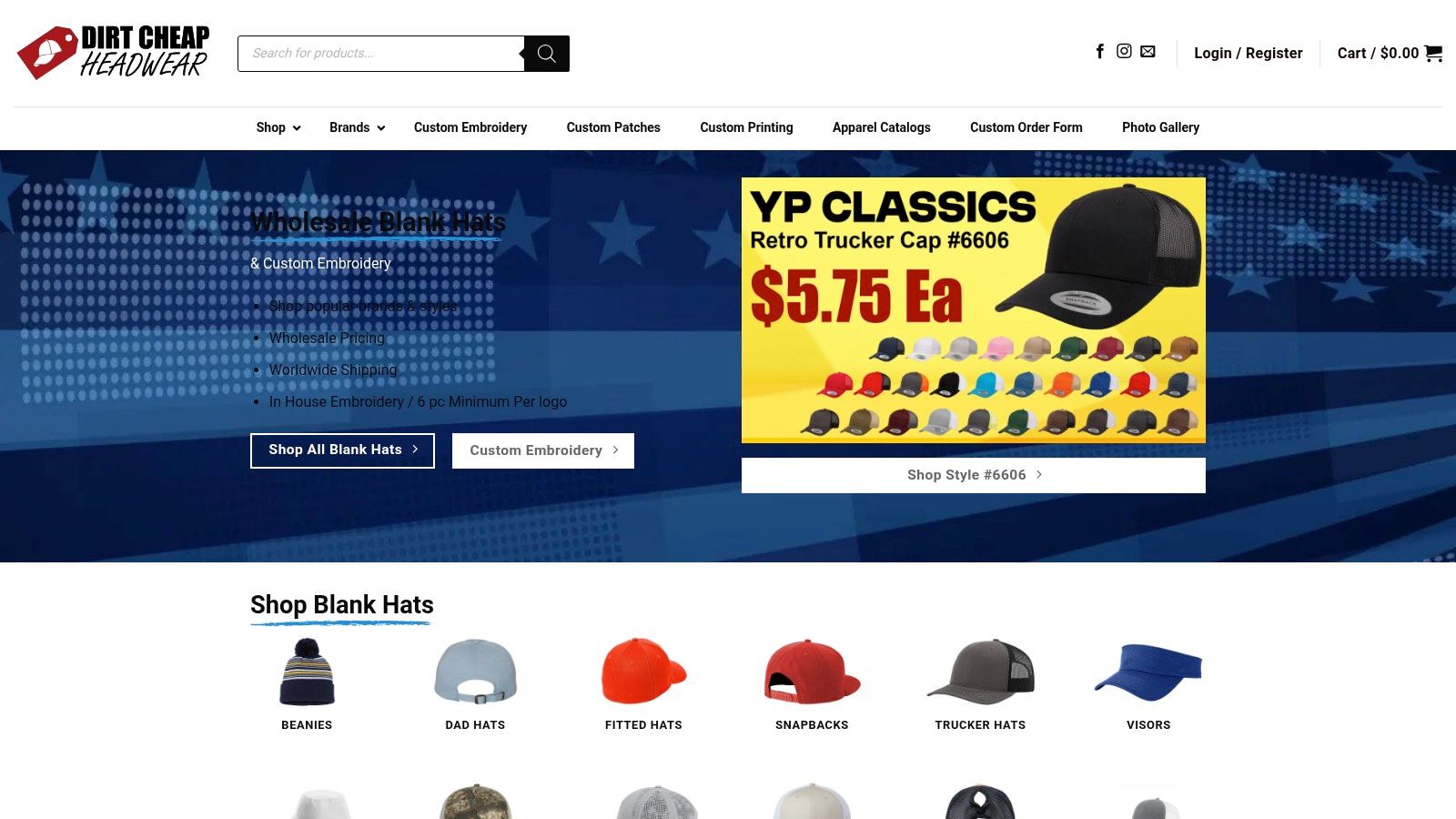
One practical example in this category is Dirt Cheap Headwear, which sells wholesale blanks and custom-decorated headwear with low minimum embroidery runs. That kind of setup is useful for buyers who want one vendor handling both the beanie and the finish.
Cheap and low-risk are not the same thing. The cheapest blank can become the most expensive choice if the logo looks weak or the reorder doesn't match.
The Bulk Ordering Workflow From Quote to Delivery
Most bulk beanie orders run smoothly when the buyer treats the process like product development, not just shopping. You're not only picking a hat. You're approving a finished branded item that has to look right, arrive on time, and make sense in cartons, on shelves, or in staff bags.
Step one through three
The beginning should be simple, but detailed.
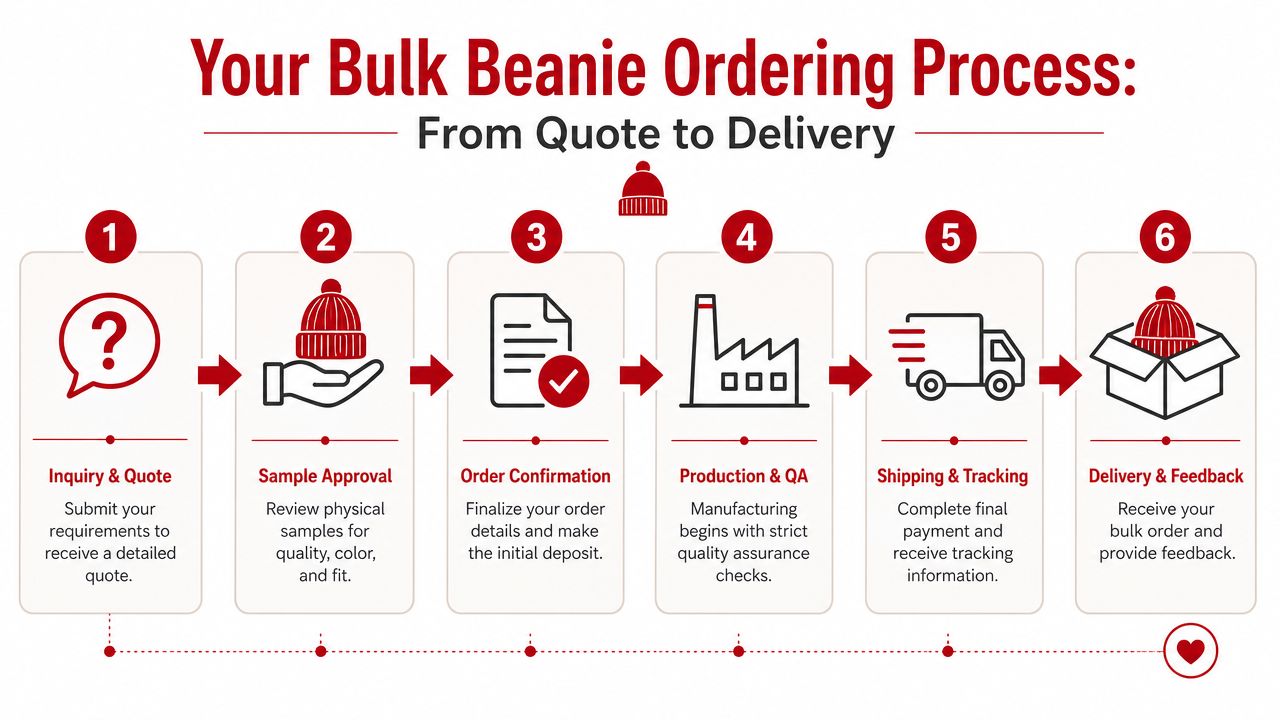
Inquiry and quote
Send the beanie style, color, quantity, logo file, and your deadline. If you skip one of those, the quote usually becomes less useful. “I need black beanies with our logo soon” is a conversation starter, not a production brief.Sample or proof review
Don't just approve the first mockup because the art looks centered. Check scale, thread coverage, placement height, and whether the logo still reads well at beanie size.Order confirmation
Once details are approved, lock the exact SKU, decoration method, color choice, and shipping destination. At this stage, confusion gets expensive if there's still anything vague.
Step four through six
Production is where standardized ordering pays off. Bulk beanie procurement is often optimized around case-pack economics, not unit pricing. One wholesale listing specifies a case of 50 adult knit beanies, all black and one size fits all, which shows how buyers benefit from a standardized base SKU that simplifies packing, replenishment, and decoration (case-pack example for adult knit beanies).
That matters because your workflow changes when the product arrives in clean, repeatable units instead of a messy assortment.
- Production and quality control: Good suppliers check the sew quality, placement consistency, and overall finish before the order leaves.
- Shipping and tracking: Confirm carton counts, ship method, and arrival expectations early, especially if the beanies support an event or launch date.
- Receiving and inspection: Open cartons as soon as they land. Check a sample across multiple boxes, not just the top item in one carton.
Approving the art is not the end of the job. Receiving the order and checking it quickly is part of the buying process too.
One extra step for cross-border orders
If your order is moving internationally, customs paperwork can slow things down if product classification isn't handled cleanly. Buyers shipping into Canada should review guidance on apparel classification in Canada before the goods move, especially if they're combining beanies with other apparel items in the same shipment.
A short workflow checklist
Use this before you place the order:
- Confirm the exact beanie construction: cuffed, slouchy, skullcap, pom, or another specific build
- Approve decoration at real scale: not just enlarged art on a screen
- Ask how the goods are packed: especially if you need them split by location or event group
- Verify the in-hands date: not just the ship date
- Inspect immediately on arrival: enough time to fix an issue is part of the project plan
That small discipline is what keeps a bulk order from turning into a scramble.
Pro Tips for Different Beanie Buyers
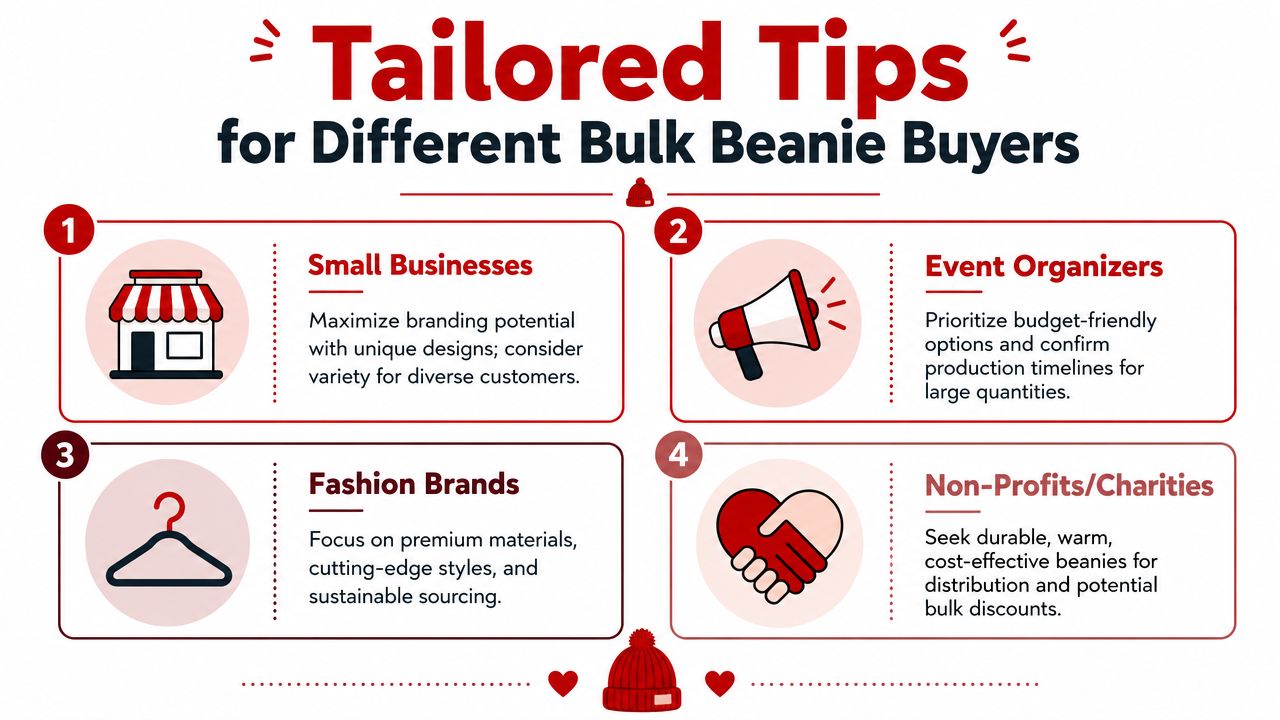
Different buyers should not use the same decision rules. The right order for a staff uniform program is often the wrong order for an online merch drop. If you treat every beanie like generic winter swag, you leave value on the table.
The broader market supports that thinking. One industry estimate places the global hat market at USD 9.5 billion in 2022, with a projection to reach USD 15.3 billion by 2029, a 7.3% CAGR from 2023 to 2029, which reinforces that headwear remains a significant category for resale and promotional programs (global hat market estimate and projection).
For small businesses
Keep the first order narrow. One dependable style, one or two colors, one logo treatment. You're not trying to prove you can offer every option. You're trying to learn what your customers or staff will wear.
Choose a beanie that can serve two jobs if possible. A cuffed knit with clean embroidery can work for employee wear and for light retail if the branding is subtle enough.
For sports teams and schools
Spirit matters, but readability matters more. Team initials, mascots, and short wordmarks usually perform better than busy crest artwork on knit headwear. If the beanie is for sideline use, cold bus rides, or booster merch, durability and easy reordering should drive the decision.
Pom styles can fit well here if the identity is more energetic, but don't force them if the program needs a cleaner look.
For resellers and apparel brands
Think shelf appeal first. If the beanie is a retail item, ask whether the blank supports the brand story. Sometimes that means a patch. Sometimes it means a softer knit or a more fashion-forward shape. Sometimes it means not overbranding the front.
Once the samples are ready, product presentation matters. Strong listings and clean images can do a lot of the selling work, so it helps to study guides on photographing hats that sell before the launch.
A beanie that looks average in person usually looks worse online. A beanie with clean shape and disciplined branding usually photographs well.
For event planners and nonprofits
Your biggest risk is usually timing, not style. Pick a construction that decorates cleanly, packs easily, and won't cause sizing questions. Beanies are helpful here because they're broadly wearable and simple to distribute.
For donation programs or volunteer gear, warmth and practicality usually beat trend-driven details. For branded event merchandise, simple front decoration on a reliable base almost always wins over complicated concepts that need too much explaining.
Your Next Steps to Awesome Beanies
A good bulk beanie order comes down to a few decisions made in the right order. Start with the use case. Then pick the construction that supports it. After that, choose the decoration method that gives your logo the clearest, most wearable finish.
If you're buying beanie hats in bulk for the first time, don't try to solve every possible future need in one order. Test a style that's easy to reorder, easy to decorate, and easy to wear. That usually means a cuffed knit in a practical material with straightforward front branding. If you're building a retail program, spend more time on how the finish looks and feels. If you're buying for a giveaway, spend more time on simplicity and logistics.
The easiest next move is to turn the idea into an actual quote. Real inventory, real decoration, and a real deadline will narrow the choices fast.
If you're ready to price out a run, send your logo, preferred beanie style, color, quantity, and deadline to Dirt Cheap Headwear. A real quote will tell you more than another hour of browsing, and it's the fastest way to find out which beanie setup fits your budget and your brand.
Pingback: Best Hats for Work Uniforms for Every Crew | Dirt Cheap Headwear