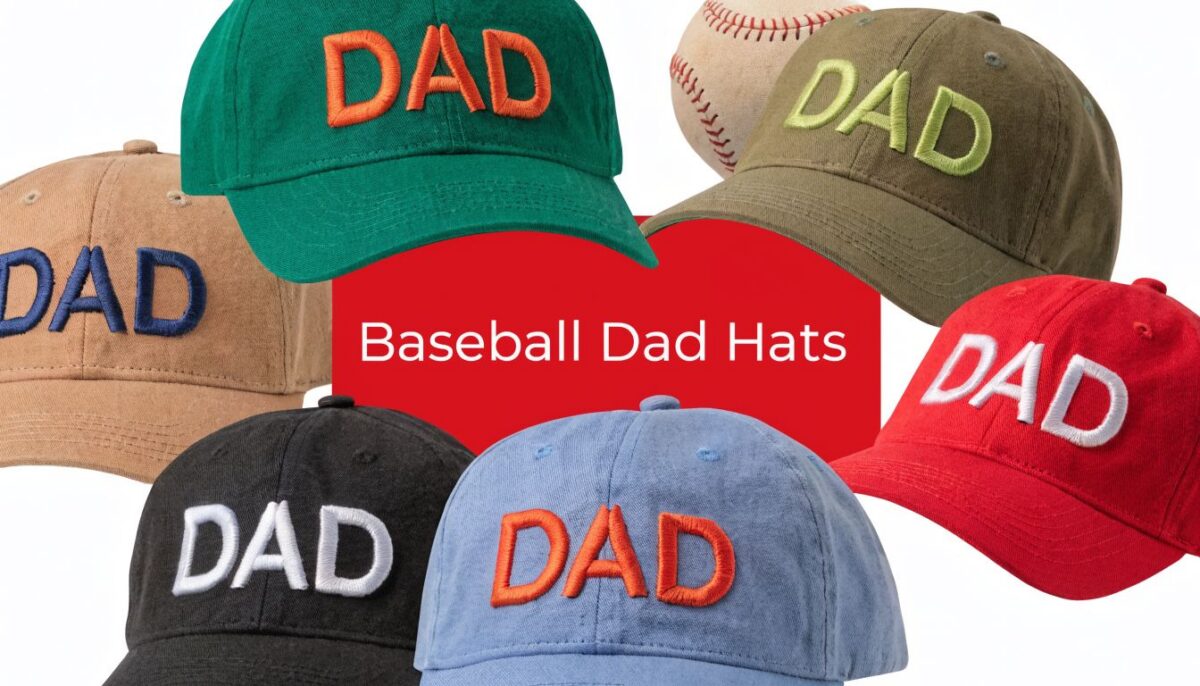
You’re probably in one of a few spots right now. You need merch for a staff team, a rec league, a school event, a fundraiser, or a brand drop, and every hat option online is starting to blur together. Some look too stiff. Some feel too trendy. Some seem cheap in photos, and some have decoration limits that nobody mentions until you’re already deep into a quote.
That’s usually when baseball dad hats rise to the top.
They’re easy to wear, forgiving on fit, and friendly to a wide range of logos. More important for buyers, they work in everyday settings. People keep them, wear them, and throw them on without thinking. That matters a lot more than picking the flashiest style on a wholesale sheet.
Why Baseball Dad Hats Are Your Secret Weapon for Branding
A buyer usually reaches for dad hats after a rough first pass through the wholesale catalog. The snapbacks look too stiff for everyday wear. The fitted options create size-collection problems. The trendy silhouettes can date a merch run fast. Dad hats solve those purchase headaches while still giving decorators enough room to produce a clean result.
That mix matters if you are ordering for a business, team, school, event, or resale shop. You are not just choosing a hat you personally like. You are choosing a blank that has to fit a broad group, accept decoration well, stay inside budget, and still look good once the box lands.
Dad hats do that job better than many other cap styles because they feel casual without looking sloppy. They read as branded merch, not costume uniform. For a coffee shop staff order, a brewery promo run, a booster club fundraiser, or a first private-label drop, that balance is hard to beat.
One more practical advantage gets missed. The softer shape tends to make logos feel more natural on the head, which helps smaller left chest style marks, simple wordmarks, and modest front embroidery look intentional instead of overbuilt. If you need a clearer comparison before you choose a blank, this guide to structured vs unstructured hats helps explain where dad hats sit in the lineup.
Why buyers keep choosing this style
- Broad use across order types: Dad hats work for employee uniforms, school stores, fundraiser merch, artist drops, event giveaways, and retail shelves.
- Lower fit friction: Adjustable closures cut down on the back-and-forth that comes with fitted caps and mixed-size groups.
- Good branding discipline: The profile supports logos without making every design look oversized or aggressive.
- Strong repeat wear potential: A hat that feels easy to throw on usually gets worn more often, which is what buyers want from branded headwear.
- Fewer costly surprises: In many cases, dad hats are easier to approve across different age groups and style preferences than truckers or high-profile snapbacks.
Here is the short version I give new customers at the shop. If the goal is to please the widest range of wearers and keep decoration straightforward, start with a dad hat and only switch if your brand clearly needs a different shape.
Presentation still counts. A clean mockup or product photo can change how customers judge the same blank, especially if you are selling online or pitching a batch to a client. For that side of the job, MerchLoom's insights on professional product photos are useful because they show how to make merch look polished and accurate without turning a simple shoot into a full production.
The Anatomy of a Perfect Baseball Dad Hat
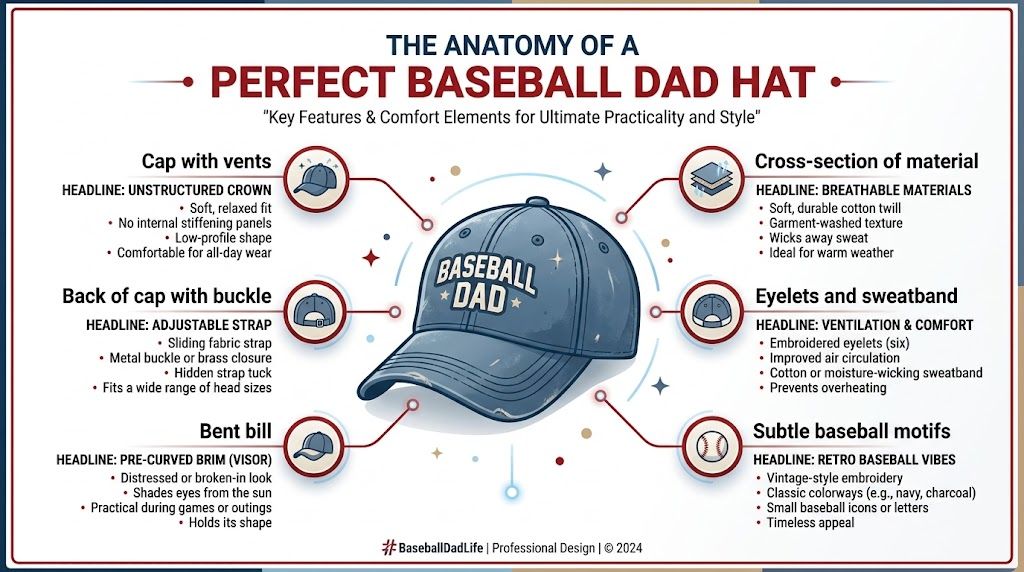
The difference between a dad hat and a generic baseball cap is mostly in the build. Once you understand the crown, brim, and closure, you can spot the right blank fast and avoid ordering something that feels wrong the second it comes out of the box.
The six-panel unstructured crown
A dad hat is defined by its six-panel unstructured crown. That means the crown is made from six triangular fabric panels sewn together, and it doesn’t have the rigid reinforcement that gives structured caps their taller, stiffer shape. The result is a low-profile cap that sits closer to the head and breaks in naturally.
That softer build is a big deal for comfort. It bends, packs, and wears differently than a structured cap. It also changes how the logo presents. Instead of looking like a billboard, the artwork follows the curve of the front panels. For many brands, that softer presentation looks more natural.
If you’ve ever wondered why one cap feels casual and another feels like part of a uniform, this is the reason. If you want a closer comparison, this guide on structured vs unstructured hats lays out the practical differences clearly.
Why six panels matter for decoration
The six-panel layout gives you a front decoration area with a center seam. That seam matters. Some logos stitch beautifully across it. Others don’t.
Here’s what tends to work well on baseball dad hats:
- Simple wordmarks: Clean text with decent letter thickness usually runs well.
- Badge-style logos: Circles, arches, and stacked layouts often suit the low-profile front.
- Small left chest style marks: A compact icon on the front of the hat can look sharp and understated.
What tends to cause trouble:
- Tiny text: Small letters can fill in during embroidery.
- Heavy gradients: Thread can’t reproduce print-style shading cleanly.
- Wide, rigid layouts: Long horizontal logos may fight the curve and seam.
A soft crown forgives a lot in wear, but it doesn’t forgive bad artwork. Simplifying the logo almost always improves the finished hat.
The low-profile curved brim
The brim is the second giveaway. Dad hats use a curved brim, not the flatter visor you’d expect on many snapbacks. That curve gives the hat its familiar, easy shape and a less aggressive silhouette on the head.
It also serves a practical purpose. Dad hats are rooted in baseball, and the curved brim is part of what made caps useful on the field long before they became lifestyle merch. For everyday buyers, that means the hat looks right at a game, on a delivery route, behind a coffee bar, or at a weekend market.
A curved brim is also friendlier to a wider audience. Plenty of people try on a flat-brim cap and feel like they’re wearing someone else’s style. The dad hat avoids that reaction.
The adjustable strap in the back
The third defining feature is the strapback closure. Most baseball dad hats use a fabric strap with a metal buckle or similar adjustable setup. That’s one of the biggest reasons they’re such a safe wholesale buy.
You don’t need to collect fitted sizes. You don’t need to guess who’s between sizes. You don’t need to split inventory into a stack of different SKUs just to cover a mixed group.
A good strapback should do three things:
| Feature | What to check | Why it matters |
|---|---|---|
| Closure feel | Smooth buckle movement | Easier for the wearer to fine-tune fit |
| Strap finish | Clean tuck or neat tail | Makes the hat look finished from the back |
| Adjustment range | Enough room for varied head sizes | Cuts down on fit complaints in group orders |
What a well-built dad hat should feel like
When you hold a solid blank, you should notice a few things right away.
- The crown should flex: If it feels stiff in the front, you may be looking at a low-profile structured cap instead of a true dad hat.
- The brim should already have shape: A natural curve looks more finished out of the box.
- The hat should sit low, not tall: That lower profile is part of what makes the style wearable for so many people.
This is one of those categories where small construction details make a huge difference. Two hats can look similar in a thumbnail and feel completely different in person.
Choosing Your Material Sizing and Brand
Once you’ve settled on the shape, the next decision is the blank itself. Material, fit, and brand choice affect how the hat feels in hand, how it embroiders, and whether the order lands as budget merch or something people treat like a favorite cap.
Material choices that actually change the result
Cotton chino twill is the classic starting point for baseball dad hats. It has enough body to hold stitching cleanly, but it still keeps that soft, casual profile. If you want a standard everyday blank for staff wear, giveaways, or team orders, this is usually the safest lane.
Washed cotton has a softer, already-broken-in feel. It tends to look more vintage and a little less crisp, which can be perfect for breweries, coffee brands, music merch, and lifestyle projects. The trade-off is that the hat may present the logo in a more relaxed way, which is great for some brands and wrong for others.
Blends can be useful when you need a slightly different hand feel or extra durability, but they vary a lot by manufacturer. The main thing to watch is surface texture. Some blends are smooth and embroidery-friendly. Others can make fine detail look rougher than expected.
Quick material comparison
| Material | Feel | Best for | Watch out for |
|---|---|---|---|
| Cotton chino twill | Classic, sturdy, clean | Team hats, uniforms, general merch | Can feel less vintage than washed styles |
| Washed cotton | Soft, worn-in, casual | Lifestyle brands, cafes, event merch | Artwork may look less sharp if overly detailed |
| Cotton blends | Depends on mill and finish | Buyers wanting a specific feel or price point | Inconsistent texture between brands |
The blank should match the brand mood. Crisp logos on a heavily washed hat can feel mismatched. Relaxed artwork on a clean twill hat usually works better than people expect.
What OSFM really means
Most dad hats are sold as OSFM, or one size fits most. That works because the style uses an adjustable back closure instead of fixed fitted sizing. In practical buying terms, it means one carton can serve a mixed staff, a school group, or a merch launch without the sizing spreadsheet headache.
That doesn’t mean every OSFM hat fits exactly the same. Some crowns sit shallower. Some have more depth. Some straps allow easier adjustment than others. If you’ve got a picky audience, ask for details on profile and closure style, not just the OSFM label.
Brands worth knowing
A few names come up again and again for wholesale baseball dad hats because they stay consistent.
- Richardson: Known for dependable build quality and a broad range of blanks. Good choice when you want a familiar standard.
- YP Classics and Flexfit: Strong option if you want modern blank choices and solid consistency across colors and styles.
- New Era: Useful when the buyer wants a recognizable brand name attached to the cap itself.
- Valucap: Often a practical budget option for larger orders where price sensitivity matters.
- Legacy: Good fit for buyers chasing a softer, more lived-in look.
The right brand depends on what you’re optimizing for. If the logo is simple and the event budget is tight, a value-oriented blank may be the smart move. If the hats are part of a retail line, hand feel and finish start to matter more.
Styling Dad Hats and Why They Work for Branding
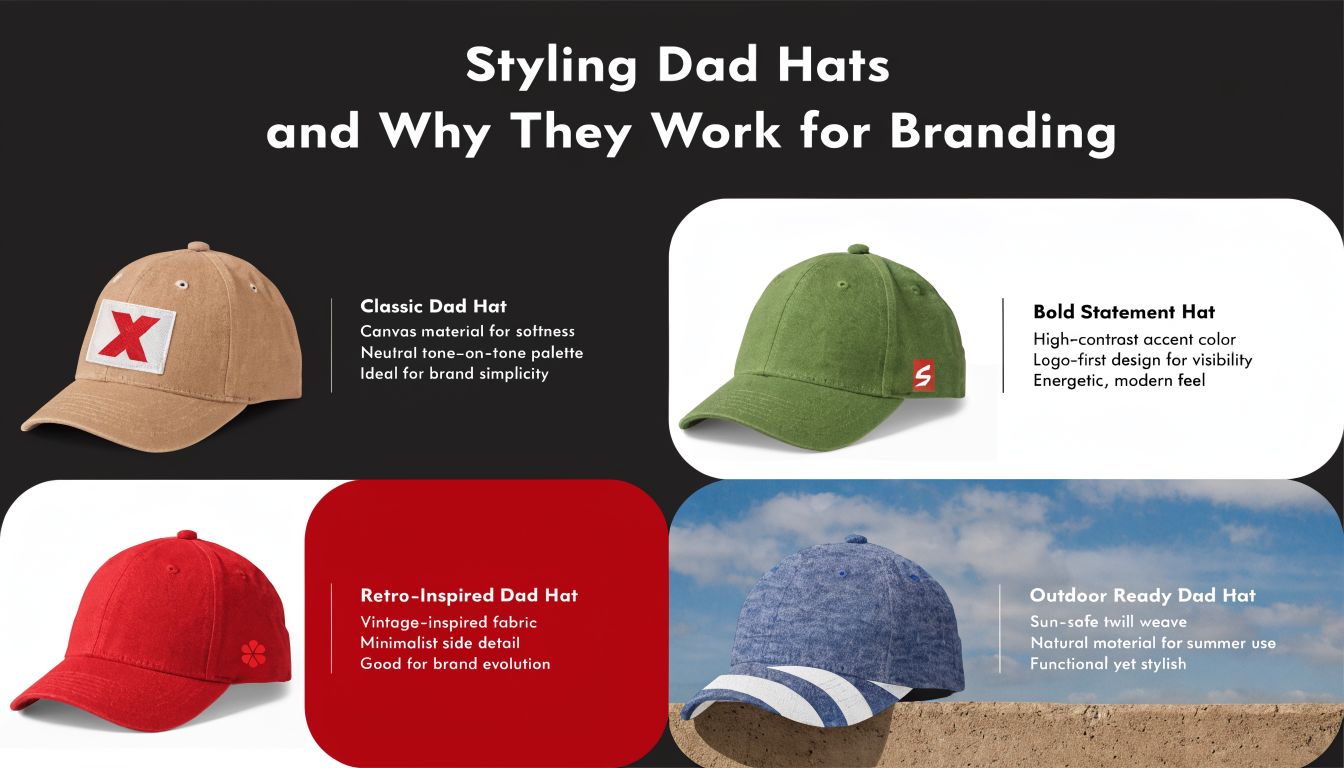
Baseball dad hats work because they don’t feel like hard sell merch. They feel like something someone would wear anyway. That difference matters more than most buyers realize.
The style got a major push in the 2010s, helped by a 200 percent social media influencer boost on Instagram, which shifted attention away from the structured fitted caps that dominated the 2000s and toward relaxed-fit dad hats, according to NotchGear’s look at baseball cap evolution. That same relaxed look is why brands still lean on them when they want an authentic, less corporate image.
The hat supports the logo instead of competing with it
A lot of branded apparel fails because the base product has too much personality before the design ever touches it. Loud shape, loud trim, loud color, loud patch. The logo has to fight for attention.
Dad hats solve that by being visually quiet.
A curved brim, low crown, and soft front panel create enough style to feel current, but not so much that the cap becomes the whole story. That makes them useful across very different kinds of buyers.
- Coffee shop staff: Small front logo, neutral cap color, easy everyday uniform piece.
- Youth league orders: Parents, coaches, and volunteers can all wear the same style without it feeling too sporty or too fashion-driven.
- Creator merch: A subtle embroidered mark can feel more like apparel than promo swag.
- Event gear: Coordinators and crew members look organized without looking over-uniformed.
Different branding moods on the same silhouette
What I like about baseball dad hats is how much they change with small design decisions. The same basic blank can read clean, vintage, outdoorsy, collegiate, or minimalist depending on thread choice and logo scale.
A few common combinations work especially well:
| Brand mood | Hat color direction | Decoration style |
|---|---|---|
| Minimal | Black, navy, stone | Small flat embroidery |
| Vintage | Faded pigment tones | Washed cap with distressed-style art |
| Premium casual | Khaki, forest, cream | Tonal embroidery or understated patch |
| Team spirit | School colors | Front logo with side detail |
The most wearable branded hats usually don’t scream. They signal.
That’s the sweet spot for a lot of businesses. If the wearer feels like the hat fits their style first and your brand second, they’ll wear it more often. And every extra wear is more useful than a louder design that only looks good in the box.
A Deep Dive into Custom Decoration Options
A dad hat can look polished in the mockup and disappointing in the carton if the decoration method doesn’t match the cap, the logo, and the order size. That happens all the time on first wholesale runs. Buyers focus on the blank, then learn too late that stitch count, panel shape, and file setup decide whether the finished hat looks retail-ready or rushed.
That gap shows up most with business orders, team programs, and resale merch. Buyers are usually comparing front logo options, asking about low minimums, and trying to keep repeat orders consistent across colors and seasons. Consumer style articles rarely cover that part.

Flat embroidery for most orders
Flat embroidery is still the safest choice for most custom dad hat programs. It holds up well, reorders cleanly, and suits the soft front of an unstructured cap better than bulkier treatments. For staff uniforms, school stores, event merch, and brand giveaways, this is usually the first method I recommend.
It works best when the logo is built for thread, not just for print. Small counters fill in. Thin outlines break up. Tiny text that looks sharp on a screen often turns muddy once it’s stitched on a curved front panel.
Use flat embroidery when:
- Your logo has moderate detail: Clear shapes, readable text, no microscopic elements.
- You need consistency across reorders: Flat embroidery is easier to repeat from batch to batch.
- You want the broadest wearability: It reads clean without making the hat feel overdesigned.
When 3D puff works and when it doesn’t
3D puff embroidery can look strong, but only with the right artwork and the right expectations. Dad hats have a soft, low-profile crown, so they don’t support puff the way a structured snapback does. That’s the trade-off. You can get bold dimension, but only on simple shapes with enough surface area.
Good uses for puff on baseball dad hats:
- Larger initials
- Bold block lettering
- Simple icons with thick, open shapes
Poor uses:
- Fine script
- Detailed mascots
- Logos with thin interior spaces
If a shop approves every logo for puff without edits, press them on how the file will be simplified and how much height the crown can realistically hold.
Patches and mixed decoration
Patches solve problems direct embroidery can’t always solve on a soft cap. If your logo has fine linework, small text, or a badge-style layout, a patch often gives a cleaner result than stitching straight into the front panel.
The patch type matters:
- Embroidered patches suit bold logos with texture.
- Woven patches hold finer detail and smaller lettering.
- Leather-style patches work well for outdoor brands, trades, and premium casual merchandise.
For a first wholesale order, simpler is better. One decoration method, one placement, and one approved logo version will reduce proofing errors and make reorders easier.
Your artwork file matters more than buyers expect
Production problems often start with the file, not the machine.
Here’s the practical breakdown:
| File type | Good for | Not ideal for |
|---|---|---|
| Vector art | Clean logo setup, redraws, consistent scaling | Photo-based graphics |
| High-resolution raster | Reference use, mockups | Precise embroidery setup if edges are rough |
| Low-resolution screenshot | Almost nothing | Production approval |
Vector art gives the decorator a clean starting point. If you only have a PNG or a screenshot from social media, expect cleanup work before digitizing. That is normal, but it adds time and can introduce avoidable changes if nobody confirms the redraw against the approved logo.
For buyers comparing stitch methods and setup requirements, this guide to custom stitching on hats gives a useful baseline on embroidery services and low-minimum custom headwear.
The proofing process buyers should take seriously
A proof is the last low-cost correction point in the job. After approval, every mistake gets more expensive.
Check each proof for:
- Logo size: Dad hats have limited front height. Oversized art can crowd the crown fast.
- Placement: Centered should mean centered on the actual seam and panel shape, not just centered in a flat mockup.
- Thread color: Brand colors often need thread substitutions. Confirm them.
- Text readability: If it is marginal on the proof, it will be worse in production.
- Extra locations: Side and back embroidery should be listed separately, with size and position shown.
Teams handling a lot of proof approvals and customer questions sometimes use workflow tools to keep communication organized. Some evaluate IllumiChat's AI solutions for support and response handling during busy custom order cycles.
Low minimums and practical order planning
Low minimums are useful for pilot programs, staff test runs, and small retail drops. They are less useful when the order has too many undecided variables. A six-piece minimum sounds flexible, but it will not save a project with loose color counts, changing logo files, or a deadline that leaves no room for revisions.
Before approving a batch, lock down these details:
- Final quantity by color
- Use case: resale, uniforms, fundraiser, event, or promo
- Approved logo version
- Decoration method by location
- Real production window plus transit time
The best custom orders are usually the least dramatic. Clear art, a method that suits the cap, and a proof that gets reviewed carefully will beat a flashy concept with poor setup almost every time.
The Smart Way to Buy Wholesale Baseball Dad Hats
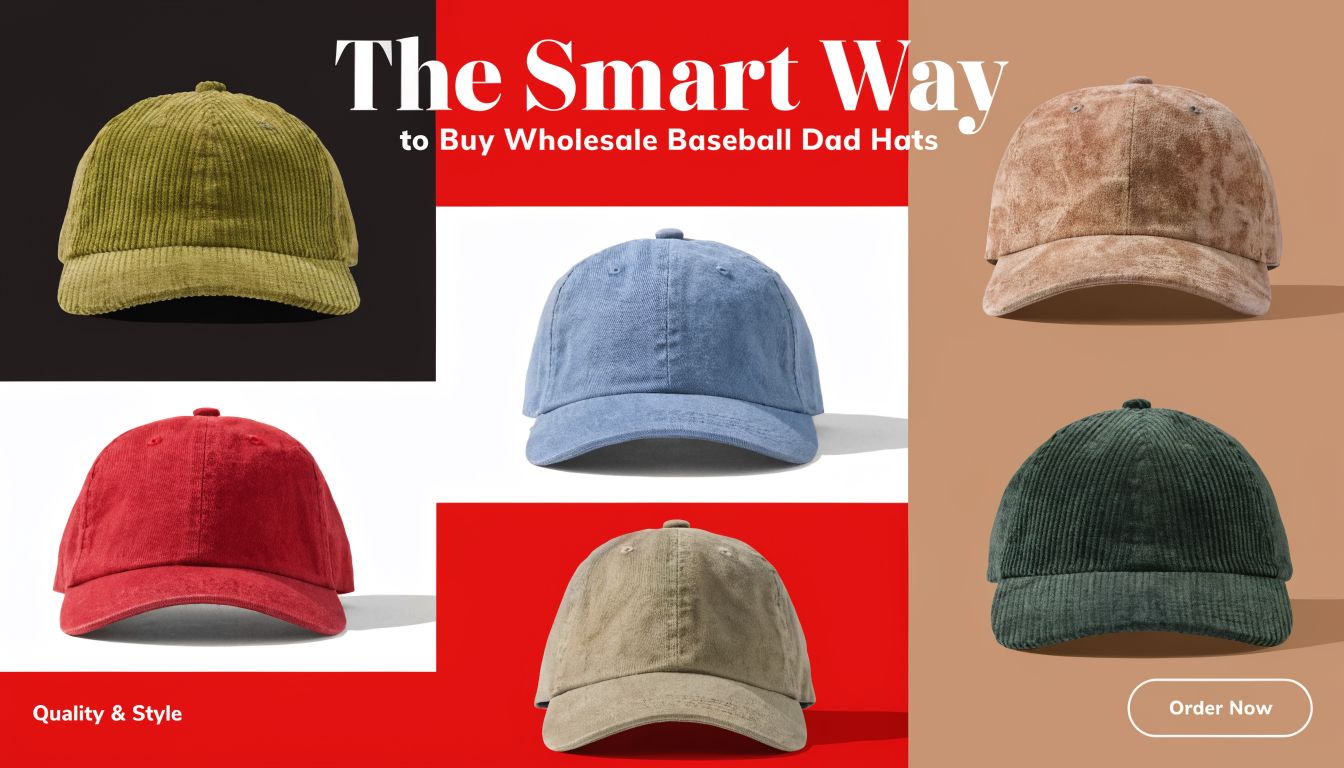
A wholesale dad hat order usually looks simple until the quote comes back with substitutions, setup charges, or a production date that misses the event. Buyers get better results when they treat the job like a purchasing project, not just a product pick. The blank, the decoration method, the stock position, the proof, and the packing plan all affect whether the hats work for the business case.
That practical side is a big reason baseball dad hats keep showing up in merch programs, staff kits, school stores, and resale drops. They carry a logo well, fit a wide range of wearers, and avoid the sizing headaches that come with many apparel categories.
What to check before you request a quote
Price matters, but it is only one line on the job sheet. I have seen plenty of buyers save a dollar on the blank and lose far more when the hat arrives with a weak closure, a crown that fights the logo, or stock that vanishes halfway through approval.
Ask these questions early:
- Exact stock status: Confirm the specific style, color, and quantity are available now, not just listed in the catalog.
- Decoration minimums: Embroidery, patches, and specialty locations often have different thresholds.
- Setup charges: Find out whether digitizing, tape edits, or patch setup are billed separately.
- Proof method: Ask if you will receive a digital proof and whether revisions are included.
- Production time versus shipping time: Keep them separate so the schedule is real.
- Substitution policy: Get clear approval rules in writing if inventory changes after the order is placed.
That last point matters more than new buyers expect. A close substitute can still change the feel, profile, buckle quality, or dye lot enough to affect resale value.
Buying by use case, not just by price
A dad hat for a giveaway table and a dad hat for a retail shelf should not be bought the same way.
Promo orders usually need controlled cost, broad appeal, and a simple decoration plan that will not overrun the cap. Team and staff orders need comfort and repeat wear. Retail and reseller orders need consistency from carton to carton, because your customer notices small differences fast.
I usually sort wholesale orders into three lanes before I recommend a blank:
| Order type | What matters most | Common mistake |
|---|---|---|
| Giveaway or promo | Cost control, broad fit, simple logo | Adding too many decoration details to an entry-level hat |
| Team or staff use | Comfort, repeat wear, easy reorder potential | Picking a style that looks good on paper but feels stiff all day |
| Retail or merch line | Hand feel, finish, consistency across batches | Cutting blank cost and hurting perceived value at the point of sale |
For a more detailed purchasing checklist, this guide to buying dad hats in bulk wholesale the right way is a useful reference.
The proof is where you protect the order
Proof approval is the cheapest place to catch an expensive mistake. On a soft, low-profile dad hat, small problems stand out. Art that feels slightly too tall on screen often looks clearly too tall once it is stitched. Thread colors that seem close in a mockup can disappear against washed cotton or pigment-dyed fabric.
Review the proof like the person who has to sell, hand out, or reorder the hats later. Check logo size, spelling, thread color, placement, and closure notes. If the run includes multiple cap colors, make sure the decoration still reads cleanly on every one of them.
Slow approval beats rushed production.
Care instructions that help the hats last
Wholesale buyers often stop thinking at delivery. That leaves value on the table, especially for teams, companies, and resellers who want the hats to look good after a month of use.
Include simple care guidance with the order, on a packing slip, or on a product page:
- Spot clean first: It protects the embroidery and helps the crown hold its shape.
- Avoid heavy crushing: Soft crowns crease easily in packed bags or crowded shelves.
- Air dry: Heat can shrink trims, distort the fit, or affect the sweatband over time.
- Store with some breathing room: Heavy stacking can flatten the profile and bend the brim.
A well-bought dad hat earns its keep after delivery. It gets worn to work, to practice, on errands, and on weekends. For a business, team, or reseller, that long wear cycle is the whole point.
Your Next Step to Amazing Custom Headwear
The reason baseball dad hats keep showing up in solid merch programs is simple. They solve more problems than they create. They fit a wide range of people, they take decoration well when the art is prepared correctly, and they don’t force your audience into a style that feels too stiff or too trendy.
For buyers, the winning formula is usually straightforward. Pick a blank that matches the purpose. Keep the artwork clean. Respect the proof. Don’t overcomplicate the decoration on a soft, low-profile crown.
If you’re ordering for a team, brand, event, school, or resale project, this style gives you room to be practical without ending up boring. That’s a sweet spot a lot of merch categories never reach.
And if you’ve made it this far, you’re already ahead of most first-time buyers. You know what defines the style, what materials to compare, where embroidery can go wrong, and what to ask before you approve a wholesale order. That’s how you end up with a box of hats you’re happy to hand out, sell, or wear yourself.
If you’re ready to price out a run of custom baseball dad hats, compare blanks, or get help matching your logo to the right decoration method, start with Dirt Cheap Headwear. They offer wholesale blank hats, low-minimum custom embroidery, and a wide mix of brands and styles for businesses, teams, events, and merch sellers.
Pingback: Embroidery vs Heat Transfer Hats | Dirt Cheap Headwear