
Snapback Hat Styles: The Complete Guide for Brands and Teams
Most buying advice for snapback hat styles starts with color, trend, and whatever looks sharp in a catalog photo. That's the wrong order for a brand, team, or decorator. A cap can look excellent on a product page and still produce puckered embroidery, poor logo placement, uncomfortable fit, or slow-moving inventory.
The better question is simple: Which blank stitches cleanly, stays consistent in production, and gives customers a reason to buy it again? Snapback selection is a decoration decision and a resale decision before it's a fashion decision. The right crown, panel layout, fabric, brim, and closure can protect your margin. The wrong combination creates rework and returns.
Why Snapback Hat Styles Matter More Than You Think
Snapbacks aren't interchangeable fashion accessories. Their construction changes how a machine handles the front panel, how a patch sits across the seams, and how the finished cap feels on a customer's head. Buyers who choose only by price often discover the hidden cost after decoration begins.
The structured front is the first major decision. A firm, buckram-backed crown gives the needle a stable surface and resists collapse under stitch density. An unstructured crown folds and flexes, which can make detailed designs harder to register cleanly. That's why structured snapbacks remain the safer starting point for team crests, bold brand marks, and dimensional embroidery.
Panel layout matters just as much. A six-panel cap usually has a center seam on the front, so the decorator must size and position the design with that seam in mind. A five-panel cap offers a broad, uninterrupted front, which suits a centered wordmark or a clean graphic. Neither is automatically better. The logo determines the better blank.
Practical rule: Choose the decoration method and logo placement before you choose the colorway.
Fabric affects more than appearance. Firm twill and acrylic or wool blends help preserve a crisp crown, while polyester twill can reduce weight and dry faster. The tradeoff is that different fabrics respond differently to thread tension, heat, adhesive, and washing. Ask for a decorated sample, not just a blank sample, before you approve a large run.
Judge the blank by its business role
A team needs repeatable decoration and a dependable fit across a group. A streetwear label may care more about a distinctive front panel, a premium closure, or a limited color story. A promotional buyer needs a style that looks appropriate on many wearers and doesn't create unnecessary size or color complexity.
This is also where presentation matters. A strong product page should explain structure, material, decoration limits, and intended use instead of relying on mood photography alone. For brands selling headwear online, these fashion SEO tips and tactics can help turn those practical product details into clearer buying guidance.
The best snapback is not the one with the loudest silhouette. It's the one that survives decoration, ships without avoidable defects, fits the audience, and supports a reorder without forcing you to rebuild the product.
The Anatomy of a Classic Snapback
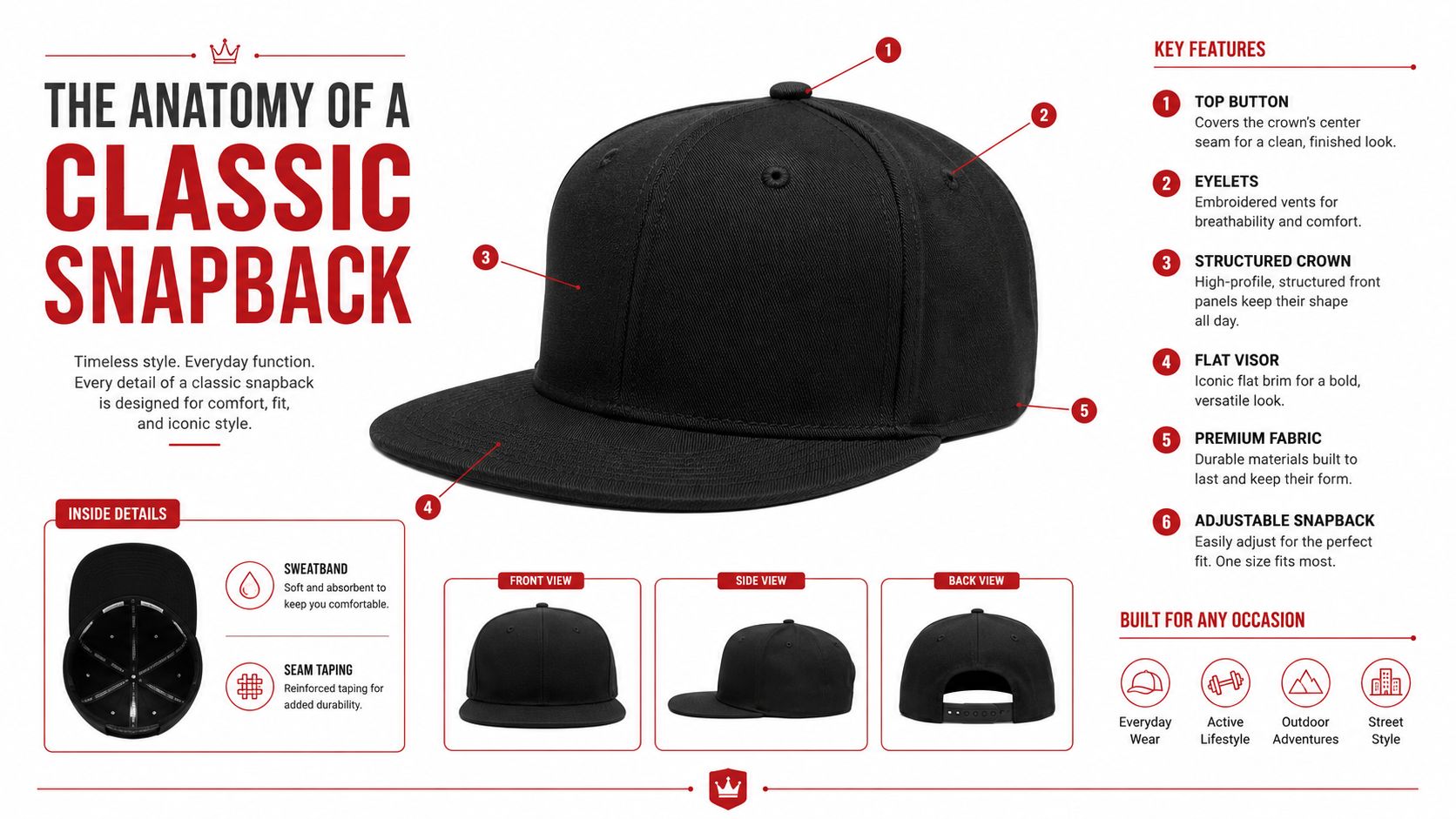
Before comparing snapback hat styles, learn to read the blank itself. A supplier specification should tell you more than color and crown height. Each component affects decoration, comfort, durability, and the way customers perceive the finished product.
Start with the crown and panels
The crown is the upper section that sits around the head. A structured crown uses backing, commonly buckram, to hold its shape. That firm surface supports embroidery and gives a logo a cleaner face. An unstructured crown has a softer hand and a more relaxed appearance, but it needs more careful digitizing because the fabric can move during stitching.
Crown profile changes the visual impression. A high-profile cap stands taller and creates the classic streetwear shape. A mid-profile crown sits closer to the head and usually feels less aggressive, which makes it a practical choice for uniforms and company promotions.
The panels are the fabric sections joined by seams. Snapbacks are commonly six-panel caps, while five-panel versions place the main front design on a single broad panel. Six-panel construction feels familiar and works well for traditional team logos, but the center seam can limit placement. Five-panel construction gives a cleaner uninterrupted field for a wordmark or patch.
Inspect the visor and interior
The visor, also called the brim, controls the cap's attitude. A flat brim supports the sharper streetwear profile and gives decorators more room to consider under-brim graphics, stickers, or decals. A pre-curved brim reads as more traditional and tends to work better for uniforms, workwear, and everyday promotional use.
Look at the insert inside the visor. A firm insert helps the brim retain its shape, but the supplier should explain whether it's cardboard, plastic, or another material. That detail affects durability, cleaning, and how the finished cap handles repeated wear.
Inside, the sweatband touches the wearer's forehead. Cotton can feel soft and absorbent, while polyester and blends can improve moisture handling and drying. The right choice depends on climate, activity, and whether the cap is intended for a field, a retail rack, or a conference floor.
Don't overlook the small parts
Eyelets provide ventilation and may be metal, embroidered, or finished openings. Their color and placement can either support the design or compete with it. The rear snap closure provides adjustable fit, but the closure itself contributes to the perceived quality of the hat. Plastic keeps the look familiar and the construction economical. Metal hardware can make a premium retail cap feel more substantial.
For a broader reference on the differences between adjustable closures, review this guide to hat closure types. Then compare the supplier's closure, crown depth, panel geometry, and sweatband together. The snap alone doesn't determine fit.
Comparing the Main Snapback Hat Styles
The safest all-around choice for custom work is a structured six-panel snapback. It gives decorators a stable front, supports familiar team branding, and keeps the silhouette recognizable. That doesn't make every other style a poor choice. It means alternatives need a specific reason to exist.
A five-panel cap is often the better option for a clean front graphic because the main panel has no center seam. The crown tends to feel flatter and more contemporary. It's a strong fit for small streetwear collections, embroidered wordmarks, woven labels, and simple patches.
Unstructured six-panel caps offer a softer, more casual appearance. They can work beautifully with a small tonal logo or a light patch, but they're a poor match for dense, oversized embroidery. The crown can distort under the design, especially when the digitized file wasn't built for a flexible surface.
Trucker snapbacks solve a different problem. Their mesh back improves airflow, making them useful for outdoor events, summer promotions, and active teams. The front may be foam, twill, or another firm material, so decoration performance depends on the exact construction rather than the word “trucker” alone.
Use this table before you order
| Style | Crown Structure | Best Decoration Method | Ideal Use Case | Relative Cost |
|---|---|---|---|---|
| Structured six-panel | Firm, usually high or mid profile | Standard embroidery, puff embroidery, patches | Sports teams, brand launches, large logos | Moderate |
| Unstructured six-panel | Soft and flexible | Small embroidery, tonal marks, light patches | Casual retail, relaxed lifestyle branding | Low to moderate |
| Five-panel | Structured or lightly structured, broad front | Wordmarks, woven labels, clean patches | Streetwear, skate, minimalist drops | Moderate |
| Trucker snapback | Structured front with mesh rear | Front embroidery, screen print, patches | Outdoor promotions, summer teams, events | Low to moderate |
| Flat-brim build | Usually structured | Embroidery, patches, under-brim decoration | Streetwear and bold team identity | Moderate |
| Curved-brim build | Structured or unstructured | Front embroidery, tonal logos | Uniforms, corporate promotions, everyday wear | Low to moderate |
Match decoration to the surface
Standard embroidery is the most forgiving option when the front panel is stable and the design is properly digitized. Puff embroidery needs a firm face and controlled stitch paths because raised elements magnify flaws. Chenille and tackle twill can look strong on structured fronts, but seams and curved surfaces require careful placement.
Patches give you more freedom with stitch density, yet they still need a flat, stable attachment area. A center seam can interfere with a wide patch on a six-panel cap. Screen printing works best when the front fabric accepts ink evenly and the design doesn't cross awkward seams.
Choose flat brims when the customer expects a streetwear silhouette and the design benefits from a sharp, graphic presentation. Choose curved brims when comfort, familiarity, and a less fashion-specific look matter more. Trying to force a curved-brim audience into a rigid flat-brim style is a positioning mistake, not a decoration problem.
Matching Snapback Styles to Real Use Cases
A cap that works for a baseball league may fail for a boutique drop. Start with the wearer, then select the structure and decoration method. The logo comes third only because its size and stitch density should be judged against the blank you've already chosen.
| Use Case | Best Style | Ideal Decoration | Typical Order Size |
|---|---|---|---|
| Sports team | Structured six-panel, flat brim | Puff embroidery, tackle twill, large team logo | Small to large group orders |
| Streetwear brand | Five-panel or distinctive trucker | Clean embroidery, woven label, leather or fabric patch | Limited or seasonal drops |
| Corporate promotion | Mid-profile structured, curved brim | Tonal embroidery or compact brand mark | Staff and event orders |
| Outdoor event | Trucker snapback | Front embroidery or screen print | Promotional and group orders |
Sports teams need stability
A youth baseball league ordering 120 structured caps with puff embroidery should not start with an unstructured five-panel. The design needs a stable face, enough room for the crest, and a crown that won't collapse around raised stitching. A flat brim reinforces the athletic streetwear look, but the front structure matters more than the brim shape.
Coaches should also confirm the fit across the group. Snap closures simplify distribution, but crown depth still affects whether the cap feels comfortable on younger players and adults. Order a decorated sample and test the cap during movement, not only on a table.
Streetwear brands need distinction
A boutique brand launching a 50-piece trucker drop can use the mesh back as part of the product identity. That build creates a lighter, more seasonal feel and separates the item from another generic six-panel cap. Keep the front treatment restrained. A small embroidered mark or a well-sized patch usually gives the product more resale flexibility than a crowded graphic.
Five-panel caps also suit brands that want the front logo to read instantly in product photography. Their uninterrupted panel supports centered typography and clean labels. If the cap is part of a small collection, a distinctive blank can do more work than another complicated decoration technique.
Corporate buyers need broad appeal
A technology company outfitting 300 conference staff should usually choose a mid-profile structured cap with a curved brim and tonal branding. That combination looks professional without pushing the cap into a narrow streetwear category. It also gives decorators a reliable surface for repeated embroidery across a large run.
The common mismatch is clear: buyers select an unstructured five-panel because it looks fashionable, then submit a dense multicolor logo designed for a team cap. The decorator has to reduce detail, the logo loses clarity, or the front puckers. Approve the blank and decorated sample together before the purchase order.
Choosing the Right Blank for Custom Orders
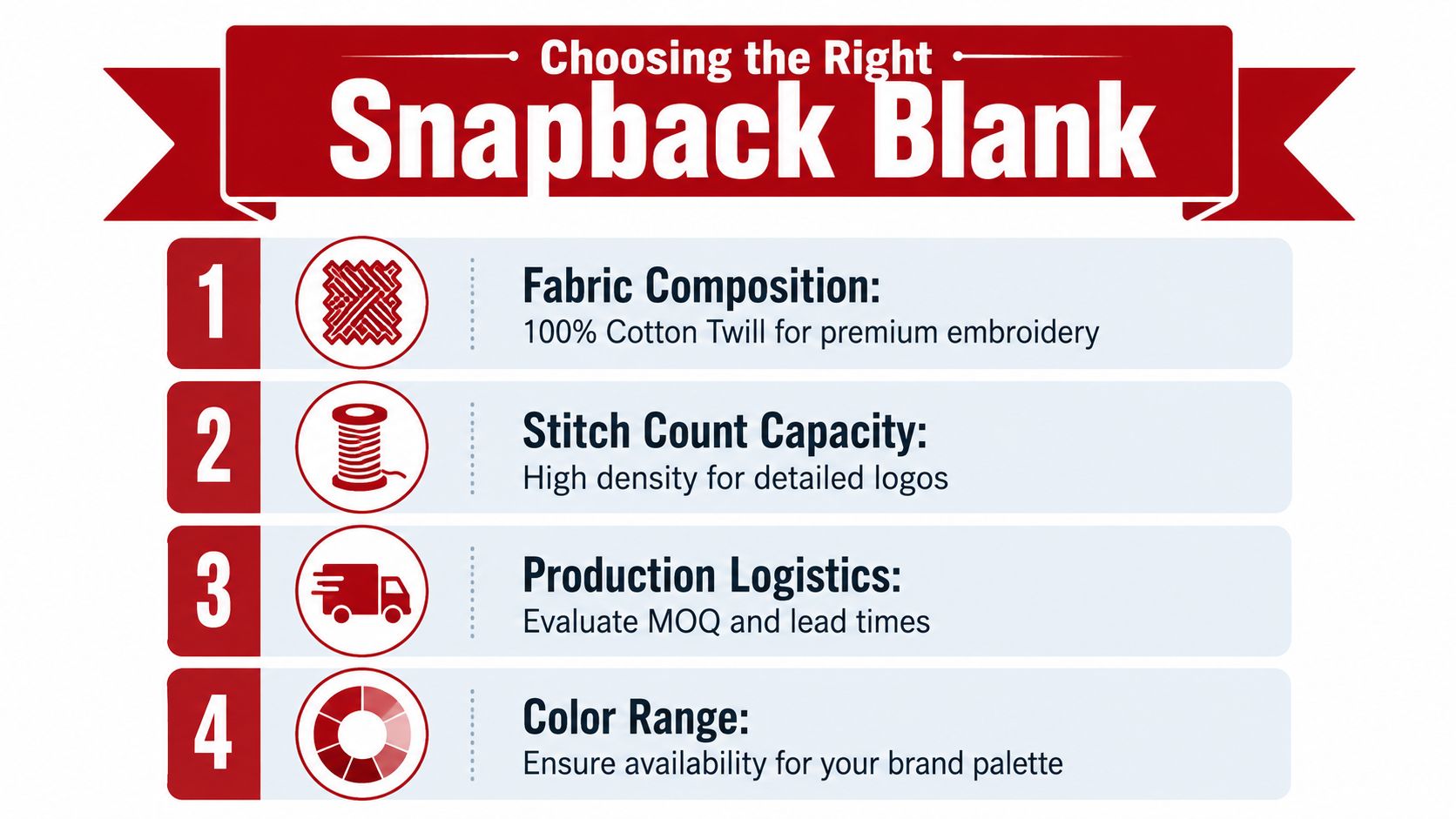
Blank selection starts with fabric, but it shouldn't end there. 100% cotton twill often gives embroidery a familiar, stable surface and a substantial hand. Polyester twill can feel lighter and handle moisture well, but its behavior under thread tension and heat varies by construction. Don't assume a fabric label predicts the finished result. Test the actual cap.
A structured crown with buckram is the practical choice for dense embroidery and raised work. An unstructured crown can support a small, low-density mark, but it becomes risky as the design grows heavier. If you're planning puff, tackle twill, or a large patch, the crown needs enough support to hold the decoration without buckling.
Examine the specifications that affect production
The brim deserves attention too. Flat brims give you a sharper front profile and more room to consider under-brim stickers or decals. Pre-curved brims narrow those options, but they often feel more familiar to uniform and promotional audiences.
Closure hardware changes the product's resale position. Plastic snaps keep the cap straightforward and economical for bulk orders. Metal snaps add tactile weight and can support a more premium presentation, provided the rest of the blank matches that quality level.
Fit should be evaluated as a system. Snapback closures commonly provide 5 to 8 adjustment positions, as described by this snapback construction guide, while practical sizing can cover roughly 55 cm to 62 cm in head circumference, according to Competition Headwear's snapback specifications. Those figures help simplify ordering, but crown depth and panel geometry still determine whether the cap feels right.
Run a blank test before a full order
Use this checklist:
- Decorate the cap: Test embroidery, puff, patch attachment, or print on the exact color and fabric you'll sell.
- Inspect the seam: Check whether the center seam interrupts the design or causes registration problems.
- Wash and wear the sample: Look for brim distortion, loose threads, fading, and closure damage after normal use.
- Confirm stock depth: Ask whether the supplier can support your colorway now and during replenishment.
- Document the approved version: Record the blank name, color, decoration file, thread colors, placement, and finishing instructions.
The market includes familiar wholesale blanks such as the Richardson 112 and Yupoong 6006, but minimums, inventory, and lead times vary by supplier and order type. Stock blanks may move quickly, while custom-dyed or private-label production requires a longer planning window. Treat every stated lead time as something to confirm in writing.
For sourcing options, compare available wholesale blank snapback hats against your decoration test, not against a catalog thumbnail.
Smart Buying Advice for Wholesalers and Decorators
Wholesale buyers waste money in predictable ways. They order too many niche colors, ignore the decoration cost until after approval, or switch blanks between runs without checking panel dimensions. A disciplined buying process prevents all three.
Lock the end use first
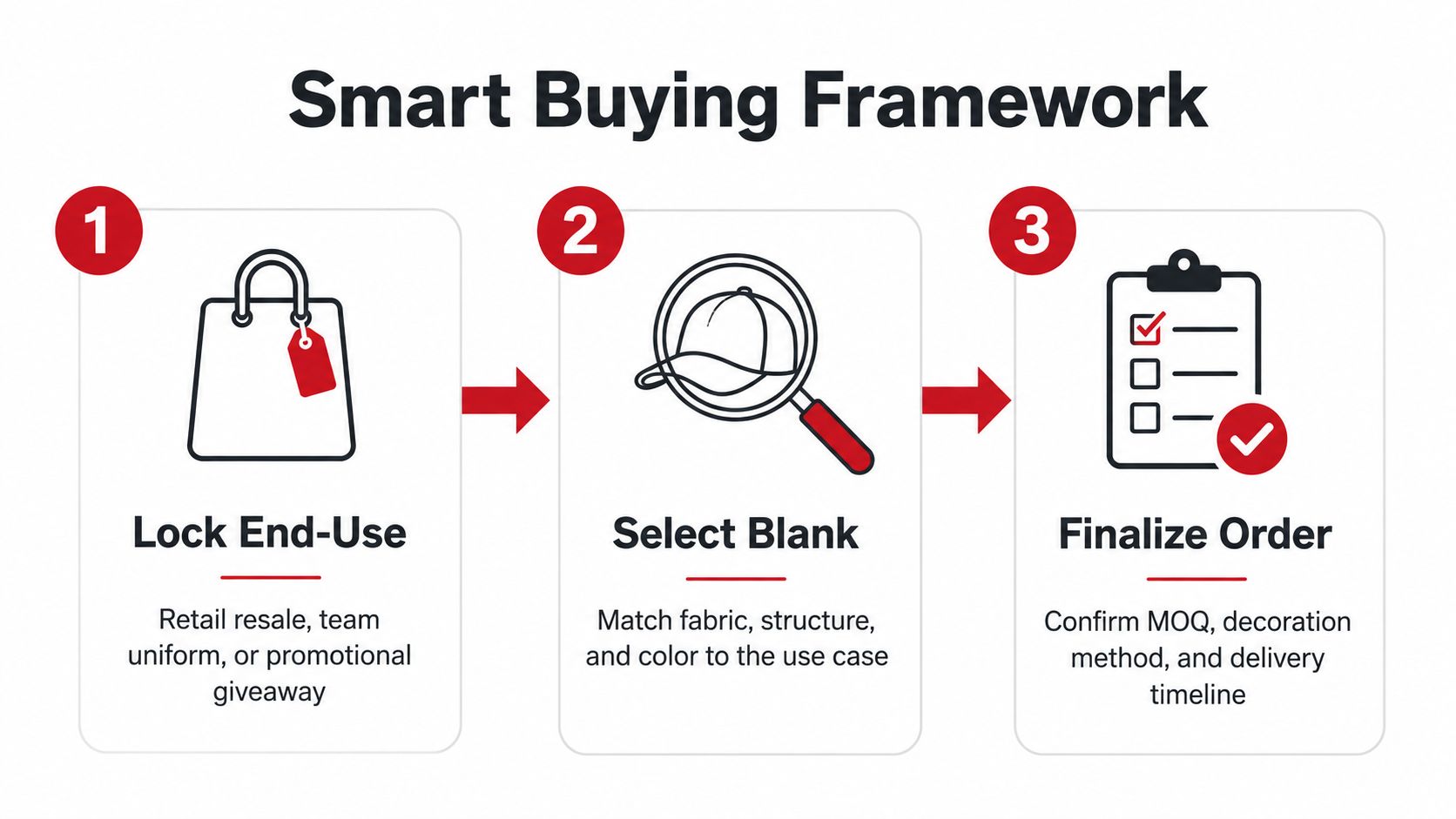
Decide whether the cap is for retail resale, a team uniform, or a promotional giveaway. Retail customers may pay for a distinctive panel layout or upgraded closure. Teams need consistent fit and a front that holds the logo. Promotional buyers usually need broad appeal, straightforward decoration, and dependable availability.
Select the blank second
Match the blank to the decoration:
- Embroidery: Use a stable structured front for medium or dense designs.
- Puff embroidery: Favor firm buckram-backed crowns and uncomplicated artwork.
- Leather or fabric patches: Check the usable front area and keep seams away from the attachment zone.
- Woven labels: Consider a five-panel front when a clean, uninterrupted presentation matters.
- Screen printing: Test ink adhesion and surface consistency on the actual fabric.
A curated library of 4 to 6 proven styles is more useful than a catalog full of untested options. Keep a reliable structured six-panel, a clean five-panel, a breathable trucker, and a softer casual option only if your customers ask for them.
Finalize the order with evidence
Before committing, request a pre-production sample for every unfamiliar blank. Confirm stock depth, color consistency, reorder expectations, decoration placement, and delivery timing. If you can offer a supplier a recurring volume commitment, ask for tiered pricing, but don't trade away sample approval for a lower unit cost.
For the decoration stage, review the available snapback hat embroidery process and confirm how the shop handles proofs, puff work, fine detail, and small runs. Dirt Cheap Headwear is one option that supplies blank caps and in-house decorated headwear for brands, teams, and events, with custom embroidery available for small and larger orders.
Supplier discipline: Approve the sample, save the production notes, and reorder the same specification. Consistency is more valuable than novelty when customers expect the next batch to match the last one.
Building a Headwear Line That Actually Sells
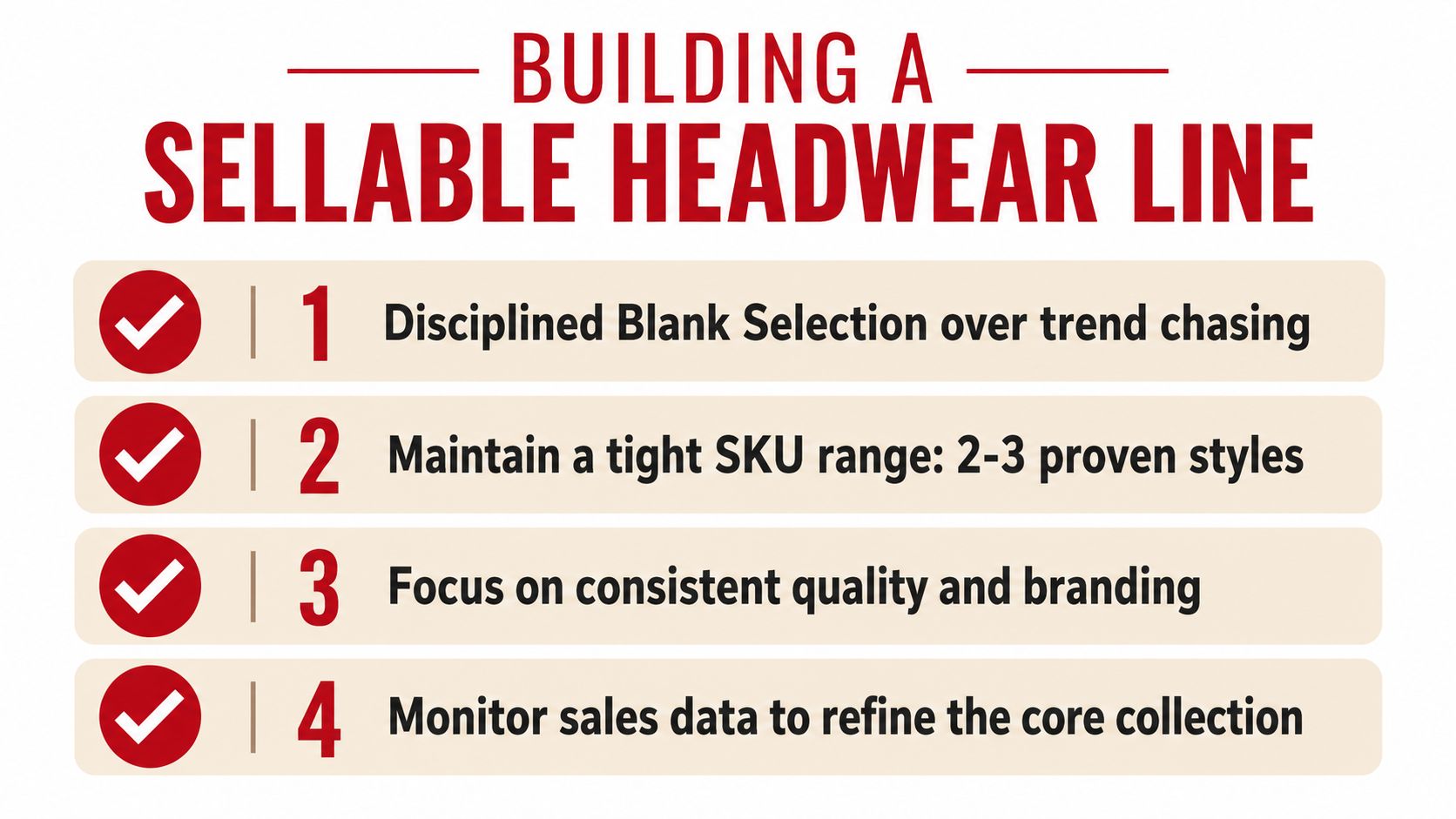
Long-term headwear sales come from disciplined blanks, not constant trend chasing. A tight assortment of 2 to 3 proven styles in core colorways gives customers a clearer choice, makes decoration more repeatable, and reduces the chance that slow-moving novelty caps consume your cash.
Your best seller should have a dependable fit, a front panel that supports your common logo treatments, and a supplier you can reorder from without rebuilding the entire product. Keep the approved blank, thread colors, placement measurements, patch dimensions, and supplier notes in one production record.
Audit your current headwear lineup this week. Remove styles that miss fit, decoration, or resale expectations, test a select group of snapback blanks, and record the exact specifications that produce clean, repeatable orders.
Visit Dirt Cheap Headwear to compare wholesale snapback blanks and decorated options for teams, brands, promotions, and resale. Send your logo with the intended use case, request a sample where needed, and build your next order around a blank that stitches cleanly and can be replenished confidently.