
High Profile Hat: A Guide for Custom Branding
You're probably looking at a few hat options right now and realizing they all seem similar until you have to put your logo on one. That's where profile matters. The shape of the crown changes how large your mark looks, how clean the stitching runs, and whether the finished cap feels like merch, uniform, or retail product.
A lot of buyers start with color and price. Fair enough. But in custom headwear, the profile often decides whether a logo looks confident or cramped. If you're ordering for a business, team, brewery, brand launch, or event, a high profile hat can be the right move. It can also be the wrong one if your artwork is small, understated, or meant to feel casual.
What Exactly Is a High Profile Hat
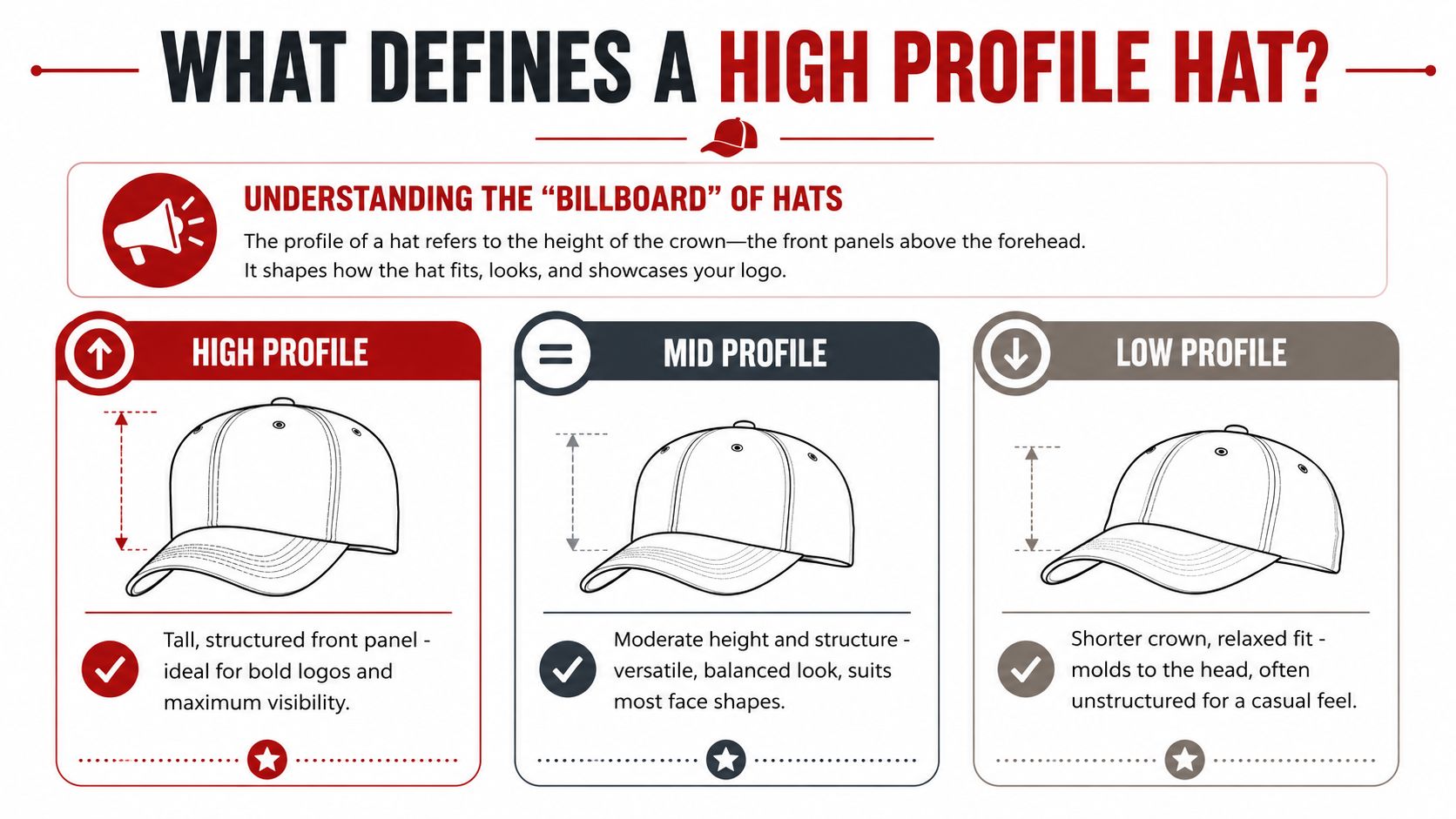
A high profile hat has a taller crown than other cap shapes. Industry guides commonly place that threshold at above 4 inches, while low-profile crowns are about 2 to 3 inches and mid-profile crowns are about 3 to 4 inches according to Foremost Hat's profile guide.
The easiest way to think about it is this. A high profile hat gives you more billboard space on the front of the cap. The crown sits taller, the front panel stands up more, and the hat makes a stronger first impression from across a room.
How it compares to mid and low profile
A low-profile cap usually hugs the head more closely. That's the shape many people associate with a relaxed dad hat or a softer baseball cap. Mid-profile sits in the middle and tends to be the safest option when you want broad appeal.
A high profile hat does the opposite. It stands up taller and looks more structured. That extra height changes the silhouette right away.
- High profile: Taller crown, bolder front, more visual presence
- Mid profile: Balanced shape, easier middle ground for mixed audiences
- Low profile: Closer fit, softer appearance, more casual energy
If you want a quick visual reference for the different fits, Dirt Cheap Headwear's hat profiles and fits guide is useful for comparing shapes before you narrow down styles.
Practical rule: If your logo needs to be seen from a distance or you want the hat to feel more like branded merchandise than giveaway apparel, high profile deserves a serious look.
Why the taller shape matters
Wearers typically don't ask for a crown measurement. They react to how the hat feels and looks when it's on. A high profile crown creates a more assertive silhouette. That's why these caps show up so often in streetwear, team snapbacks, licensed product, and promotional headwear where the logo is supposed to lead.
For a client, that usually translates into one key question. Do you want the hat to blend in, or do you want the front of the hat to carry the brand?
The Anatomy of a High Profile Hat
The shape doesn't happen by accident. A high profile hat keeps its form because of how the front is built.
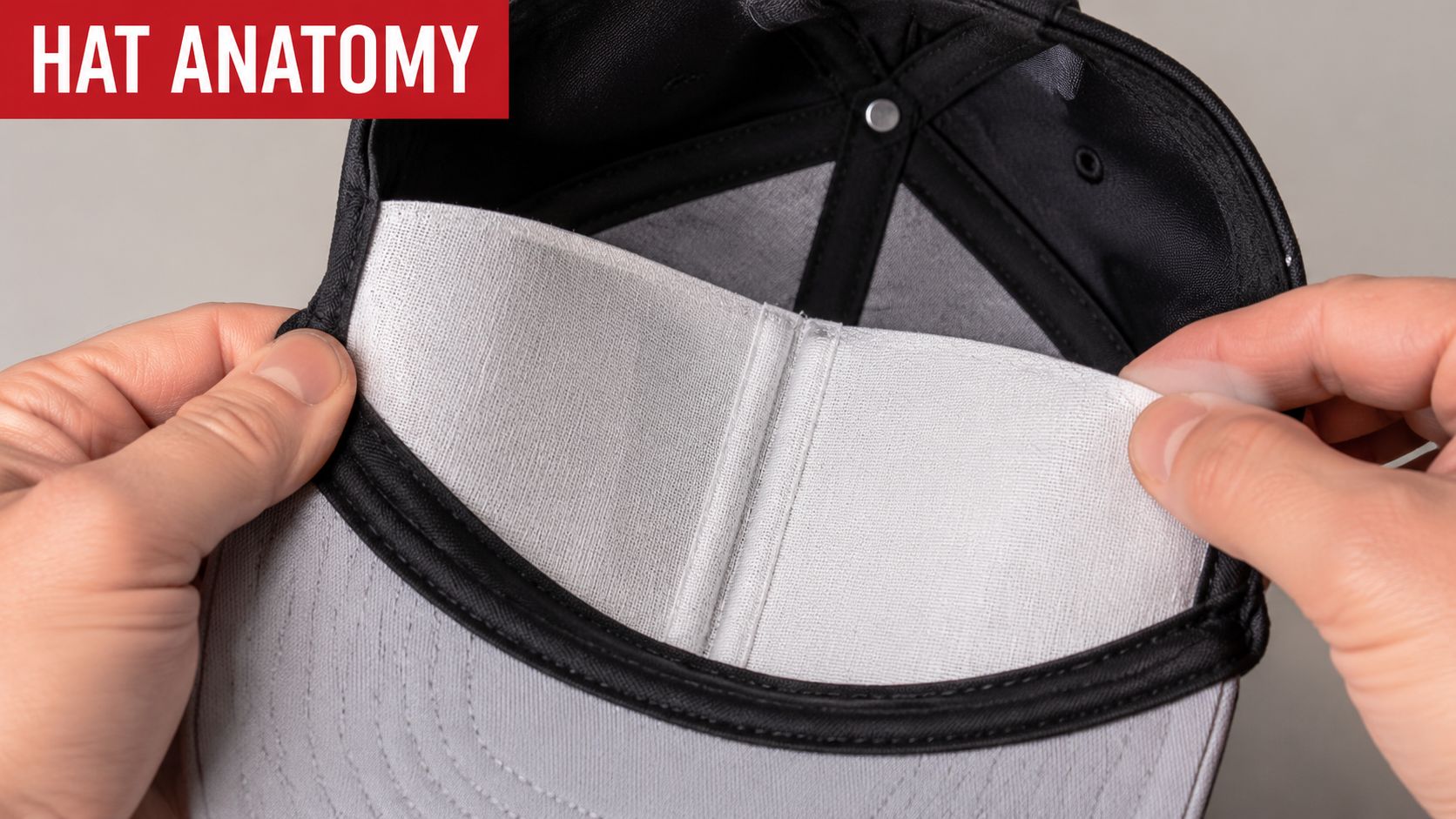
At the construction level, the crown depth is at least 4.0 inches, and the hat relies on a reinforced bill and internal bracing to hold that shape. That structure helps the cap retain its form even after 200+ wear cycles, based on the product and construction explanation from Novae Apparel's high profile hat reference.
What gives it that firm front
Most high profile caps use a structured front panel. In plain shop terms, that means the front doesn't flop over when you set it down or run it through an embroidery machine. Inside the crown, you'll usually find stiff support material that helps the panel stay upright.
That's the big difference between a structured snapback and a soft dad hat. With an unstructured cap, the fabric collapses more easily. With a high profile structured cap, the face of the hat stays more consistent.
Here's what that construction does for you:
- Keeps the front panel upright: Better for logos that need a clean presentation
- Supports the bill shape: The hat feels more intentional and less broken-in out of the box
- Helps the cap hold up over time: Important for staff uniforms, teams, and retail resale
Why clients notice the difference
Most end users won't talk about internal bracing. They'll say the hat feels crisp, looks premium, or sits higher. That reaction comes from the build.
A structured high profile cap also tends to photograph better for branded apparel. The front panel presents the logo more cleanly in product shots, team photos, and event wear. A soft cap can look great too, but it creates a very different mood.
The hat's structure isn't just a manufacturing detail. It affects how your logo reads, how the cap wears in, and how long it keeps the look you approved.
There's a trade-off, though. The same shape retention that helps branding can feel too rigid for buyers who want a broken-in, low-key fit. If your audience prefers relaxed uniforms or laid-back merch, the construction may read too formal or too styled.
Is a High Profile Hat Right for Your Brand
A lot of profile advice stops at definitions. That doesn't help much when you're deciding what your staff, customers, or team will wear.
One of the biggest unanswered questions around high profile hats is who they fit best across head shape, hair volume, and wear style, which matters a lot for teams and streetwear buyers, as noted in Foremost Hat's comparison of low, mid, and high profile caps.
Brands that usually benefit from the taller shape
High profile works well when the hat itself is part of the statement. Streetwear labels, breweries, skate shops, music merch, team gear, automotive brands, and companies with bold icon marks often land here.
The common thread is simple. These buyers want the front of the cap to carry visual weight. The taller crown helps do that.
A high profile hat usually makes sense when your brand fits one of these patterns:
- You have a bold logo: Large marks, block lettering, mascots, and patches usually read better on a taller front
- You want a retail feel: Structured caps often feel closer to lifestyle merchandise than basic promo wear
- Your audience wears snapbacks already: If your customers already lean into that silhouette, the fit won't feel unfamiliar
When it may not be the best call
If your logo is tiny, delicate, or intended to whisper instead of announce itself, a high profile hat can feel oversized. The front panel may leave too much empty space around the design unless the art is scaled thoughtfully.
It can also be a mismatch for brands aiming at a softer, more broken-in look. Think coffee shop uniforms, coastal resort merch, minimalist wellness branding, or organizations that want the hat to feel understated.
A few practical fit and style notes:
- Larger heads or more hair volume: The taller crown can feel more balanced visually
- Backward wear: High profile snapbacks often look cleaner worn backward than softer caps
- Minimal logos: Small left-chest style art doesn't always translate well to a large front panel
If the brand personality is clean, relaxed, and low-key, a lower profile cap often feels more natural. If the brand wants presence, the taller crown helps immediately.
The right answer usually comes from matching silhouette to message. Don't pick high profile just because it's popular in a category. Pick it because the shape supports how you want the brand to be seen.
High Profile Hats and Custom Embroidery
The profile decision begins to affect production, extending beyond mere style considerations. A high profile hat gives embroidery more room to work, and that matters when you're trying to make a logo look sharp instead of crowded.
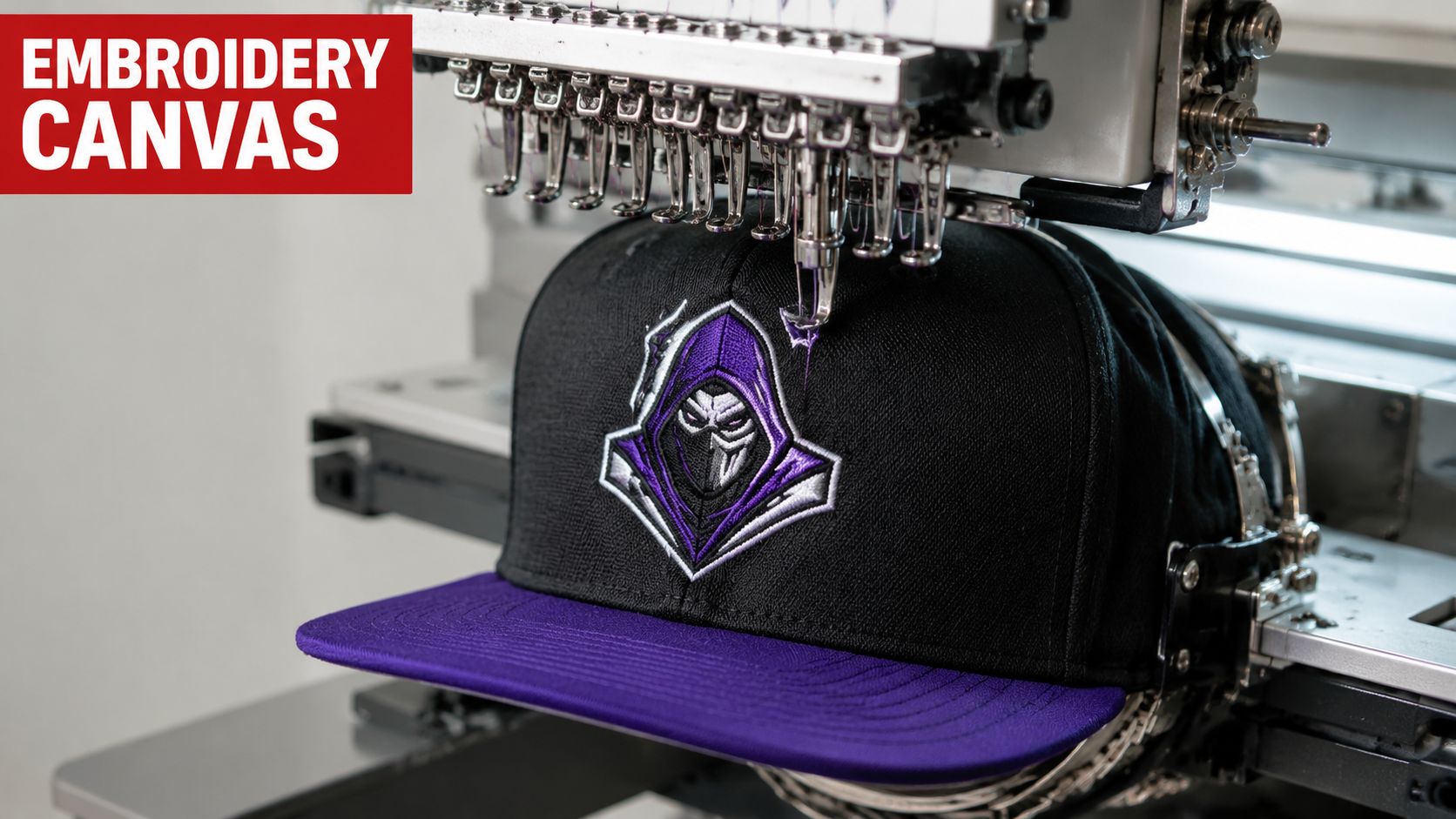
For decorators, the structure matters because stiffer front panels resist collapse during stitching, while the taller crown and flatter front create more usable surface area for bold decoration and 3D-puff embroidery, according to Hoppy Beer Gear's high profile trucker specification guide.
Why embroiderers like structured high crowns
When a cap front caves in during stitching, the logo can distort. Satin columns can wander. Circles can look uneven. Fine outlines can lose consistency. A structured high profile cap reduces some of that risk because the front panel stays more stable under the machine.
That doesn't mean every design suddenly works. It means the hat gives the embroidery a better foundation.
The biggest wins usually show up in these decoration types:
- Large front logos: Wordmarks, shield logos, team names, and mascots have room to breathe
- 3D puff embroidery: Raised foam embroidery needs structure so the design holds shape cleanly
- Bold patches: Woven or embroidered patch applications often sit better on a flatter, taller front
What works and what doesn't
Some logos improve immediately on a high profile hat. Others need editing before they belong there.
Good candidates include chunky lettering, simple icons, outlined sports graphics, and brand marks with enough visual weight to fill the space. Weak candidates include thin scripts, tiny subtext, narrow horizontal logos, and artwork packed with very fine details.
If your logo has lots of small copy under the main mark, don't assume the extra crown height solves it. In many cases, it's smarter to simplify the front design and move secondary information elsewhere or remove it entirely.
A useful prep step is reviewing your art for stitch logic before proofing. Dirt Cheap Headwear also offers logo digitizing for embroidery, which is one way buyers can adapt artwork for cap construction instead of forcing flat artwork onto a curved product.
Here's a quick breakdown from the shop side:
| Logo type | High profile result |
|---|---|
| Bold icon or monogram | Usually strong |
| Tall stacked wordmark | Often a great fit |
| Small minimalist chest logo | Can look undersized |
| Fine script with thin strokes | Often needs revision |
A short machine example helps if you've never watched cap embroidery in action:
Small logos can disappear on a high crown. Bigger space doesn't automatically mean better branding. It means you need artwork that belongs in that space.
The cost side buyers should know
The hat shape itself can influence cost indirectly. Larger or more complex front embroidery often means more setup attention, more stitch planning, and stricter proof review. If you choose 3D puff, patches, or oversized front art, expect the decoration approach to matter as much as the blank cap.
That's why proofing is not a formality on high profile styles. It's the point where you catch a logo that looks perfect on screen but awkward on an upright cap front.
Popular High Profile Styles for Wholesale Orders
Once you know you want the taller silhouette, the next choice is style family. Not every high profile hat presents the logo the same way. Panel count, bill shape, and closure all change the final impression.
One of the key reasons buyers keep coming back to structured high-profile caps is that crown shape affects front-panel embroidery placement, 3D puff compatibility, logo visibility, and perceived brand value, which is why they remain central to licensed and lifestyle headwear, as described on New Era's fitted cap collection page.
Style families worth comparing
Some wholesale buyers come in asking for a “snapback” when what they really mean is a specific silhouette. It helps to separate the common high-profile families.
Five-panel trucker
This style often gives you a broad, uninterrupted front panel. It's strong for bold patches, simple logos, and clean streetwear presentation. If your artwork needs a flat-looking face with less seam interference, this can be a smart pick.
Classic six-panel snapback
This is the familiar structured team and promo shape. It works for a wide range of logos, especially centered embroidery. The front seam can affect certain art layouts, but for many company logos, it's the most versatile option.
Fitted high crown
This style skews more licensed, athletic, and retail-focused. It can look polished and substantial, but sizing is less forgiving than adjustable closures. Better for brands with a specific audience than one-size-fits-most giveaway programs.
High Profile Hat Style Comparison
| Style | Key Feature | Best For |
|---|---|---|
| Five-panel trucker | Broad front panel with clean presentation | Bold patches, simple icons, streetwear-style merch |
| Six-panel snapback | Familiar structured crown with adjustable closure | Teams, staff apparel, event merch, general branding |
| Fitted high crown | More tailored retail silhouette | Lifestyle brands, resale programs, premium-looking drops |
| Seven-panel cap | Taller front presentation with distinctive shape | Modern branding, large logos, fashion-forward merch |
If you're considering a seven-panel shape specifically, this overview of the 7-panel hat is useful because that silhouette has a noticeably different front presentation than standard six-panel caps.
What I usually recommend by use case
For company uniforms, I usually steer buyers toward a structured six-panel snapback when they need broad fit flexibility and dependable front embroidery. It's familiar, easy to size, and less polarizing than more fashion-driven shapes.
For merch brands, trucker and seven-panel styles often photograph better and feel more current. For sports programs, classic snapbacks still do a lot of work because they balance visibility with wearability.
The blank hat sets the mood before anyone reads the logo. Choose the silhouette that matches the audience, not just the artwork.
The best wholesale order usually isn't the one with the tallest crown. It's the one where the cap shape, logo size, and brand position all support each other.
Ordering and Caring for Your Custom Hats
The easiest way to avoid disappointment is to treat a hat order like a product build, not just a logo placement request. The cap shape, stitch method, and proof all need to agree before production starts.
A high profile hat gives you more room on the front, but that also makes poor scaling more obvious. A logo that looked acceptable on a flat PDF can end up floating too high, sitting too small, or leaving awkward dead space once it's mocked up on the actual crown shape.
Before you approve the order
Use a short checklist before signoff:
- Check logo scale: Make sure the design fills the front in a balanced way
- Review line weight: Thin strokes and tiny text often need adjustment for embroidery
- Match style to audience: Staff uniform, team cap, retail merch, and giveaway hats shouldn't all default to the same silhouette
- Ask about decoration method: Standard embroidery, 3D puff, and patches each change how the final logo reads
If you're ordering for mixed groups, it can also make sense to sample one high profile option against one lower or mid-profile option before committing to a larger run.
Keeping the shape looking good
Care matters more with structured hats because the shape is part of the value. Don't crush them into storage bins if presentation matters. Keep them stacked properly or stored in a way that supports the crown.
For cleaning, stay gentle. Spot clean instead of soaking when possible, and avoid handling that bends the bill or crushes the front panel. The whole appeal of a high profile cap is that crisp shape. Once the crown gets misshapen, the logo won't present the same way.
The smart order is usually the one that starts with an honest question. Does your logo want a casual cap, or does it want a stage?
If you're comparing blanks, deciding between embroidery methods, or trying to figure out whether a high profile hat fits your brand, Dirt Cheap Headwear can help you source wholesale styles and turn your artwork into a production-ready custom order.