
Flat Bill Snapback Hats: A Buyer’s Guide (2026)
You’re probably here because you need hats for a real purpose, not because you want to spend your afternoon comparing crown heights and closure types. Maybe you’re ordering for a brewery staff, a school booster club, a startup launch, a tournament, or a merch drop. You know a good custom hat can make a group look pulled together fast. You also know one bad choice can leave you with a box of hats nobody wants to wear.
That’s where flat bill snapback hats earn their keep. They’re recognizable, structured, easy to customize, and they give your logo a more deliberate look than a soft casual cap. But they aren’t automatically the right choice just because they’re popular. The best results come from matching the hat to the job.
If you’re buying for staff, you may care most about consistency and easy fit. If you’re buying for resale, the blank itself has to feel right in the hand before anyone notices the logo. If you’re ordering for a team or event, the main question is usually whether one style can work across a mixed group without turning sizing into a headache.
So You Need Custom Hats Lets Talk Snapbacks
A lot of orders start the same way. Someone on the team says, “We should do hats.” Then five minutes later you’re staring at dozens of options that all look similar until you notice one has a curved bill, one has mesh, one sits lower on the head, and one makes your logo look sharp while another makes it look cramped.
That confusion is normal.
A restaurant owner might want hats that make staff look polished behind the counter. A coach might need a style players will continue to wear after the season. A small apparel brand might want something with enough front structure for bold embroidery that feels retail-ready instead of promo-grade. Those are three different goals, and they shouldn’t all get the same hat.
Practical rule: Start with the outcome you want. Do you want your brand to look premium, approachable, athletic, trend-driven, or utility-focused? The right snapback choice follows that answer.
Flat bill snapback hats usually come into the conversation when the goal is clean shape, stronger logo presence, and broad wearability. They photograph well. They hold decoration nicely. They also feel intentional in a way that soft, floppy caps often don’t.
Still, not every flat bill is equal. Some blanks feel sturdy and decoration-friendly. Others look good online but don’t deliver once a logo gets stitched on. Material matters. Crown profile matters. The way the front panels are built matters. Even the type of artwork you use matters more than most buyers expect.
If you choose well, custom hats become one of the easiest branded products to distribute. If you choose poorly, you end up fighting fit issues, weak decoration, and style mismatch. That’s avoidable.
What Exactly Are Flat Bill Snapback Hats
A flat bill snapback hat is defined by three things you can see right away and one you feel when you wear it. It has a flat visor, a structured crown, an adjustable plastic snap closure, and a firmer overall shape than softer casual caps.
The modern version of that look traces back to 1954, when New Era standardized the modern flat-brimmed baseball cap by changing an 8-panel cap into a 6-panel configuration, a move that also supported its Major League Baseball partnership the same year, as noted in this snapback origin history.
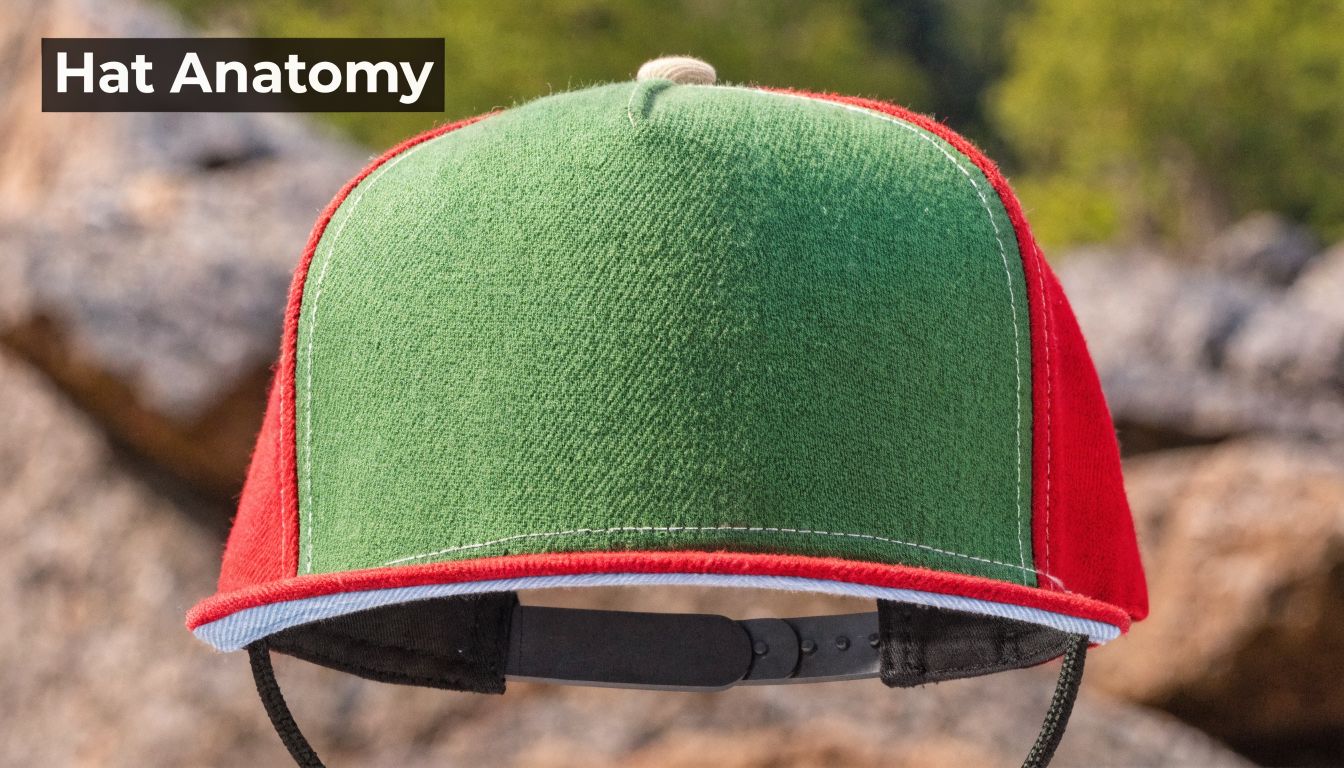
The anatomy that matters
The visor is the obvious part. Flat means flat. Some wearers keep it that way. Others add a slight curve over time. But if you’re ordering this style, the bill starts with a crisp, squared-off look that gives the hat its attitude.
The crown is usually structured and high-profile, which means it stands up on its own and doesn’t collapse when it’s off your head. That shape is one reason logos often look stronger on this style. The hat gives the artwork a more stable canvas.
The back closure is the “snapback” part. Instead of fitted sizing or fabric strap adjustments, you get a row of plastic snaps that let the wearer dial in the fit quickly.
How they differ from other common hat styles
Here’s the easiest way to separate the major categories:
| Style | Main shape | Best visual effect | Common drawback |
|---|---|---|---|
| Flat bill snapback | Structured, taller crown | Bold, clean, graphic | Can feel too rigid for very casual brands |
| Dad hat | Soft, lower profile, curved bill | Relaxed, broken-in | Less front space for large logos |
| Trucker hat | Structured front, mesh back | Breathable, casual | Mesh changes the look immediately |
A flat bill snapback usually works best when you want the hat to feel like part of the brand identity, not just an add-on giveaway.
Why buyers like them for group orders
The practical value isn’t just style. It’s simplicity. A good snapback can cover a wide range of wearers without forcing you to split the order into multiple fitted sizes.
That matters when you’re ordering for staff, events, schools, or teams. Fewer size decisions usually means fewer mistakes, less leftover stock, and less time chasing people to ask what they wear.
One of the reasons this style has stuck around is that it solves two problems at once. It gives buyers a strong visual platform for branding, and it gives wearers an easy, adjustable fit.
Choosing the Perfect Blank Snapback for Your Project
Blank selection is where most successful orders are won or lost. Buyers tend to focus on the logo first, but the blank determines how the finished hat feels, how the logo sits, and whether people keep wearing it after the first week.
A flat bill snapback with a weak front panel won’t make a bold logo look better. A premium decoration on the wrong blank usually just highlights the blank’s flaws.
Start with fit and crown shape
This is the first screen we use in a real shop conversation. If you get profile wrong, everything else gets harder.
Flat bill snapbacks commonly use a 7-position snap closure and high-profile 6-panel construction. That setup allows one SKU to fit about 85 to 90 percent of adults and gives you more front space for decoration, according to this product specification for the New Era flat bill snapback.
For bulk buyers, that means one style can cover most of the group without size splitting. For decorators, the taller crown is useful because large front logos and 3D puff embroidery have room to breathe.
If you’re shopping options, a strong place to compare is this selection of bulk snapback hats wholesale.
Material choice changes the job the hat can do
This part is less about trend and more about use case.
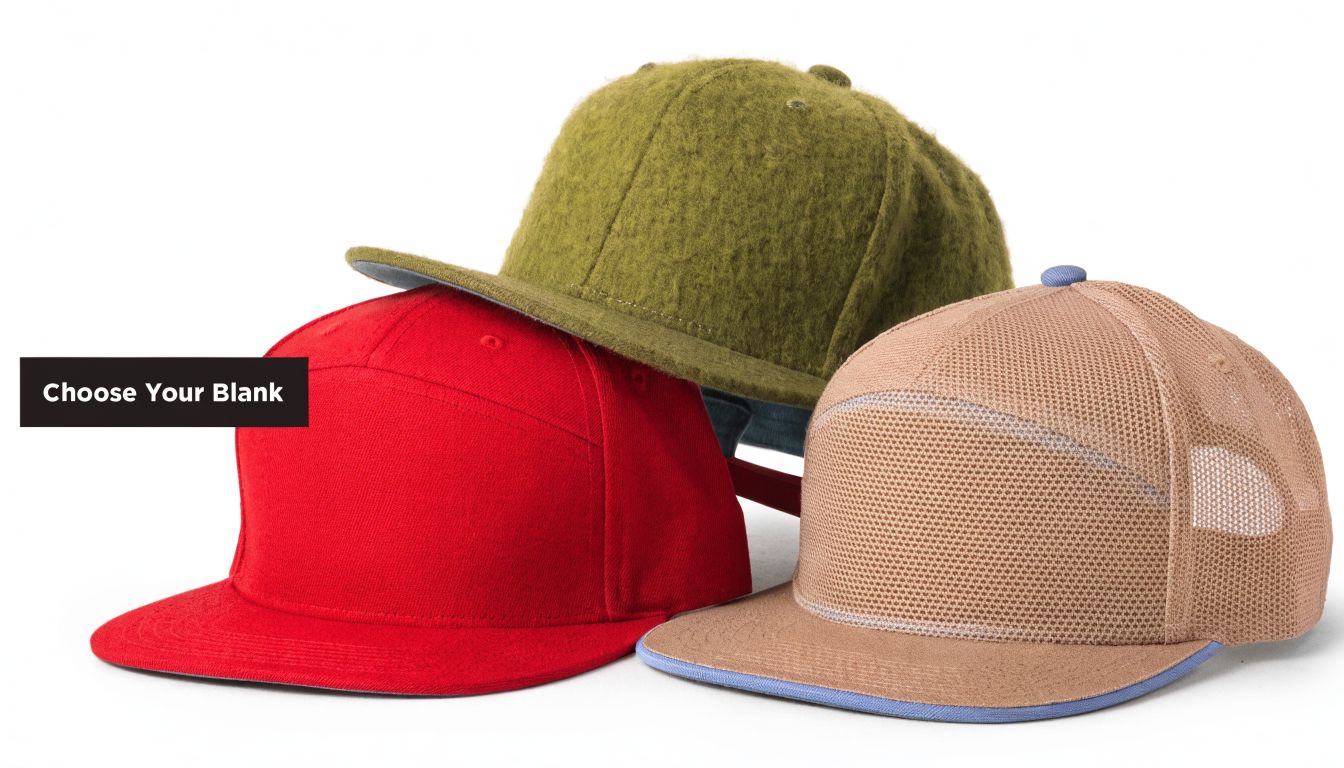
- Acrylic-heavy blanks often make sense when budget and color consistency matter most. They usually hold bold color well and suit event hats, promo runs, and straightforward embroidered logos.
- Wool blends tend to give a richer hand feel. They often fit brands that want a more elevated merch look.
- Cotton and poly blends usually land in the middle. They can balance structure, comfort, and everyday wear.
What works in practice depends on where the hat will live. Staff hats get grabbed, tossed in cars, and worn repeatedly. Retail hats get judged by feel almost immediately. Team hats need enough structure to look uniform across different head shapes.
Brand matters, but not in the way people think
Buyers sometimes ask for a brand name before they decide what they need the hat to do. That’s backwards.
Good brands earn trust because they’re consistent. In this category, names like YP Classics, Richardson, and New Era come up often because buyers and decorators know what kind of shape and finish they’ll get. But the better question is this: does that model support your artwork and your audience?
A merch line with bold lettering may need a taller, cleaner front panel. A laid-back brewery hat might benefit from a slightly less aggressive profile. A school spirit hat may need color options first and brand prestige second.
A simple buying filter
When buyers get stuck, this filter helps fast:
Brand image
Do you want sharp and modern, or casual and broken-in?Decoration plan
Is your logo detailed, chunky, patch-based, or text-heavy?Wear pattern
Will people wear it daily, occasionally, or mainly for events?Budget tolerance
Spend more on the blank when the hat itself is part of the product. Spend more on decoration when the blank just needs to support a strong visual.
If your blank choice supports those four answers, you’re usually on solid ground.
Your Guide to Custom Decoration Options
Most artwork problems on hats are not artwork problems. They’re method mismatch problems. The logo is fine. The decoration choice is wrong.
A thin, detailed logo can look great in flat embroidery and terrible in puff. A bold block wordmark can look weak as a tiny woven patch but excellent as raised stitching. If you match the method to the art, your hat looks intentional. If you don’t, it looks compromised.
The four decoration lanes that matter most
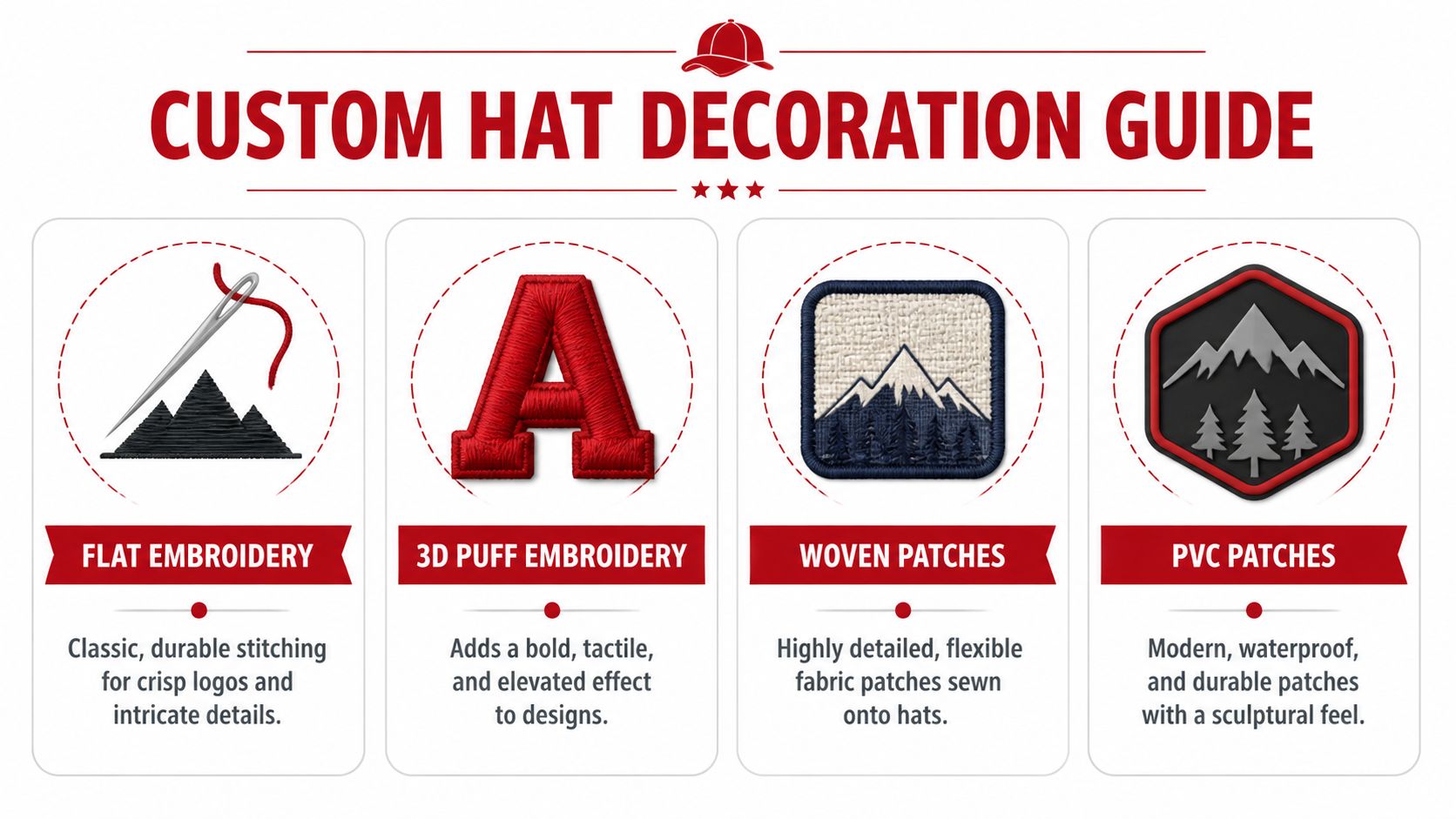
Flat embroidery is the standard for a reason. It’s stitched directly into the hat, it holds up well, and it handles many logo types cleanly. If your logo has moderate detail and you want a classic branded look, this is often the safest choice.
3D puff embroidery adds foam under the stitching so parts of the design rise off the hat. It looks strongest on simple shapes, chunky lettering, and logos with clear outlines. Fine lines, tiny text, and crowded art usually don’t cooperate.
Woven or embroidered patches work well when you want a label-like look instead of direct stitching. Patches can help with artwork that needs borders, layered branding, or a distinct merch feel.
PVC patches create a more molded, modern look. They can feel more tactical or streetwear-oriented depending on the design and hat color.
For buyers comparing methods in detail, this guide on how to customize flat bill hats is useful.
Comparing Custom Hat Decoration Methods
| Decoration Method | Best For | Look & Feel | Cost |
|---|---|---|---|
| Flat Embroidery | Classic logos, text, moderate detail | Clean, stitched, traditional | Mid-range |
| 3D Puff Embroidery | Bold initials, simple shapes, strong wordmarks | Raised, dimensional, attention-grabbing | Usually higher than standard embroidery |
| Woven Patches | Fine visual detail, label-style branding | Flexible, crafted, patch-forward | Varies by patch type and attachment |
| PVC Patches | Modern badge looks, rugged branding | Smooth, sculpted, distinct | Often premium-looking, pricing varies |
What usually works and what usually doesn't
Here’s the practical version we give customers.
- Use flat embroidery when your logo has small elements that still need to read clearly.
- Use 3D puff when the design is simple enough to stay bold after being raised.
- Use patches when you want the logo to feel like a piece applied to the cap rather than part of the cap.
- Skip printing on the front of structured snapbacks when you want a premium result. Printing has its place, but the structured front of this style often looks better with stitching or a patch.
Shop-floor advice: If your logo depends on tiny text, don’t force it into a raised embroidery idea just because puff looks cool on social media. Hats reward simplification.
The fastest way to choose
If you need a quick rule of thumb, use this:
- Want classic and versatile. Flat embroidery.
- Want bold and prominent. 3D puff.
- Want merch-driven and textured. Woven or embroidered patch.
- Want modern and molded. PVC patch.
The hat style already makes a visual statement. Your decoration method should support that statement, not compete with it.
How to Style and Care for Your Snapbacks
Once the hats arrive, the next question is usually practical. How do you keep them looking good? That matters more than a lot of product pages admit. Many flat bill listings explain material and closure details but leave out useful care guidance, which creates a real problem for group buyers who need hats to hold up for staff or team wear, as noted on this wholesale product page discussing the care information gap.
Styling it without overthinking it
Most wearers keep a flat bill snapback simple. Brim forward is the standard. Backward wear can work for a more relaxed team or event setting. Some people leave stickers on. Most remove them. That part is personal and usually tied to the audience you’re serving.
For business use, consistency matters more than fashion debates. If hats are part of a staff uniform, pick one standard and stick with it. A clean front-facing wear style usually looks the most polished in service environments, photos, and group appearances.
The care routine that protects shape
The biggest mistake people make is treating a structured snapback like a T-shirt. Don’t toss it in a washing machine and hope for the best. Water, agitation, and heat can all work against the shape that made you choose the hat in the first place.
Use a simple spot-clean method instead:
- Brush off dry dust first so you’re not grinding dirt deeper into the fabric.
- Mix a small amount of gentle detergent with water.
- Test a hidden area if the hat has dark or saturated color.
- Use a soft cloth or soft brush on the stained area.
- Blot, don’t soak.
- Air dry naturally and keep the crown supported while it dries.
Keep the bill flat while drying. If it dries bent or twisted, that shape can stick.
Here’s a visual walkthrough if you want to see the process in action.
Storage is part of maintenance
A snapback can survive regular wear. It doesn’t love being crushed under gym bags, packed loose in a trunk, or shoved onto an overfilled shelf.
A few habits help:
- Store on a flat surface or hat rack so the crown keeps its shape.
- Avoid stacking heavy items on top of structured caps.
- Keep them dry between wears if they’ve picked up sweat or light rain.
- Separate decorated hats carefully so patches and embroidery don’t rub against rough surfaces.
Good care won’t make every hat immortal, but it does help your order stay presentation-ready longer.
Ordering With Dirt Cheap Headwear From Start to Finish
Most buyers don’t need more options. They need fewer surprises.
That’s the part many generic product pages miss. They show hat styles, maybe a few colors, and leave you to guess which one fits your audience best. They also don’t tell you much about whether your logo is better off embroidered directly, turned into a patch, or simplified for a cleaner result. That kind of guidance matters because style preference and customization choices vary by audience, and broad supplier listings usually don’t explain that well, which is why working with a specialist helps, as discussed on this flat bill supplier category page.
What the process looks like
The ordering flow is straightforward.
You send over your logo, rough idea, and any preferences on hat style, colors, or decoration. If you’re not sure what blank fits the project, that’s where a good shop conversation saves time. A quick discussion about your audience, budget, and intended use usually narrows the field fast.
Then comes proofing. You review a digital mockup before production starts, which is where smart buyers slow down and check the details. Look at logo size, placement, thread or patch contrast, and how the art sits on the actual panel shape. A logo that looks balanced on a screen can still need adjustment once it’s mapped to a hat.
If you’re ready to start that process, the page for how to order custom embroidered hats lays it out clearly.
Why low minimums matter
This is a big deal for small brands, startup teams, and local organizations. Dirt Cheap Headwear offers minimums starting at just six pieces per logo, which makes testing far less risky for a first run or a niche design.
That kind of flexibility changes buying behavior in a good way. You can sample a staff hat before committing to a larger reorder. You can test a merch design without sitting on a huge pile of inventory. You can also split projects by logo concept more easily when the minimum isn’t working against you.
Small minimums are useful for more than budget. They let you make better decisions with less guesswork.
Frequently Asked Questions About Snapback Hats
What’s the difference between a 5-panel and a 6-panel snapback
A 5-panel hat has one uninterrupted front panel. That’s useful when your logo is wide and you don’t want a center seam running through it.
A 6-panel hat has two front panels joined by a seam in the middle. Many classic snapbacks use this construction. It’s great for lots of logos, but very detailed center artwork sometimes needs adjustment so the seam doesn’t interfere with readability.
Is my logo a good fit for 3D puff embroidery
Use a quick self-check:
- Simple shapes work best
- Chunky lettering beats thin strokes
- Tiny text is usually a bad candidate
- Open space around the design helps
If your logo only works when every small line remains visible, flat embroidery or a patch is usually the safer route.
Can I mix hat colors in one order
Often, yes, but the practical question is whether the same logo treatment works across all chosen colors. A thread combo that looks sharp on black may disappear on heather gray or clash on red. Before mixing colors, check contrast first and keep the decoration consistent enough that the collection still looks intentional.
How should I think about photos for the finished hats
If your order will be used for merch listings, team pages, or event recaps, think about the photos before production. Clear answers around lighting, styling, and usage rights can save headaches later. A helpful example of well-organized customer-facing guidance is this set of questions about photo experiences, which shows the kind of practical detail worth clarifying upfront even outside the headwear world.
Should I choose the hat first or the logo treatment first
Start with the end use, then narrow both together. A retail hat, a staff uniform hat, and a fundraiser hat can all use the same logo but need different blanks and decoration choices. The strongest orders happen when the blank and the decoration are chosen as a pair.
If you’re ready to turn an idea into finished hats, Dirt Cheap Headwear makes it easy to source blanks, compare decoration options, and place a custom order without a huge minimum. Whether you need a short test run or a full bulk order, their team can help you choose a snapback that fits your audience, your artwork, and your budget.
Pingback: Embroidered Hats vs Patches: Which Wins? | Dirt Cheap Headwear