
Cheap Top Hats: A Smart Buyer’s Guide
You're coordinating a wedding, a theater production, or a branded event, and the brief sounds simple: find matching top hats without blowing the budget. Then the listings start blending together. One hat looks crisp in the photo, another looks identical for less, and neither tells you whether the crown will stay upright, the brim will arrive flat, or the sizing will work for the whole group.
That's the problem with cheap top hats. Price alone doesn't tell you whether you're buying a practical event accessory or a flimsy novelty prop. I've handled enough headwear orders to know that budget hats can work very well, but only when the construction matches the job. A one-night parade, a formal photograph, and a touring stage production need completely different products.
Finding Affordable Top Hats Without the Guesswork
Start with the event, not the product page. A coordinator outfitting a wedding party needs consistent shape, matching color, reliable sizing, and a finish that looks presentable under photography lighting. A theater director may care more about repeat handling, quick changes, and replacement availability. A promotional buyer may need a simple hat that accepts a logo or removable badge.
The cheapest listing often becomes expensive after you add replacements, rushed shipping, returns, and last-minute alterations. Before you compare prices, write down four details:
- Quantity: Count every wearer, then account for spares if the event can't tolerate a missing or damaged hat.
- Wear time: A hat worn briefly for photos can use lighter construction than one worn throughout a performance.
- Setting: Indoor use is easier on low-cost materials than heat, rain, humidity, or crowded outdoor events.
- Finish required: Decide whether you need a matte costume finish, a satin novelty look, or a more restrained formal appearance.
Read the listing like a supplier
Look for an actual head measurement, crown dimensions, brim width, shell material, interior band, and return terms. “One size fits most” tells you very little unless the seller explains how the internal adjuster works. Ask for photos of the inside and underside of the brim. Those areas reveal shortcuts that product photography hides.
For closeout buying, the guidance in this practical guide to buying hat closeout inventory deals is useful because discontinued stock can offer value, but only when you verify remaining sizes and color consistency before ordering.
Use the right quality reference
Budget doesn't have to mean careless design. The discussion of Pandemonium Millinery ethical luxury is a helpful reminder that materials, labor, and construction choices shape how a hat feels and performs. You're not trying to turn an inexpensive topper into a bespoke heirloom. You're trying to identify which features matter for your event and avoid paying for a glossy product image that doesn't match the delivered item.
Practical rule: Buy the least expensive hat that passes your use-case checks, not the least expensive hat in the search results.
If you're ordering a group, test one sample before committing. Put it on, handle it by the brim, inspect the band, and photograph it under the lighting you'll use. That small test tells you more than a long product description.
Why Top Hats Got Cheaper in the First Place
The top hat began as a status-heavy item, but industrial production changed who could buy one. A verifiable milestone came in 1793, when Middlesex hatter George Dunnage introduced an early version historians identify as the first recognizably modern top hat. The style became mainstream during the 19th century, was predominant men's headwear in the early 1800s, reached its high point in the 1840s and 1850s, and later gave way to more casual hats. By the 1880s, it was largely reserved for formal occasions, and after World War I it appeared mainly in ceremonial settings. The Gentleman's Journal outlines this development in its history of the top hat.
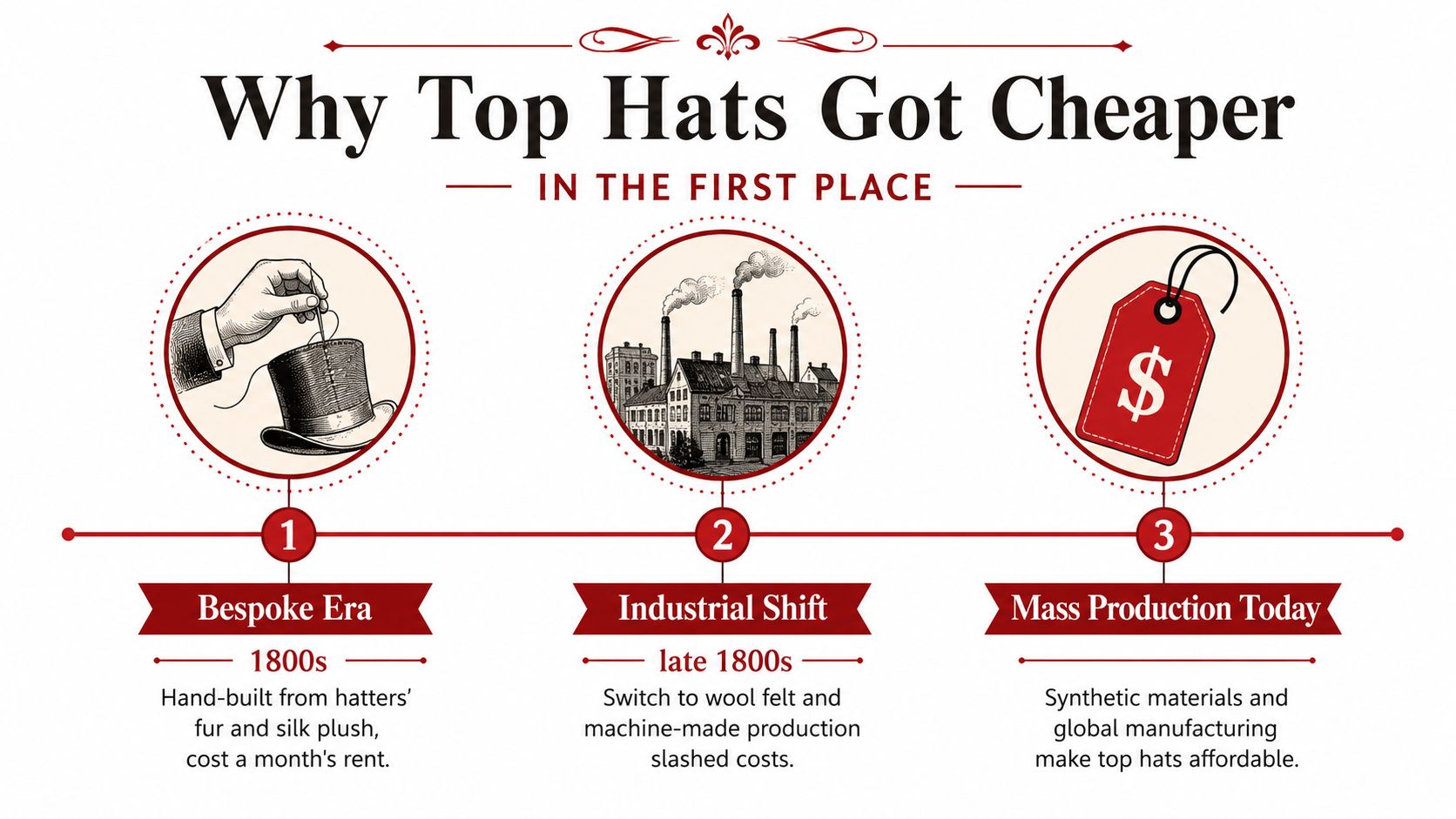
The important shift wasn't just that factories made hats faster. Mass manufacturing and industrialization widened access to fashionable top hats, according to the Victoria and Albert Museum's record for a James Lock top hat. A separate museum account describes the 1850s as producing the tallest top hats of the century, with a typical height of about 8 inches, while standardized forming made the silhouette more repeatable. The Victoria and Albert Museum documents the role of industrial production in top-hat popularity.
Materials changed too. Raw silk became the main material in the mid-1800s and surpassed beaver fur as supply and trade expanded. Earlier luxury materials required more specialized work, while later felt and factory methods made a recognizable top-hat shape accessible to a broader market.
Today's low-cost hat follows the same basic commercial logic. Manufacturers scale the shell, simplify the interior, reduce hand finishing, and choose materials that are easy to cut, form, and ship. The result can be perfectly sensible for a theme event or short production, but it won't automatically deliver the surface, rigidity, or longevity associated with historical formalwear. The Conversation provides further context on the top hat's movement from luxury object to formal and cultural symbol.
What Cheap Top Hats Are Actually Made Of
The shell is the first quality signal. Most inexpensive top hats rely on a hard or semi-hard body covered with felt-like material, rather than a fully soft construction. Historical examples used a shell covered with silk plush, while lower-cost versions commonly substituted wool felt or other non-fur felts. Those substitutions affect shine, stiffness, surface smoothness, and shape retention, as described in the top hat construction overview.
The material choices that matter
Polyester felt usually sits at the bottom of the budget range. It can look acceptable in a listing photo, but its surface may fuzz, pill, or show pressure marks after handling. A wool blend is the practical middle ground when you need a hat to retain its outline and accept color evenly. Dense wool melton is less common at very low prices, but its uniform surface generally looks more controlled.
The shell itself may be glued, laminated, sewn, or molded. A glued laminate can feel impressively rigid at first, yet heat and humidity can weaken the bond. Sewn or molded bodies typically tolerate handling better, but they cost more because they require more controlled assembly.
Compare the construction, not just the price
| Feature | $5–$8 Range | $10–$15 Range | $18–$25 Range |
|---|---|---|---|
| Outer material | Usually synthetic felt or plastic-like covering | Often a better synthetic or wool blend | More substantial felt or a cleaner finished covering |
| Shell | Lightweight, commonly glued or laminated | Firmer body with more consistent forming | Better structural stability and controlled shaping |
| Brim | Raw or lightly finished edge, possible waviness | Cleaner binding and more even curl | More polished edge treatment and stronger shape retention |
| Interior | Minimal lining or elastic adjuster | Basic lining and sweatband are more likely | More complete lining, band, and sizing options |
| Best use | Single-use parties, props, quick promotions | Group events, costumes, short productions | Repeated wear when appearance matters |
Treat the table as a buying direction, not a guarantee. Sellers use price bands differently, so verify construction details before ordering.
Inspect the brim and interior
A bound brim with even stitching usually signals better assembly than a raw cut edge. Look for a consistent curl, no exposed adhesive, and a crown that sits squarely on the brim. Inside, a sweatband is worth more than decorative lining because it improves comfort and limits direct contact between skin and the shell.
Crown height also changes the impression. Taller rigid shells use more material and create a more traditional silhouette. Shorter or collapsible styles are easier to store and often make more sense for costume kits. If two hats cost about the same, choose the one with the better shell and interior rather than the one with the flashiest band.
Rigid vs Collapsible Top Hats on a Budget
Rigid and collapsible hats aren't interchangeable. A rigid topper gives you the cleaner outline most buyers expect from a formal top hat. A collapsible opera-style hat solves a different problem, storage and transport, and it accepts a softer silhouette as the trade-off.
| Feature | Rigid Top Hat | Collapsible Top Hat |
|---|---|---|
| Shape | Holds a fixed crown and brim profile | Pops open from a flexible internal structure |
| Appearance | Cleaner lines and stronger formal presence | More visible seams and softer definition |
| Transport | Bulky and awkward to pack | Flattens or rolls for travel |
| Storage | Needs shelf or box space | Fits into compact costume or event storage |
| Handling | Better for posed photographs and repeated display | Better for touring groups and mobile staff |
| Main risk | Can warp when exposed to heat or humidity | Can lose crispness after repeated folding |
| Best match | Weddings, formal portraits, stage silhouettes | Travel performers, trade shows, costume kits |
Choose rigid for a wedding, formal photograph, or stage production where the crown must look identical from the front row and the camera angle. A rigid shell also makes group styling easier because the hats present a consistent profile.
Choose collapsible when people need to carry the hats between venues, pack them with costumes, or hand them out during a mobile promotion. The convenience is real, but don't mistake it for formal construction. Fold lines and seam marks can show, especially under direct light.
Match the hat to the travel burden
Shipping and storage matter more than buyers expect. A rigid batch takes up more carton space and needs protection around the crown and brim. A collapsible batch reduces that burden, but you'll need time to restore the shape and inspect each hat before use.
For a one-weekend event, collapsible can be the smarter purchase if the audience is moving and the hats aren't being photographed close up. For a ceremony, theatrical close-up, or coordinated portrait, spend the budget on rigid structure and a cleaner brim.
Sourcing Wholesale and Custom Top Hats
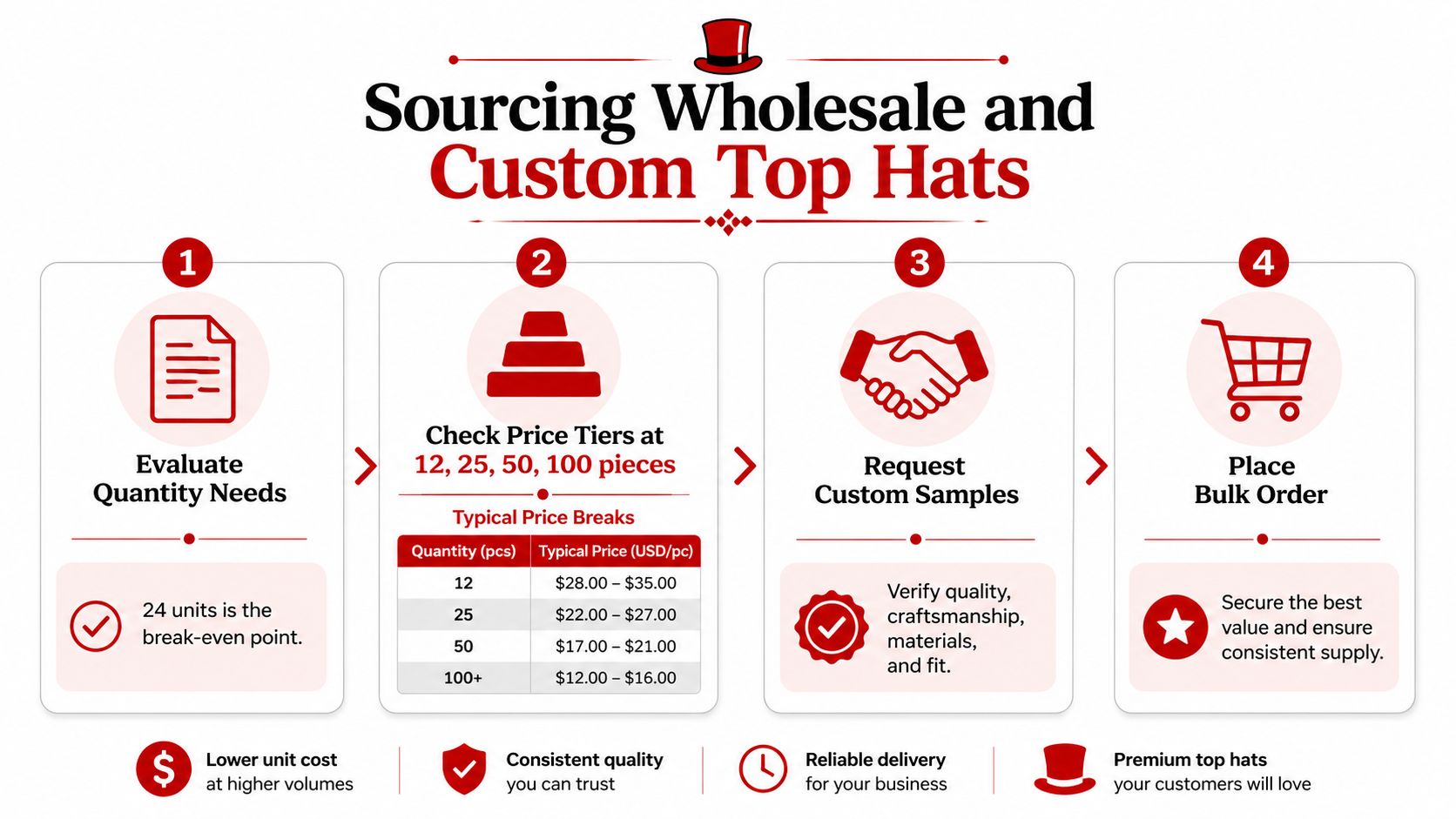
Wholesale makes sense when you're buying for a cast, wedding group, event team, reseller, or promotional campaign. The first decision is whether you need stock hats or a custom run. Stock styles are faster to evaluate and reorder. Custom production gives you control over bands, labels, colors, and graphics, but it demands clearer specifications and more planning.
Use this sequence before requesting quotes:
- Define the quantity and size mix. Don't send a supplier only a total count. Provide the number of each head size, preferred crown profile, color, and delivery date.
- Separate stock from custom. Ask whether the quoted style is already made or will be produced after approval. The lead time, sample process, and reorder risk can differ sharply.
- Request a physical sample. A digital mockup can show artwork placement, but it can't reveal a weak brim, rough lining, or inaccurate sizing.
- Get decoration details in writing. Confirm logo placement, thread colors, patch dimensions, band width, finish, and whether the decoration is removable.
- Protect the reorder. Ask whether the supplier can retain the same blank, color, and decoration specifications for later replenishment.
The exact customization menu varies, but budget top hats can support simple printed bands, woven labels, embroidered crests, crown wraps, or removable badges. Embroidery may look polished on a band, while a removable badge works better when the same hats will serve different clients or events. Sublimated wraps can create a bold visual identity, but they also make a mistake more expensive because the graphic becomes part of the surface.
Ask better supplier questions
A supplier should be able to answer whether the hats are sized or adjustable, how the crown is formed, what the brim is covered with, and how defective units are handled. If the answer is vague, assume the product may vary from piece to piece.
Buyers who already understand bulk headwear can also use this guide to buying blank hats in bulk when comparing decoration workflows and supplier requirements. Top hats aren't standard baseball caps, but the sourcing discipline is similar. Confirm the blank, approve the sample, define the decoration, and document the reorder terms.
The video below can help visual buyers think through wholesale sourcing and custom order preparation.
Don't approve a large order from a catalog image. Approve it from a sample that has been worn, handled, photographed, and measured.
Quality Checks Before You Buy
The cheapest hat rarely wins after you count replacements and event disruption. A low-cost topper can be acceptable, but only if the supplier's sample passes a physical inspection and the shipment arrives consistently.
Inspect the shell first
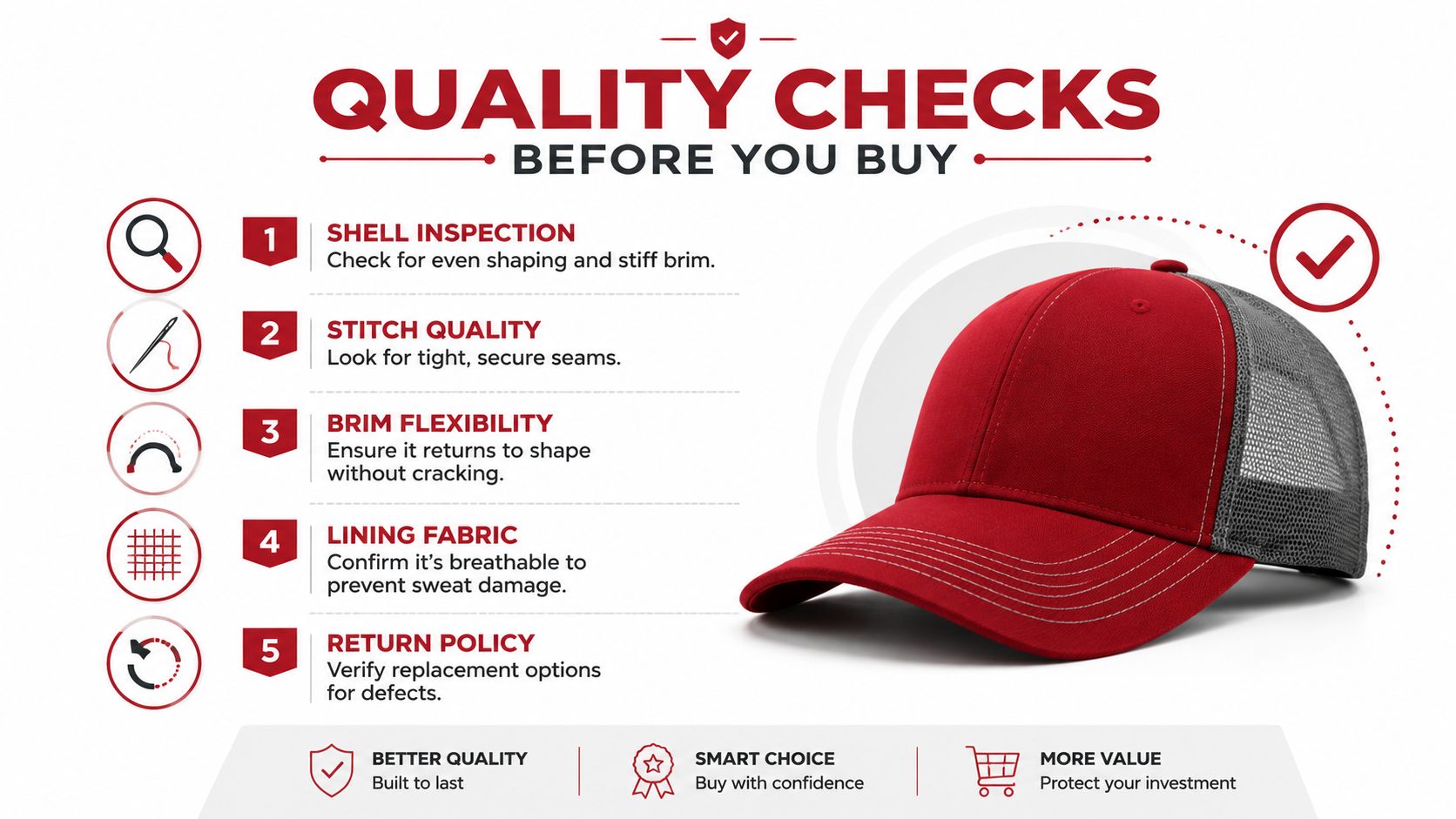
Hold the hat by the brim and look straight across the crown. The top should be level, the sidewalls should appear even, and the brim shouldn't twist. Press the side gently. A usable shell should resist a light squeeze and return toward its original form rather than staying dented.
Check the band next. Loose threads, uneven stitching, exposed glue, or a band that shifts around the crown point to rushed finishing. Run your finger along the inside edge as well. Rough seams become uncomfortable quickly, especially when the hat is worn for hours.
Check the parts buyers skip
The interior matters because a bare shell can feel hot and slippery. Look for a basic sweatband, breathable lining, and an adjuster that doesn't bunch against the wearer's forehead. Ask for an actual internal measurement. A label such as “large” isn't enough if the supplier doesn't define the circumference.
Finish consistency matters for group orders. Compare several units under the same light and look for shade differences, uneven sheen, crown dents, and inconsistent brim curls. Satin and matte surfaces reflect light differently, so make sure the delivered finish matches the approved sample.
Reject weak inventory: A hat that fails the shell, seam, interior, or sizing check before the event won't improve during the event.
Document defects with photographs and keep the packing labels. Your return or replacement request is stronger when you can show the exact issue, affected units, and approved specification. Don't accept a mixed batch if every wearer needs to look coordinated.
Care and Storage That Make Them Last
Low-cost top hats need simple handling, not complicated maintenance. Most damage comes from crushed crowns, bent brims, trapped sweat, and storage in hot or damp places.
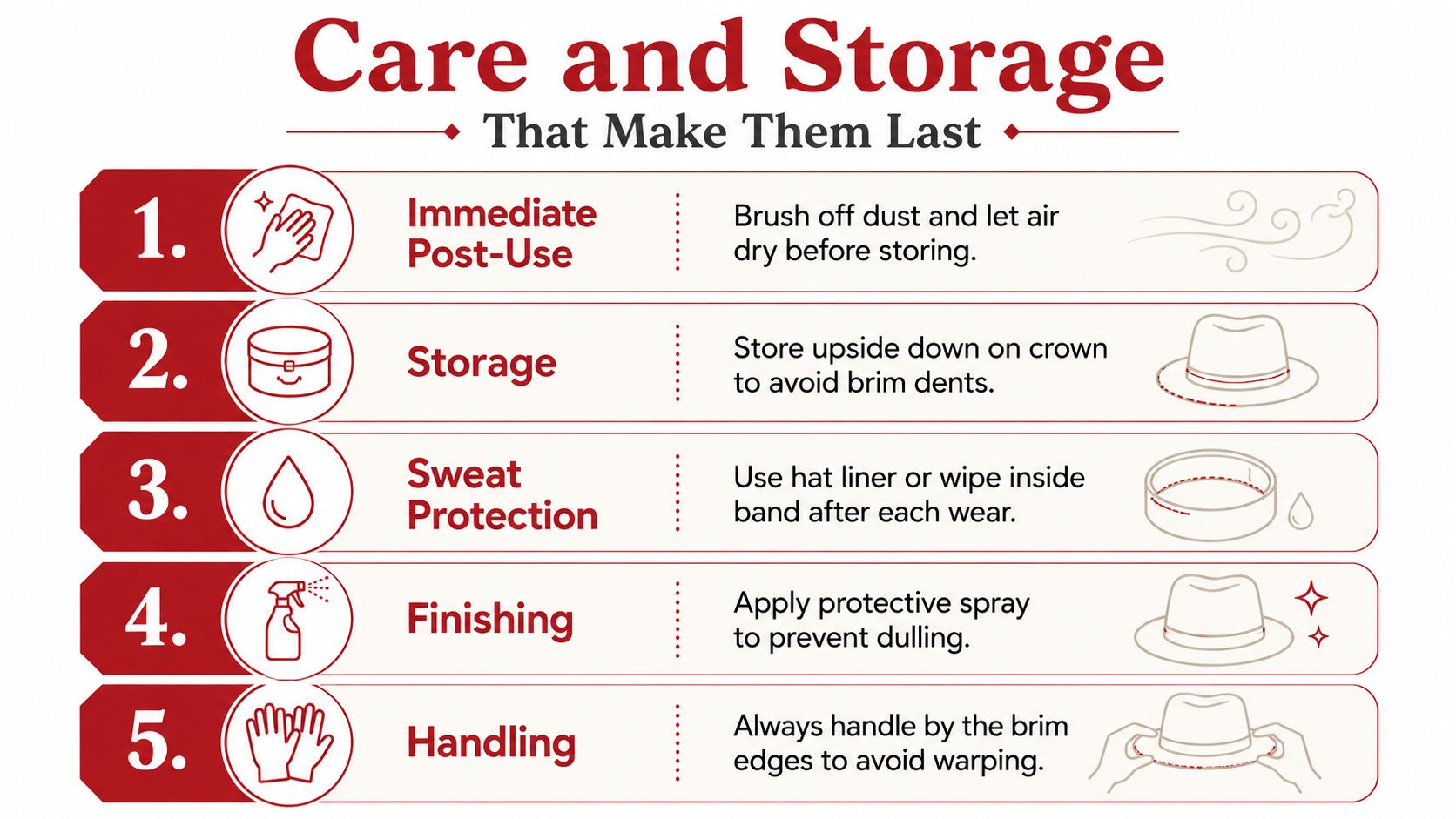
After use, brush dust from the outer surface with a soft hat brush or clean garment brush. Wipe the inside band with a barely damp cloth, then let the hat air-dry away from radiators, hair dryers, and direct sunlight. Heat can soften adhesives and encourage the crown to settle out of shape.
Store the shape, not just the hat
Use a hat box when possible. If you don't have one, support the crown with a clean rolled towel so the sidewalls don't collapse under other equipment. Store the hat where air can circulate, and use a moisture-control packet for longer storage, without placing it directly against the finished surface.
Handle the hat by the brim edges rather than squeezing the crown. If a brim develops a small dent, gentle steam and light hand pressure can help restore it, but test the technique on an inconspicuous area first. Don't machine-wash a structured hat, and don't use aggressive solvents on synthetic finishes or glued seams.
For a run of repeated events, rotate hats rather than returning the same pieces to storage while they're still damp with sweat. More detailed hat-cleaning tips can help you build a basic post-event routine.
If the hats will be displayed between uses, find the perfect hat stand that supports the crown without pressing against the brim. A stable stand keeps the silhouette visible and reduces the temptation to stack hats in a storage bin.
Choosing the Right Cheap Top Hat for Your Event
Your event decides the correct compromise. Don't buy a collapsible hat for a close-up wedding portrait just because it ships easily. Don't buy a rigid formal topper for a roaming promotion that has to fit into equipment cases.
| Use case | Recommended format | What to prioritize |
|---|---|---|
| Wedding or formal photography | Rigid, silk-look or clean synthetic finish | Even crown, stable brim, consistent sizing, restrained band |
| Theater production | Rigid for silhouette, collapsible for transport-heavy work | Repeatable shape, interior comfort, replacement availability |
| Travel performance | Collapsible | Compact storage, quick reshaping, secure internal structure |
| Trade show or branded event | Collapsible or lightweight rigid | Decoration area, low handling risk, easy distribution |
| Parade or themed party | Plastic, printed paper, or basic synthetic | Visual impact, simple replacement, short-use practicality |
| Resale inventory | Sized rigid or dependable collapsible stock | Repeatable specifications, reorder potential, clear measurements |
For weddings, spend the budget on shape and finish before decorative extras. For theater, inspect the inside because performers may wear the hats through long scenes and repeated changes. For branded merchandise, decide whether the logo should be permanent. A removable badge or replaceable band can make the same base hat useful for multiple campaigns.
A decorative project may need a different product entirely. The B-Sew Inn witch hat decor offers useful inspiration for themed presentation, especially when the hat's role is visual rather than wearable. That distinction saves money. A centerpiece, prop, giveaway, and formal accessory shouldn't share the same specification.
Use this final check before ordering:
- Event: Is the hat formal, theatrical, promotional, decorative, or disposable?
- Quantity: Do you need a few matching pieces or a repeatable stock program?
- Construction: Will rigid shape or compact storage solve the bigger problem?
- Customization: Do you need a printed band, embroidery, patch, badge, or no decoration?
- Fit: Has the supplier provided actual measurements for every wearer or size group?
- Inspection: Have you approved a sample and defined what counts as a defect?
Cheap top hats work when you buy for the job in front of you. Match construction to wear time, fit to the people using them, and decoration to the way the hats will be handled.
Dirt Cheap Headwear helps businesses and event teams source wholesale headwear and add custom embroidery, patches, or printing with low minimums and worldwide shipping. If you're building a coordinated branded headwear order, visit Dirt Cheap Headwear to compare blank styles and start a custom order.