You’re probably in one of three spots right now. You need hats for a staff team, a spring event, or a small merch drop, and every quote you’ve seen either looks too expensive, too confusing, or too cheap to trust.
That’s normal. In custom headwear, “cheap” usually gets used the wrong way. A low price by itself doesn’t help if the hat fits badly, the logo stitches like a blob, or the order minimum forces you to buy more than you can move.
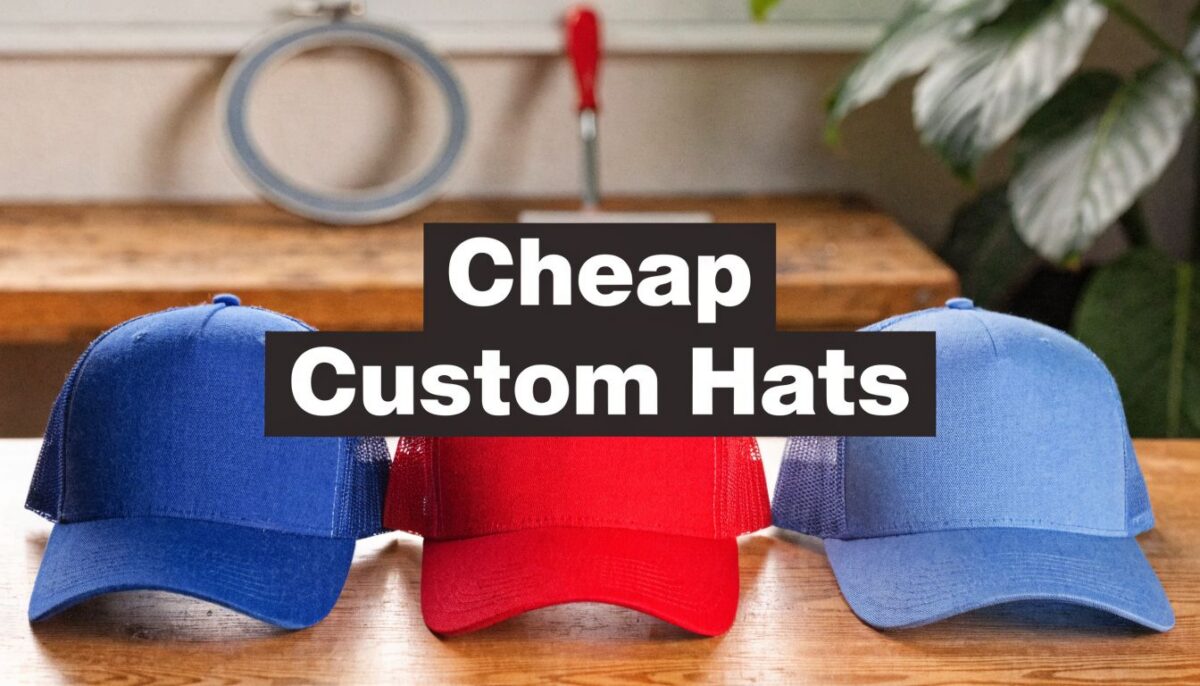
The buyers who get the best results focus on cost per usable hat, not just the lowest listed unit price. That means choosing the right blank, the right decoration method, and the right quantity for the job. Get those three decisions right, and custom trucker hats cheap can still look clean, branded, and retail-ready.
Why 'Cheap' Custom Hats Don't Have to Look Cheap
The old model for custom hats was rough on small buyers. If you didn’t need a big bulk run, you often had to accept high pricing, limited style choices, or decoration that felt like an afterthought.
That’s changed. The Global Cap Market was valued at $16.46 billion in 2020, and custom headwear has become much more accessible as suppliers expanded low-minimum ordering options. Many sellers now offer no-minimum or low-minimum custom orders, with some starting at as few as 6 pieces, instead of the old 50 to 300 unit minimums that used to be common (Printify custom trucker hats market overview).
That matters for real buyers. A startup can test a logo without tying up cash in a giant run. A coach can order for a small roster. A brewery can try one seasonal hat before committing to a bigger reorder.
What cheap should actually mean
Cheap should mean efficient. It should mean:
- The blank fits the use case instead of overbuilding the hat
- The decoration matches the logo instead of forcing embroidery onto artwork that should be printed
- The quantity matches the risk so you aren’t sitting on dead inventory
- The finished piece still feels intentional when someone puts it on
Practical rule: A hat looks premium when the blank, logo size, and decoration method agree with each other.
A simple one-color patch on the right trucker hat often looks better than dense embroidery stuffed onto a bargain blank. A foam-front print can outperform thread when the art is bold and graphic. And a six-piece test run can be smarter than a large “deal” if you haven’t validated the design yet.
Where buyers get into trouble
Most bad hat orders come from one of two mistakes. They either chase the lowest hat price and ignore decoration cost, or they buy a premium blank for a logo that doesn’t need it.
The sweet spot is usually in the middle. Good custom trucker hats cheap aren’t about cutting every corner. They’re about cutting the corners nobody notices.
Decoding the True Cost of a Custom Trucker Hat
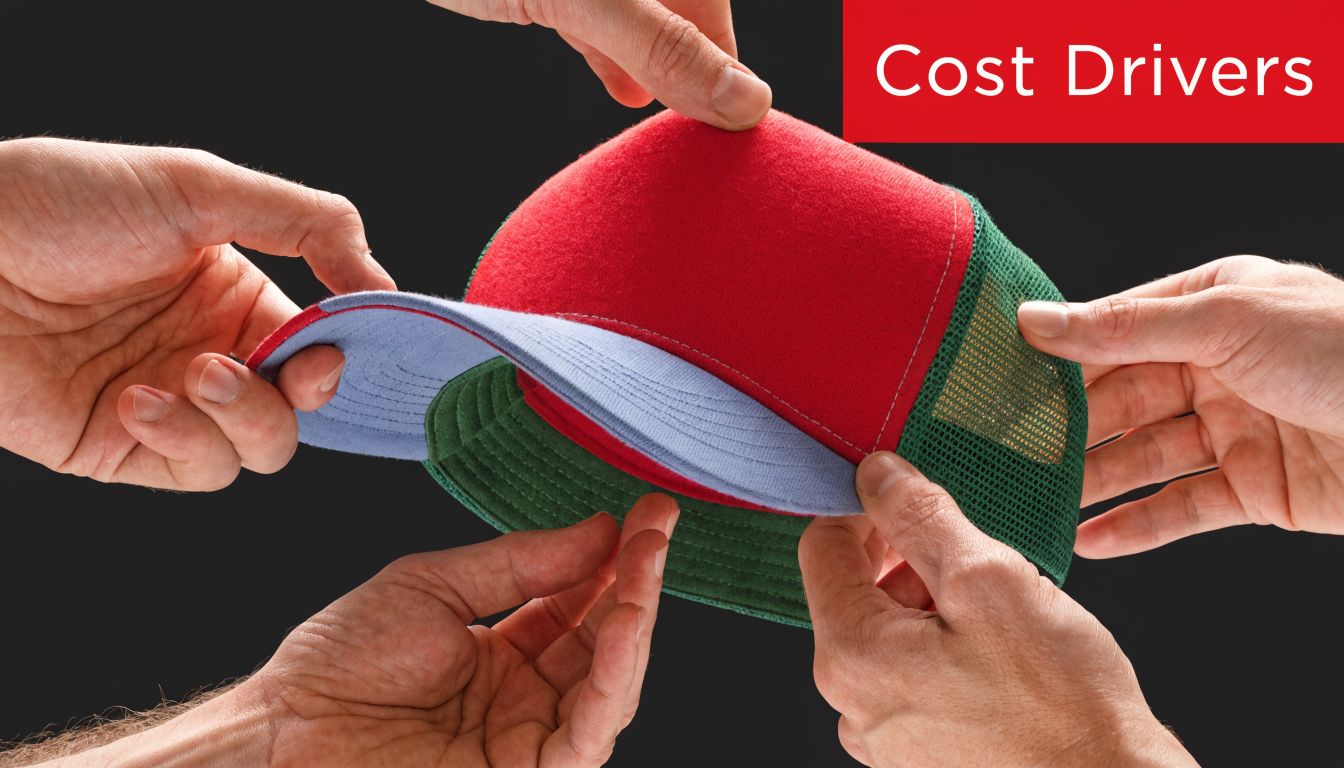
The final price on a trucker hat comes from three moving parts. The blank hat, the decoration method, and the quantity. If you don’t separate those, quotes are hard to compare.
The blank sets the floor
Start with the undecorated hat. That’s your floor cost.
A better-known style usually costs more because you’re paying for a specific fit, construction, and consistent inventory. A basic promo trucker can still work well, but cheaper blanks often have weaker front panels, lighter mesh, or a shape that doesn’t hold up after decoration.
If you want a quick primer on how decoration charges stack on top of the blank, this breakdown of screen printing cost is useful because it shows why setup and unit pricing don’t move the same way.
Decoration changes the math fast
Many budgets frequently get blown at this point.
A simple logo with clean shapes is usually inexpensive to decorate. A dense logo with tiny text, gradients, or lots of color changes is harder. That means more labor, more setup, or a different decoration method.
Here’s the practical version:
| Cost driver | Usually cheaper | Usually pricier |
|---|---|---|
| Artwork | Bold, simple logo | Fine detail, tiny text |
| Thread work | Flat embroidery with limited detail | Dense stitching or 3D puff |
| Patch style | Simple woven or embroidered patch | Specialty material or layered patch |
| Printing | One bold front graphic | Artwork needing special handling |
A logo can be great on a website and still be wrong for a hat. Caps give you less room. If the art has to be shrunk too far, decoration either gets muddy or expensive.
The cheapest custom hat isn’t the one with the lowest quote. It’s the one that survives production without redesigns, proof changes, and rework.
Quantity creates the real trade-off
Small runs cost more per hat. Bigger runs lower the unit cost, but only if you do use or sell the hats.
That’s the core trade-off in custom trucker hats cheap. You’re balancing risk against efficiency.
- Low quantity works for testing a design, outfitting a small crew, or making samples.
- Mid quantity often gives the best balance for events and small merch launches.
- High quantity makes sense when the design is proven and stock risk is low.
Don’t compare quotes blindly
When you review quotes, check these details side by side:
- Blank model: Same hat, or different hats?
- Decoration type: Direct embroidery, patch, or print?
- Logo size and placement: Front only, or extra locations?
- Proofing and setup: Included, or added later?
- Shipping: Rolled in, or billed separately?
Two quotes can look similar at first and be built on totally different assumptions. That’s why the “cheap” option sometimes ends up costing more after revisions.
Choosing the Right Blank Hat for Your Budget
Most buyers don’t need every trucker hat on the market. They need the few styles that decorate well, fit consistently, and don’t wreck the budget.
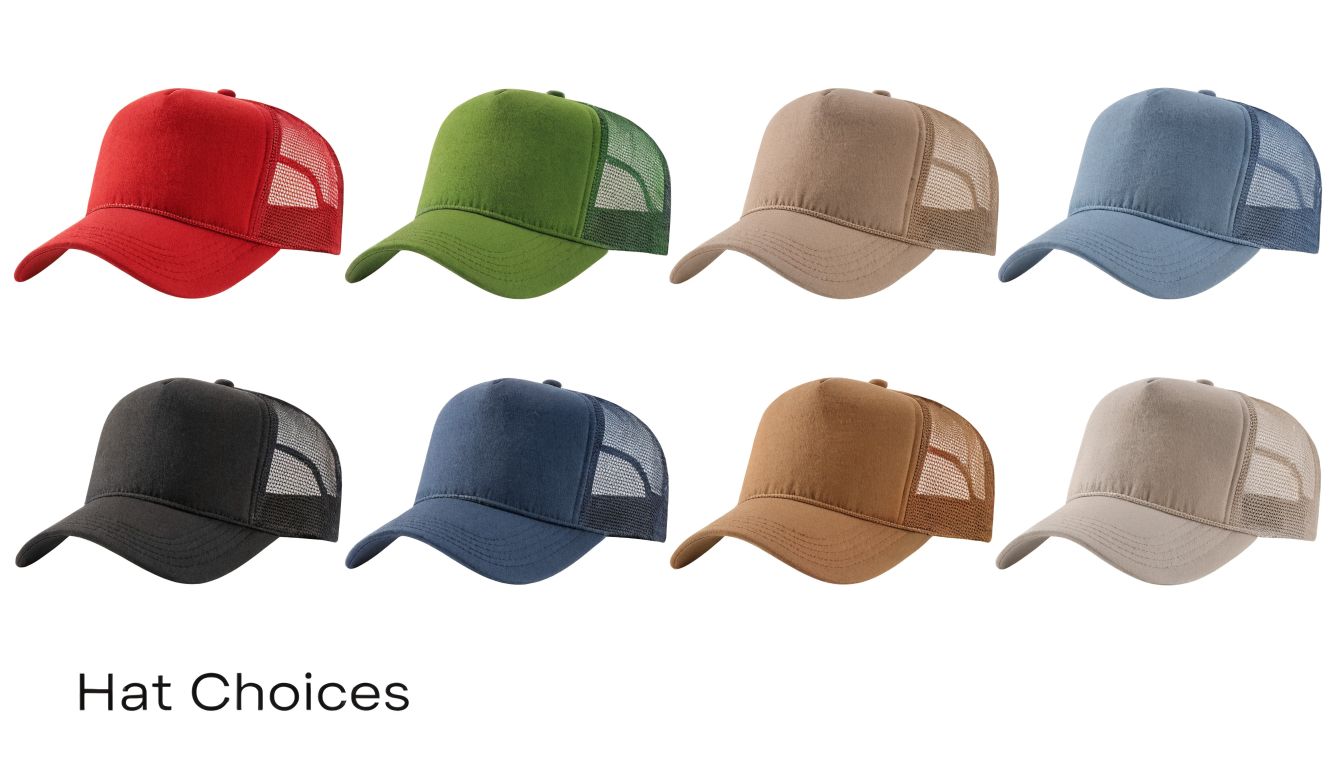
That short list starts with one obvious workhorse. The Richardson 112 trucker hat style consistently dominates the market, and its bulk wholesale pricing often lands in the $1.10 to $2.80 per unit range (Accio top-selling trucker hats data). That’s a big reason it keeps showing up in team stores, merch tables, and wholesale programs.
Why the Richardson 112 stays on top
It isn’t just brand recognition. The 112 hits the balance most buyers want.
You get a classic six-panel trucker profile, a structured front, and a shape that works for embroidery, patches, and a lot of mainstream branding. It’s rarely the absolute cheapest blank in the room, but it often becomes the cheapest safe choice because decorators know how it behaves.
If you’re comparing blanks that hold stitches well, this guide on buying bulk blank trucker hats that stitch well gets into the construction details buyers usually overlook.
The budget tiers that make sense
Instead of chasing every catalog option, think in tiers.
Good value with fewer surprises
Richardson 112 sits here. It’s the “I need this to work” option for a lot of businesses and teams. If your logo is straightforward and you want a dependable finished look, this is the easy recommendation.
YP Classics trucker styles also live in this lane. They’re popular with merch brands because the profile often leans a little more fashion-forward depending on the model. If your audience cares about shape and streetwear styling, YP Classics can be worth the bump.
Budget-first blanks
Valucap and similar promo-level styles make sense for giveaways, staff events, and broad distribution where keeping unit cost down matters more than premium feel.
These hats can absolutely work. You just need to be realistic. The front panel may be softer, the mesh may feel lighter, and not every low-cost blank handles dense embroidery well.
A bargain blank works best when the decoration is simple and the expectations are clear.
Five-panel vs six-panel
This choice affects both the look and the decoration.
Here’s the short version:
| Style | Best for | Watch out for |
|---|---|---|
| 5-panel trucker | Big front graphics, patches, bold prints | Can feel more fashion-specific |
| 6-panel trucker | Classic embroidery, broad audience, standard merch | Center seam can affect some artwork |
A 5-panel hat gives you a cleaner front face. That’s excellent for patches and printed art because there’s no center seam splitting the design.
A 6-panel hat gives you the familiar trucker look many buyers expect. It’s versatile and easy to sell across age groups and industries.
Structured vs unstructured
If you want hats that hold shape on a display wall or in e-commerce photos, structured is usually safer.
If you want a softer, more relaxed fit, unstructured can feel easier to wear, but it changes the vibe. Some logos look sharper on a rigid front. Others fit a laid-back shape better.
For uniforms, staff hats, and broad-use branded merch, structured truckers usually win because they keep a cleaner silhouette after decoration.
Material matters more than most buyers think
Not every trucker front behaves the same way.
- Cotton/poly fronts usually give you a versatile, everyday finish
- Foam fronts are excellent for bold prints and high-visibility graphics
- Acrylic blends can look clean, but decoration quality depends on construction
- Mesh quality affects comfort and how “cheap” the hat feels in hand
Factories that produce custom trucker hats at scale typically move through material sourcing, cutting, decoration, sewing, ironing, inspection, and packing as separate stages, and production quality is heavily tied to how accurately those steps are handled (ZYCAPS custom trucker hat manufacturing process). Buyers don’t need to manage factory operations themselves, but they do need to understand that low price and clean production aren’t automatic.
A simple way to choose
If you’re unsure, use this filter:
- For resale merch: Pick a better-known blank with a reliable shape
- For event giveaways: Use a budget blank with simple decoration
- For patches or bold front art: Look hard at 5-panel truckers
- For broad team use: Stick with a classic structured 6-panel style
The right blank saves money before the first stitch even starts.
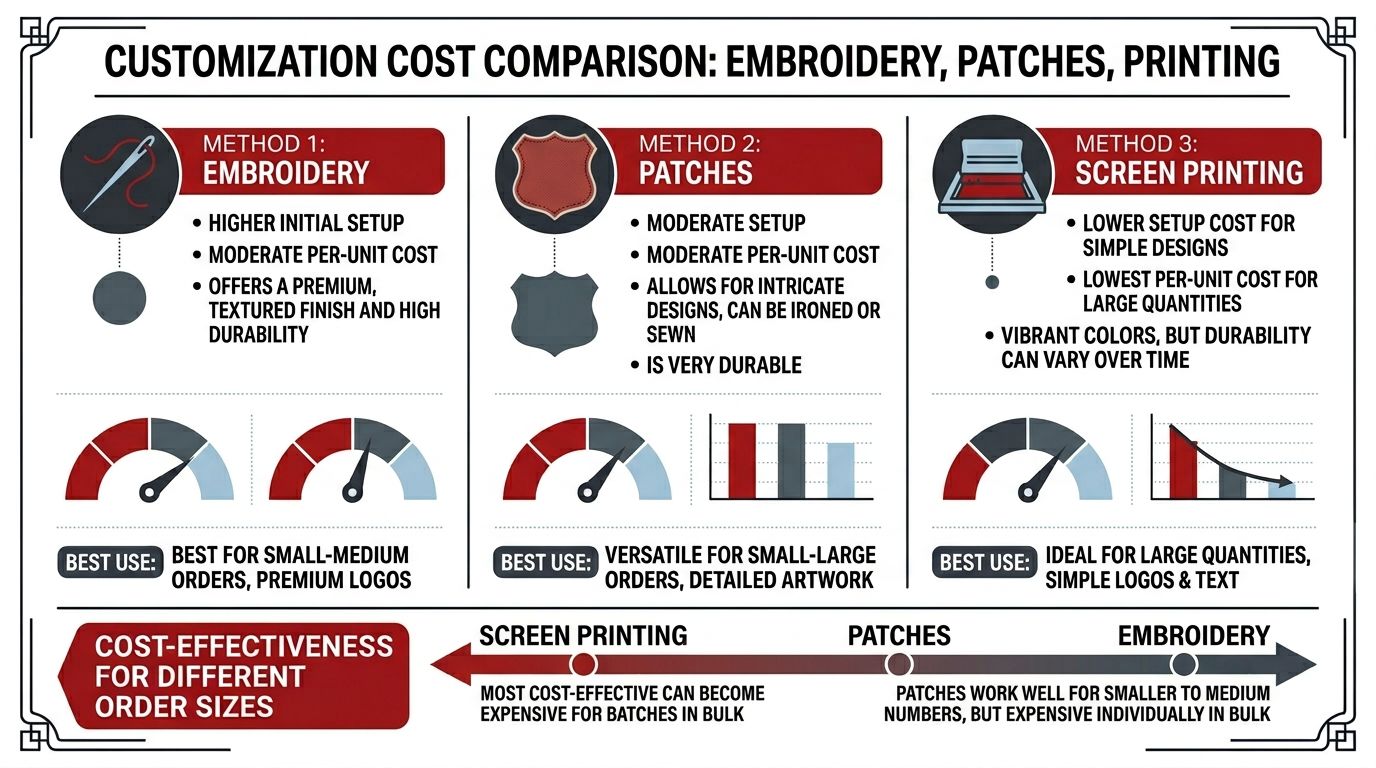
Embroidery vs Patches vs Printing Which Is Cheapest
Decoration is where a good hat order gets sharp, or gets messy. Buyers usually ask which method is cheapest, but that’s only half the question. The key question is which method gives you the best result for the money.
Embroidery for the classic hat look
Embroidery is still the default for a reason. It looks clean, wears well, and instantly reads as standard branded headwear.
But embroidery gets expensive when the logo fights the process. Tiny letters, packed fill areas, and heavy stitch count all push cost and can lower clarity.
Flat embroidery works well when the logo has:
- Clear shapes
- Limited fine detail
- Enough spacing between elements
- No need for photo-like color transitions
3D puff gives a raised look that can be great for bold lettering. It’s not ideal for delicate artwork.
Shop-floor advice: If the logo only looks good when it’s large on a screen, it probably needs simplification before it goes on a hat.
Patches solve problems embroidery can’t
Patches are the quiet money-saver in a lot of custom trucker hats cheap orders.
If your logo has detail that won’t stitch cleanly straight onto the cap, a patch often fixes that. It also changes the visual style in a good way. Woven patches feel cleaner and finer. Embroidered patches feel traditional. PVC leans sporty and modern. Leather-style patches give a different retail look.
This is a solid side-by-side on embroidered patches vs direct embroidery if you’re deciding between those two specifically.
When patches make the most sense
- You want detail without dense direct stitching
- You’re decorating a softer front panel
- You want a retail-style badge look
- You need consistency across multiple hat styles
Patches do add an extra production step. That means they aren’t always the lowest-cost option on paper. But they often prevent the “why does my logo look different on every cap style?” problem.
Here’s a quick comparison:
| Method | Best look | Cost tendency | Best for |
|---|---|---|---|
| Direct embroidery | Traditional, textured | Moderate to higher with complex logos | Teams, uniforms, core merch |
| Patch application | Branded, retail-style | Moderate | Lifestyle brands, detailed logos |
| Printing | Bold, graphic, colorful | Often strong for simple bulk use | Foam truckers, events, promo runs |
Printing wins on the right hat
Printing is underrated in the trucker space because people default to thread. That’s a mistake for certain art styles.
If you’re using a foam-front trucker and the design is bold, graphic, and color-driven, printing can be the smartest budget move. It handles art that embroidery can’t reproduce cleanly, especially if the goal is visual punch instead of stitched texture.
A lot of generic “cheap custom hats” content skips this and pushes every buyer toward embroidery. That’s one reason so many small brands overpay for decoration that doesn’t suit their artwork. There’s also a real gap in practical sourcing advice around combining low-cost blanks with local decoration workflows, especially for buyers trying to stay under aggressive per-hat targets (ShelfTrend custom hat market analysis).
Here’s a quick video that shows the kind of visual effect buyers often want from hat decoration:
The cheap answer depends on the art
Use this decision filter:
- Choose embroidery if the logo is simple, bold, and meant to feel standard and durable.
- Choose patches if the art has detail, you want a branded retail look, or the cap surface isn’t ideal for direct stitching.
- Choose printing if the design is graphic-heavy, color-forward, and going on a print-friendly front panel.
The cheapest decoration method is the one that doesn’t require you to redesign the logo after the proof comes back.
Smart Ordering Strategies to Maximize Your Budget
The biggest savings usually don’t come from shaving a little off the blank. They come from ordering smarter.
A lot of buyers search for no-minimum trucker hats because they don’t want inventory risk. That makes sense. But the market is messy. Many buyers looking for that option run into confusing price bands of $13 to $20 per hat, and demand for retro 5-panel styles has risen 30% while clear guidance on decorating them at low quantities is still thin (RushOrderTees trucker hat pricing and demand notes).
Start with a test run when the design is unproven
If you haven’t sold the design before, keep the first order tight. A small run lets you check real-world things that mockups won’t tell you:
- How the logo sits on the crown
- Whether the color combo sells
- How the hat fits your audience
- Whether the decoration method was the right call
Low-minimum embroidery can be useful. Dirt Cheap Headwear, for example, offers in-house embroidery with minimums starting at six pieces per logo, which is practical for test runs, small teams, and early merch drops.
Simplify the logo before you simplify the hat
Buyers often try to save money by downgrading the blank. The better move is usually to simplify the artwork first.
A cleaner logo can lower decoration cost while keeping the hat itself solid.
What usually helps
- Reduce tiny text: If it won’t read at a glance, remove it.
- Limit color changes: Simpler art is easier to decorate cleanly.
- Use bold shapes: Hats reward strong silhouettes.
- Pick one focal point: Front logos get crowded fast.
Buyers save more money fixing bad artwork early than arguing over pennies on the blank later.
Understand where bulk starts helping
You don’t need massive volume for quantity to matter. Once a design is proven, moving from a test order to a fuller run usually changes the economics in your favor.
The exact breakpoints vary by hat, logo, and decoration. The pattern doesn’t. More units usually mean a lower price per hat.
Here’s a simple example of how buyers should think about it.
| Order Quantity | Estimated Price Per Hat | Total Estimated Cost |
|---|---|---|
| 6 | Higher | Higher per-unit risk, lower inventory risk |
| 24 | Lower than a small test run | Moderate total spend |
| 72 | Better value for proven designs | Stronger balance of cost and stock |
| 144+ | Lowest per-unit range in many setups | Highest cash commitment |
This isn’t a quote table. It’s a decision table. The point is to choose the quantity that matches your confidence level.
Split the job if needed
A lot of shops present only one path. You pick one hat, one decoration, one order size, and that’s that.
Smart buyers sometimes separate the problem:
- Buy a better blank for retail sales
- Use a simpler blank for giveaways
- Run premium embroidery on a small batch
- Print a larger promo batch for events
That approach keeps your nicest hats where they matter most.
Negotiate the parts that actually move
You usually won’t get far haggling randomly. You’ll do better if you negotiate around specifics such as proof fees, setup handling, reorder terms, or packaging choices. This guide on negotiating with vendors is worth reading because it frames negotiation as a scope conversation, not just a price conversation.
The best budget move is simple. Don’t buy like every hat has the same job.
Your Final Buyer's Checklist Before You Order
A hat order usually goes sideways in the last mile, not the first. Someone approves a proof too fast. A production timeline gets confused with shipping time. The landed cost ends up higher than expected because freight wasn’t considered.
That’s easy to avoid if you slow down for one final review.
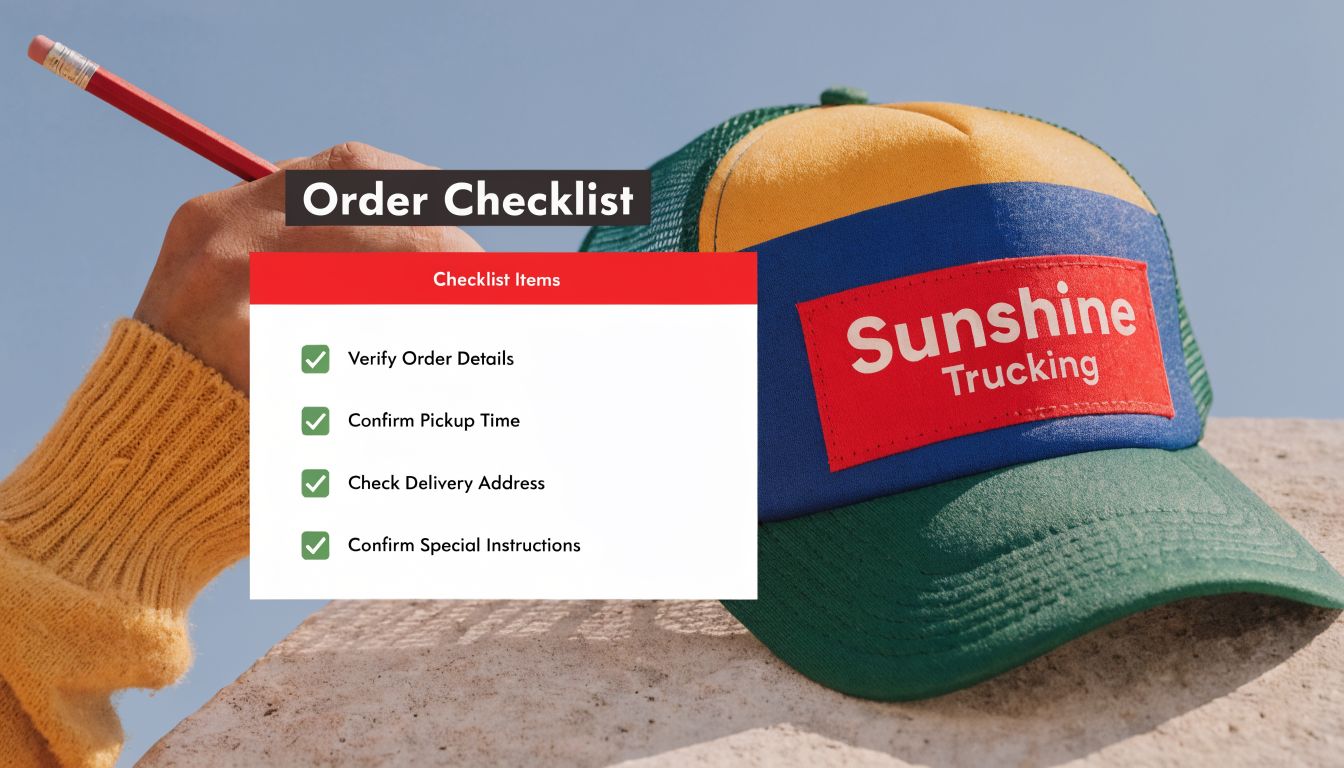
Check the proof like it’s the final product
Don’t just glance at the mockup. Check the exact things that create expensive mistakes.
- Spelling and wording: Brand names, taglines, event dates
- Logo placement: Centered, sized right, not too high
- Thread or patch colors: Close enough isn’t always close enough
- Hat color and closure: Make sure the selected SKU matches the proof
Separate production time from delivery time
Production starts after approval, not when you ask for the quote.
Factories that produce custom trucker hats at scale often quote sample timing and bulk timing separately, and that same logic applies at the shop level. The decoration window and the transit window are two different clocks. If a shop says standard production is a set number of business days, that usually doesn’t mean the box lands on your doorstep that same day range.
Don’t approve art on Friday and assume the event is covered just because the timeline sounded short.
Calculate landed cost
A cheap hat that gets expensive after shipping isn’t cheap.
Before you place the order, confirm:
- The full item total
- Any setup or proof charges
- Shipping cost
- Expected arrival date, not just ship date
Final pre-order check
Use this short list before you send payment:
- Confirm the exact blank style and color
- Approve the final digital proof
- Verify the decoration method
- Check the quantity and any price break
- Confirm production time and estimated delivery
- Review the full landed cost
That two-minute check saves a lot of cleanup.
If you want a practical place to start, Dirt Cheap Headwear offers wholesale blank hats plus low-minimum custom decoration, so you can price out a small test run or a larger reorder without guessing your way through the process.
Pingback: Megatrans 2026: The Ultimate Exhibitor's Guide
Pingback: How to Match Hats to Uniforms for Work Teams | Dirt Cheap Headwear