
Mid Profile Hat Guide for Custom Orders and Wholesale Buyers
You're comparing cap samples for a team, event, or new merch drop, and every supplier seems to use “profile” differently. One hat looks too flat, another stands tall and boxy, and a third seems promising until you place your logo on the front. The problem usually isn't crown height alone. Structure, panel count, closure, and decoration method can change the fit and finished appearance just as much.
A mid profile hat is often the safest starting point for a custom order because it occupies the practical middle ground. It can look polished without feeling overly tall, and it gives a supplier enough front-panel stability for dependable branding. But “mid profile” doesn't describe one universal cap. A structured five-panel trucker and an unstructured six-panel cotton cap may share the same general crown category while producing very different results on the head and under an embroidery needle.
Why Mid Profile Hats Are the Default Choice for Most Orders
Most first-time buyers don't walk into a wholesale order knowing they need a particular crown height. They want something a youth team, work crew, customer base, or mixed group can wear without constant complaints. After looking through structured caps, dad hats, truckers, flat bills, and fitted styles, they're left asking why one cap feels clean and balanced while another seems either too low or too tall.
That's where the mid profile hat earns its reputation. Its crown sits higher than a close-fitting low profile cap but lower than a tall high profile style. The result generally reads as a familiar baseball cap rather than a fashion-specific silhouette. For group orders, that familiarity reduces the risk that the cap will feel too extreme for part of the audience.
Why the middle works
A mid profile crown provides moderate vertical room over the forehead and upper head. That space can make the hat feel less restrictive than a low profile design, while the lower stance keeps it from projecting the upright, oversized look associated with many high profile caps.
Fit still depends on head shape, crown construction, closure, and the individual brand's pattern. A snapback can accommodate a varied group more easily than a fitted cap, while a structured front can feel more substantial than a soft, unstructured crown even when both are labeled mid profile.
Practical rule: If you're ordering for people you can't fit individually, start with a mid profile adjustable cap, then decide whether the front should be structured or relaxed.
This category also works across several buying situations. A sports league may want a classic cap shape that supports a team mark. A small business may need a professional-looking hat for staff and promotional use. An apparel brand may prefer the same general profile in a softer fabric, with the decoration intentionally kept understated.
What the label does not tell you
The profile label won't tell you whether the cap has five or six panels, whether the visor is curved or flat, or how much reinforcement sits behind the front decoration area. It also won't guarantee that every brand's “mid” fit feels identical.
That's why a product page should be treated as a starting point, not a complete buying decision. Check the construction, closure, fabric, decoration area, and sample fit before committing to a large run. The most versatile profile can still be the wrong choice if its front panels fight your artwork or its closure doesn't suit the group.
Understanding Crown Height and Mid Profile Measurements
Crown height is the measurement that separates profile categories. Neutral industry guides commonly place a mid profile hat around 3 to 4 inches, or about 7.6 to 10.2 centimeters, from the brim base to the crown top. See this hat profiles and fits guide for a practical comparison of how crown geometry affects the way a cap sits.
Think of low, mid, and high profile as three shelves. The low shelf keeps the crown close to the head. The middle shelf adds enough height for a balanced front without making the cap look upright. The high shelf creates more vertical presence and often gives the wearer a bolder, more structured silhouette.

Why a few inches change the fit
The crown has to follow the arc from the forehead toward the top of the head. A very low crown can sit close and feel sleek, but it may press more noticeably against certain forehead shapes. A high crown creates additional vertical space, though some wearers find that extra height visually dominant or less natural for everyday use.
Mid profile occupies the compromise position. Its moderate height usually leaves enough room for a standard forehead-to-vertex arc without forcing the front panels to collapse. That geometry helps explain why suppliers often recommend it as a default for mixed groups and general retail assortments.
Crown height also influences logo presentation. A mid profile front panel can display a standard mark clearly, but its curve begins sooner than on many high profile caps. Artwork that depends on substantial vertical space may need to be simplified, reduced, or moved to a patch format.
The construction timeline behind the silhouette
The balanced shape has a long baseball-cap lineage. Early modern cap examples were worn by the New York Knickerbockers in 1849, while the Brooklyn Excelsiors' 1860 cap is widely treated as the first true modern baseball cap, according to MLB's baseball-cap history. Those early designs established the crown-and-bill format that later developed into modern structured silhouettes.
By the 1890s, caps had added air holes, and in 1901 the Detroit Tigers placed the first known front-logo image on a cap, turning the crown into a visible branding surface. By the 1940s, the crown had become more vertical. The modern six-panel construction became standard in the 1950s, replacing earlier eight-panel designs and helping normalize the balanced crown shape familiar on many mid profile caps.
The result is more than a measurement category. It's a practical combination of crown height, panel geometry, and branding tradition. When checking a sample, look at the cap from the side, then inspect the front while it's worn. A mid profile crown should look present but not towering, with the front panels following the head rather than folding into a low shelf.
Structured vs Unstructured Mid Profile Caps
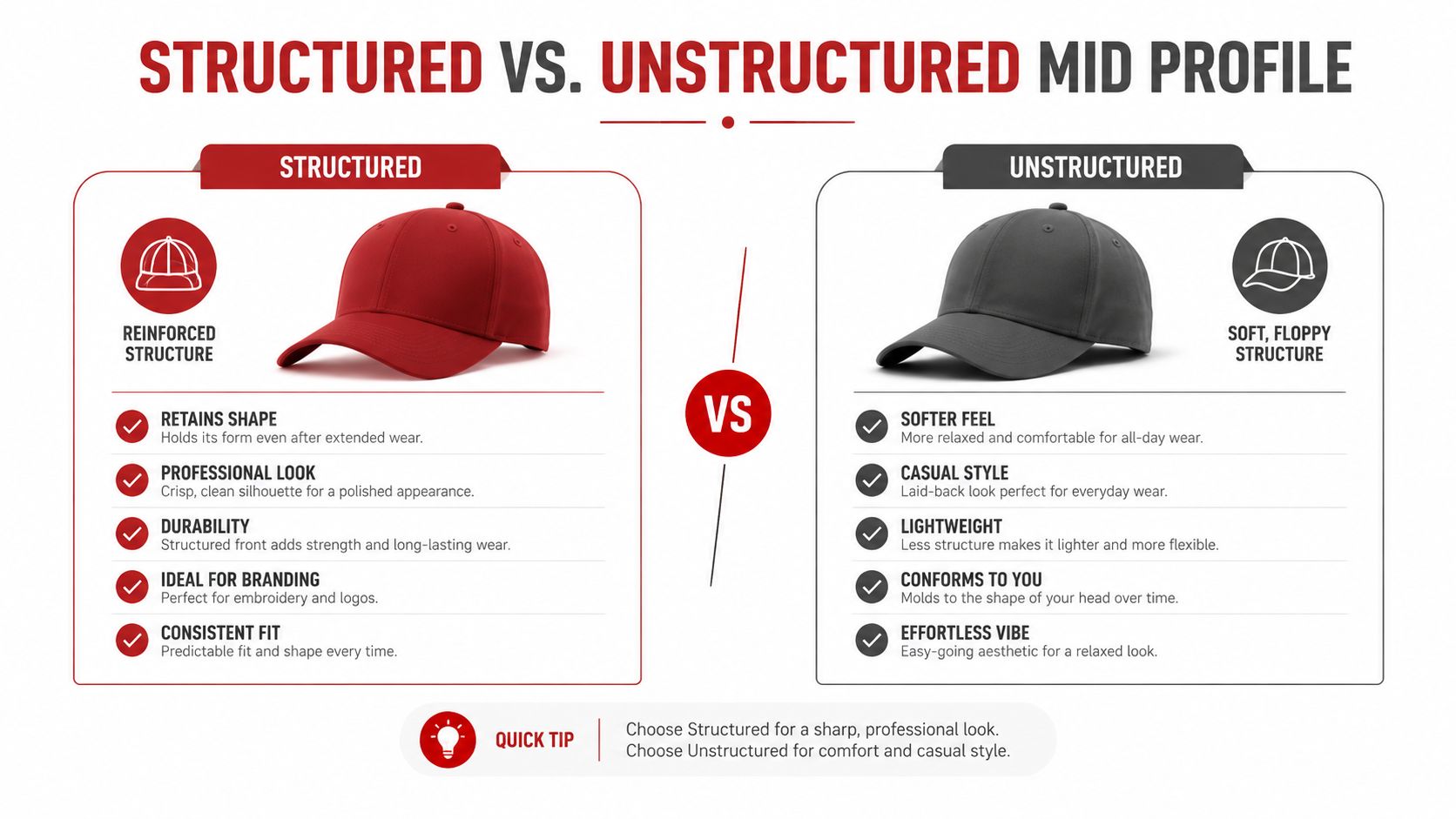
Two caps can share a mid profile label and still feel completely different. The key distinction is whether the front panels contain reinforcement. A structured mid profile cap uses backing or stiffening to help the crown hold its form. An unstructured mid profile cap uses softer panels that relax and conform more closely to the wearer's head.
Structured caps favor presentation
Structured construction is usually the better fit when the logo needs to look consistent from cap to cap. Reinforced front panels resist collapsing during hooping and decoration, which helps the embroidery machine maintain stitch registration. That stability is especially useful for bold lettering, clean borders, dimensional puff work, and designs that need a crisp front-facing presentation.
A structured crown also creates a more intentional appearance before decoration. It suits sports uniforms, company programs, school branding, and retail designs where the cap needs to look finished on a display wall or in product photography.
The trade-off is feel. A structured front can seem firmer and less forgiving, particularly for people who prefer a broken-in, low-bulk cap. It may also project more visibly from the head than a soft construction with the same nominal profile.
Unstructured caps favor comfort
Unstructured construction collapses slightly when it isn't being worn and follows the head more naturally once it is on. That softer behavior works well for casual lifestyle programs, relaxed outdoor brands, and merchandise intended to feel familiar rather than uniform.
The decoration surface requires more care. The cap can move under the needle, and the front may not present a perfectly flat plane during production. That doesn't make embroidery impossible, but it makes artwork simplicity, proper stabilization, and experienced hooping more important.
The video below shows the visual difference between these construction approaches and can help you judge the kind of shape your order needs.
Panel count changes the result
Panel count adds another layer. A six-panel cap divides the crown into a traditional baseball-cap layout, with a center front seam or seam relationship that can affect logo placement. A five-panel cap often presents a broader uninterrupted front panel, which can be attractive for a large patch or a centered graphic.
That broader surface isn't automatically easier to decorate. Seams, fabric tension, visor attachment, and the chosen decoration method still control the outcome. A structured five-panel mid profile can create a bold, clean front, while an unstructured six-panel version may offer a softer, more traditional feel.
For a deeper construction comparison, review this guide to structured and unstructured hats. Choose structure when repeatable logo presentation matters most. Choose softness when the product's comfort and relaxed character matter more than a rigid front.
Embroidery and Decoration Considerations for Mid Profile Hats
Mid profile caps are workable decoration platforms, but they don't offer unlimited front-panel space. Because the crown begins curving sooner than it does on many high profile caps, a large design can wrap toward the sides or distort near the lower edge. The right artwork size depends on the specific cap, not just the profile label.
Start with the cap, then fit the artwork
Ask for the decoration area or a sample before finalizing the design. Place the artwork on a front-panel template, checking its width, height, lower edge, and relationship to seams. A logo that looks balanced on a flat digital mockup may feel crowded once it follows the crown's curve.
Use these checks before approving production:
- Measure the usable field: Keep the design inside the panel area rather than treating the entire visible crown as one flat canvas.
- Inspect the lower edge: Designs placed too close to the visor seam can look compressed or become difficult to hoop cleanly.
- Check fine details: Small lettering and thin outlines need enough scale to remain readable after stitching.
- Match the design to the construction: Structured panels support a more controlled embroidered finish than soft panels that shift and flex.
A mid profile crown generally suits compact logos, simple wordmarks, badges, and moderate-width team graphics. It's less forgiving of very tall artwork or designs with multiple tiny elements stacked vertically.
Choose the technique for the design
Flat embroidery is the most adaptable option for many mid profile programs. It can handle clean shapes, straightforward lettering, and brand marks without adding excessive height to a crown that already has limited vertical space.
Three-dimensional puff embroidery can create a strong raised effect, but it needs suitable artwork. Broad shapes and sturdy lettering tend to work better than delicate details. The structured front is usually the safer choice because it supports cleaner registration and helps the design maintain its intended form.
Patches offer another route when the artwork is too detailed, too wide, or better suited to a defined badge. A patch can create a deliberate boundary between the design and the cap fabric, though its size and backing still need to match the crown's curve.
Decoration rule: Don't enlarge a logo just because the customer wants it to feel prominent. On a mid profile crown, a slightly smaller mark often looks cleaner than an oversized design forced around the curve.
Approve a physical proof when possible
A digital proof confirms placement and color relationships, but it can't fully show how thread behaves on a curved panel. Ask how the supplier handles stabilization, whether the design will be digitized for the specific stitch method, and whether the chosen cap is structured enough for the requested detail.
Use this embroidery logo hat guide when comparing decoration-ready styles. The goal isn't maximum stitch count. It's a mark that stays readable, centered, and proportionate after the hat is worn.
Best Use Cases and Styling Applications
Mid profile hats fit programs that need a familiar shape without committing to an extreme look. Sports teams often choose a structured version because the cap resembles the classic baseball format and gives the team mark a firm presentation. A curved peak can keep the style traditional, while a flat peak creates a sharper streetwear or retail impression.
For company programs, the decision usually comes down to how formal the headwear should feel. A structured six-panel cap can support a clean embroidered business mark for staff, field crews, or customer events. An unstructured version can soften the brand presence and suit a creative studio, café, outdoor label, or casual merchandise line.
Match the construction to the audience
The wearer's setting matters more than the word “mid.” Consider these common applications:
- Team and league orders: Choose structured construction when players, coaches, or supporters need a consistent branded appearance. Adjustable closures can simplify distribution across a mixed group.
- Workwear programs: Favor a stable front and durable decoration when employees will wear the cap repeatedly in active settings.
- School and nonprofit fundraising: A familiar six-panel shape can appeal to varied ages, while a straightforward logo keeps production and purchasing decisions easier.
- Lifestyle merchandise: An unstructured crown, curved peak, or washed fabric can make the item feel like everyday apparel rather than uniform equipment.
- Outdoor and event use: Trucker variations can add airflow through mesh back panels while keeping the mid profile's recognizable front.
A five-panel cap may suit a brand that wants a broad graphic or patch centered on a clean front. A six-panel cap may be the better choice when the desired look is unmistakably classic baseball headwear.
Build an assortment without confusing buyers
Retailers can use mid profile as the anchor shape, then vary structure, fabric, closure, and visor treatment around it. That gives customers meaningful choices without making the assortment depend entirely on unfamiliar crown terminology.
The safest core option is often a structured, adjustable cap with a clear front decoration area. Add an unstructured style when comfort and softness are central to the brand. Add a five-panel option when the visual identity depends on a broad front surface or a more contemporary silhouette.
Mid profile doesn't guarantee universal approval. It gives the buyer a balanced starting point, then lets construction and styling carry the personality.
Wholesale Buying Tips and Brand Recommendations
A reliable wholesale order starts by separating fit and construction from decoration. Specify the profile, panel layout, fabric, closure, and structured or unstructured build first. Then confirm that the blank can support the planned logo method, thread density, patch dimensions, or print treatment. A structured six-panel front may keep embroidery placement consistent across a group, while an unstructured five-panel style can require more care around panel seams and fabric movement.
Ask suppliers about minimum order quantities, sample availability, decoration lead times, stock status, and proof approval before payment. These details affect the schedule more than a product photo. For a dated event, allow time for artwork revisions, sample review, production, and shipping.
Compare brands by construction, not reputation alone
Richardson is often considered for trucker and team-oriented styles. YP Classics and Flexfit cover structured, fitted, adjustable, and casual options across branded headwear programs. New Era and Nike suit buyers seeking recognizable sportswear branding, while Valucap and Legacy may fit programs that prioritize assortment flexibility and wholesale cost control.
The practical choice depends on the wearer, decoration method, and intended retail position. A recognizable label can support premium merchandise, while a simpler blank may work better for event distribution or staff uniforms. For custom embroidery, compare the front panel, backing, seam placement, and available fits rather than judging brands by name alone.
| Brand | Price Range | Construction Options | Best For |
|---|---|---|---|
| Richardson | Ask supplier for current quote | Structured and unstructured team and trucker styles | Sports, work crews, and promotional programs |
| YP Classics and Flexfit | Ask supplier for current quote | Structured, fitted, adjustable, and relaxed options | Branded retail and general custom orders |
| New Era | Ask supplier for current quote | Structured sportswear and fitted cap options | Sports-led branding and premium merchandise |
| Nike | Ask supplier for current quote | Sportswear-oriented structured options | Athletic programs and performance-focused branding |
| Valucap | Ask supplier for current quote | Value-oriented construction choices | Events, giveaways, and budget-sensitive programs |
| Legacy | Ask supplier for current quote | Structured and casual mid profile options | Lifestyle brands and everyday merchandise |
The table avoids fixed figures because supplier pricing changes with style, decoration, quantity, and availability. Request a current quote for the exact cap and artwork instead of comparing brand names in isolation.
Protect the order with a sample and proof
Request a physical sample when the fit, panel shape, or decoration is unfamiliar. If the order serves a group, test the sample on more than one wearer. Check whether the front feels too firm, whether the visor matches the intended look, and whether the closure accommodates different head shapes. This review can expose fit variation before the full order is decorated.
Approve a proof showing the actual logo size, placement, thread colors, and decoration method. For repeat programs, record the exact product style, color, closure, artwork file, and approved proof. That record helps prevent a reorder from switching to a different construction.
Dirt Cheap Headwear offers blank and decorated headwear, in-house embroidery, custom patches, and custom ordering for small runs or larger wholesale programs. Compare mid profile styles, request a quote, and review decoration options through Dirt Cheap Headwear before placing the order.
Making Your Final Decision on Mid Profile Headwear
Choose a mid profile hat when you need a balanced shape for a mixed audience and want a familiar base for custom branding. Then specify the details that the profile label leaves out, especially structured or unstructured construction, five or six panels, visor shape, closure, fabric, and decoration method.
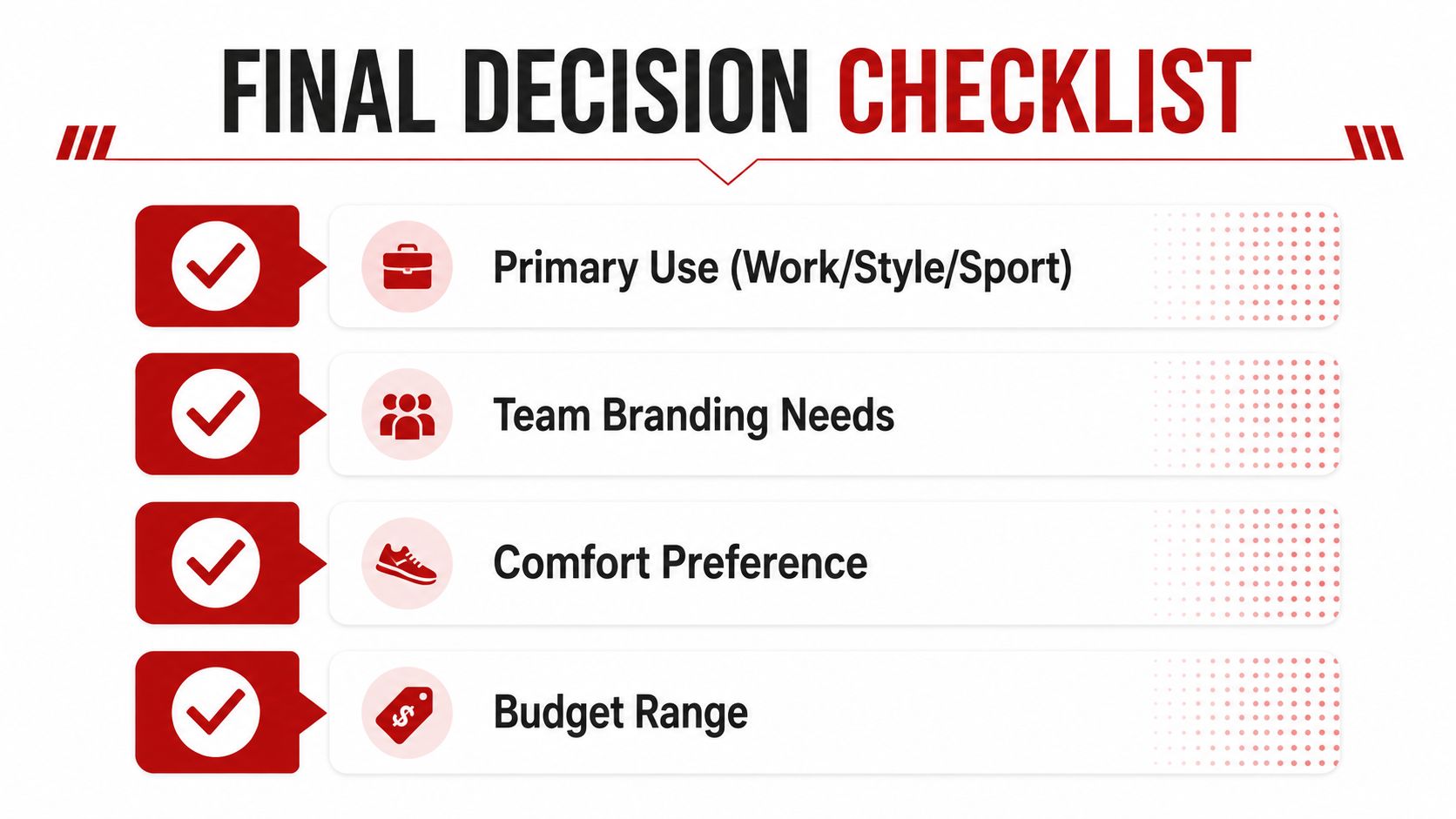
Use this checklist before requesting a final quote:
- Primary use: Is the cap for sport, work, promotion, retail, or everyday style?
- Wearer mix: Will one person fit every cap, or do you need an adjustable closure for varied head shapes?
- Brand presentation: Does the logo need a firm, uniform front, or should the cap feel soft and relaxed?
- Artwork shape: Is the design compact and embroidery-friendly, or would a patch handle its detail better?
- Order plan: Do you need a sample, a proof, a small test run, or a repeatable replenishment program?
A low profile cap may be better when the wearer wants a close, understated fit. A high profile cap can make more sense when the design needs extra vertical presence or the brand deliberately wants a taller silhouette. For most first group orders, though, mid profile remains a sensible starting point because it balances appearance, comfort, and decoration potential.
Don't approve the order from a product thumbnail alone. Request the exact blank, review a physical sample when possible, and approve a decoration proof that reflects the front-panel shape.
Dirt Cheap Headwear supplies blank and fully decorated mid profile headwear, with options across structured, unstructured, five-panel, and six-panel constructions. Visit Dirt Cheap Headwear to compare available styles, request a quote, and start a custom order with embroidery or patches.