You're probably in one of a few familiar spots right now. You need hats for staff, a team, a launch, or a merch table. You want them to look better than a basic logo cap, but you also don't want to order the wrong thing and end up with hats that feel cheap, bulky, or hard to sell.
That's where a woven patch hat starts making sense. It gives you a cleaner, more modern look than a lot of standard decoration options, especially if your logo has fine lines, small text, or multiple colors. It also opens up practical choices around hat style, patch size, backing, and order quantity, which matter a lot more than most first-time buyers realize.
For a small business or team, the question usually isn't “what is a woven patch?” It's “should I buy woven patches for this specific hat order, or would something else serve me better?” That's the decision worth making carefully.
Beyond the Basic Logo Hat
A lot of first-time buyers start with the same idea. Get a hat, put the logo on it, move on.
Then the samples start to blur together. Direct embroidery can look great, but some logos lose detail. Printed options can look sharp at first glance, but they don't always give the tactile, finished look people expect from branded headwear. Leather can be excellent for the right brand, but it pushes the hat in a very specific style direction.
A woven patch hat sits in a useful middle ground. It looks polished, feels intentional, and works for a surprisingly wide range of brands. Coffee shops use it when they want a modern retail hat instead of a staff-uniform hat. Youth programs use it when the mascot or name has details that would get muddy in raised stitching. Startups use it when they want hats that feel more like merch and less like giveaway leftovers.
What buyers usually want from this style
Shoppers in this category are trying to solve a few practical problems at once:
- Cleaner logo reproduction when direct embroidery makes thin lines or small lettering look soft
- A more premium shelf look for retail merch, launch kits, and branded apparel
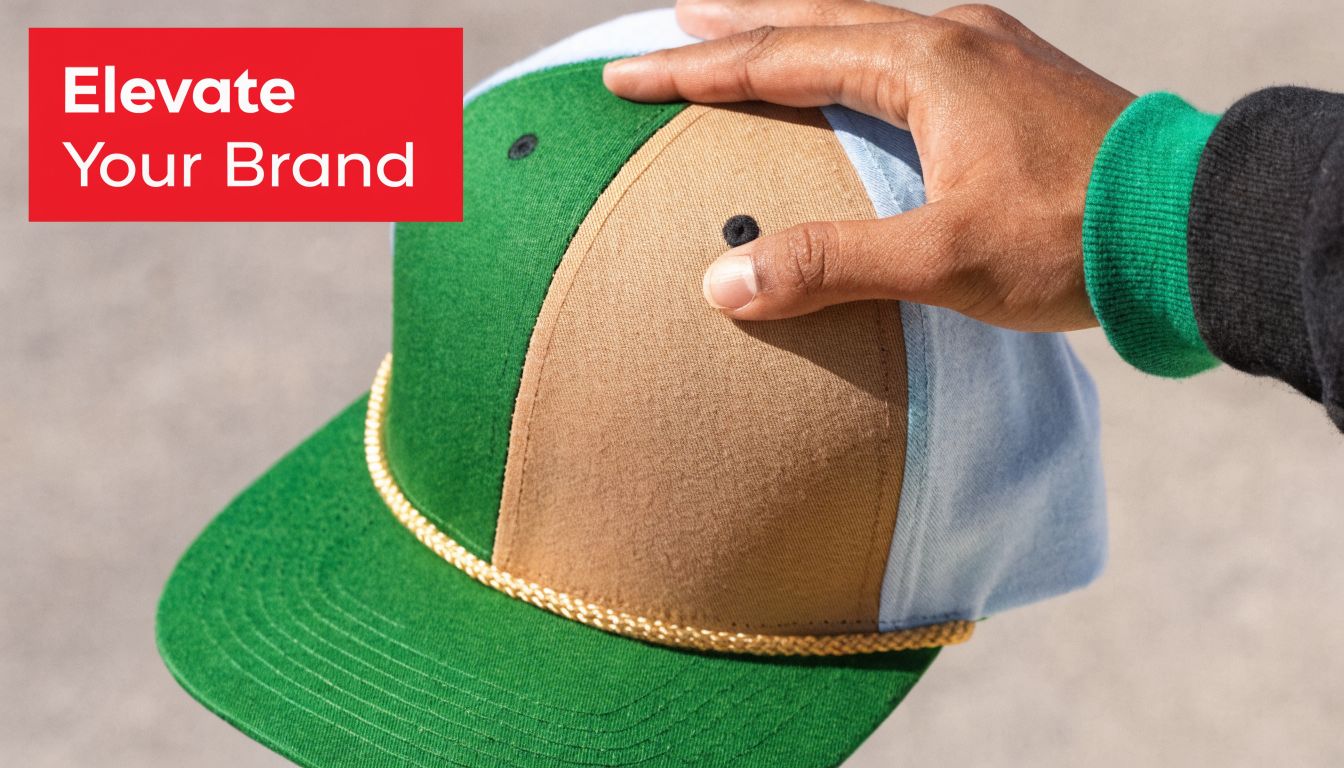
- Flexibility on hat styles so the patch can work on truckers, dad hats, snapbacks, and more
- A manageable first order instead of committing to a giant run before testing demand
Practical rule: If the hat needs to look good both up close and from across the room, woven patches are usually worth a serious look.
The best part is that you don't need to be a designer or a large company to order them well. You just need to match the patch style to the way the hats will be worn, washed, and judged.
What Makes a Woven Patch Special
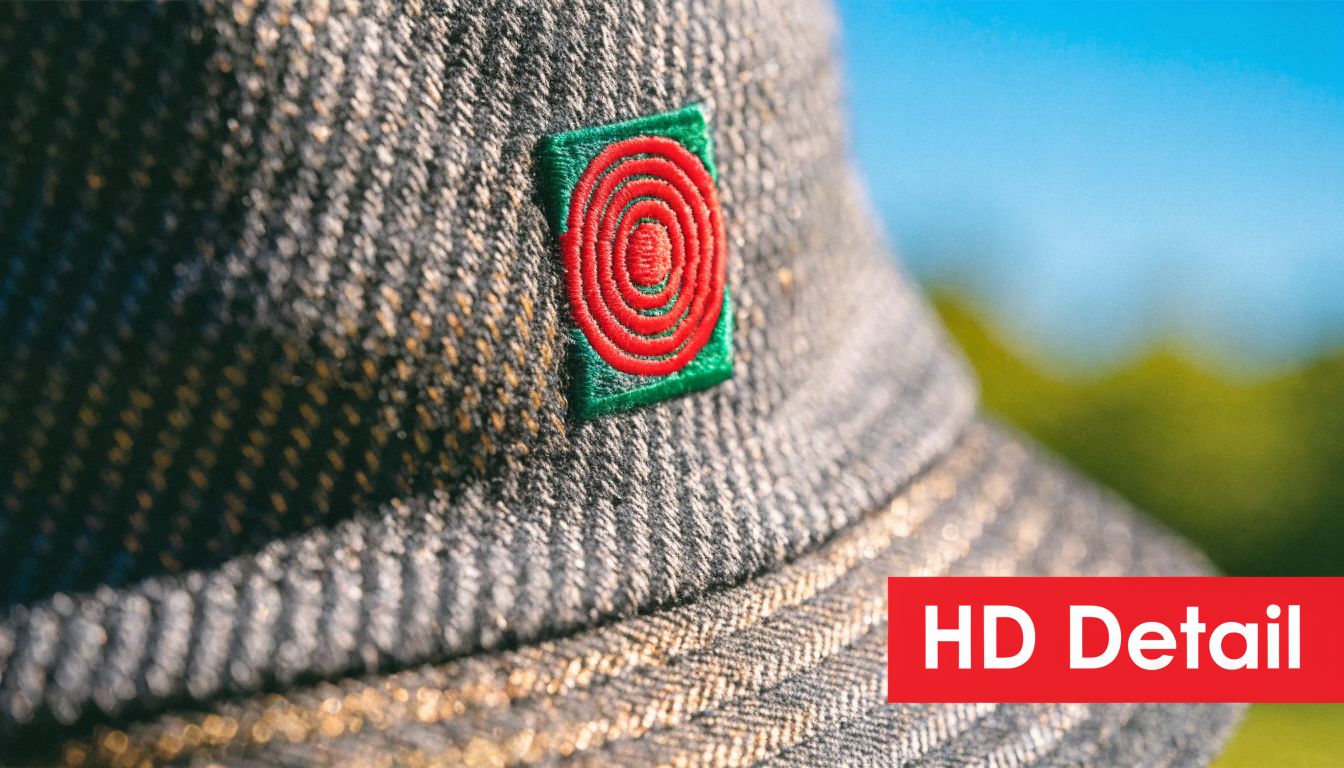
The easiest way to explain a woven patch is this. A woven patch looks more like a high-definition image. An embroidered patch looks more like a textured painting.
Both can look good. They just solve different problems.
With embroidery, thread sits on top of the patch surface in raised stitches. That gives you dimension and texture, which is why embroidered patches have that classic, traditional look. With woven patches, the threads are interlocked during the patch-making process itself, which creates a flat, smooth surface and allows much finer visual detail.
Why the detail looks sharper
Woven patches are strong when a logo includes:
- Small text
- Thin outlines
- Complex icons
- Multi-color transitions that would look clunky in standard stitching
That's because thin-thread weaving can capture fine detail that traditional embroidery often can't reproduce cleanly. If your logo has a lot going on, woven usually gives you a more faithful version of the artwork.
Why they feel more modern on a hat
That flat finish matters on headwear. A bulky patch can fight the shape of the front panel, especially on lower-profile hats. A woven patch tends to sit cleaner and feel more integrated with the cap, which is one reason it works well for brands that want a sleek result instead of a rugged one.
The technology behind this isn't new or experimental. The turning point goes back to 1863, when Isaak Groebli invented the Schiffli embroidery machine in Switzerland. According to the history of custom patches, that invention made mass production of identical woven and embroidered patches possible. Before that, creating 100 identical patches demanded 100 individual hand-embroiderers. After the breakthrough, a single machine could produce hundreds of identical patches per day.
A woven patch isn't just a style trend. It's the result of a production method built to deliver consistency and detail at scale.
What that means for your order
If you're ordering hats for a brand, a team, or a resale drop, consistency matters. You want the logo on hat one to match the logo on hat twelve or hat two hundred. Woven patches are good at that. They also help when your artwork doesn't translate well to thick stitching.
Choose woven when the design itself is the priority. If the texture is the priority, that's when you start looking harder at embroidery instead.
Woven vs Embroidered vs Other Patches
A coffee shop ordering 24 hats for staff has different needs than a contractor buying 200 for field crews. The patch that works best depends on how the hats will be worn, how detailed the logo is, and how much margin the order needs to protect.
For small businesses, the decision usually comes down to four practical factors: detail, texture, wear conditions, and budget flexibility. The right patch is the one that fits those four criteria without forcing compromises your brand does not need.
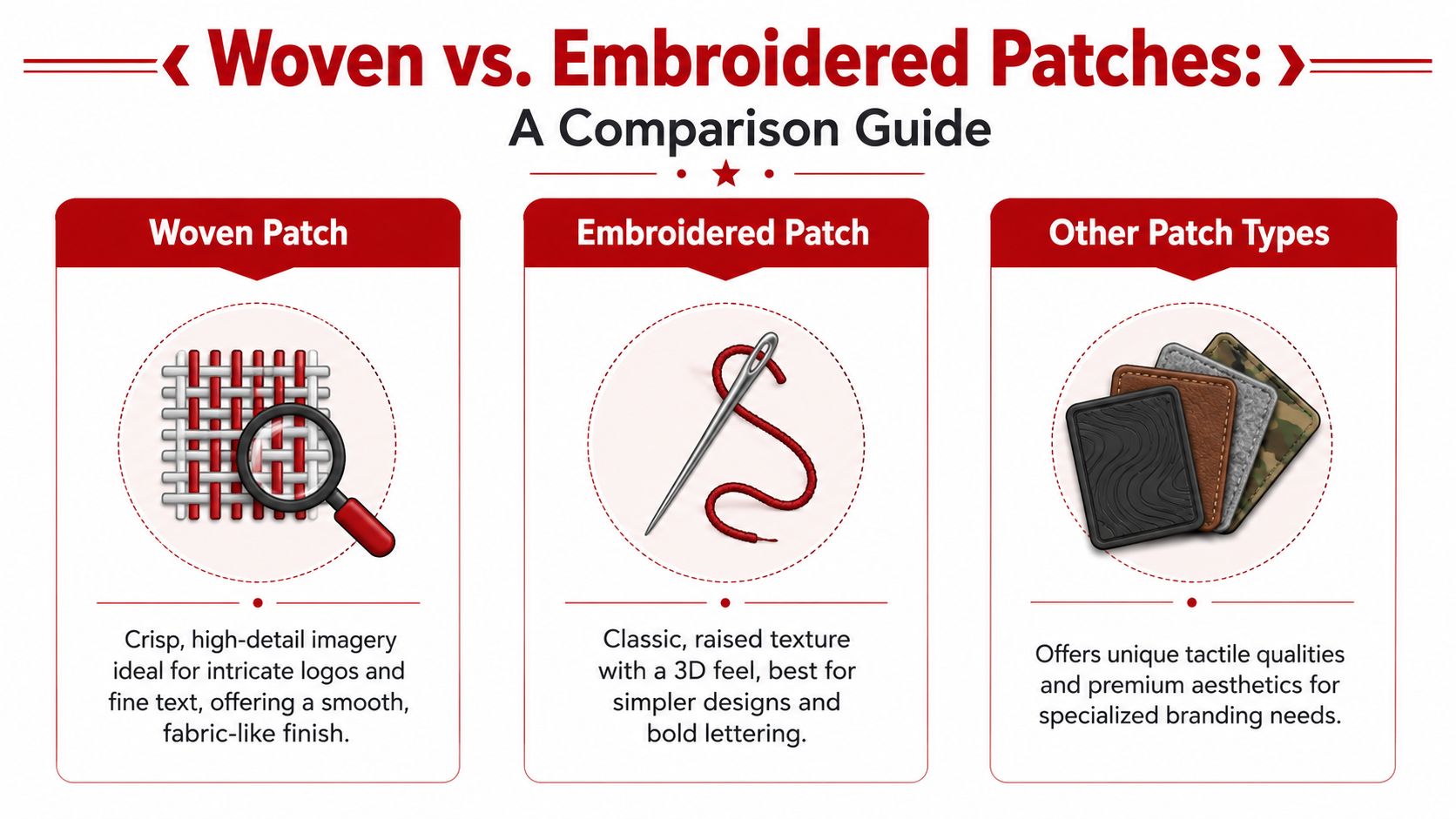
Quick side by side comparison
| Patch type | Best at | Watch out for | Good fit for |
|---|---|---|---|
| Woven | Fine detail, small text, smooth look | Less texture, can feel too clean for rugged branding | Modern brands, detailed logos, clean retail hats |
| Embroidered | Raised texture, classic look, simpler bold art | Fine details can fill in or lose definition | Workwear, heritage brands, bold mascots, simpler marks |
| Leather and similar specialty patches | Premium feel, lifestyle branding | Limited color/detail options, not ideal for every audience | Outdoor brands, upscale merch, minimalist marks |
| Printed or other specialty options | Photo-like detail, unusual finishes, specific visual effects | Feel and lifespan vary by material and application | Event merch, fashion capsules, promo-specific projects |
Woven patches make sense when the artwork has to stay precise
Choose woven if the logo includes small lettering, thin outlines, or shape changes that would get muddy with thicker stitching. That is the buying decision I usually recommend for startups, cafés, breweries with detailed secondary marks, and school or team hats that need a cleaner retail look.
Woven also helps when you are ordering in lower quantities and cannot afford a bad first run. If the design is complex, embroidery leaves less room for error because simplifying the art can change how the brand reads on the hat. A woven patch usually preserves more of the original mark.
That does not mean woven is automatically the premium choice. It means it is the safer choice for certain artwork.
Embroidery still earns its spot
Embroidery wins when the logo is bold enough to benefit from thickness. Outdoor service professionals, trades, farm brands, and older-established businesses often look better with a patch that has visible texture and a little weight to it.
Distance matters too. On a hat seen from across a room or across a parking lot, clean block shapes often outperform fine detail. If your logo is basically a strong icon and one or two bold words, embroidery can look more confident than woven.
This is also where brand personality matters. A clean streetwear label and a workwear company should not always use the same patch method, even if the logo could technically work in both.
Here's a good reality check if you're new to patches in general. Stitch Mingle has a helpful beginner's guide to custom patches that walks through the basics of how patch choices affect the final result.
For a hat-specific decoration comparison, this overview of embroidered patches vs direct embroidery helps clarify when a separate patch makes more sense than stitching straight onto the cap.
Later in the buying process, it also helps to see patch construction in motion:
Other patch types can be right, but they solve narrower problems
Leather, faux leather, PVC, and printed patches each have a place. They are usually better as style decisions than all-purpose defaults.
Leather works well for minimalist logos and outdoor branding, but it is a poor match for small text and multi-color artwork. Printed patches can carry more visual information, but the finish often feels less tactile than woven or embroidery. PVC is durable and distinctive, though it can look too technical or heavy for brands that want a softer look.
For a small business or team buyer, the mistake is choosing the material first and forcing the logo into it. Start with the logo, the use case, and the minimum order you can justify. Then choose the patch type that gets closest to the result you need without overspending.
Backing and application affect the final decision
Patch type is only part of the purchase. How the patch gets attached to the hat matters just as much in real use.
Sew-on is the safer choice for long-term wear and repeat washing. Heat-applied options are faster and can work well for lighter-use promotional runs. Hook-and-loop makes sense only if the patch needs to be changed out.
If you are buying a small batch to test merchandise, a low-minimum woven patch hat can be a smart entry point because it lets you keep detail without committing to a big run. If the hats are headed to crews, uniforms, or rough daily use, embroidered patches or direct embroidery often make more sense because the texture and attachment method better match the job.
Designing Your Perfect Woven Patch Hat
A woven patch can reproduce impressive detail, but it won't rescue a messy design. Good results usually come from making a few disciplined choices before the order ever goes into production.
The first one is simple. Use the cleanest art you have. If you've got a vector file, use it. If you don't, send the sharpest version available and expect a little cleanup before proofing.
Start with the logo, not the hat
A common mistake is choosing the hat first and forcing the logo into it. The stronger approach is the opposite. Look at your logo and ask three basic questions:
- Does it rely on small text?
- Does it need thin lines to stay recognizable?
- Does it lose its identity if simplified too much?
If the answer is yes to any of those, woven is probably the better patch direction than embroidery.
If you're creating a logo concept from scratch, tools that generate visual directions can help you get unstuck. This guide to mastering AI art creation is useful for brainstorming styles and visual references before you hand artwork off for production.
Use size ranges that actually work on caps
Cap geometry matters. A patch that looks perfect on a screen can feel oversized once it lands on the front of a hat.
According to this cap patch sizing guide, the maximum recommended patch width for baseball caps is 4.5 inches, with a height limit of 2.75 inches. The same guide notes that the ideal range is 2 inches to 3.5 inches wide by 1 inch to 2.5 inches tall, and that 2.25-inch circles are the most commonly ordered configuration.
Design shortcut: If you don't know where to start, a patch in the middle of that ideal range is usually safer than pushing to the maximum.
Shape and border affect the final look
The patch shape does as much visual work as the logo itself.
A few reliable pairings:
- Circle patches feel balanced and classic. Good for badges, mascots, coffee logos, and outdoor-style marks.
- Rectangle patches suit wordmarks, team names, and logos with a horizontal layout.
- Custom contour shapes can look great, but they need cleaner artwork and a clear silhouette.
Border choice matters too. A stitched border looks more traditional and visually frames the art. A laser-cut edge looks cleaner and more modern. Neither is universally better. The right one depends on whether you want the patch to feel like a badge or blend into the hat.
Match the patch to the hat style
Not every woven patch hat should be built the same way.
| Hat style | Usually works best with |
|---|---|
| Trucker cap | Mid-size patch with strong contrast and simple placement |
| Dad hat | Smaller patch that doesn't overpower the lower profile |
| Structured snapback | Slightly bolder patch shapes that can take advantage of the firmer front panel |
| Beanie | Compact shapes with very clear art |
On lower-profile hats, oversized patches can make the front look crowded. On structured crowns, tiny patches can feel underpowered. Most disappointing samples come from that mismatch, not from the patch method itself.
How to Order Custom Woven Patch Hats
Ordering custom hats feels harder than it is. Most problems come from buyers not knowing what decisions matter early, then trying to fix everything at proof stage.
The cleanest way to do it is to move in a straight line. Pick the hat. Match the patch style to the artwork. Review the proof carefully. Then approve only when the size, shape, and placement all make sense on the actual cap style.
Step one is choosing the hat blank
Don't start by obsessing over the patch. Start with who's going to wear the hat.
A few examples:
- Staff uniforms usually need comfort, repeat wear, and easy reorder potential.
- Retail merch needs shelf appeal and a shape your customers already like wearing.
- Sports teams need something practical enough for regular use and easy enough to reorder mid-season.
- Events and fundraisers often need a style that appeals to the widest range of people.
The same woven patch can feel completely different on a structured trucker versus an unstructured dad hat. A logo that looks sharp on a firm front panel may feel too large or too stiff on a softer crown.
Then submit artwork and expect a proof
Good vendors save you time. You send the logo, hat choice, and basic direction. They turn that into a proof showing how the patch should look on the selected cap.
Review that proof like a buyer, not like a designer. Ask:
- Can people read the small text?
- Does the patch fill the front panel well without taking over the hat?
- Does the border style fit the brand?
- Does the hat color help or hurt the patch contrast?
If you're ordering for a group, show the proof to one or two other decision-makers before approval. That catches avoidable mistakes.
Minimums and quantity planning
Small buyers often assume custom headwear only works in large runs. That's not always true.
If you're testing a new design or ordering for a small crew, lower minimums make woven patches much more practical. Dirt Cheap Headwear offers custom orders starting at six pieces per logo, which is useful for small business uniforms, pilot merch runs, and team samples based on the company details provided in the publisher brief.
That kind of small-run option changes the decision. You don't have to guess at demand and overcommit just to get a branded hat made.
Pricing usually comes down to a few variables
Not every vendor quotes the same way, but these factors commonly affect cost:
- Hat style and brand
- Patch size and shape
- Patch backing and border choice
- Order quantity
- Complexity of the artwork
If you're buying wholesale or comparing vendors, it helps to understand how patch programs are usually structured. This overview of buying custom hat patches wholesale gives a practical look at the process.
The cheapest sample isn't always the cheapest order. If the patch is too big, the logo is unreadable, or the hat style is wrong for your audience, you'll pay for that mistake later.
A simple way to avoid ordering regret
If this is your first woven patch hat order, don't try to satisfy every possible use case with one design. Build for the main job.
If the hats are for resale, prioritize visual appeal. If they're for field staff, prioritize wearability and permanence. If they're for a one-time event, prioritize clarity and speed. The strongest orders come from making one clear choice, not five competing ones.
Durability and Care for Woven Patch Hats
A woven patch hat can look excellent on day one and still be the wrong buy for a crew that wears it six days a week in heat, dust, and sun. That is usually the point where small businesses feel the difference between a good-looking sample and a good long-term choice.
For everyday merch, light uniform use, and event hats, woven patches usually hold up well if the patch is made cleanly and attached properly. For crews that sweat through hats, toss them in the wash, and work outside year-round, woven still works, but it deserves a harder evaluation before you place the order.
Where woven patches perform well
According to this woven patch durability overview, woven patches generally handle repeated washing and regular wear well, though embroidery still tends to last longer under heavy wash cycles.
That trade-off matters because the best-looking option is not always the best operational choice.
Woven patches are a strong fit for:
- Retail merch hats
- Brewery, coffee shop, and restaurant staff caps
- School clubs and volunteer teams
- Brand drops and pilot runs
- Company hats worn a few times a week instead of every day
In those cases, the cleaner detail and flatter finish often outweigh the durability gap.
Where you should be more cautious
Sun and wash frequency are the two pressure points I would look at first. The same woven patch durability overview notes that woven patches can fade faster than embroidery under heavy UV exposure because they use finer threads.
That is a practical concern for:
- Landscaping and construction crews
- Fishing guides and boating brands
- Camp staff
- Outdoor coaches
- Festival or event teams working full days outside
If the hats are part of a uniform budget and you need them to survive hard use for months, embroidery often gives you more margin for error. If the hats are brand-forward and appearance matters more than maximum toughness, woven is still a smart buy.
Care habits that extend the life of the hat
A woven patch hat does better with lighter handling. Spot cleaning beats frequent machine washing. Drying it out of direct sun helps preserve color. Storing hats properly also cuts down on edge wear and patch curling over time.
Attachment method matters too. If you are comparing patch construction options, this guide to iron-on patch application considerations helps explain where heat-applied patches make sense and where a sewn or more permanent attachment is the safer choice.
My advice to small brands is simple. Buy woven when logo detail, a smoother finish, and lower minimums make the project easier to launch. Buy embroidery when the hats are tools first and branding second.
If you're ready to price out a woven patch hat order, Dirt Cheap Headwear is one option to consider for small-run and wholesale headwear projects, especially if you want a low-minimum custom order and need help matching the patch style to the right hat.
Pingback: Tiger Iron on Patch: A Complete Application Guide for 2026 | Dirt Cheap Headwear
Pingback: Baseball Cap with Patch: A Brand's Complete Guide | Dirt Cheap Headwear